

 Vorschau anzeigen
 Versenden
 Teilen
 Details anzeigen

 Herunterladen
 Ähnliche Objekte
 Röntgenaufnahme
 Diashow
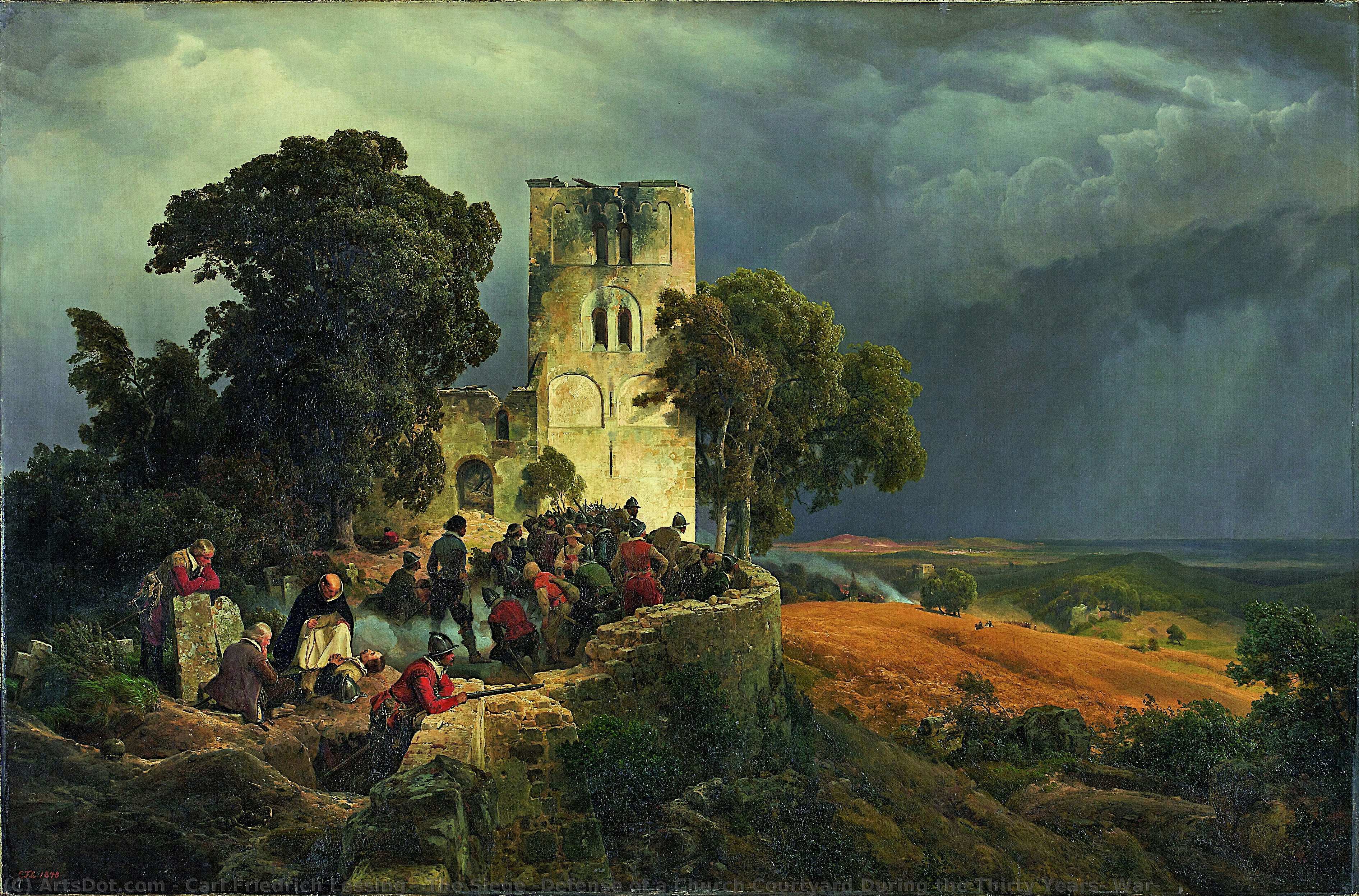
The Siege (Defense of a Church Courtyard During the Thirty Years’ War)
 Oil
Oil- WallArt
- Düsseldorf School
 1848
1848- 19th Century
 1766.0 x 1165.0 cm
 Kunstpalast
 Weiterlesen
Handgefertigte Ölreproduktion
Handgemaltes Ölgemälde auf Leinwand in Ihrer Wunschgröße und mit Rahmen, auf Bestellung von unseren Künstlern angefertigt. ( Druck bestellen Bild kaufen)




P118B $10

P118H $10

P118W $10

P438Z $10

P508JH $12

P508YH $12

P805H $10

P805Z $10

P919BZ $10

P919G $10

P919XJ $10

P959ZH $10

P968JZ $12

W106C $8

W218G $10

W218JH $8

W218Y $10

W307PJ $10

W316G $10

W316PJ $8

W316Y $10

W398PJ $8

W4111J $10

W500HY $15

W500JH $15

W692G $12

W849H $8

W940BG $15

W953PJ $8




Wählen Sie aus unseren vordefinierten Formaten, die den ursprünglichen Proportionen des Kunstwerks entsprechen.

Sie können Ihre eigenen Maße eingeben, um einen bestimmten Rahmen oder Platz auszufüllen. Wenn die gewählte Größe nicht den Proportionen des Originalbildes entspricht, werden wir das Kunstwerk entweder beschneiden oder das Gemälde durch zusätzliche, handgemalte Elemente erweitern. Ein digitales Mockup wird Ihnen zur Genehmigung zugesandt, bevor die Produktion beginnt.
Bitte beachten Sie, dass die Bildschirmvorschau nicht die tatsächliche Beschneidung oder Erweiterung widerspiegelt. Nur das Mockup zeigt die endgültige Komposition exakt an.
Obwohl Sondermaße verfügbar sind, empfehlen wir, eine Größe aus der vordefinierten Liste zu wählen, um die ursprünglichen Proportionen beizubehalten.
Nach der Bestellung wird das ArtsDot.com-Team dem Kunden Anweisungen per E-Mail zusenden und eine Mockup-Vorschau bereitstellen.
Weltweiter Versand () in nur 3 bis 4 Wochen statt der üblichen 5 Wochen. (27 August). Keine Kompromisse bei der Qualität.

Kostenloser weltweiter Expressversand

Hochwertige Leinenleinwand

Umfassender Versicherungsschutz beim Versand

Zollgebühren-Rückerstattungsgarantie

Garantie für exakte Farbtreue

60 Tage Rückgaberecht (nur bei Mängeln)

100% Geld-zurück-Garantie

Mengenrabatt verfügbar
 Die Glasoption ist nur für Größen unter 110 cm verfügbar.

The Siege (Defense of a Church Courtyard During the Thirty Years’ War)
Art der Reproduktion
Format der Reproduktion
-


Gesamtpreis
$ 263
A Masterpiece of Drama and Devotion
In the sweeping, atmospheric canvas of The Siege (Defense of a Church Courtyard During the Thirty Years’ War), Carl Friedrich Lessing invites the viewer into a moment of profound historical tension. Painted in 1848, this work stands as a monumental achievement of the Düsseldorf School, masterfully synthesizing the grandeur of history painting with the raw, emotive power of landscape. The scene unfolds beneath a somber, tempestuous sky that seems to mirror the chaos unfolding on the ground. As the eye traverses the rugged terrain, it encounters a world caught in the throes of conflict, where the architectural remnants of a monastery—partially consumed by fire—serve as a haunting backdrop to the struggle for survival.
The composition is a triumph of narrative structure, guiding the observer through a carefully orchestrated sequence of events. Along the curved diagonal of the fortress wall, Lessing leads our gaze into the vast, brooding countryside, creating a sense of immense scale and isolation. On the ridges, the presence of arquebusiers and lansquenets provides a rhythmic pulse of military movement, yet the true heart of the painting lies in its intimate, tragic foreground. Here, the artist captures a moment of spiritual gravity: a monk administering the Last Sacraments to a dying soldier. This poignant intersection of violence and piety creates a profound emotional resonance, reminding us of the fragile sanctity of life amidst the devastation of war.
Technique and the Spirit of an Era
Lessing’s technical prowess is evident in his ability to manipulate light and atmosphere to evoke a specific psychological state. Drawing from his extensive studies in the Eifel region, he employs a palette of muted, earthy tones and stormy grays that imbue the work with a sense of impending doom. The brushwork, while precise enough to render the intricate details of period weaponry and clothing, possesses an atmospheric fluidity that allows the smoke of battle and the heavy clouds to blend seamlessly. This mastery of light not only illuminates the central drama but also creates a sense of depth that pulls the viewer into the very center of the siege.
Beyond its immediate visual impact, the painting carries deep historical symbolism. Created during the turbulent year of the 1848 Revolution, the work resonates with the contemporary anxieties of Lessing’s time. The destruction of the monastery and the desperate defense of the courtyard can be read as an allegory for the fragility of social and religious institutions during periods of political upheaval. For the discerning collector or interior designer, this piece offers more than mere decoration; it provides a window into the human condition, making it a commanding centerpiece for any collection that values historical depth, narrative complexity, and the enduring power of Romanticism.
Ähnliche Kunstwerke
Über den Künstler
early life and education
Carl Friedrich Lessing, a celebrated German historical and landscape painter, was born on February 15, 1808, in Breslau (now Wrocław), Poland. He descended from Gotthold Ephraim Lessing, the esteemed poet and dramaturgist—a lineage that instilled within him an appreciation for artistic expression and intellectual rigor.
Lessing’s formative years were marked by a dedication to scholarly pursuits. He commenced his education at the Berlin Bauakademie in 1822, immersing himself in architectural studies before enrolling at the königlich-preussische akademie der wissenschaften (royal prussian academy of the sciences) from 1823 to 1826. These academic endeavors honed his observational skills and cultivated a profound understanding of artistic principles.
artistic career and influences
Lessing’s artistic trajectory gained momentum through his association with Friedrich Wilhelm von Schadow, under whose tutelage he refined his technique in historical painting. Schadow's guidance proved instrumental in shaping Lessing’s stylistic sensibilities and establishing him as a prominent figure within the Düsseldorf School.
In 1830, Lessing’s canvases—characterized by their harmonious blend of history and landscape elements—commanded considerable acclaim. Critics lauded his ability to convey emotion and grandeur through meticulously crafted compositions. His oeuvre encompasses iconic works such as:
- Landscape with Castle Ruins and Riders(1878): This monumental painting captures the desolate beauty of a ruined castle amidst rolling hills, embodying themes of decay and resilience—a hallmark of Romanticism’s fascination with sublime landscapes.
- Soldiers at Rest(1877): Lessing skillfully portrays soldiers weary from battle, conveying both physical exhaustion and psychological introspection. The painting reflects the anxieties of its time and underscores the artist's sensitivity to human experience.
- Motif From The Harz Mountains(1870): Lessing’s depiction of the Harz mountains—a UNESCO World Heritage Site—demonstrates his mastery of tonal gradation and atmospheric perspective, creating a palpable sense of place and mood.
- Landscape (1862): This serene panorama showcases Lessing's meticulous attention to detail and his ability to evoke tranquility through subtle color palettes.
- Upper Rhine Chapel(1860): Lessing’s depiction of the Upper Rhine Chapel exemplifies his commitment to capturing architectural grandeur and spiritual contemplation—a testament to his artistic vision.
leadership and legacy
Lessing played a pivotal role in fostering artistic collaboration and intellectual discourse. He co-founded the artists' association Malkasten (Paint Box) in 1848, uniting fellow painters and promoting shared creative endeavors.
From 1858 until his passing in 1880, Lessing served as director of the Grand Ducal Painting Gallery and Print Collection in Karlsruhe—a position that afforded him unparalleled access to artistic treasures and enabled him to champion the advancement of German art. His contribution extended beyond administrative duties; he actively curated exhibitions and fostered scholarly discussions on artistic innovation.
key achievements
Lessing’s early recognition at the Berlin Art Exhibition (1826) solidified his reputation as a rising talent within the Düsseldorf School. Furthermore, Schadow's acceptance into his atelier ensured that Lessing benefited from invaluable mentorship—a factor contributing significantly to his artistic development.
His unwavering dedication to artistic excellence culminated in his appointment as director of Karlsruhe’s gallery and print collection—a distinction honoring his lifelong commitment to preserving and disseminating German art heritage. Carl Friedrich Lessing remains a celebrated figure whose paintings continue to inspire admiration for their beauty, emotional depth, and profound engagement with the Romantic spirit.
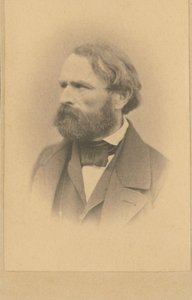
Karl Friedrich Lessing
1808 - 1880 , Polen
Kurzinfos
- Artistic Movement Or Style: Düsseldorfer Schule
- Artists Or Movements Influenced By This Artist: ['Romantik']
- Artists Who Influenced This Artist: ['Friedrich Wilhelm von Schadow']
- Date Of Birth: Februar 15, 1808
- Date Of Death: Januar 4, 1880
- Full Name: Karl Friedrich Lessing
- Nationality: Deutsch
- Notable Artworks:
- Landschaft mit Ruinen und Rittern
- Soldatenruhe
- Motiv vom Harzgebirge
- Place Of Birth: Wrocław, Polen
Ähnliche Artikel
William Owen: A Poetic Vision of War & Landscape in British Modernism
Explore the poignant war poetry of Wilfred Owen, a key figure in British Modernism. Discover his innovative style, themes of loss & camaraderie, and lasting impact on 20th-century literature. Analysis & historical context included.
Echoes of a Turning Tide: Artistic Responses to 1916 – A Year of Conflict & Transformation
Explore the profound artistic responses to the tumultuous year of 1916. Discover how WWI shaped movements like Futurism & Expressionism, and delve into masterpieces by Kandinsky, Matisse, Nevinson & more. Learn about art history at ArtsDot.
The Hague School: Realism, Atmosphere & the Dawn of Dutch Impressionism
Explore the Hague School's pivotal role in Dutch art history. Discover realism, atmospheric landscapes & its influence on Impressionism. Learn about key artists like Mauve & Maris with ArtsDot.
Vasily Vereshchagin: Realism, War & Subversion in 19th-Century Russian Painting
Explore the powerful realism of Vasily Vereshchagin's war paintings & Central Asian scenes. Discover how this Russian master challenged artistic conventions and offered a brutal, honest depiction of 19th-century conflict. Learn about his legacy for discerning collectors.
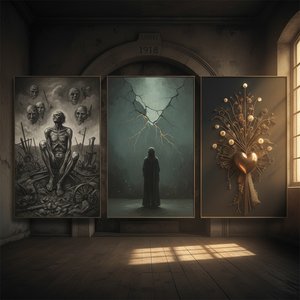
Echoes of Trauma & Hope: Representing Transformation in Artworks of 1918
Explore the profound artistic responses to World War I's trauma & hope. Discover Expressionist masterpieces by Bacon, de Kooning & more. Expert insights for collectors & art enthusiasts at ArtsDot.

