

 Vorschau anzeigen
 Versenden
 Teilen
 Details anzeigen

 Herunterladen
 Ähnliche Objekte
 Röntgenaufnahme
 Diashow
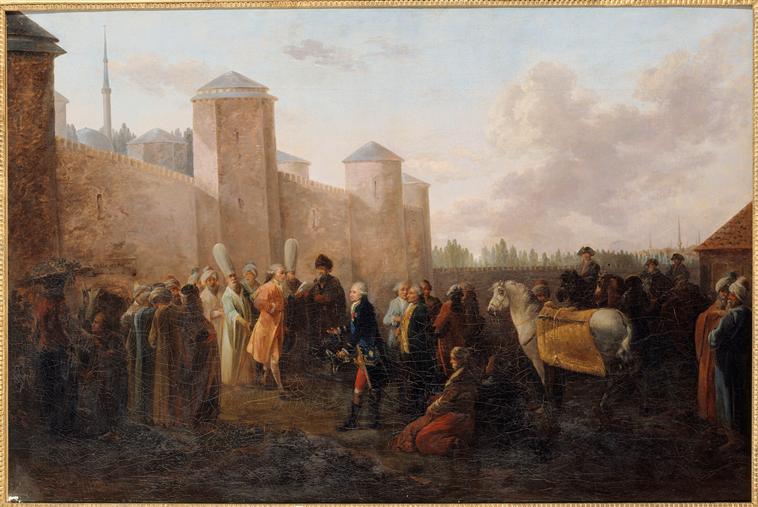
LE PRINCE PIERRE REPNIN DELIVRE DE LA PRISON DES SEPT TOURS EN PRESENCE DE MONSIEUR DE SAINT PRIEST.25 SEPTEMBRE 1773
 Weiterlesen
Handgefertigte Ölreproduktion
Handgemaltes Ölgemälde auf Leinwand in Ihrer Wunschgröße und mit Rahmen, auf Bestellung von unseren Künstlern angefertigt. ( Druck bestellen Bild kaufen)




































Wählen Sie aus unseren vordefinierten Formaten, die den ursprünglichen Proportionen des Kunstwerks entsprechen.

Sie können Ihre eigenen Maße eingeben, um einen bestimmten Rahmen oder Platz auszufüllen. Wenn die gewählte Größe nicht den Proportionen des Originalbildes entspricht, werden wir das Kunstwerk entweder beschneiden oder das Gemälde durch zusätzliche, handgemalte Elemente erweitern. Ein digitales Mockup wird Ihnen zur Genehmigung zugesandt, bevor die Produktion beginnt.
Bitte beachten Sie, dass die Bildschirmvorschau nicht die tatsächliche Beschneidung oder Erweiterung widerspiegelt. Nur das Mockup zeigt die endgültige Komposition exakt an.
Obwohl Sondermaße verfügbar sind, empfehlen wir, eine Größe aus der vordefinierten Liste zu wählen, um die ursprünglichen Proportionen beizubehalten.
Nach der Bestellung wird das ArtsDot.com-Team dem Kunden Anweisungen per E-Mail zusenden und eine Mockup-Vorschau bereitstellen.
Weltweiter Versand () in nur 3 bis 4 Wochen statt der üblichen 5 Wochen. (29 August). Keine Kompromisse bei der Qualität.

Kostenloser weltweiter Expressversand

Hochwertige Leinenleinwand

Umfassender Versicherungsschutz beim Versand

Zollgebühren-Rückerstattungsgarantie

Garantie für exakte Farbtreue

60 Tage Rückgaberecht (nur bei Mängeln)

100% Geld-zurück-Garantie

Mengenrabatt verfügbar
 Die Glasoption ist nur für Größen unter 110 cm verfügbar.

LE PRINCE PIERRE REPNIN DELIVRE DE LA PRISON DES SEPT TOURS EN PRESENCE DE MONSIEUR DE SAINT PRIEST.25 SEPTEMBRE 1773
Art der Reproduktion
Format der Reproduktion
-


Gesamtpreis
$ 488
Ähnliche Kunstwerke








Über den Künstler
A Life Painted in Conflict: The World of Francesco Casanova
Francesco Giuseppe Casanova was a painter whose life unfolded against a backdrop as colorful and dramatic as the battle scenes he would come to master. Born on June 1, 1727, in the vibrant theatrical milieu of London, his early years were steeped in a unique blend of performance and prestige. The son of Zanetta Farussi, an actress, and Gaetano Casanova, an actor and dancer, Francesco was raised within a family where the boundaries between reality and stagecraft were perpetually blurred. While history often remembers his older brother, the legendary adventurer Giacomo Casanova, Francesco carved out a distinct and formidable path in the art world. He became a sought-after chronicler of 18th-century warfare, capturing the chaos of combat and the tragic grandeur of disaster with an unparalleled intensity that resonated across Europe. The artist's journey was marked by both movement and mentorship. Following his father's death when he was only eight, Francesco and his siblings were placed under the care of the influential Grimani family in Venice. This transition to the heart of Venetian culture provided him with access to the finest artistic traditions of the era. His professional development began in the workshops of Giovanni Antonio Guardi, a period described by his brother Giacomo as quite unpleasant, yet it served as a vital crucible for his skills. He later moved to the studios of Antonio Joli, a renowned set designer, where he learned to manipulate space and scale—skills that would prove indispensable when composing his monumental canvases of cavalry charges and military skirmishes.Mastery of Drama and the Venetian Legacy
Casanova’s artistic style was deeply rooted in the zenith of Venetian art, absorbing the stylistic conventions established by masters such as Canaletto and Tiepo. He possessed a profound command over chiaroscuro, utilizing the dramatic interplay of light and shadow to breathe life into his subjects. This technique allowed him to heighten the tension within his battle scenes, making the smoke of gunpowder and the glint of steel feel tangibly present to the viewer. His work is characterized by an evocative color palette and a staggering sense of movement, achieved through a prolific output that exceeded 400 canvases during his lifetime. Beyond mere documentation, Casanova’s paintings functioned as epic narratives. He did not simply paint soldiers; he painted the very essence of conflict and the visceral emotion of disaster. His ability to blend the theatricality of his upbringing with the rigorous demands of historical painting allowed him to create works that were both aesthetically pleasing and emotionally arresting. Through his brush, the chaos of the battlefield was transformed into a structured, yet breathtaking, spectacle of human struggle and aristocratic elegance.Legacy and Historical Significance
The historical significance of Francesco Giuseppe Casanova lies in his ability to bridge the gap between the decorative traditions of Venice and the burgeoning interest in dramatic, narrative-driven realism. While his biography was often overshadowed by the scandalous exploits of his brother, his contribution to the genre of battle painting remains undisputed. He stands as a master of composition, capable of organizing vast numbers of figures into a cohesive and gripping visual story. His enduring impact can be seen in several key areas:- Genre Innovation: His specialization in disaster paintings and complex military maneuvers helped elevate the status of historical genre painting.
- Technical Proficiency: The integration of theatrical set design principles into fine art, creating a sense of depth and stage-like drama.
- Cultural Documentation: Providing a visual record of 18th-century warfare and the aristocratic atmosphere of the era.
casanova françois joseph
1727 - 1802
Kurzinfos
- Artistic Movement Or Style: Orientalist art
- Artists Or Movements Influenced By This Artist: ['European Battle Scenes']
- Artists Who Influenced This Artist: ['Venetian Art Style']
- Date Of Birth: June 1, 1727
- Full Name: Francesco Giuseppe Casanova
- Nationality: Italian
- Notable Artworks:
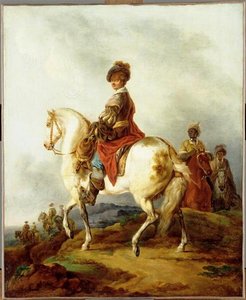
- Cavalier sur un cheval blanc
- AUDIENCE ACCORDEE PAR LE GRAND VIZIR AIMALI CARAC A MONSIEUR DE SAINT PRIEST
- Place Of Birth: London

