 Vorschau anzeigen
 Versenden
 Teilen
 Details anzeigen

 Herunterladen
 Ähnliche Objekte
 Röntgenaufnahme
 Diashow
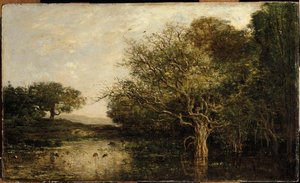
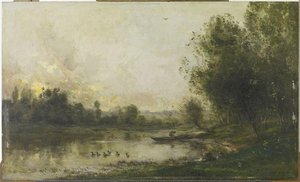
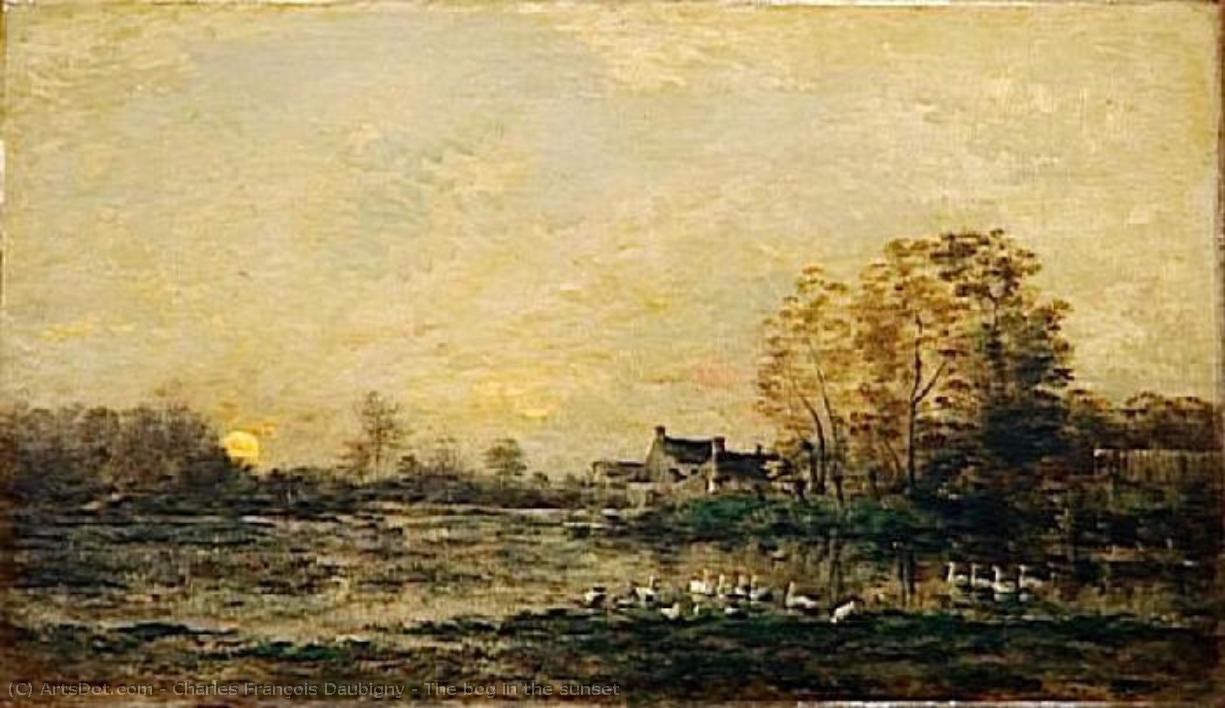
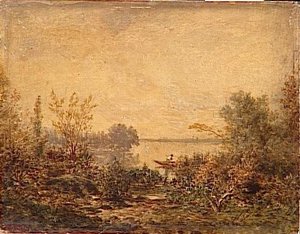
The bog in the sunset
 Oil On Panel
- WallArt
- Barbizon School & Impressionism
 1861
1861- 19th Century
 33.0 x 57.0 cm
 Musée d'Orsay
 Weiterlesen
Handgefertigte Ölreproduktion
Handgemaltes Ölgemälde auf Leinwand in Ihrer Wunschgröße und mit Rahmen, auf Bestellung von unseren Künstlern angefertigt. ( Druck bestellen Bild kaufen)




P118B $10

P118H $10

P118W $10

P438Z $10

P508JH $12

P508YH $12

P805H $10

P805Z $10

P919BZ $10

P919G $10

P919XJ $10

P959ZH $10

P968JZ $12

W106C $8

W218G $10

W218JH $8

W218Y $10

W307PJ $10

W316G $10

W316PJ $8

W316Y $10

W398PJ $8

W4111J $10

W500HY $15

W500JH $15

W692G $12

W849H $8

W940BG $15

W953PJ $8




Wählen Sie aus unseren vordefinierten Formaten, die den ursprünglichen Proportionen des Kunstwerks entsprechen.

Sie können Ihre eigenen Maße eingeben, um einen bestimmten Rahmen oder Platz auszufüllen. Wenn die gewählte Größe nicht den Proportionen des Originalbildes entspricht, werden wir das Kunstwerk entweder beschneiden oder das Gemälde durch zusätzliche, handgemalte Elemente erweitern. Ein digitales Mockup wird Ihnen zur Genehmigung zugesandt, bevor die Produktion beginnt.
Bitte beachten Sie, dass die Bildschirmvorschau nicht die tatsächliche Beschneidung oder Erweiterung widerspiegelt. Nur das Mockup zeigt die endgültige Komposition exakt an.
Obwohl Sondermaße verfügbar sind, empfehlen wir, eine Größe aus der vordefinierten Liste zu wählen, um die ursprünglichen Proportionen beizubehalten.
Nach der Bestellung wird das ArtsDot.com-Team dem Kunden Anweisungen per E-Mail zusenden und eine Mockup-Vorschau bereitstellen.
Weltweiter Versand () in nur 3 bis 4 Wochen statt der üblichen 5 Wochen. (21 August). Keine Kompromisse bei der Qualität.

Kostenloser weltweiter Expressversand

Hochwertige Leinenleinwand

Umfassender Versicherungsschutz beim Versand

Zollgebühren-Rückerstattungsgarantie

Garantie für exakte Farbtreue

60 Tage Rückgaberecht (nur bei Mängeln)

100% Geld-zurück-Garantie

Mengenrabatt verfügbar
 Die Glasoption ist nur für Größen unter 110 cm verfügbar.

The bog in the sunset
Art der Reproduktion
Format der Reproduktion
-


Gesamtpreis
$ 263
Beschreibung des Kunstwerks
The Serene Embrace of Dusk: Daubigny’s “The Bog in the Sunset”
Charles-François Daubigny's "The Bog in the Sunset," painted in 1861, isn’t merely a landscape; it’s an immersion into a fleeting moment of profound tranquility. This oil on panel, currently residing within the hallowed halls of the Musée d’Orsay in Paris, captures a scene both familiar and subtly imbued with a melancholic beauty—a quintessential example of the Barbizon School's dedication to capturing the essence of nature rather than its idealized representation. Daubigny, a pivotal figure bridging the gap between academic painting and the burgeoning Impressionism, sought to move beyond the rigid conventions of his time, prioritizing direct observation and the atmospheric effects of light and shadow.
The scene unfolds with remarkable detail: a small group of ducks glide serenely across the still waters of a bog, reflecting the fiery hues of a setting sun. A modest village nestles in the mid-ground, its houses rendered with a gentle warmth that contrasts subtly with the cool tones of the water and sky. Dominating the background is an ancient oak tree, its branches reaching upwards like supplicating arms against the dramatic canvas of twilight. Daubigny’s masterful use of color—a symphony of ochres, yellows, and deep oranges—evokes not just a visual representation but a palpable sense of warmth and stillness. The brushstrokes are loose and expressive, prioritizing capturing the *feeling* of the moment over meticulous detail, a hallmark of his approach.
A Pioneer of Atmospheric Impressionism
Daubigny’s artistic journey was one of constant evolution. Initially trained under Paul Delaroche, he quickly rejected the formal constraints of academic painting, embarking on a solitary pilgrimage to Italy in 1836 with fellow artist Henri Mignan. This experience proved transformative, instilling within him a deep appreciation for the natural world and a desire to paint *en plein air* – directly from nature’s source. Returning to Paris, he established a close working relationship with Camille Corot, whose influence is readily apparent in Daubigny's later works, particularly his focus on capturing atmospheric conditions and the subtle shifts of light.
Crucially, Daubigny wasn’t simply documenting a landscape; he was attempting to convey its *spirit*. He meticulously studied how light interacted with water, foliage, and the surrounding atmosphere, striving to capture the ephemeral quality of a sunset. This pursuit led him to experiment with innovative techniques, including the “cliché verre” method – utilizing translucent glass plates to create photographic negatives for printing, allowing him to achieve astonishingly accurate depictions of atmospheric effects.
Symbolism in Light and Reflection
The painting’s symbolism is layered and subtly suggestive. The ducks themselves represent tranquility and a connection to the natural world—a quiet reflection on the beauty of the present moment. The setting sun, rendered with such vibrant intensity, isn't merely a visual spectacle; it symbolizes transition, closure, and perhaps even a hint of melancholy. The stillness of the water mirrors this sense of contemplation, inviting the viewer to pause and absorb the scene’s serene atmosphere.
Furthermore, the ancient oak tree – a symbol of longevity and resilience – stands as a silent witness to countless sunsets, embodying the enduring power of nature. The village nestled in the distance represents human presence within this vast landscape, highlighting the delicate balance between civilization and the wild. The overall composition creates a sense of harmony—a visual meditation on the beauty and transience of life.
A Legacy of Atmospheric Beauty
"The Bog in the Sunset" is more than just a beautiful painting; it’s a testament to Daubigny's pioneering spirit and his profound connection to nature. His innovative techniques and atmospheric approach profoundly influenced subsequent generations of artists, including Vincent van Gogh, who famously painted three studies of Daubigny’s garden at Auvers-sur-Oise, demonstrating the enduring impact of this remarkable work. Reproductions capture a fraction of the original's magic, offering a window into a world of serene beauty and evocative atmosphere—a timeless reminder of nature’s power to inspire and uplift.
Ähnliche Kunstwerke

Über den Künstler
Frühes Leben und Ausbildung
Charles-François Daubigny, ein französischer Künstler, wurde am 15. Februar 1817 in Paris geboren und wuchs in einer Familie von Malern auf. Er erhielt seine künstlerische Ausbildung von seinem Vater Edmond François Daubigny und seinem Onkel, dem Miniaturisten Pierre Daubigny. Diese frühe Auseinandersetzung mit der Kunst legte den Grundstein für Daubignys späteren Erfolg.Die Barbizon-Schule und Impressionismus
Daubigny war einer der Maler der Barbizon-Schule, einer Künstlergruppe, die in und um das Dorf Barbizon im Fontainebleau-Wald südöstlich von Paris arbeitete. Sie strebten danach, genaue, ungeschönte Darstellungen des ländlichen Lebens und der Landschaft zu schaffen und malten oft im Freien. Daubignys Werk gilt als wichtiger Vorläufer des Impressionismus, eines Stils, der die flüchtige Realität der Natur betont.Wichtige Werke
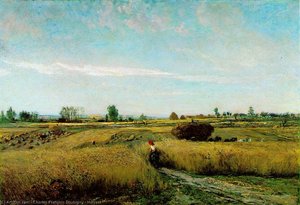
Zu Daubignys bedeutendsten Werken gehören:- Ernte (1857), heute im Musée d'Orsay (Paris, Frankreich), das seine Fähigkeit zeigt, die Essenz des ländlichen Lebens einzufangen.
- Die Teiche von Gylieu (1864), das Daubignys Können in der Landschaftsmalerei demonstriert und sich heute im Cincinnati Art Museum (Cincinnati, Vereinigte Staaten) befindet.
- Mondlicht (1865) und Auvers-sur-Oise (1868), die seine Position als Meister der impressionistischen Landschaftsbilder weiter festigen.
Entwicklung und Einflüsse
Daubigny entwickelte seinen Stil im Laufe seiner Karriere stetig weiter. Er begann mit historischen und religiösen Themen, fand aber bald seine wahre Berufung in der Landschaftsmalerei. Die Barbizon-Schule hatte einen großen Einfluss auf ihn, insbesondere die Betonung des Malens direkt aus der Natur. Er war auch ein wichtiger Vorläufer des Impressionismus, indem er sich darauf konzentrierte, den flüchtigen Eindruck von Licht und Atmosphäre einzufangen. Seine Reisen nach Italien in jungen Jahren prägten seine künstlerische Entwicklung nachhaltig. Er experimentierte mit verschiedenen Techniken, darunter die Verwendung eines Bootes als Atelier, um die Flüsse Frankreichs zu erkunden und Inspiration für seine Kunst zu finden.Vermächtnis und Bedeutung
Charles-François Daubigny verstarb am 19. Februar 1878 in Paris. Seine Überreste ruhen auf dem Cimetière du Père-Lachaise (Division 24). Heute werden seine Nachfolger und Schüler für ihre Beiträge zur Kunstwelt gewürdigt. Er gilt als eine wichtige Brücke zwischen der naturalistischen Landschaftsmalerei des 19. Jahrhunderts und den impressionistischen Experimenten, die später folgten. Seine Betonung auf das Einfangen von Licht und Atmosphäre beeinflusste nachfolgende Generationen von Künstlern maßgeblich.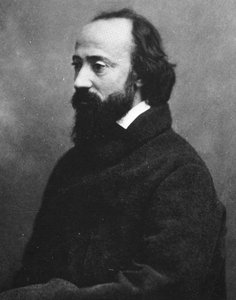
Charles-François Daubigny
1817 - 1878 , Frankreich
Kurzinfos
- Beeinflusste Künstler:
- Claude Monet
- Alfred Sisley
- Bemerkenswerte Werke:
- Ernte (1857)
- Teiche von Gylieu (1864)
- Mondnacht (1865)
- Auvers-sur-Oise (1868)
- Geburtsdatum: 15. Februar 1817
- Geburtsort: Paris, Frankreich
- Künstlerische Bewegung: Barbizon Schule, Impressionismus
- Nationalität: Französisch
- Sterbedatum: 19. Februar 1878
- Vollständiger Name: Charles-François Daubigny
- Von Beeinflusste Künstler: ['Camille Pissarro']
Ähnliche Artikel

Paul Cézanne: Die 25 Meisterwerke des Impressionismus | ArtsDot
Entdecken Sie die 25 Meisterwerke von Paul Cézanne! Tauchen Sie ein in die Welt des Impressionismus und Postimpressionismus. Erfahren Sie mehr über seine Stillleben, Landschaften & berühmten Gemälde – jetzt hochwertige Kunstdrucke auf ArtsDot.com.
Charles-François Daubigny: Pionier atmosphärischer Lichtmalerei und des Barbizon-Realismus
Entdecken Sie das Leben und Werk von Charles-François Daubigny, einem Pionier der atmosphärischen Lichtmalerei und des Realismus. Erfahren Sie mehr über die Barbizon Schule und seinen Einfluss auf die Kunstgeschichte.

Evocations of Place: A Historical Journey Through Landscape Art
Explore the rich history of landscape art with ArtsDot. Discover renowned artists, movements like Impressionism & tonalism, and expert guidance for collecting timeless pieces. Find your perfect serene escape today!

Evocations of Place: A Historical Journey Through Landscape Art
Explore the rich history of landscape art with ArtsDot. Discover renowned artists, movements like Impressionism & Romanticism, and expert guidance for collecting timeless pieces. Find your perfect serene escape today!
Evoking Nature's Sublime: A Comprehensive Exploration of 19th-Century Landscape Painting
Explore the captivating world of 19th-century landscape painting! Discover renowned artists like Friedrich & Monet, key movements, and find the perfect artwork to bring nature's serenity into your home. Expert insights at ArtsDot.