

 Vorschau anzeigen
 Versenden
 Teilen
 Details anzeigen

 Herunterladen
 Ähnliche Objekte
 Röntgenaufnahme
 Diashow
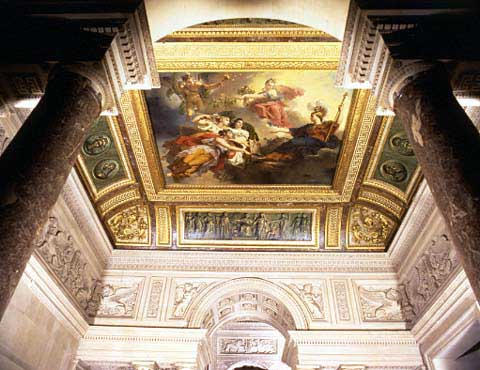
La France, sous les traits de Minerve, protégeant les arts


 Weiterlesen
Handgefertigte Ölreproduktion
Handgemaltes Ölgemälde auf Leinwand in Ihrer Wunschgröße und mit Rahmen, auf Bestellung von unseren Künstlern angefertigt. ( Druck bestellen Bild kaufen)




P118B $10

P118H $10

P118W $10

P438Z $10

P508JH $12

P508YH $12

P805H $10

P805Z $10

P919BZ $10

P919G $10

P919XJ $10

P959ZH $10

P968JZ $12

W106C $8

W218G $10

W218JH $8

W218Y $10

W307PJ $10

W316G $10

W316PJ $8

W316Y $10

W398PJ $8

W4111J $10

W500HY $15

W500JH $15

W692G $12

W849H $8

W940BG $15

W953PJ $8




Wählen Sie aus unseren vordefinierten Formaten, die den ursprünglichen Proportionen des Kunstwerks entsprechen.

Sie können Ihre eigenen Maße eingeben, um einen bestimmten Rahmen oder Platz auszufüllen. Wenn die gewählte Größe nicht den Proportionen des Originalbildes entspricht, werden wir das Kunstwerk entweder beschneiden oder das Gemälde durch zusätzliche, handgemalte Elemente erweitern. Ein digitales Mockup wird Ihnen zur Genehmigung zugesandt, bevor die Produktion beginnt.
Bitte beachten Sie, dass die Bildschirmvorschau nicht die tatsächliche Beschneidung oder Erweiterung widerspiegelt. Nur das Mockup zeigt die endgültige Komposition exakt an.
Obwohl Sondermaße verfügbar sind, empfehlen wir, eine Größe aus der vordefinierten Liste zu wählen, um die ursprünglichen Proportionen beizubehalten.
Nach der Bestellung wird das ArtsDot.com-Team dem Kunden Anweisungen per E-Mail zusenden und eine Mockup-Vorschau bereitstellen.
Weltweiter Versand () in nur 3 bis 4 Wochen statt der üblichen 5 Wochen. (22 August). Keine Kompromisse bei der Qualität.

Kostenloser weltweiter Expressversand

Hochwertige Leinenleinwand

Umfassender Versicherungsschutz beim Versand

Zollgebühren-Rückerstattungsgarantie

Garantie für exakte Farbtreue

60 Tage Rückgaberecht (nur bei Mängeln)

100% Geld-zurück-Garantie

Mengenrabatt verfügbar
 Die Glasoption ist nur für Größen unter 110 cm verfügbar.

La France, sous les traits de Minerve, protégeant les arts
Art der Reproduktion
Format der Reproduktion
-


Gesamtpreis
$ 363
Beschreibung des Kunstwerks
Charles Meynier’s “La France, sous les traits de Minerve protégeant les arts”: A Symphony of Classical Ideals
“La France, sous les traits de Minerve protégeant les arts,” painted by Charles Meynier in 1819, stands as a monumental testament to the neoclassical aesthetic and French cultural pride during Louis XVIII’s reign. Housed prominently within the Musée du Louvre's Salle 706 – Percier et Fontaine, this fresco transcends mere decoration; it embodies a deliberate assertion of republican values amidst the turbulent aftermath of Napoleon’s defeat. Its sheer scale—measuring approximately 3.3 meters by 4.4 meters—immediately commands attention and invites contemplation of its intricate composition and masterful execution.- Composition & Perspective: Meynier skillfully employs pyramidal structure, a hallmark of neoclassical art, to draw the viewer’s gaze upwards towards Minerva – the Roman goddess of wisdom and protector of arts – who dominates the central panel. Flanking columns provide structural support while simultaneously framing the painted area, creating an illusion of depth that reinforces the grandeur of the scene.
- Symbolism & Allegory: The fresco is rife with symbolic representations reflecting Enlightenment ideals. Minerva herself embodies France’s commitment to reason and intellectual pursuits, surrounded by figures representing various artistic disciplines – sculpture, painting, architecture, literature – symbolizing the nation's cultural heritage and aspirations for renewal.
- Color Palette & Technique: Meynier’s palette utilizes rich hues—primarily blues, golds, reds, and creams—to evoke a sense of majesty and luminosity. The fresco is executed in oil paint on plaster, employing the technique of *fresco secco*, where pigments are applied to dry plaster rather than wet plaster, ensuring durability and vibrancy for generations to come.
- Historical Context: Created shortly after Napoleon’s downfall, “La France, sous les traits de Minerve protégeant les arts” served as a deliberate counterpoint to the imperial grandeur of the Napoleonic era. It represented a return to classical forms and moral values—a conscious effort to reaffirm French identity and cultural excellence in the face of European upheaval.
- Emotional Impact: The artwork’s serene atmosphere and idealized depiction of artistic patronage inspire awe and admiration for France's intellectual legacy. Its meticulous detail and masterful use of light contribute to a profound emotional resonance, conveying a message of stability, enlightenment, and enduring cultural significance.
Ähnliche Kunstwerke


Über den Künstler
Early Life and Artistic Foundations
Charles Meynier, a name inextricably linked to the grandeur of Neoclassicism in France, was born on November 24th, 1768, in the heart of Paris. His early life, however, wasn’t destined for the artistic heights he would eventually achieve. Initially, his family envisioned a future for him as a tailor – a practical profession rooted in their modest circumstances. Yet, from a young age, Charles displayed an undeniable passion for drawing and painting, a talent that stubbornly resisted conventional expectations. Recognizing this innate inclination, his elder brother, Etienne Meynier, a successful actor at the Comédie-Française, secured him a place within the atelier of François-André Vincent, a renowned painter and teacher. This pivotal apprenticeship provided Charles with a foundational education in artistic techniques, laying the groundwork for his future success. It was here that he began to hone his skills, absorbing the principles of classical composition and mastering the tools of his trade.Rise to Prominence: Prix de Rome and Academic Recognition
Meynier’s career truly took flight in 1789 when he secured second place at the prestigious Prix de Rome competition. This remarkable achievement not only validated his artistic talent but also opened doors to membership within the Académie de France in Rome – a highly coveted honor that cemented his position as a rising star in the Parisian art world. The Prix de Rome, a contest designed to identify and nurture promising young artists, provided Meynier with invaluable experience and exposure. He spent several years immersed in the artistic traditions of Italy, studying ancient sculpture and architecture, which profoundly influenced his subsequent work. His time in Rome was marked by intense study and experimentation, culminating in a series of masterful paintings that showcased his evolving style. Returning to Paris in 1793, he navigated the tumultuous period of the French Revolution, continuing to produce significant works reflecting both the era’s spirit and his own artistic sensibilities.Notable Works and Commissions: Celebrating Napoleon
Charles Meynier's artistic output during the Napoleonic era is particularly noteworthy. He was commissioned to create numerous paintings that glorified Napoleon Bonaparte and celebrated the triumphs of the French Empire. One of his most iconic works, “Marshal Ney and the Soldiers of the 76th Regiment Retrieving their Flags from the Arsenal of Inspruck” (1808), exemplifies this period. This dramatic scene, depicting a pivotal moment during the Napoleonic campaigns in Germany, is characterized by its dynamic composition, meticulous detail, and powerful sense of movement. Beyond individual paintings, Meynier also contributed significantly to the decoration of public spaces, designing bas-reliefs and sculptures for the Arc de Triomphe du Carrousel in Paris – a monumental structure intended to commemorate Napoleon’s victories. His work on this grand project demonstrated his versatility as an artist and his ability to translate complex historical narratives into visually compelling forms. Other notable commissions included illustrations for decorative elements within the Château de Versailles, further solidifying his reputation as a court painter of considerable skill and influence.Legacy and Artistic Influence
Charles Meynier’s impact on the art world extends far beyond his individual achievements. He served as a mentor to numerous younger artists, including James Pradier, who went on to become a prominent figure in Neoclassical sculpture. Meynier's emphasis on classical ideals, meticulous technique, and dramatic storytelling profoundly influenced subsequent generations of painters. His work continues to be studied and admired for its elegance, clarity, and emotional resonance. Though his life ended on September 6th, 1832, in Paris, Charles Meynier’s artistic legacy endures, a testament to the enduring power of Neoclassicism and the brilliance of one of France's most celebrated painters. His paintings remain treasured possessions within museums and private collections worldwide, offering a glimpse into a pivotal era in French art history.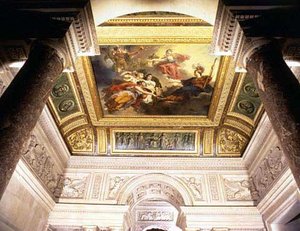
Charles Meynier
1768 - 1832 , Frankreich
Kurzinfos
- Artistic Movement Or Style: Neoklassizismus
- Artists Or Movements Influenced By This Artist: ['James Pradier']
- Artists Who Influenced This Artist:
- Pierre-Philippe Choffard
- François-André Vincent
- Date Of Birth: 24. November 1768
- Date Of Death: 6. September 1832
- Full Name: Charles Meynier
- Nationality: Französisch
- Notable Artworks:
- Frankreich triumphiert
- Milo von Kroton
- Place Of Birth: Paris, Frankreich
Ähnliche Artikel

Das Familienerbe an die Wand bringen: Wandgemälde als Generationenschatz
Verwandeln Sie Ihre Familiengeschichte in ein beeindruckendes Wandgemälde! Expertenrat & hochwertige Handwerkskunst für einzigartige Kunstwerke, die Generationen verbinden. Entdecken Sie jetzt!

The Enduring Legacy of Fresco Painting: Techniques, History & Contemporary Relevance
Explore the rich history & enduring artistry of fresco painting – from Giotto to Michelangelo! Discover techniques, conservation efforts, & modern applications. Learn how ArtsDot brings this timeless art form to your home.

The Enduring Legacy of Fresco: Technique, History & Artistic Expression Across Cultures
Explore the rich history & enduring legacy of fresco painting! Discover ancient techniques, Giotto's masterpieces, and modern applications. Expert insights for art lovers & professionals.

Kunst, die mit Ihnen lebt: Emotionale Kraft individueller Innenraumfresken
Entdecken Sie die emotionale Kraft individueller Innenraumfresken! Expertenberatung & hochwertige Wandmalerei für Hotels, Wohnräume & mehr. – Ihr Partner für einzigartige Kunst.
Die bleibende Pracht der Freskomalerei: Technik, Geschichte und künstlerischer Ausdruck
Entdecken Sie die faszinierende Welt der Freskomalerei! Von den Ursprüngen bis zur Renaissance – wir beleuchten Technik, Geschichte und künstlerischen Ausdruck dieser einzigartigen Kunstform. Expertenwissen für Sammler & Liebhaber.


