

 Vorschau anzeigen
 Versenden
 Teilen
 Details anzeigen

 Herunterladen
 Ähnliche Objekte
 Röntgenaufnahme
 Diashow
 Statistiken
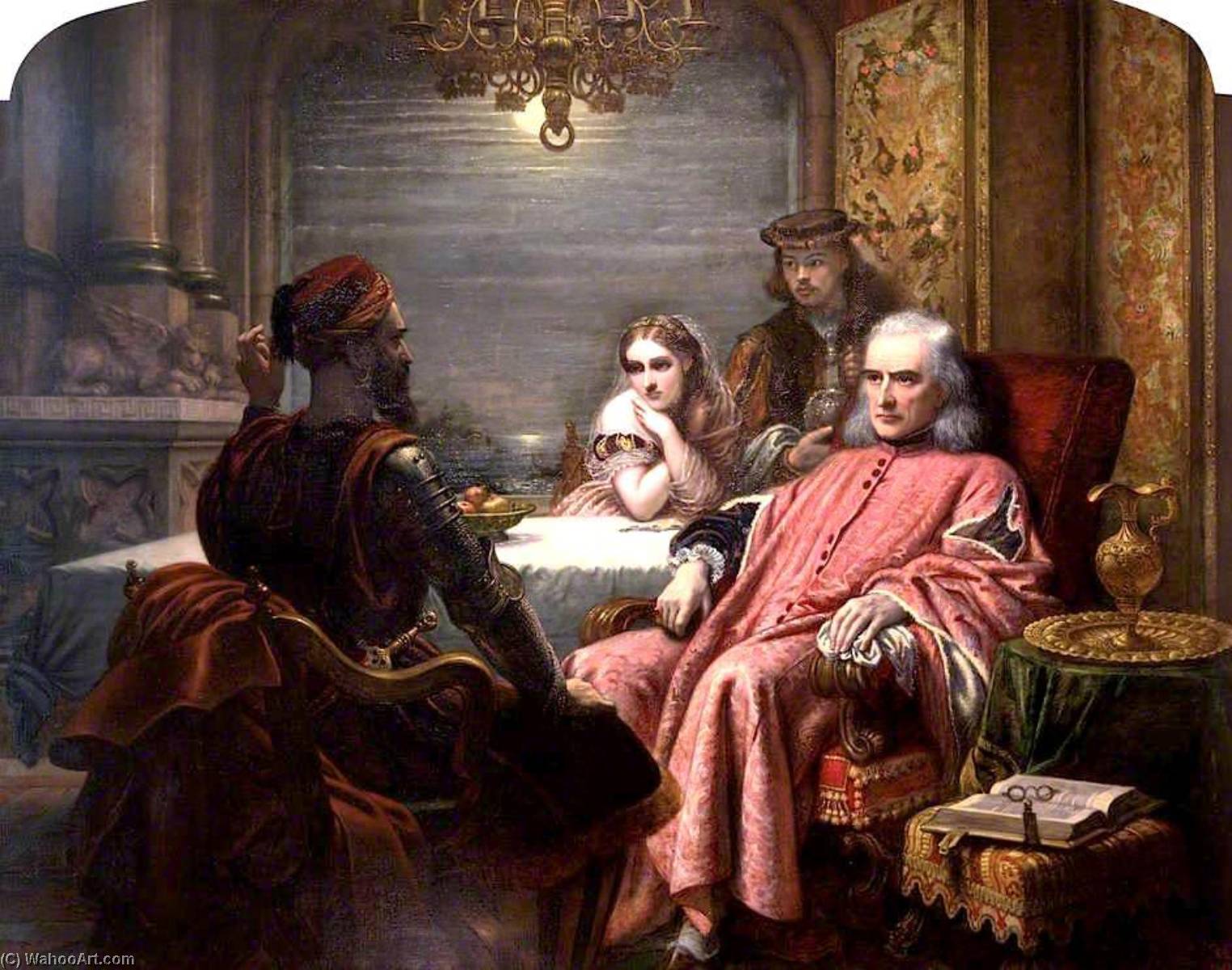
The Life's Story, 'Othello', Act I Scene 3
 Oil
Oil- WallArt
- Victorian Genre Painting
 1868
1868- 19th Century
 112.0 x 142.0 cm
 Parlamentarische Kunstsammlung
 Weiterlesen
Erwerben Sie ein hochauflösendes, optimiertes digitales Bild, das der Online-Vorschau weit überlegen ist.
Jede Datei wird von unseren hauseigenen Spezialisten mit modernsten Werkzeugen und fachmännischer manueller Retusche sorgfältig vorbereitet. Wir stellen sicher, dass jedes Bild eine außergewöhnliche Klarheit, präzise Farbgenauigkeit und feinste Details aufweist.
Die endgültige Datei wird innerhalb von 72 Stunden per E-Mail zugestellt und ist für den sofortigen Einsatz in professionellen, redaktionellen und Druckumgebungen optimiert. Es handelt sich um dieselbe Qualität, der führende Designstudios, Verlage und Galerien vertrauen.
Digitales Bild
Laden Sie eine hochauflösende Datei für die persönliche Präsentation, den Druck und kreative Projekte herunter. ( Zu Druck wechseln Handgemalte Reproduktion bestellen)
In jeder Bestellung digitaler Bilder enthalten
Professionelle digitale Bereitstellung, garantiert
Wenn Sie sich für ArtsDot.com entscheiden, erhalten Sie nicht nur ein Bild – Sie erhalten ein professionell aufbereitetes digitales Kunstwerk, das mit höchster Präzision erstellt und durch eine Zufriedenheitsgarantie abgesichert wird. Hier ist alles, was automatisch mit Ihrer Bestellung geliefert wird:

Schnelle E-Mail-Zustellung
Ihre hochauflösende digitale Bilddatei wird Ihnen innerhalb von 72 Stunden nach der Bestellung per E-Mail zugestellt – bereit zur sofortigen Verwendung.

KI-optimierte digitale Datei
Ihre Kunstwerke werden professionell mithilfe fortschrittlicher KI-Tools und manueller Bearbeitung optimiert, um maximale Detailtreue, Klarheit und Farbgenauigkeit zu gewährleisten.

Lebenslanger kostenloser Neudruckservice
Datei versehentlich gelöscht oder verloren? Keine Sorge – wir senden sie Ihnen jederzeit kostenlos erneut zu.

Keine Einfuhrgebühren – jemals
Genießen Sie Ihr Kunstwerk sofort ohne Zollgebühren, Einfuhrabgaben oder Versandkosten – digitale Downloads sind immer steuerfrei.

Garantierte Farbtreue
Wir garantieren, dass Ihr digitales Bild mithilfe professioneller Werkzeuge und Farbmanagement die Originalfarben so präzise wie möglich wiedergibt.

100-Tage-Zufriedenheitsgarantie
Wenn Sie mit Ihrem digitalen Bild nicht zufrieden sind, werden wir es überarbeiten oder 100% innerhalb von 100 Tagen erstatten – ohne Wenn und Aber.

100% Geld-zurück-Garantie
Nicht zufrieden? Erhalten Sie innerhalb von 100 Tagen nach Erhalt Ihrer digitalen Datei eine vollständige Rückerstattung – ohne Wenn und Aber.

Rabatte bei Großbestellungen
3 Bilder kaufen, 10% sparen – 5 Bilder kaufen, 15% sparen – Ab 10 Bildern 20% sparen. Ideal für kreative Projekte, Galerien und Agenturen.
A Gathering of Souls: The Narrative Depth of Charles West Cope
In the grand tradition of nineteenth-century history painting, Charles West Cope captures a moment of profound human connection in his 1868 masterpiece, The Life's Story, 'Othello', Act I Scene 3. This evocative work transcends a mere depiction of a banquet; it serves as a window into a world of shared intellect and social intimacy. As the eye wanders across the canvas, one is immediately drawn into the warmth of the gathering, where the soft glow of light dances upon wine glasses, ceramic bowls, and the weathered pages of an open book. The composition masterfully balances the stillness of contemplation with the lively energy of conversation, inviting the viewer to sit at the table and partake in the camaraderie that defines this historic assembly.
The technique employed by Cope reflects his rigorous training at the Royal Academy, showcasing a sophisticated command over light and texture. Through delicate brushwork, he renders the tactile reality of the scene—the translucency of liquid in a glass, the heavy weight of fabric, and the subtle shadows that pool in the corners of the banquet hall. This mastery of chiaroscuro does more than provide depth; it creates an atmosphere of psychological intimacy. The artist uses light not merely to illuminate the subjects, but to guide the viewer's emotional journey, highlighting faces caught in moments of realization or quiet reflection, thereby imbuing the scene with a sense of lived experience.
Beyond its aesthetic brilliance, the painting carries a weight of historical and literary significance. By drawing inspiration from Shakespearean themes, Cope taps into a universal language of drama and destiny. The presence of the book on the table acts as a powerful symbol of knowledge and the unfolding narrative of life itself—a silent witness to the dialogue occurring among the figures. For the discerning collector or interior designer, this piece offers more than just decoration; it provides a focal point of intellectual prestige. It is an artwork that commands attention in a sophisticated study or a grand dining room, offering a timeless sense of elegance and a profound invitation to reflect on the stories that shape our shared humanity.
Ähnliche Kunstwerke
Biografie des Künstlers
Early Life and Training
Charles West Cope, born July 28, 1811, in Leeds, Yorkshire, England, was profoundly shaped by the untimely demise of his father, Charles Cope—a watercolour landscape painter and influential art teacher—in a tragic coach accident in 1827. This event propelled young Cope into Sass’s Academy in Bloomsbury, London, where he honed his artistic skills alongside fellow aspiring artists. Subsequently, he enrolled at the Royal Academy in 1828, establishing a formal foundation for his lifelong pursuit of excellence in painting and etching. His mother, gifted in watercolour herself, instilled within him an appreciation for visual artistry from a young age. Cope’s formative years were marked by both loss and intellectual stimulation—a duality that would permeate his artistic vision throughout his career.Artistic Career
Charles West Cope’s artistic trajectory commenced with “The Golden Age,” exhibited at the Royal Academy in 1833, marking a decisive step toward establishing himself as a respected painter of genre and history scenes. This initial success fueled his ambition and propelled him to spend two formative years immersed in the Italian Renaissance, absorbing inspiration from masters like Titian and Rembrandt—experiences that irrevocably influenced his stylistic sensibilities. He returned to Florence where he spent the winter of 1834 and the spring of 1835. During this period, Cope undertook numerous commissions, culminating in “Paolo and Francesca” (1837) and “Osteria di Campagna” (1838), which garnered immediate acclaim upon their debut at the Royal Academy. These works showcased his ability to capture intimate moments of human emotion and narrative complexity—characteristics that would define much of his oeuvre.Notable Works and Collaborations
Cope’s artistic prowess extended beyond individual paintings; he actively participated in shaping the cultural landscape of Victorian Britain as a founding member of The Etching Club, alongside luminaries like William Holman Hunt and Samuel Palmer. This collaborative endeavor fostered experimentation with printmaking techniques and broadened Cope's artistic horizons. His monumental fresco project for the Houses of Lords—including “Prince Henry acknowledging the authority of Judge Gascoigne” (1844) and “Edward the Black Prince receiving the order of the Garter”—stands as a testament to his ambition and technical mastery, securing his place in British art history. Cope’s dedication to capturing grandeur and conveying historical significance cemented his reputation as one of the era's foremost artists.Painting Frescos for the Houses of Parliament
Perhaps Cope’s most enduring legacy resides in his contribution to the architectural splendor of Westminster—specifically, his frescoes adorning the House of Lords. These ambitious undertakings demanded unparalleled skill and vision, resulting in evocative depictions of pivotal moments in British history: “The Meeting of Joseph and Rachel,” “Speaker Leathall Asserting the Privileges of the House of Commons,” “The Defence of Basing House,” “The Burial of Charles I,” and “The Raising of the Royal Standard.” Cope’s meticulous attention to detail and masterful use of color elevated these artworks into symbols of national identity—a testament to his artistic genius.Key Dates
* July 28, 1811: Born in Leeds, Yorkshire, England * 1827: Father's death; Entry into Sass’s Academy * 1833: First exhibition at the Royal Academy * 1844: Commissioned to paint frescos for the House of Lords * 1866 - 1875: Professor of Painting ## Notable Museums Featuring Charles West Cope's Work His artistic legacy continues to inspire admiration and scholarly study, primarily housed in:- Parliamentary Art Collection (London, United Kingdom)
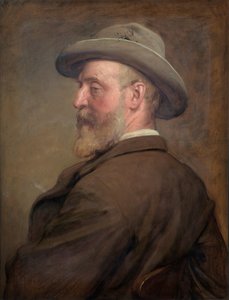
Charles West Cope
1811 - 1890 , Vereinigtes Königreich
Kurzinfos
- Artistic Movement Or Style: Victorian Genre Malerei
- Artists Who Influenced This Artist:
- William Holman Hunt
- Samuel Palmer
- Date Of Birth: 28 Juli 1811
- Date Of Death: 21 August 1890
- Full Name: Charles West Cope
- Nationality: Englisch
- Notable Artworks:
- Edward Der Schwarze Prinz
- Portrait Des Künstlers Tochter
- Florence Cope Gebetend Bei Abendmahl
- Place Of Birth: Leeds, Vereinigtes Königreich