

 Versenden
 Teilen
 Details anzeigen

 Herunterladen
 Ähnliche Objekte
 Diashow
Pandora


 Weiterlesen
Handgefertigte Ölreproduktion
Handgemaltes Ölgemälde auf Leinwand in Ihrer Wunschgröße und mit Rahmen, auf Bestellung von unseren Künstlern angefertigt. ( Druck bestellen Bild kaufen)




































Wählen Sie aus unseren vordefinierten Formaten, die den ursprünglichen Proportionen des Kunstwerks entsprechen.

Sie können Ihre eigenen Maße eingeben, um einen bestimmten Rahmen oder Platz auszufüllen. Wenn die gewählte Größe nicht den Proportionen des Originalbildes entspricht, werden wir das Kunstwerk entweder beschneiden oder das Gemälde durch zusätzliche, handgemalte Elemente erweitern. Ein digitales Mockup wird Ihnen zur Genehmigung zugesandt, bevor die Produktion beginnt.
Bitte beachten Sie, dass die Bildschirmvorschau nicht die tatsächliche Beschneidung oder Erweiterung widerspiegelt. Nur das Mockup zeigt die endgültige Komposition exakt an.
Obwohl Sondermaße verfügbar sind, empfehlen wir, eine Größe aus der vordefinierten Liste zu wählen, um die ursprünglichen Proportionen beizubehalten.
Nach der Bestellung wird das ArtsDot.com-Team dem Kunden Anweisungen per E-Mail zusenden und eine Mockup-Vorschau bereitstellen.
Weltweiter Versand () in nur 3 bis 4 Wochen statt der üblichen 5 Wochen. (7 September). Keine Kompromisse bei der Qualität.

Kostenloser weltweiter Expressversand

Hochwertige Leinenleinwand

Umfassender Versicherungsschutz beim Versand

Zollgebühren-Rückerstattungsgarantie

Garantie für exakte Farbtreue

100 Tage Rückgaberecht (nur bei Mängeln)

100% Geld-zurück-Garantie

Mengenrabatt verfügbar
 Die Glasoption ist nur für Größen unter 110 cm verfügbar.

Pandora
Art der Reproduktion
Format der Reproduktion
-


Gesamtpreis
$ 263
The Enigmatic Beauty of Pandora
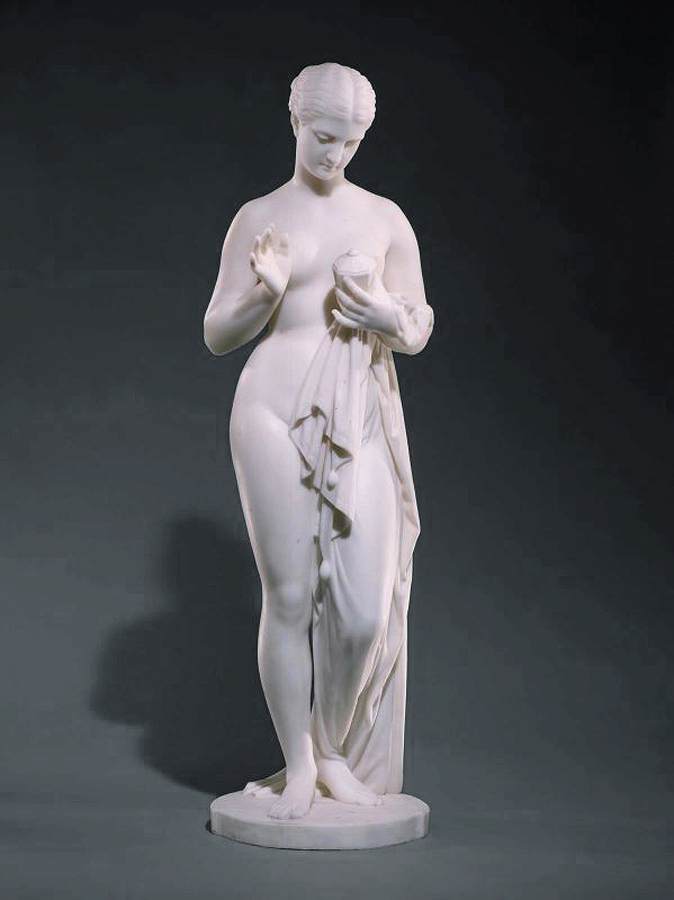
Chauncey Bradley Ives’s “Pandora,” sculpted in Rome around 1863, is more than just a marble figure; it's a poignant meditation on human nature and the inescapable presence of both beauty and sorrow. This captivating work, currently residing within the Chrysler Museum of Art in Boston, immediately draws the viewer into its serene yet subtly unsettling world. The sculpture depicts Pandora, the Greek goddess often associated with curiosity and the bearer of misfortune, not as a monstrous figure of chaos, but rather as a woman caught in a moment of quiet contemplation – her eyes closed, a gentle curve to her lips suggesting a held breath, and her hands poised as if offering or receiving something unseen. The pose itself is remarkably graceful, imbued with an almost ethereal quality that belies the weighty subject matter.
Ives’s style firmly anchors “Pandora” within the Neo-Classical tradition, echoing the refined aesthetics of ancient Greek sculpture while simultaneously imbuing it with a distinctly Romantic sensibility. The smooth, polished marble surface reflects light beautifully, creating an illusion of depth and volume that emphasizes the figure's form. Notice the meticulous attention to anatomical detail – the delicate curve of her neck, the subtle musculature beneath her draped garments – yet these are rendered with a sense of idealized beauty, characteristic of the era. Ives’s mastery lies in his ability to seamlessly blend realism with an almost dreamlike quality, resulting in a sculpture that is both strikingly lifelike and profoundly evocative.
A Mythological Tapestry
The story behind “Pandora” is inextricably linked to the ancient Greek myth it portrays. As recounted by Hesiod in his *Works and Days*, Pandora was created by Hephaestus, the god of blacksmiths, as a gift for Zeus – a beautiful woman designed to tempt humanity with her allure. However, Zeus, angered by Prometheus’s theft of fire, decided to punish humankind by gifting them Pandora, along with a jar (often mistakenly referred to as a “box”) filled with all the evils of the world: disease, famine, war, and sorrow. Pandora, in her innocence, opened the jar, unleashing these misfortunes upon humanity – though, crucially, she also retained Hope within its depths, offering a glimmer of solace amidst the darkness.
Ives’s sculpture captures this pivotal moment with remarkable sensitivity. The closed eyes suggest a profound awareness of the consequences of her actions, while the gesture of her hands hints at both the offering and the receiving – perhaps representing humanity's acceptance of its fate or, more optimistically, the enduring presence of Hope. The drapery, flowing gracefully around her form, adds to the sense of mystery and invites interpretation. Is she regretting her actions? Is she resigned to them? Or is she simply contemplating the nature of existence itself?
Symbolism and Emotional Resonance
Beyond the literal depiction of Pandora, the sculpture is rich in symbolic meaning. The marble itself – a material associated with purity, immortality, and divine beauty – elevates the figure to an almost sacred status. The pose, reminiscent of classical depictions of mourning goddesses, speaks to themes of loss, regret, and acceptance. Yet, Ives avoids portraying Pandora as a purely tragic figure; her expression is remarkably serene, suggesting a quiet dignity in the face of adversity.
Furthermore, the sculpture’s emotional impact stems from its ambiguity. It doesn't offer easy answers or simplistic moral judgments. Instead, it compels viewers to confront their own understanding of human nature, fate, and the enduring presence of both joy and sorrow within the human experience. The subtle tension between beauty and misfortune creates a powerful and lasting impression, inviting repeated contemplation and personal interpretation.
A Timeless Masterpiece
“Pandora” by Chauncey Bradley Ives stands as a testament to the artist’s skill and his profound engagement with classical mythology. Its enduring appeal lies not only in its technical brilliance but also in its ability to resonate deeply with viewers across generations. Reproductions of this exquisite sculpture offer a remarkable opportunity to bring this timeless masterpiece into any setting, adding an element of grace, mystery, and philosophical depth to the space. Whether displayed in a private collection or a public museum, “Pandora” continues to captivate and inspire, reminding us of the complexities of human existence and the enduring power of hope amidst adversity.
Ähnliche Kunstwerke
Über den Künstler
Early Life and Background
Chauncey Bradley Ives (1810 – 1894) emerged as a prominent sculptor during the American Neo-classical movement, leaving behind a legacy marked by serene sculptures and an unwavering dedication to capturing idealized forms. Unfortunately, biographical details surrounding his formative years remain scarce—a frustrating absence of documentation hinders our understanding of his origins and familial roots. However, it is known that Ives’s inclination towards artistic pursuits contrasted sharply with the practical demands of rural farm life, a decision profoundly shaped by his father's concern for his health due to tuberculosis. At the tender age of sixteen, he embarked on an apprenticeship under Rodolphus Northrop, a skilled woodcarver based in New Haven, Connecticut—a pivotal step that instilled foundational artistic principles and techniques. During this formative period, Ives may have benefited from instruction imparted by Hezekiah Augur, another accomplished sculptor hailing from New Haven who excelled in both wood carving and marble sculpting. This early exposure to diverse sculptural mediums undoubtedly broadened his artistic horizons.Artistic Career
Ives’s artistic trajectory unfolded across multiple genres—primarily landscape painting and portrait sculpture—establishing him as a versatile artist adept at conveying beauty and emotion through various mediums. While comprehensive records documenting his oeuvre remain elusive, Ives's creations nevertheless represent a significant contribution to the evolving American art scene of the 19th century. His stylistic approach—characterized by a harmonious blend of classical influences and individual flair—distinguished him from contemporaries while simultaneously honoring artistic traditions. Ives’s sculptures frequently depicted tranquil landscapes imbued with the grandeur of the American wilderness, demonstrating his mastery in capturing atmospheric perspective and conveying a sense of sublime serenity. Simultaneously, his portrait work showcased meticulous attention to detail and profound psychological insight, reflecting his ability to portray subjects with remarkable sensitivity and nuance.Notable Works
Among Ives’s most celebrated achievements stand sculptures commemorating influential figures—including Ithiel Town, the architect and engineer; Daniel Wadsworth, a wealthy art patron; and Thomas Sully, a renowned painter. His likeness of Sir Walter Scott, inspired by a plaster sculpture crafted by Francis Chantrey in Boston's Athenaeum, garnered considerable acclaim upon its completion in 1840—a testament to Ives’s artistic skill and his ability to capture the essence of literary inspiration. Furthermore, Ives undertook ambitious projects honoring Jonathan Trumbull, Connecticut’s governor during a crucial period of American history. His sculptures exemplify the Neo-classical movement's commitment to portraying historical figures with dignity and grandeur.Influence and Legacy
Ives’s artistic endeavors resonated deeply within the broader context of American art history—particularly in Florence, Italy, where he established himself as part of a vibrant expatriate community alongside Hiram Powers and Harriet Hosmer. During his time abroad, Ives honed his craft amidst the epicenter of Neo-classical artistic innovation, absorbing inspiration from masters such as Antonio Canova and Michelangelo Buonarroti. His studio became a pilgrimage site for American artists eager to immerse themselves in European artistic traditions—a reflection of the era’s fervent pursuit of classical ideals. Ives's entrepreneurial spirit propelled him to actively market and exhibit his sculptures throughout New York City, securing considerable success within a remarkably short timeframe—a feat indicative of his astute business acumen and unwavering determination. Ives’s enduring legacy persists through his artwork—particularly those housed in museums across the United States—affirming his contribution to American sculpture and ensuring that his artistic vision continues to inspire future generations.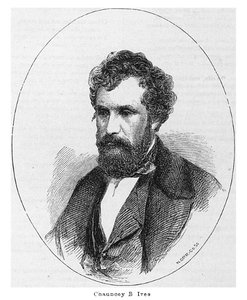
Chauncey Bradley Ives
1810 - 1894 , Vereinigte Staaten von Amerika
Kurzinfos
- Artistic Movement Or Style: Neoklassisch
- Date Of Birth: 1810
- Date Of Death: 1894
- Full Name: Chauncey Bradley Ives
- Nationality: Amerikaner
- Notable Artworks:
- Undine Rising from the Waters
- San Souci
- Place Of Birth: Hamden, Vereinigte Staaten
Ähnliche Artikel
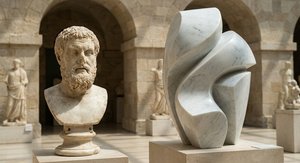
The Enduring Allure of Marble in Art History: From Classical Sculpture to Modern Abstraction
Explore the captivating history of marble sculpture from ancient Greece to modern art. Discover renowned artists like Canova & Michelangelo, carving techniques, and investment insights at ArtsDot.

Bronze-Meisterwerke: Die 10 Skulpturen, die Kunstgeschichte schrieben | ArtsDot
Entdecken Sie die 10 legendärsten Bronze Skulpturen der Kunstgeschichte! Von Michelangelo bis Rodin – erfahren Sie die Geschichten hinter den Meisterwerken und lassen Sie sich von Wanddeko-Ideen inspirieren. Hochwertige Kunstdrucke auf ArtsDot.com.

The Enduring Form: Exploring Themes & Techniques in Sculpture Across Historical Periods
Explore the rich history of sculpture from ancient masterpieces to contemporary innovations. Discover key techniques, influential artists & investment potential for discerning art collectors.
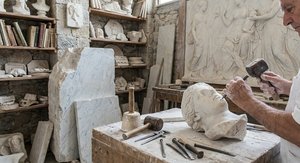
The Enduring Legacy of Marble: A Comprehensive Exploration of Technique, Symbolism & Artistic Expression
Explore the rich history of marble sculpture from antiquity to the Renaissance! Discover key techniques, influential artists & enduring themes in classical art. Expert insights for collectors and enthusiasts at ArtsDot.

The Enduring Form: Sculpture Across History, Technique & Emotional Resonance
Explore the rich history of sculpture with ArtsDot. Discover key techniques, influential artists & investment potential for discerning collectors. Expert insights into valuing and collecting timeless masterpieces.