

 Vorschau anzeigen
 Versenden
 Teilen
 Details anzeigen

 Herunterladen
 Ähnliche Objekte
 Röntgenaufnahme
 Diashow
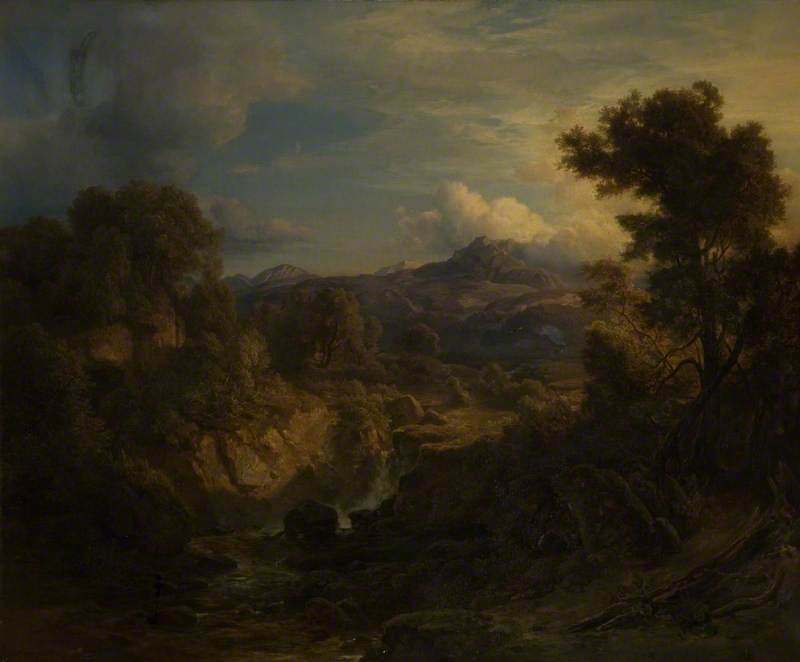
Landscape with Mountains and Waterfall
 1832
1832 114.0 x 154.0 cm
 County Hall
 Weiterlesen
Erwerben Sie ein hochauflösendes, optimiertes digitales Bild, das der Online-Vorschau weit überlegen ist.
Jede Datei wird von unseren hauseigenen Spezialisten mit modernsten Werkzeugen und fachmännischer manueller Retusche sorgfältig vorbereitet. Wir stellen sicher, dass jedes Bild eine außergewöhnliche Klarheit, präzise Farbgenauigkeit und feinste Details aufweist.
Die endgültige Datei wird innerhalb von 72 Stunden per E-Mail zugestellt und ist für den sofortigen Einsatz in professionellen, redaktionellen und Druckumgebungen optimiert. Es handelt sich um dieselbe Qualität, der führende Designstudios, Verlage und Galerien vertrauen.
Digitales Bild
Laden Sie eine hochauflösende Datei für die persönliche Präsentation, den Druck und kreative Projekte herunter. ( Druck bestellen Handgemalte Reproduktion bestellen)
In jeder Bestellung digitaler Bilder enthalten
Professionelle digitale Bereitstellung, garantiert
Wenn Sie sich für ArtsDot.com entscheiden, erhalten Sie nicht nur ein Bild – Sie erhalten ein professionell aufbereitetes digitales Kunstwerk, das mit höchster Präzision erstellt und durch eine Zufriedenheitsgarantie abgesichert wird. Hier ist alles, was automatisch mit Ihrer Bestellung geliefert wird:

Schnelle E-Mail-Zustellung
Ihre hochauflösende digitale Bilddatei wird Ihnen innerhalb von 72 Stunden nach der Bestellung per E-Mail zugestellt – bereit zur sofortigen Verwendung.

KI-optimierte digitale Datei
Ihre Kunstwerke werden professionell mithilfe fortschrittlicher KI-Tools und manueller Bearbeitung optimiert, um maximale Detailtreue, Klarheit und Farbgenauigkeit zu gewährleisten.

Lebenslanger kostenloser Neudruckservice
Datei versehentlich gelöscht oder verloren? Keine Sorge – wir senden sie Ihnen jederzeit kostenlos erneut zu.

Keine Einfuhrgebühren – jemals
Genießen Sie Ihr Kunstwerk sofort ohne Zollgebühren, Einfuhrabgaben oder Versandkosten – digitale Downloads sind immer steuerfrei.

Garantierte Farbtreue
Wir garantieren, dass Ihr digitales Bild mithilfe professioneller Werkzeuge und Farbmanagement die Originalfarben so präzise wie möglich wiedergibt.

60-Tage-Zufriedenheitsgarantie
Sollten Sie mit Ihrem digitalen Bild nicht zufrieden sein, werden wir es überarbeiten oder Ihnen innerhalb von 60 Tagen 100% erstatten – ohne Wenn und Aber.

100% Geld-zurück-Garantie
Nicht zufrieden? Erhalten Sie innerhalb von 60 Tagen nach Erhalt Ihrer digitalen Datei eine vollständige Rückerstattung – ohne Angabe von Gründen.

Rabatte bei Großbestellungen
3 Bilder kaufen, 10% sparen – 5 Bilder kaufen, 15% sparen – Ab 10 Bildern 20% sparen. Ideal für kreative Projekte, Galerien und Agenturen.
Ähnliche Kunstwerke








Biografie des Künstlers
A Pioneer of Realism: Exploring the Landscape of Christian Ernst Bernhard Morgenstern
Christian Ernst Bernhard Morgenstern, a name perhaps less familiar than some of his contemporaries, stands as a pivotal figure in the development of German landscape painting during the early 19th century. Born in Hamburg in 1805 and tragically passing away in Munich in 1867, Morgenstern’s work represents a crucial bridge between the romanticized visions of earlier generations and the burgeoning realism that would dominate the art world for decades to come. He wasn't merely a painter; he was an explorer of light, atmosphere, and the profound solitude of nature – qualities that resonate powerfully even today.
Morgenstern’s early life was shaped by circumstance and a relentless pursuit of artistic training. His father, Johann Heinrich Morgenstern, was a miniature portraitist, providing a foundation in meticulous observation and detail. However, his father's untimely death thrust young Christian into the care of Cornelius Suhr, a prominent panorama printer, where he spent formative years immersed in the techniques of graphic reproduction. This early exposure to visual representation, particularly the vast scale of panoramas, undoubtedly influenced his later approach to landscape – a tendency towards expansive vistas and an interest in capturing the grandeur of the natural world. His travels with Suhr through Germany, Russia, Sweden, and Norway were not simply vacations; they were intensive studies in topography, light, and color, laying the groundwork for his distinctive style.
Crucially, Morgenstern’s artistic journey was guided by a network of influential mentors. He studied under Siegfried Bendixen in Hamburg, absorbing the principles of academic painting, before moving to Copenhagen to refine his skills at the Royal Danish Academy. It was in Munich, however, that he truly found his voice and established himself as a leading figure in the realist movement. Here, he collaborated with artists like Friedrich Wasmann, Johan Christian Dahl, and Adolph Menzel – all pioneers pushing against the conventions of the time. This association wasn’t merely collaborative; it fostered a dynamic exchange of ideas and techniques, contributing significantly to the development of Munich's burgeoning artistic scene.
The Language of Light and Atmosphere
Morgenstern’s paintings are characterized by an extraordinary sensitivity to light and atmosphere. He eschewed the dramatic, idealized landscapes favored by earlier Romantic painters, opting instead for a more subtle and nuanced approach. His scenes often depict remote mountain ranges, alpine meadows, and serene lakes – locations that he visited repeatedly throughout his life, meticulously documenting their ever-changing moods. He wasn’t interested in rendering a single, definitive image of a place; rather, he sought to capture the *feeling* of a location—the way light filtered through clouds, the subtle shifts in color with the passing hours, and the sense of isolation and tranquility that these landscapes evoked.
His technique was remarkably precise. Morgenstern employed a meticulous layering of thin washes of paint, building up textures and gradations of tone to create an illusion of depth and atmosphere. He paid close attention to detail, capturing the subtle variations in foliage, rock formations, and water surfaces. Yet, this precision never felt rigid or contrived; it served to enhance his overall vision rather than dominate it. He was deeply influenced by the Dutch Masters, particularly Jacob van Ruisdael, whose use of light and atmospheric perspective he admired immensely.
A Traveler’s Eye: Influences and Travels
Morgenstern's artistic development was inextricably linked to his extensive travels throughout Europe. He wasn’t simply a painter who happened to visit these locations; he actively sought them out, immersing himself in their landscapes and cultures. His journeys to Bavaria, the Alps, Alsace, Venice, Trieste, and Heligoland provided him with an unparalleled wealth of visual material and informed his understanding of light, color, and composition. These excursions weren’t just for artistic inspiration; they were also a means of escape from the constraints of urban life and a way to connect with the natural world.
His patron, Carl Friedrich von Rumohr, played a significant role in facilitating these travels, providing Morgenstern with lodging and access to privileged locations. Rumohr’s estate in Holstein became a seasonal retreat for the artist, offering him a space to work undisturbed and to engage with the beauty of the Danish countryside. This patronage allowed Morgenstern to pursue his artistic ambitions without the pressures of commercial demands, fostering a period of intense creativity and experimentation.
Legacy and Historical Significance
Despite not achieving widespread fame during his lifetime, Christian Ernst Bernhard Morgenstern’s influence on German landscape painting is undeniable. He was one of the first German artists to embrace open-air painting – *plein air*—a technique that would become increasingly popular in the decades following his death. His emphasis on observation, atmospheric perspective, and a nuanced understanding of light paved the way for later generations of realist painters, including Friedrich and Anselm Kiefer.
His work is now recognized as a key example of early German realism, offering a valuable insight into the artistic sensibilities of 19th-century Europe. The collection of his paintings held by institutions like the Fitzwilliam Museum in Cambridge and the Thyssen-Bornemisza Museum in Madrid provides a compelling testament to his skill, vision, and enduring legacy as a pioneer of landscape painting.
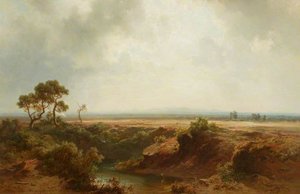
christian ernst bernhard morgenstern
1805 - 1867
Kurzinfos
- Artistic Movement Or Style: Early Realism
- Artists Or Movements Influenced By This Artist:
- Adolph Friedrich Vollmer
- Johann Christian Dahl
- Artists Who Influenced This Artist:
- Siegfried Bendixen
- Carl Friedrich von Rumohr
- Date Of Birth: September 29, 1805
- Date Of Death: February 27, 1867
- Full Name: Christian Ernst Bernhard Morgenstern
- Nationality: German
- Notable Artworks:
- Landscape with Mountains
- Alpine Landscape
- Bavarian Highlands
- Place Of Birth: Hamburg, Germany

