

 Vorschau anzeigen
 Versenden
 Teilen
 Details anzeigen

 Herunterladen
 Ähnliche Objekte
 Röntgenaufnahme
 Diashow
 Statistiken
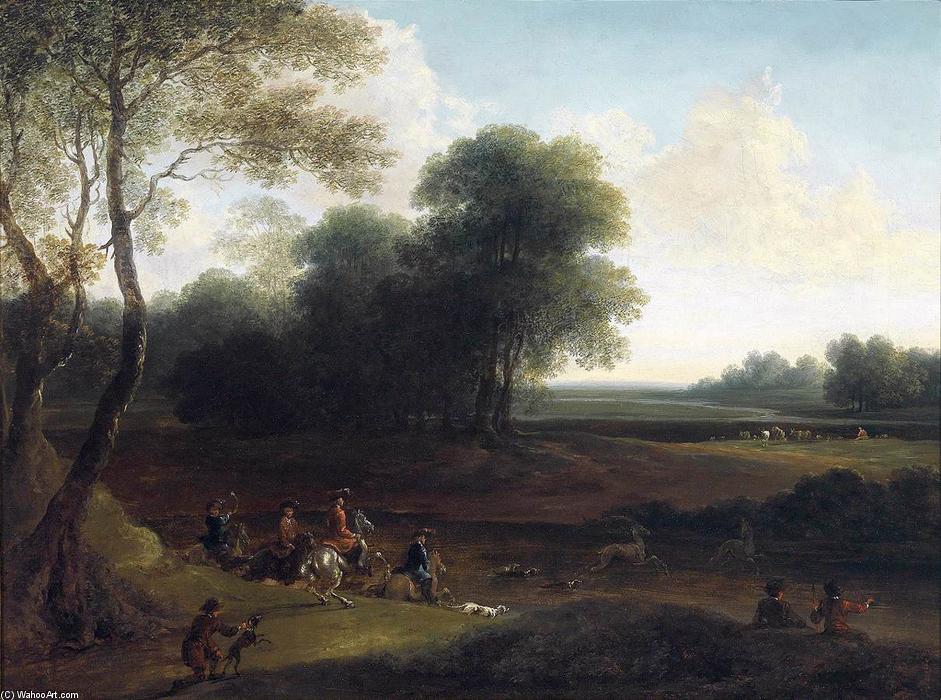
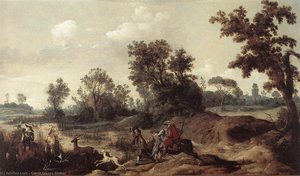
Par force Hunting
 34.0 x 45.0 cm
 Weiterlesen
Giclée / Kunstdruck
Giclée- oder Leinwanddruck in Museumsqualität mit schneller Produktion und flexiblen Veredelungsoptionen. ( Handgemalte Reproduktion bestellen Zum digitalen Bild wechseln)




































Wählen Sie aus unseren vordefinierten Formaten, die den ursprünglichen Proportionen des Kunstwerks entsprechen.

Sie können Ihre eigenen Maße eingeben, um ein bestimmtes Format oder einen speziellen Platz einzupassen. Wenn das von Ihnen gewählte Format nicht den Proportionen des Originalbildes entspricht, werden wir das Kunstwerk entweder beschneiden oder das Bild mit einem gespiegelten oder einfarbigen Rand erweitern. Ein digitaler Entwurf wird Ihnen zur Genehmigung zugesandt, bevor die Produktion beginnt.
Bitte beachten Sie, dass die Vorschau auf dem Bildschirm nicht den tatsächlichen Zuschnitt oder die Erweiterung widerspiegelt. Nur der Entwurf zeigt die endgültige Komposition präzise an.
Obwohl Sondermaße verfügbar sind, empfehlen wir die Auswahl eines Maßes aus der vordefinierten Liste, um die ursprünglichen Proportionen zu bewahren.
Weltweiter Versand () innerhalb von 2 Wochen statt der üblichen 4/5 Wochen. (10 September)

Kostenloser weltweiter Expressversand

Hochwertige Leinenleinwand

Umfassender Versicherungsschutz beim Versand

Zollgebühren-Rückerstattungsgarantie

Garantie für exakte Farbtreue

100-Tage-Rückgaberecht (nur bei Mängeln)

100% Geld-zurück-Garantie

Mengenrabatt verfügbar
 Die Glasoption ist nur für Größen unter 110 cm verfügbar.

Par force Hunting
Giclée / Kunstdruck
Format der Reproduktion
-


Gesamtpreis
$ 62
Ähnliche Kunstwerke
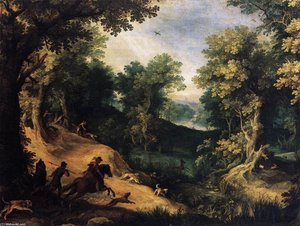
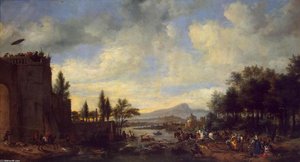
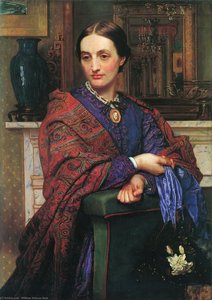
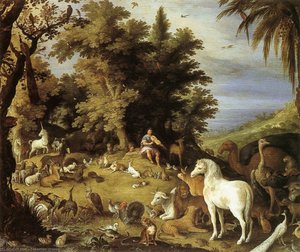
Über den Künstler
Christian Hilfgott Brand (1694–1756): Bridging Baroque and Romantic Landscape
Christian Hilfgott Brand stands as a pivotal figure in the transition from the opulent Baroque to the burgeoning Romantic landscape movement of the 18th century. Born in Frankfurt am Oder in 1694, he descended from a family steeped in artistic tradition—his father, also Christian Hilfgott Brand, was a respected painter who instilled in him an early appreciation for visual art.Early Life and Training
Brand’s formative years were spent in Hamburg, where his father established his business. He pursued his education diligently, immersing himself in the study of mathematics and natural sciences alongside artistic pursuits. Recognizing the importance of formal training, he moved to Regensburg to reside with his mother's relatives, seeking mentorship from Christoph Ludwig Agricola, a fellow artist who championed the Dutch landscape style—a stylistic departure from the prevailing Baroque conventions. Agricola’s focus on atmospheric landscapes profoundly impacted Brand’s artistic sensibilities. Like Agricola, Brand drew inspiration from Claude Lorrain and Nicolas Poussin – masters who prioritized idealized beauty and dramatic lighting—elements that would characterize his distinctive oeuvre.Influence of Agricola & Lorrain/Poussin
The Agricola's dedication to Dutch landscape painting served as a crucial catalyst for stylistic change—ushering in an era of Romantic landscape painting. Brand skillfully blended Baroque tradition with emerging sensibilities, establishing himself as a cornerstone of European art history and securing his place among the most influential artists of his time. Lorrain’s and Poussin's masterful use of light and shadow profoundly influenced Brand’s artistic vision, shaping his approach to composition and color palettes.Vienna Academy & Artistic Recognition
From 1726 to 1728, Brand enrolled at the Vienna Academy of Fine Arts, honing his skills under renowned instructors. His unwavering commitment to artistic excellence earned him honorary membership in 1751 and recognition as an academic advisor, cementing his position within Viennese artistic circles. The academy’s prestige further validated Brand's reputation as a leading landscape painter—a testament to his dedication and talent.Notable Commissions & Artistic Style
Brand’s prolific output included monumental commissions for the imperial court and foreign dignitaries—a testament to his reputation as a skilled landscape painter. His style distinguished itself through meticulous detail and masterful use of chiaroscuro (light and shadow), mirroring the techniques favored by Lorrain and Poussin, yet subtly incorporating elements that foreshadowed Romanticism’s emphasis on emotion and sublime grandeur. He brought in his friend August Querfurt , who painted horses and people. The work, however, drained him. After six months he suffered a stroke that paralyzed him on one side. Brand switched to painting with his left hand, and produced a “Magnificat” (a scene from the life of the Virgin Mary). It was indistinguishable from his previous works.Historical Significance
Christian Hilfgott Brand’s artistic innovations served as a crucial catalyst for stylistic change—ushering in an era of Romantic landscape painting. He skillfully blended Baroque tradition with emerging sensibilities, establishing himself as a cornerstone of European art history and securing his place among the most influential artists of his time. His paintings are housed in prestigious institutions across Europe including Laxenburg Castle, Österreichische galerie in Belvedere palace, vienna art history museum, museum at the schottenstift and harrach galleries. He was named one of the first honorary members of the Vienna Academy in 1751. Three years later, he was appointed an advisor. Two of his sons became artists: Friedrich August Brand, from his second marriage, and Johann Christian Brand, from his first marriage.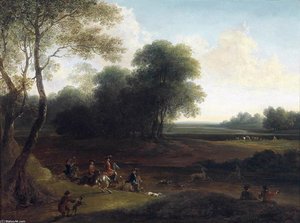
Christian Hilfgott Brand
1723 - 1795 , Deutschland
Kurzinfos
- Artistic Movement Or Style: Landscape painting
- Artists Or Movements Influenced By This Artist: ['Johann Christian Brand']
- Artists Who Influenced This Artist:
- Claude Lorrain
- Nicolas Poussin
- Christoph Ludwig Agricola
- Date Of Birth: March 6, 1722
- Date Of Death: June 12, 1795
- Full Name: Christian Hilfgott Brand
- Nationality: Austrian
- Notable Artworks:
- Magnificat
- Par force Hunting
- Place Of Birth: Vienna, Austria