 Vorschau anzeigen
 Versenden
 Teilen
 Details anzeigen

 Herunterladen
 Ähnliche Objekte
 Röntgenaufnahme
 Diashow
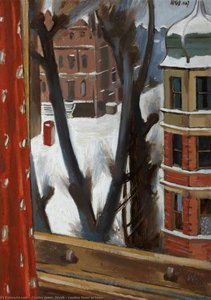
Winter Time
 Acrylic On Canvas
- WallArt
- Futurist & Cubist
 59.0 x 50.0 cm
 Royal Academy of Music
 Weiterlesen
Handgefertigte Ölreproduktion
Handgemaltes Ölgemälde auf Leinwand in Ihrer Wunschgröße und mit Rahmen, auf Bestellung von unseren Künstlern angefertigt. ( Druck bestellen Bild kaufen)




P118B $10

P118H $10

P118W $10

P438Z $10

P508JH $12

P508YH $12

P805H $10

P805Z $10

P919BZ $10

P919G $10

P919XJ $10

P959ZH $10

P968JZ $12

W106C $8

W218G $10

W218JH $8

W218Y $10

W307PJ $10

W316G $10

W316PJ $8

W316Y $10

W398PJ $8

W4111J $10

W500HY $15

W500JH $15

W692G $12

W849H $8

W940BG $15

W953PJ $8




Wählen Sie aus unseren vordefinierten Formaten, die den ursprünglichen Proportionen des Kunstwerks entsprechen.

Sie können Ihre eigenen Maße eingeben, um einen bestimmten Rahmen oder Platz auszufüllen. Wenn die gewählte Größe nicht den Proportionen des Originalbildes entspricht, werden wir das Kunstwerk entweder beschneiden oder das Gemälde durch zusätzliche, handgemalte Elemente erweitern. Ein digitales Mockup wird Ihnen zur Genehmigung zugesandt, bevor die Produktion beginnt.
Bitte beachten Sie, dass die Bildschirmvorschau nicht die tatsächliche Beschneidung oder Erweiterung widerspiegelt. Nur das Mockup zeigt die endgültige Komposition exakt an.
Obwohl Sondermaße verfügbar sind, empfehlen wir, eine Größe aus der vordefinierten Liste zu wählen, um die ursprünglichen Proportionen beizubehalten.
Nach der Bestellung wird das ArtsDot.com-Team dem Kunden Anweisungen per E-Mail zusenden und eine Mockup-Vorschau bereitstellen.
Weltweiter Versand () in nur 3 bis 4 Wochen statt der üblichen 5 Wochen. (1 September). Keine Kompromisse bei der Qualität.

Kostenloser weltweiter Expressversand

Hochwertige Leinenleinwand

Umfassender Versicherungsschutz beim Versand

Zollgebühren-Rückerstattungsgarantie

Garantie für exakte Farbtreue

60 Tage Rückgaberecht (nur bei Mängeln)

100% Geld-zurück-Garantie

Mengenrabatt verfügbar
 Die Glasoption ist nur für Größen unter 110 cm verfügbar.

Winter Time
Art der Reproduktion
Format der Reproduktion
-


Gesamtpreis
$ 263
A Frozen Reverie: Christopher Richard Wynne Nevinson’s “Winter Time”
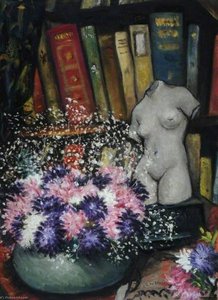
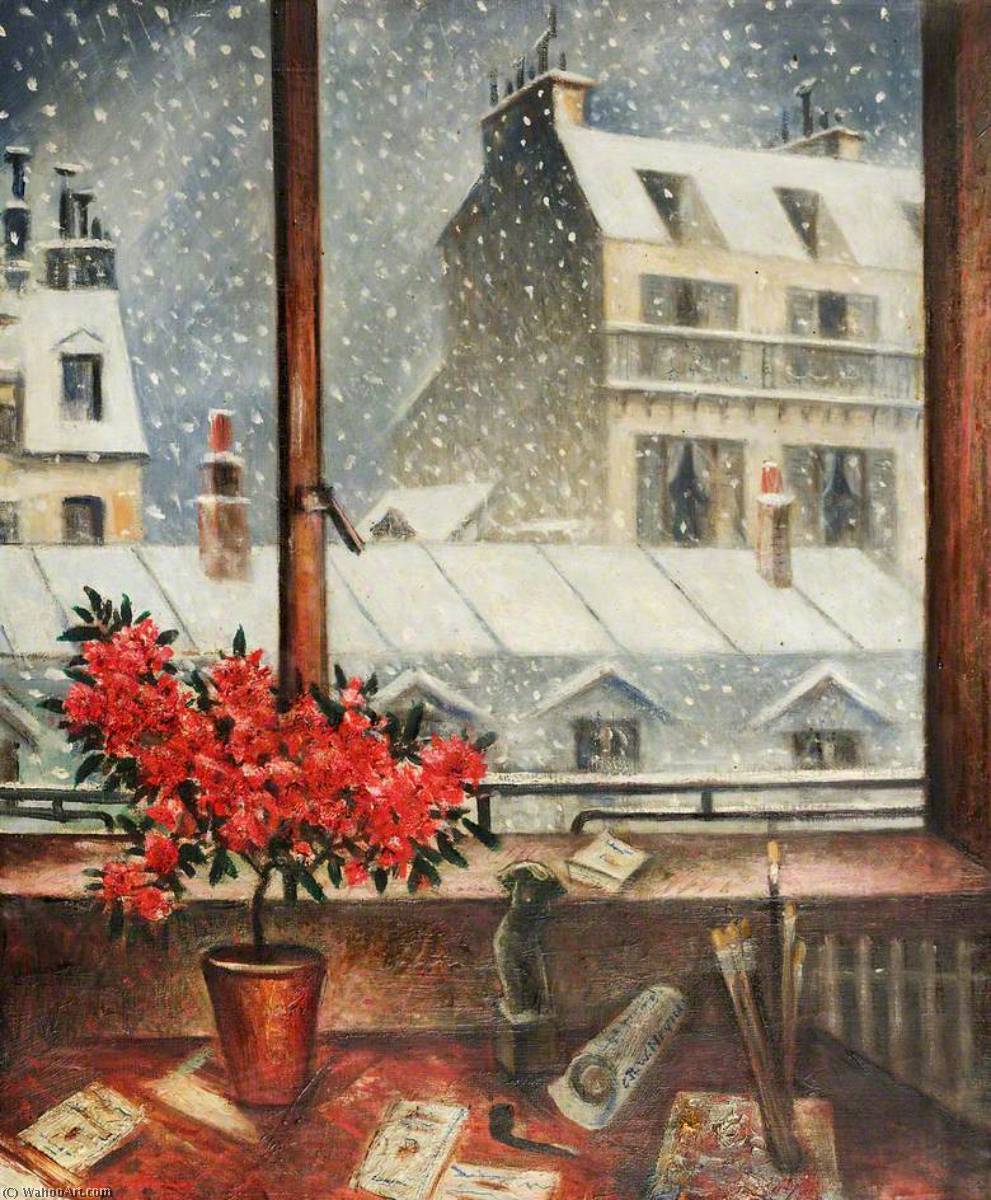
Christopher Richard Wynne Nevinson's "Winter Time," painted circa 1915-1916, isn’t merely a depiction of snow; it’s a carefully constructed meditation on the anxieties and transformations simmering beneath the surface of early 20th-century Europe. This evocative oil painting, currently housed at the Royal Academy of Music in London, captures a European town shrouded in a thick blanket of winter, yet within that stillness lies a palpable sense of unease—a feeling amplified by Nevinson’s masterful deployment of Futurist and Cubist techniques.
The scene unfolds from a window, offering a carefully framed view of a cityscape dominated by the muted tones of grey stone buildings and slate roofs. The snow itself isn't rendered as a pristine white; instead, it’s layered with shades of blue, violet, and even hints of ochre, suggesting a world both beautiful and subtly unsettling. The artist deliberately avoids romanticizing winter – there are no cheerful figures or festive decorations to be found. Instead, the focus is on the architecture itself, rendered in sharp, angular forms that echo the geometric principles of Cubism. These fractured shapes create a sense of dynamism and instability, mirroring the turbulent times.
The Seeds of Modernity: Nevinson’s Artistic Influences
Nevinson's artistic journey was deeply intertwined with the radical currents sweeping through Europe at the time. His early exposure to Augustus John’s expressive brushwork ignited a passion for capturing raw emotion, while his time in Paris introduced him to the revolutionary ideas of Futurism and Cubism. He became particularly close to Filippo Marinetti, embracing the movement's fascination with speed, technology, and the dynamism of modern life. This influence is strikingly evident in "Winter Time," where the rigid geometry of the buildings contrasts sharply with the fluid, almost chaotic, application of paint.
However, Nevinson’s relationship with the Futurists was ultimately fraught with tension. His tendency towards self-promotion and his association with the controversial Wyndham Lewis led to a falling out, resulting in his exclusion from the core group. Despite this estrangement, he remained a key figure in British avant-garde art, pushing boundaries and challenging conventional artistic norms.
Symbolism Within the Snowfall
Beyond its formal elements, "Winter Time" is rich with symbolic meaning. The snow itself can be interpreted as a metaphor for oblivion—a blank slate upon which the past is erased and the future remains uncertain. The darkened windows suggest introspection and isolation, reflecting the anxieties of a continent bracing itself for war. Even the red flowers in the foreground – a deliberate splash of color against the muted palette – carry symbolic weight, perhaps representing fleeting beauty amidst a landscape of decay or a reminder of life’s vitality persisting through hardship.
The inclusion of books scattered throughout the scene adds another layer of interpretation. They could represent knowledge, memory, and the enduring power of human thought—a quiet resistance against the encroaching darkness. The overall composition feels like a contained world, a snapshot of a moment suspended in time, inviting contemplation on themes of loss, resilience, and the passage of history.
A Legacy of Intensity
“Winter Time” is not simply a pretty winter scene; it’s a powerfully emotive work that captures the spirit of a pivotal era. Nevinson's bold use of color, fractured forms, and unsettling atmosphere created a lasting impact on British art, influencing generations of artists to come. Despite his later controversies and struggles with self-image, his contribution to the development of modernism remains undeniable. Today, "Winter Time" stands as a testament to Nevinson’s artistic vision—a frozen reverie that continues to resonate with viewers seeking beauty, complexity, and a glimpse into the heart of a turbulent time.
Ähnliche Kunstwerke
Über den Künstler
Frühes Leben und Ausbildung
- Geboren: Hampstead, Vereinigtes Königreich (1889)
- Gestorben: 1946
- Eltern: Henry Nevinson (Kriegskorrespondent/Journalist), Margaret Nevinson (Frauenrechtsaktivistin/Schriftstellerin)
- Ausbildung: Shrewsbury School, Uppingham School, Slade School of Art
- Studierte unter Henry Tonks an der Slade School of Art zusammen mit Stanley Spencer und Mark Gertler.
- Kurzzeitig besuchte die Académie Julian in Paris (1912-1913).
Künstlerische Einflüsse und frühe Karriere
- Frühe Einflüsse umfassten Augustus John.
- Pflegte eine Freundschaft zu Marinetti, dem Anführer der italienischen Futuristen, und Wyndham Lewis.
- War kurzzeitig in das Rebel Art Centre involviert und wurde anschließend aus Wyndhams Lewis' Vorticist-Bewegung ausgeschlossen.
- Mitbegründete die London Group im Jahr 1914.
- Veröffentlichte zusammen mit Marinetti ein Manifest für den englischen Futurismus.
- Frühe Werke zeigten Einflüsse des Neo-Primitivismus, mit Freundschaften zu Mark Gertler und Dora Carrington.
Erster Weltkrieg und offizieller Kriegskünstler
- Tretete beim Ausbruch des Ersten Weltkriegs der Friends' Ambulance Unit bei.
- Diente kurzzeitig als Ambulanzfahrer, bevor eine Krankheit ihn nach Großbritannien zurückbrachte.
- Meldet sich freiwillig beim Royal Army Medical Corps.
- Schuf kraftvolle Gemälde, die die Realitäten des Krieges darstellen und futuristische und kubistische Ästhetiken nutzen.
- Bemerkenswertes Werk: La Mitrailleuse (als bedeutende Darstellung des Ersten Weltkriegs angesehen).
- Wurde 1917 zum offiziellen Kriegskünstler ernannt.
- Spätere Kriegsbilder wandelten sich hin zu einem realistischeren Stil.
Reisen nach dem Krieg und künstlerische Entwicklung
- Reiste 1920 in die Vereinigten Staaten und schuf Werke, die von New York City inspiriert waren.
- Erlebte Phasen der Depression und hatte eine schwierige Persönlichkeit, was zu angespannten Beziehungen zu Zeitgenossen führte.
- Verfasste das Memoiren *Paint and Prejudice* (1937), das für Ungenauigkeiten und Widersprüche bekannt ist.
- Seine Nachkriegskarriere war weniger bedeutend als seine früheren Arbeiten.
Vermächtnis und historische Bedeutung
- Wird als bedeutender britischer Kriegskünstler anerkannt, insbesondere für seine frühen Darstellungen des Ersten Weltkriegs.
- Sein Einsatz futuristischer und kubistischer Techniken zur Darstellung der Schrecken des modernen Krieges war innovativ.
- Trag zur Entwicklung der Avantgarde-Kunst in Großbritannien bei.
- Seine Arbeit bleibt relevant für ihre kraftvolle Darstellung von Konflikten und ihre Erforschung der Moderne.
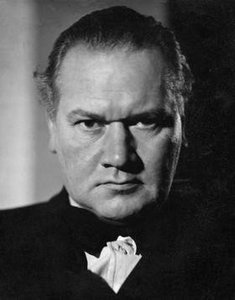
Christopher Richard Wynne Nevinson
1889 - 1946 , Vereinigtes Königreich
Kurzinfos
- Bemerkenswerte Werke:
- Le vieux port
- The Unending Cult...
- Loading Timber at...
- Notre Dame de Paris...
- Summer in the Downs
- The Arrival
- Oxford, on the Cherwell
- Geburtsdatum: 1889-08-13
- Geburtsort: Hampstead, Vereinigtes Königreich
- Künstlerische Bewegung:
- Futurismus
- Kubismus
- Expressionismus
- Künstlerische Einflüsse:
- Augustus John
- Marinetti
- Wyndham Lewis
- Nationalität: Britisch
- Todatum: 1946-10-07
- Vollständiger Name: Christopher Richard Wynne Nevinson
Ähnliche Artikel
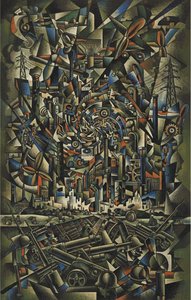
C.R.W. Nevinson: A Vorticist Vision of War & Modernity
Explore the powerful art of C.R.W. Nevinson, a key British Vorticist painter. Discover his impactful depictions of WWI and evolution beyond Futurism. Expert analysis & high-quality reproductions at ArtsDot.
William Trost Richards: Luminismus, Spiritualität und die amerikanische Landschaftstradition
Entdecken Sie das Werk von William Trost Richards und die faszinierende Welt des Luminismus! Erfahren Sie mehr über seine einzigartige Aquarelltechnik, spirituelle Tiefe & Einfluss auf die amerikanische Landschaftsmalerei. Jetzt lesen!
Urban Visions: A Historical & Artistic Exploration of the Cityscape in Painting
Explore the evolution of cityscape painting from historical maps to Impressionist masterpieces. Discover artists like Caillebotte, Utrillo & Matsumoto Shunsuke. Find museum-quality reproductions at ArtsDot.
Urban Visions: A Historical & Artistic Exploration of the Cityscape in Painting
Explore the evolution of cityscape painting from historical maps to Impressionist masterpieces. Discover artists like Caillebotte & Utrillo. Find museum-quality reproductions at ArtsDot.
Richard Hayley Lever: A Study in British Impressionism & Coastal Light
Explore the captivating world of Richard Hayley Lever (1876-1958), a master of Impressionism renowned for his vibrant coastal scenes. Discover his life, style & legacy with ArtsDot.