

 Vorschau anzeigen
 Versenden
 Teilen
 Details anzeigen

 Herunterladen
 Ähnliche Objekte
 Röntgenaufnahme
 Diashow
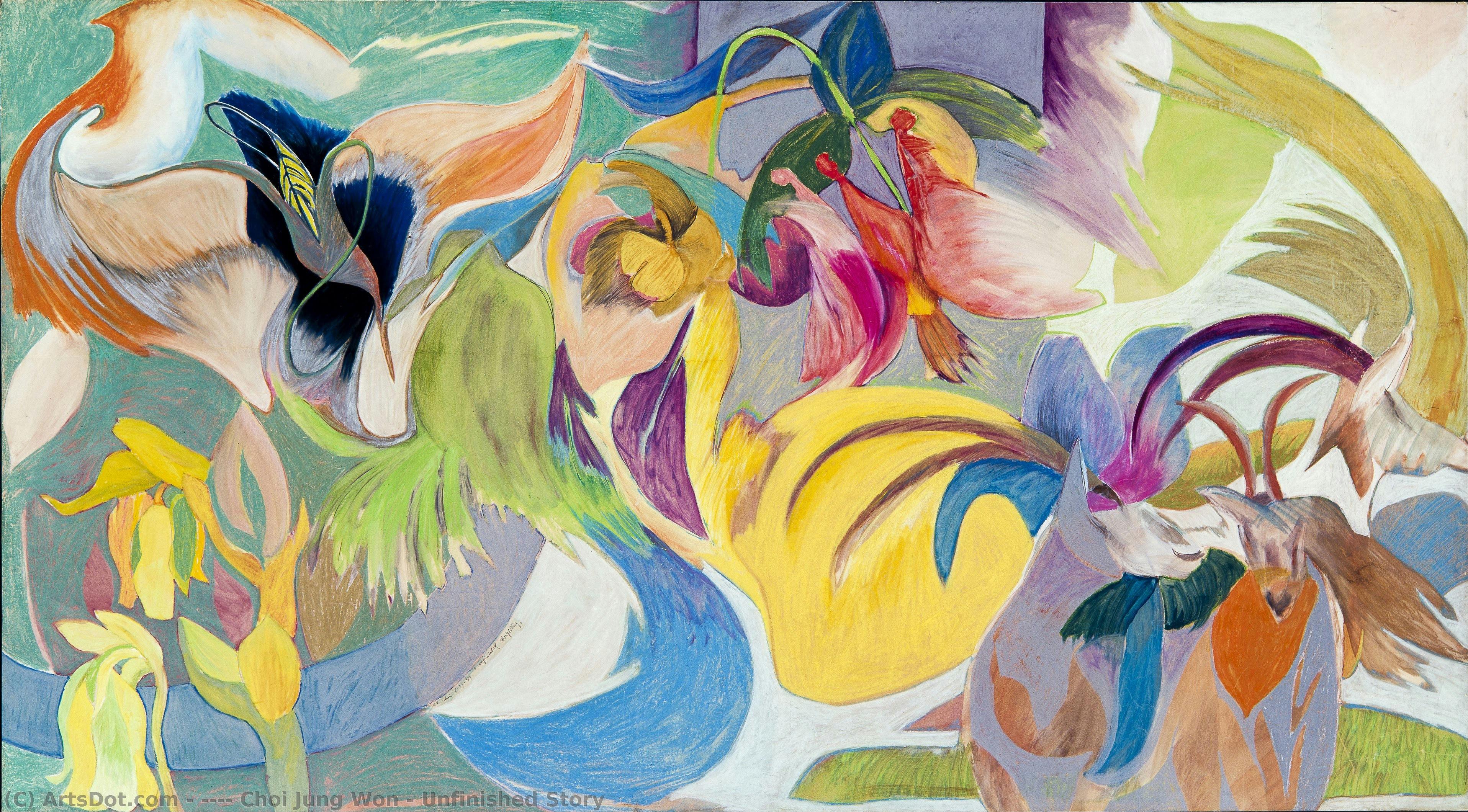
Unfinished Story
 266.0 x 147.0 cm
 Weiterlesen
Erwerben Sie ein hochauflösendes, optimiertes digitales Bild, das der Online-Vorschau weit überlegen ist.
Jede Datei wird von unseren hauseigenen Spezialisten mit modernsten Werkzeugen und fachmännischer manueller Retusche sorgfältig vorbereitet. Wir stellen sicher, dass jedes Bild eine außergewöhnliche Klarheit, präzise Farbgenauigkeit und feinste Details aufweist.
Die endgültige Datei wird innerhalb von 72 Stunden per E-Mail zugestellt und ist für den sofortigen Einsatz in professionellen, redaktionellen und Druckumgebungen optimiert. Es handelt sich um dieselbe Qualität, der führende Designstudios, Verlage und Galerien vertrauen.
Digitales Bild
Laden Sie eine hochauflösende Datei für die persönliche Präsentation, den Druck und kreative Projekte herunter. ( Druck bestellen Handgemalte Reproduktion bestellen)
In jeder Bestellung digitaler Bilder enthalten
Professionelle digitale Bereitstellung, garantiert
Wenn Sie sich für ArtsDot.com entscheiden, erhalten Sie nicht nur ein Bild – Sie erhalten ein professionell aufbereitetes digitales Kunstwerk, das mit höchster Präzision erstellt und durch eine Zufriedenheitsgarantie abgesichert wird. Hier ist alles, was automatisch mit Ihrer Bestellung geliefert wird:

Schnelle E-Mail-Zustellung
Ihre hochauflösende digitale Bilddatei wird Ihnen innerhalb von 72 Stunden nach der Bestellung per E-Mail zugestellt – bereit zur sofortigen Verwendung.

KI-optimierte digitale Datei
Ihre Kunstwerke werden professionell mithilfe fortschrittlicher KI-Tools und manueller Bearbeitung optimiert, um maximale Detailtreue, Klarheit und Farbgenauigkeit zu gewährleisten.

Lebenslanger kostenloser Neudruckservice
Datei versehentlich gelöscht oder verloren? Keine Sorge – wir senden sie Ihnen jederzeit kostenlos erneut zu.

Keine Einfuhrgebühren – jemals
Genießen Sie Ihr Kunstwerk sofort ohne Zollgebühren, Einfuhrabgaben oder Versandkosten – digitale Downloads sind immer steuerfrei.

Garantierte Farbtreue
Wir garantieren, dass Ihr digitales Bild mithilfe professioneller Werkzeuge und Farbmanagement die Originalfarben so präzise wie möglich wiedergibt.

60-Tage-Zufriedenheitsgarantie
Sollten Sie mit Ihrem digitalen Bild nicht zufrieden sein, werden wir es überarbeiten oder Ihnen innerhalb von 60 Tagen 100% erstatten – ohne Wenn und Aber.

100% Geld-zurück-Garantie
Nicht zufrieden? Erhalten Sie innerhalb von 60 Tagen nach Erhalt Ihrer digitalen Datei eine vollständige Rückerstattung – ohne Angabe von Gründen.

Rabatte bei Großbestellungen
3 Bilder kaufen, 10% sparen – 5 Bilder kaufen, 15% sparen – Ab 10 Bildern 20% sparen. Ideal für kreative Projekte, Galerien und Agenturen.
Ähnliche Kunstwerke

Biografie des Künstlers
The Enduring Spirit of Choi Jung Won: A Life Woven in Ink and Brush
Choi Jung Won, a contemporary Korean master, stands as a vital link to the rich traditions of East Asian painting while simultaneously forging a uniquely personal artistic voice. Though biographical details remain somewhat elusive – a deliberate choice perhaps, reflecting his focus on the work itself rather than celebrity – it is understood that Choi was born in Korea and continues to live and create there. This intentional privacy allows for an unburdened appreciation of his art, free from the distractions of personality cults or sensational narratives. His journey has been one of deep immersion in classical techniques, followed by a subtle yet profound evolution towards a style that is both deeply rooted in history and strikingly modern in its sensibility.A Foundation in Tradition: Calligraphy, Landscape, and the Scholar’s Brush
Choi Jung Won's artistic lineage traces back through centuries of Korean painting, heavily influenced by the scholar-artist tradition. This is immediately apparent in his masterful calligraphy, which isn’t merely decorative but integral to the composition of his works. He doesn’t simply *add* text; he allows the energy and form of the characters to interact with the imagery, creating a harmonious balance between word and visual representation. His early training focused on the “Four Gentlemen” – plum blossom, orchid, bamboo, and chrysanthemum – symbolic plants representing virtues like perseverance, refinement, resilience, and integrity. These motifs recur throughout his oeuvre, not as tired tropes but as vehicles for exploring deeper philosophical themes. Equally central to his development was a rigorous study of landscape painting, specifically in the traditions of ink wash (sumukhwa or suibokuga). He absorbed the techniques of creating atmospheric depth through varying shades of ink, employing both bold washes and delicate brushstrokes to evoke the spirit of nature. The influence of earlier masters like Jeong Seon and Kim Hongdo is discernible, but Choi never simply replicates; he internalizes these lessons and transforms them into something distinctly his own.Evolving a Personal Language: Minimalism, Abstraction, and Emotional Resonance
While deeply respectful of tradition, Choi Jung Won’s work isn't defined by strict adherence to it. Over time, his paintings have moved towards increasing abstraction, stripping away unnecessary detail in favor of capturing the *essence* of a subject. This is not an abandonment of representation but rather a refinement – a distillation of form and energy. His landscapes, for example, often feature simplified mountains, trees reduced to their skeletal structures, and vast expanses of empty space. These aren’t depictions of specific places; they are meditations on the power and tranquility of nature, inviting viewers to project their own emotions and experiences onto the canvas. The use of negative space is particularly significant, creating a sense of stillness and contemplation. He often works in monochromatic palettes – shades of black ink on white paper or silk – further emphasizing the importance of line, texture, and tonal variation. This minimalist approach isn’t cold or sterile; it's imbued with a profound emotional resonance, conveying a sense of quietude, solitude, and spiritual awakening.Themes and Symbolism: Nature, Zen Buddhism, and the Search for Harmony
Recurring themes in Choi Jung Won’s work reveal his deep engagement with philosophical concepts, particularly those found within Zen Buddhism. Nature is not simply a subject to be depicted but a pathway to enlightenment – a mirror reflecting the impermanence of all things. The mountains he paints often symbolize strength and stability, while flowing water represents change and adaptability. Bamboo, in particular, holds special significance, embodying resilience, humility, and moral integrity. His paintings frequently evoke a sense of harmony between humanity and nature, suggesting that true peace can only be found through aligning oneself with the natural order. The deliberate simplicity of his compositions encourages viewers to slow down, quiet their minds, and connect with the present moment – a core tenet of Zen practice. He doesn’t offer explicit narratives or moral lessons; instead, he creates visual poems that invite contemplation and self-discovery.Historical Significance and Contemporary Relevance
Choi Jung Won occupies a unique position within contemporary Korean art. He is not part of any particular avant-garde movement, yet his work has garnered significant critical acclaim both domestically and internationally.- His paintings represent a powerful counterpoint to the often frenetic pace of modern life.
- He demonstrates that tradition doesn’t have to be static or irrelevant; it can be a source of inspiration and renewal.
- His minimalist aesthetic resonates with contemporary sensibilities, appealing to viewers seeking quietude and contemplation in an increasingly chaotic world.
Kurzinfos
- Artistic Movement Or Style: Korean Painting
- Date Of Death: Living
- Full Name: Choi Jung Won
- Nationality: Korean

