

 Vorschau anzeigen
 Versenden
 Teilen
 Details anzeigen

 Herunterladen
 Ähnliche Objekte
 Röntgenaufnahme
 Diashow
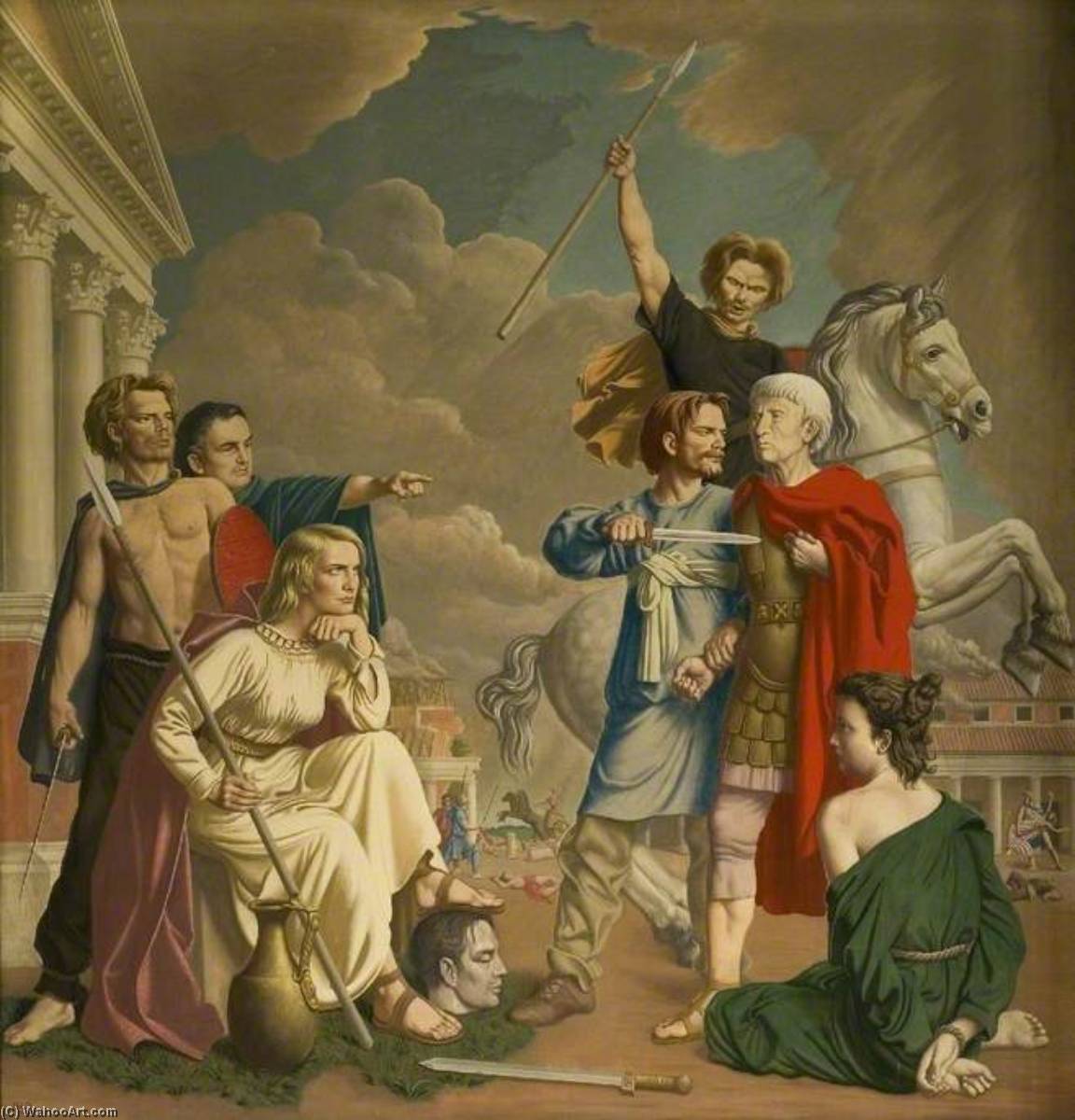
Boadicea at Colchester, 61 AD


 Weiterlesen
Handgefertigte Ölreproduktion
Handgemaltes Ölgemälde auf Leinwand in Ihrer Wunschgröße und mit Rahmen, auf Bestellung von unseren Künstlern angefertigt. ( Druck bestellen Bild kaufen)




































Wählen Sie aus unseren vordefinierten Formaten, die den ursprünglichen Proportionen des Kunstwerks entsprechen.

Sie können Ihre eigenen Maße eingeben, um einen bestimmten Rahmen oder Platz auszufüllen. Wenn die gewählte Größe nicht den Proportionen des Originalbildes entspricht, werden wir das Kunstwerk entweder beschneiden oder das Gemälde durch zusätzliche, handgemalte Elemente erweitern. Ein digitales Mockup wird Ihnen zur Genehmigung zugesandt, bevor die Produktion beginnt.
Bitte beachten Sie, dass die Bildschirmvorschau nicht die tatsächliche Beschneidung oder Erweiterung widerspiegelt. Nur das Mockup zeigt die endgültige Komposition exakt an.
Obwohl Sondermaße verfügbar sind, empfehlen wir, eine Größe aus der vordefinierten Liste zu wählen, um die ursprünglichen Proportionen beizubehalten.
Nach der Bestellung wird das ArtsDot.com-Team dem Kunden Anweisungen per E-Mail zusenden und eine Mockup-Vorschau bereitstellen.
Weltweiter Versand () in nur 3 bis 4 Wochen statt der üblichen 5 Wochen. (7 September). Keine Kompromisse bei der Qualität.

Kostenloser weltweiter Expressversand

Hochwertige Leinenleinwand

Umfassender Versicherungsschutz beim Versand

Zollgebühren-Rückerstattungsgarantie

Garantie für exakte Farbtreue

100-Tage-Rückgaberecht (nur bei Mängeln)

100% Geld-zurück-Garantie

Mengenrabatt verfügbar
 Die Glasoption ist nur für Größen unter 110 cm verfügbar.

Boadicea at Colchester, 61 AD
Art der Reproduktion
Format der Reproduktion
-


Gesamtpreis
$ 388
Ähnliche Kunstwerke

Über den Künstler
The Visionary of the Great War: The Life and Legacy of Colin Unwin Gill
To look upon the works of Colin Unwin Gill is to witness a profound dialogue between the brutal realities of modern warfare and the timeless elegance of classical tradition. Born in 1892, Gill possessed an artistic sensibility that was uniquely shaped by both his English heritage and his early exposure to the light and grandeur of Italy. His journey through the prestigious Slade School of Fine Art provided him with a foundation of disciplined draughtsmanship, yet it was his time in Rome—as the first recipient of the Rome Scholarship in Decorative Painting—that infused his work with a sense of monumental scale and decorative grace. This rare blend of classical training and contemporary observation would later become the hallmark of an artist capable of capturing the soul of a nation in its darkest hour.
The trajectory of Gill’s career was irrevocably altered by the outbreak of the First World War. Serving as a second lieutenant in the Royal Garrison Artillery, he experienced firsthand the harrowing landscape of the Western Front. His service was not merely one of combat but of technical observation; as a camouflage officer, he developed an acute eye for the interplay of light, shadow, and concealment. This period of intense, often traumatic experience—marked by the physical toll of gas poisoning and frostbite—became the crucible in which his most significant artistic themes were forged. When he eventually transitioned into the role of a war artist, he did so not as a detached observer, but as a man who had breathed the very dust and smoke of the trenches.
A Mastery of Memory and Symbolism
Gill’s contribution to the visual record of the Great War extends far beyond simple reportage. His work for the Imperial War Graves Commission and the British War Memorials Committee sought to transcend the immediate carnage to find a deeper, more spiritual resonance. In masterpieces such as Evening after a Resupply and Heavy Artillery, one finds a hauntingly beautiful use of expressionist style and dramatic lighting. He utilized large-scale oil canvases to create immersive environments where the heavy machinery of war is rendered with a startling, almost surreal realism. Through his brush, the patchwork camouflage of a howitzer or the weary posture of a soldier becomes a symbol of both human endurance and the overwhelming weight of industrial conflict.
The depth of his artistry can be observed through several key elements of his technique:
- Emotional Realism: A profound ability to depict the psychological exhaustion of soldiers, moving past mere physical likeness to capture the internal landscape of loss and resilience.
- Decorative Grandeur: The influence of his Roman training, which allowed him to approach large-scale murals with a sophisticated understanding of composition and monumental form.
- Symbolic Depth: The use of light and shadow to create atmospheric tension, turning scenes of military life into allegories for the human condition.
An Enduring Artistic Significance
Though his life was tragically cut short in 1940, Colin Unwin Gill left behind a body of work that serves as a vital bridge between the classical past and the fractured modern era. His ability to weave together the decorative traditions of the early twentieth century with the raw, unvarnished truths of the battlefield ensured that his murals and portraits would remain much more than historical artifacts. They are living monuments to remembrance. Whether capturing the quiet tension of a Café Bar in wartime London or the stoic dignity of a decorated hero like Captain Albert Jacka, Gill’s art continues to resonate with an evocative power that speaks to the enduring strength of the human spirit amidst the shadows of history.
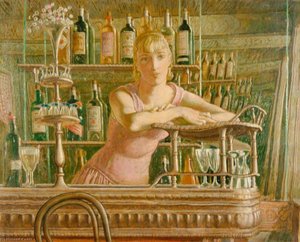
colin unwin gill
1892 - 1940
Kurzinfos
- Artistic Movement Or Style: Expressionism
- Artists Who Influenced This Artist:
- Henri Matisse
- Georges Braque
- Date Of Birth: May 12, 1892
- Date Of Death: November 16, 1940
- Full Name: Colin Unwin Gill
- Nationality: British
- Notable Artworks:
- Evening after a Push
- Café Bar
- The Captive
- Place Of Birth: England
Ähnliche Artikel

Öl auf Leinwand: Eine historische und technische Erkundung eines zeitlosen künstlerischen Mediums
Entdecken Sie die faszinierende Welt der Ölmalerei! Von historischen Techniken bis zur modernen Anwendung – wir bieten Expertenwissen, Restaurierungstipps und hochwertige Reproduktionen. Jetzt informieren!

The Enduring Power of Painting: A Historical & Contemporary Exploration of Form and Emotion
Explore the rich history & enduring techniques of oil painting with ArtsDot. Discover masterpieces, learn about art collecting, and find authentic handmade reproductions crafted by skilled artists.

Barocke Pracht: Wie Sie Opulenz und Emotionen in zeitgenössische Innenräume bringen
Entdecken Sie die Pracht des Barock! Expertenratgeber für luxuriöse Innenräume mit barocken Elementen. Inspiration, Tipps & hochwertige Kunst bei .

The Dramatic Flourish: Exploring the Baroque Movement's Enduring Legacy in Art History
Explore the dramatic world of Baroque art! Discover iconic artists like Caravaggio & Rubens, defining techniques, and its lasting impact on art history. Expert insights for collectors & enthusiasts at ArtsDot.

Barock Meisterwerke: Die 10 prägendsten Kunstwerke für Ihr Zuhause |
Entdecken Sie die 10 prägendsten Meisterwerke des Barock! Caravaggio, Rembrandt & Co. – Erfahren Sie die Geschichten hinter ikonischen Gemälde und finden Sie hochwertige Kunst Reproduktionen für Ihr Zuhause auf .