

 Vorschau anzeigen
 Versenden
 Teilen
 Details anzeigen

 Herunterladen
 Ähnliche Objekte
 Röntgenaufnahme
 Diashow
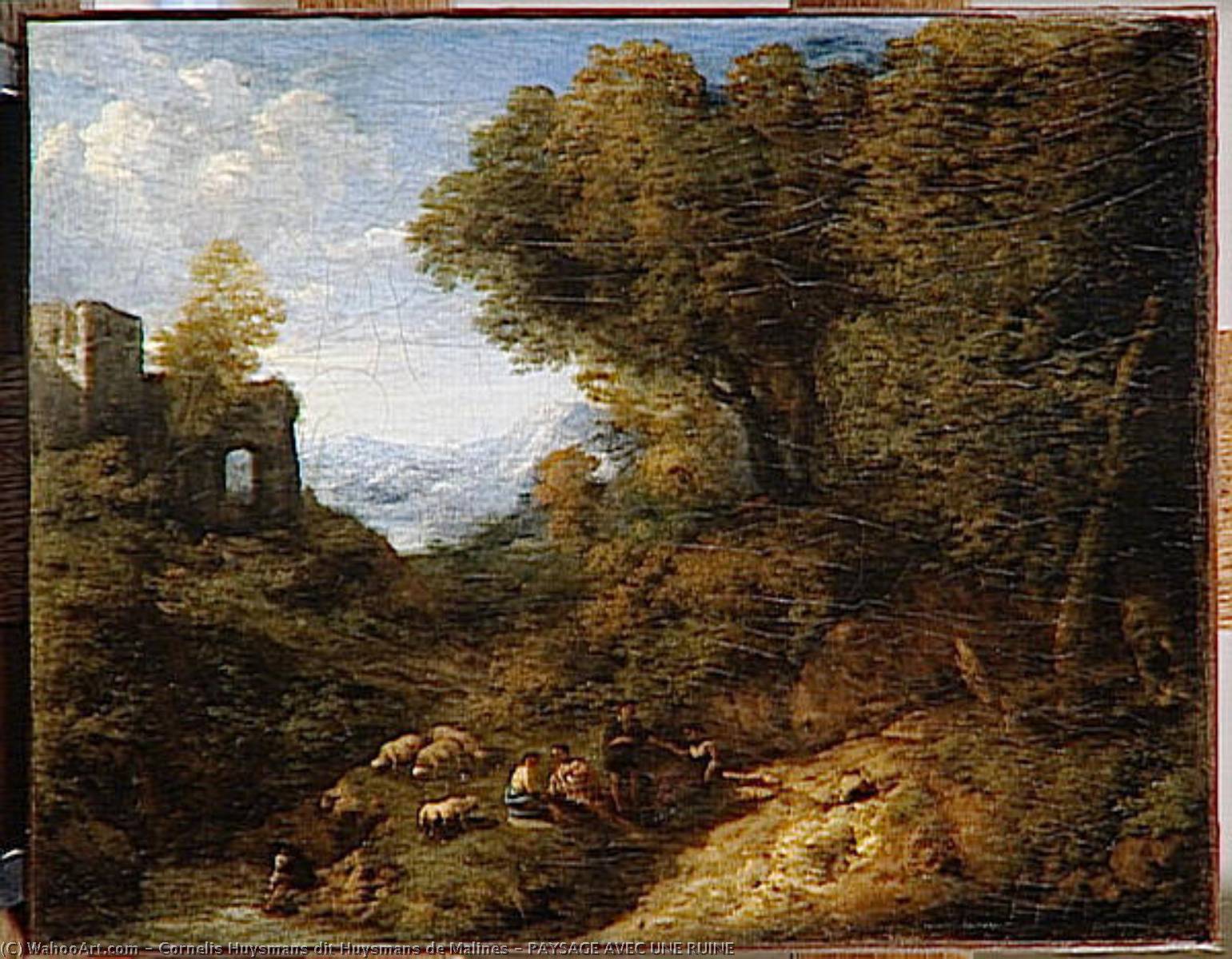
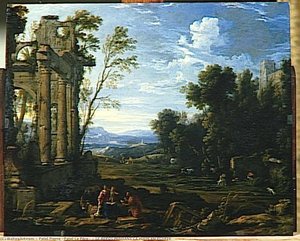
PAYSAGE AVEC UNE RUINE

 Weiterlesen
Erwerben Sie ein hochauflösendes, optimiertes digitales Bild, das der Online-Vorschau weit überlegen ist.
Jede Datei wird von unseren hauseigenen Spezialisten mit modernsten Werkzeugen und fachmännischer manueller Retusche sorgfältig vorbereitet. Wir stellen sicher, dass jedes Bild eine außergewöhnliche Klarheit, präzise Farbgenauigkeit und feinste Details aufweist.
Die endgültige Datei wird innerhalb von 72 Stunden per E-Mail zugestellt und ist für den sofortigen Einsatz in professionellen, redaktionellen und Druckumgebungen optimiert. Es handelt sich um dieselbe Qualität, der führende Designstudios, Verlage und Galerien vertrauen.
Digitales Bild
Laden Sie eine hochauflösende Datei für die persönliche Präsentation, den Druck und kreative Projekte herunter. ( Druck bestellen Handgemalte Reproduktion bestellen)
In jeder Bestellung digitaler Bilder enthalten
Professionelle digitale Bereitstellung, garantiert
Wenn Sie sich für ArtsDot.com entscheiden, erhalten Sie nicht nur ein Bild – Sie erhalten ein professionell aufbereitetes digitales Kunstwerk, das mit höchster Präzision erstellt und durch eine Zufriedenheitsgarantie abgesichert wird. Hier ist alles, was automatisch mit Ihrer Bestellung geliefert wird:

Schnelle E-Mail-Zustellung
Ihre hochauflösende digitale Bilddatei wird Ihnen innerhalb von 72 Stunden nach der Bestellung per E-Mail zugestellt – bereit zur sofortigen Verwendung.

KI-optimierte digitale Datei
Ihre Kunstwerke werden professionell mithilfe fortschrittlicher KI-Tools und manueller Bearbeitung optimiert, um maximale Detailtreue, Klarheit und Farbgenauigkeit zu gewährleisten.

Lebenslanger kostenloser Neudruckservice
Datei versehentlich gelöscht oder verloren? Keine Sorge – wir senden sie Ihnen jederzeit kostenlos erneut zu.

Keine Einfuhrgebühren – jemals
Genießen Sie Ihr Kunstwerk sofort ohne Zollgebühren, Einfuhrabgaben oder Versandkosten – digitale Downloads sind immer steuerfrei.

Garantierte Farbtreue
Wir garantieren, dass Ihr digitales Bild mithilfe professioneller Werkzeuge und Farbmanagement die Originalfarben so präzise wie möglich wiedergibt.

60-Tage-Zufriedenheitsgarantie
Sollten Sie mit Ihrem digitalen Bild nicht zufrieden sein, werden wir es überarbeiten oder Ihnen innerhalb von 60 Tagen 100% erstatten – ohne Wenn und Aber.

100% Geld-zurück-Garantie
Nicht zufrieden? Erhalten Sie innerhalb von 60 Tagen nach Erhalt Ihrer digitalen Datei eine vollständige Rückerstattung – ohne Angabe von Gründen.

Rabatte bei Großbestellungen
3 Bilder kaufen, 10% sparen – 5 Bilder kaufen, 15% sparen – Ab 10 Bildern 20% sparen. Ideal für kreative Projekte, Galerien und Agenturen.
Ähnliche Kunstwerke




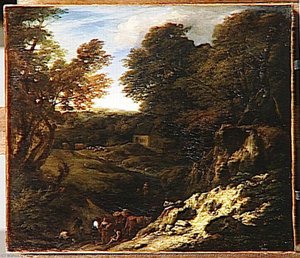
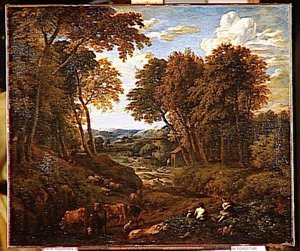
Biografie des Künstlers
Cornelis Huysmans de Malines: A Flemish Master of Pastoral Idyl
Cornelis Huysmans, a name perhaps less familiar than those of his contemporaries in the Dutch Golden Age, nevertheless stands as a significant figure in 17th-century Flemish landscape painting. Born in Antwerp in 1648 and passing away in Mechelen in 1727, Huysmans dedicated his life to capturing the serene beauty of rural scenes – idyllic landscapes populated by shepherds, livestock, and the quiet rhythms of daily life. His work, characterized by a remarkable attention to detail and a subtly evocative atmosphere, reveals a deep appreciation for nature’s tranquility and a masterful command of light and color.
Huysmans' artistic journey began under the tutelage of Gaspar de Witte, a respected Antwerp landscape painter. Following this initial training, he moved to Brussels, where he likely worked within the studio of Jacques d’Arthois, a pivotal figure in the development of Flemish landscape art. D’Arthois’s influence is particularly evident in Huysmans' early works, characterized by a decorative style and an emphasis on intricate details – a hallmark that would remain consistent throughout his career. The period between 1675 and 1682 saw him working in the Meuse valley near Dinant and Namur, further honing his skills and developing his unique artistic vision.
A Pseudo-Italianate Style: Influences and Techniques
Huysmans’s style is often described as “pseudo-Italianate,” a term that reflects his deliberate adoption of elements reminiscent of the Italian Renaissance masters. While he never traveled to Italy, Huysmans was deeply influenced by artists like Nicolas Poussin and Jacques d'Arthois, whose works featured dramatic mountainscapes and atmospheric lighting. He skillfully incorporated these influences into his own landscapes, creating scenes that evoke a sense of idealized beauty and timelessness. His compositions frequently employed diagonal lines to establish depth and perspective, drawing the viewer’s eye through the scene and emphasizing the vastness of the countryside.
A key element of Huysmans' technique was his meticulous attention to detail. He painstakingly rendered individual trees, rocks, and patches of grass, creating a sense of realism that belied the idealized nature of his subjects. His use of light and shadow was particularly noteworthy, casting dramatic contrasts across the landscape and adding depth and dimension to his scenes. The interplay of sunlight filtering through the foliage, illuminating herds of sheep grazing in verdant pastures – these are the moments that define Huysmans’s artistic legacy.
Subjects and Themes: Pastoral Life and Rural Harmony
Huysmans' paintings predominantly depict rural landscapes, focusing on scenes of pastoral life. Shepherds tending their flocks, farmers working the land, and livestock grazing peacefully in open fields are recurring motifs. These images weren’t merely representations of the countryside; they were imbued with a sense of tranquility and harmony – a deliberate antidote to the turbulent realities of 17th-century Europe. His subjects often appear bathed in golden light, evoking a feeling of warmth and contentment.
The artist frequently depicted scenes of shepherds and their flocks, capturing the quiet dignity of rural life. These works are not simply idyllic portrayals; they also subtly comment on the relationship between humanity and nature. Huysmans’s landscapes invite contemplation and offer a respite from the complexities of urban existence.
Legacy and Historical Significance
Cornelis Huysmans' work holds a significant place in the history of Flemish landscape painting. While he may not be as widely celebrated as some of his contemporaries, his meticulous attention to detail, his skillful use of light and color, and his distinctive “pseudo-Italianate” style have earned him a devoted following among art historians and collectors. His paintings are now housed in major museums across Europe, testament to the enduring appeal of his serene and evocative landscapes.
Huysmans’s influence can be seen in the work of subsequent generations of Flemish landscape painters, who continued to draw inspiration from his masterful depictions of nature. He represents a crucial link between the more formal, courtly landscapes of earlier periods and the later, more expressive works of artists like Jan Bruegel the Elder. His legacy lies not only in his individual paintings but also in his contribution to the development of Flemish landscape art as a whole.
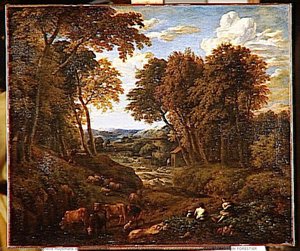
cornelis huysmans dit huysmans de malines
1648 - 1727

