 Vorschau anzeigen
 Versenden
 Teilen
 Details anzeigen

 Herunterladen
 Ähnliche Objekte
 Röntgenaufnahme
 Diashow
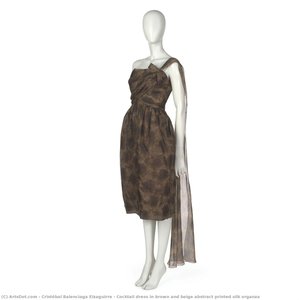
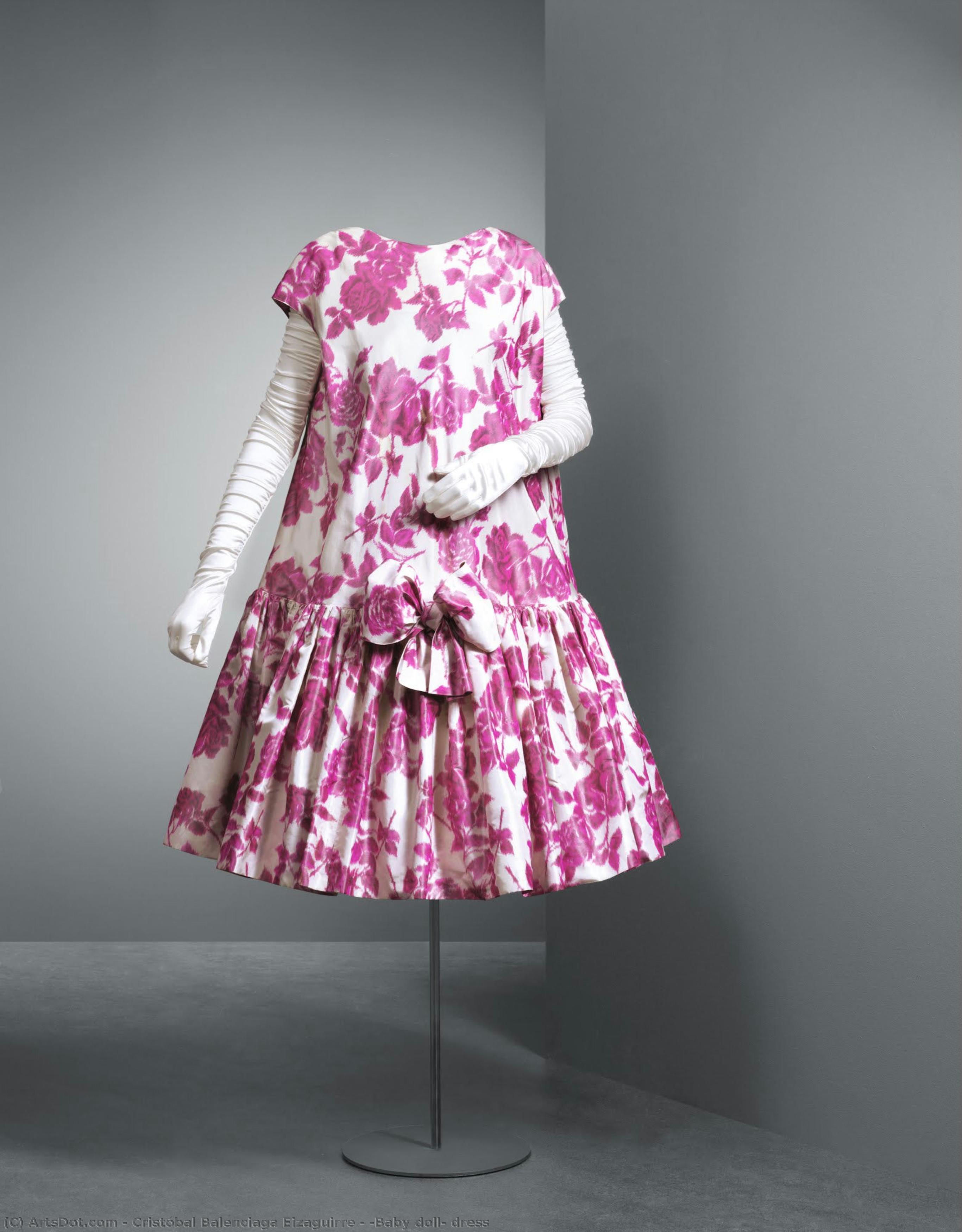
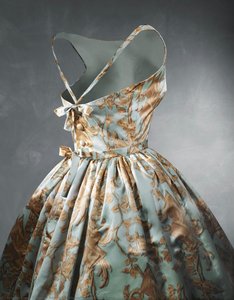
“Baby doll” dress


 Weiterlesen
Giclée / Kunstdruck
Giclée- oder Leinwanddruck in Museumsqualität mit schneller Produktion und flexiblen Veredelungsoptionen. ( Handgemalte Reproduktion bestellen Bild kaufen)




P118B $10

P118H $10

P118W $10

P438Z $10

P508JH $12

P508YH $12

P805H $10

P805Z $10

P919BZ $10

P919G $10

P919XJ $10

P959ZH $10

P968JZ $12

W106C $8

W218G $10

W218JH $8

W218Y $10

W307PJ $10

W316G $10

W316PJ $8

W316Y $10

W398PJ $8

W4111J $10

W500HY $15

W500JH $15

W692G $12

W849H $8

W940BG $15

W953PJ $8




Wählen Sie aus unseren vordefinierten Formaten, die den ursprünglichen Proportionen des Kunstwerks entsprechen.

Sie können Ihre eigenen Maße eingeben, um ein bestimmtes Format oder einen speziellen Platz einzupassen. Wenn das von Ihnen gewählte Format nicht den Proportionen des Originalbildes entspricht, werden wir das Kunstwerk entweder beschneiden oder das Bild mit einem gespiegelten oder einfarbigen Rand erweitern. Ein digitaler Entwurf wird Ihnen zur Genehmigung zugesandt, bevor die Produktion beginnt.
Bitte beachten Sie, dass die Vorschau auf dem Bildschirm nicht den tatsächlichen Zuschnitt oder die Erweiterung widerspiegelt. Nur der Entwurf zeigt die endgültige Komposition präzise an.
Obwohl Sondermaße verfügbar sind, empfehlen wir die Auswahl eines Maßes aus der vordefinierten Liste, um die ursprünglichen Proportionen zu bewahren.
Weltweiter Versand () innerhalb von 2 Wochen statt der üblichen 4/5 Wochen. (25 August)

Kostenloser weltweiter Expressversand

Hochwertige Leinenleinwand

Umfassender Versicherungsschutz beim Versand

Zollgebühren-Rückerstattungsgarantie

Garantie für exakte Farbtreue

60 Tage Rückgaberecht (nur bei Mängeln)

100% Geld-zurück-Garantie

Mengenrabatt verfügbar
 Die Glasoption ist nur für Größen unter 110 cm verfügbar.

“Baby doll” dress
Giclée / Kunstdruck
Format der Reproduktion
-


Gesamtpreis
$ 62
Sammlerstück-Beschreibung
The Genesis of a Silhouette: Cristóbal Balenciaga and the ‘Baby Doll’
In the aftermath of World War II, fashion was yearning for something beyond the rigid constraints of the 1930s. A desire for fluidity, for a return to softer lines, and an embrace of the feminine form ignited a revolution led by Cristóbal Balenciaga Eizaguirre – often hailed as “the master of us all.” Born in Spain’s Basque Country, Balenciaga’s early career was marked by a quiet brilliance, crafting exquisite garments for the Spanish aristocracy before he boldly established his Parisian couture house in 1937. His designs weren't merely clothing; they were architectural statements, imbued with an almost sculptural quality that defied convention. The “Baby Doll” dress, created in 1958, stands as a quintessential example of this revolutionary approach – a garment that captured the zeitgeist and cemented Balenciaga’s reputation for pushing the boundaries of design.
- Historical Context: Post-war Paris was experiencing a resurgence of optimism and a renewed interest in luxury. The “New Look,” popularized by Christian Dior, emphasized cinched waists and full skirts, but Balenciaga offered an alternative – a more relaxed, almost childlike silhouette that prioritized comfort and movement.
- Balenciaga’s Influence: He was profoundly influenced by the avant-garde art movements of his time, particularly Surrealism and Primitivism, evident in his willingness to experiment with unconventional materials and forms. His work wasn't simply about replicating beauty; it was about exploring new ways of perceiving and representing it.
A Study in Ivory Silk Taffeta: Form and Texture
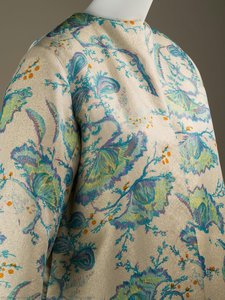
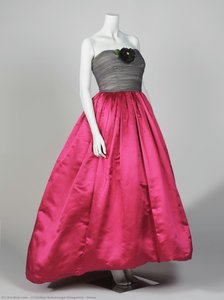
The “Baby Doll” dress is a testament to Balenciaga’s meticulous attention to detail and his mastery of textile manipulation. Constructed primarily from ivory silk taffeta, the fabric itself possesses a remarkable crispness and sheen – qualities that are beautifully accentuated by the soft, diffused lighting in the photograph. The dress's core structure is defined by a straight bodice with drop-shoulder sleeves and a rounded neckline, creating a deceptively simple foundation for the dramatic volume of the skirt. The pleated skirt, meticulously crafted from layers of taffeta, cascades outwards in a full, voluminous manner, reminiscent of a youthful innocence. A delicate bow, mirroring the fabric’s hue, is artfully positioned at the waist – a subtle yet elegant flourish that adds to the dress's overall charm.
Technique: Balenciaga’s signature technique involved precise pleating and draping, creating an illusion of effortless movement despite the fabric’s inherent stiffness. The use of silk taffeta allowed for a crisp, structured silhouette while maintaining a luxurious feel.Symbolism and Emotional Resonance
Beyond its purely aesthetic qualities, the “Baby Doll” dress is rich in symbolic meaning. The short, full skirt evokes a sense of youthful exuberance and carefree abandon – a deliberate contrast to the more restrictive fashions of the era. The ivory color palette suggests purity and innocence, while the vibrant floral print—a riot of reds and fuchsias—introduces an element of playful sensuality. The long white gloves worn by the mannequin further enhance this duality, creating a visual representation of both vulnerability and sophistication. The photograph itself, with its symmetrical composition and carefully controlled lighting, contributes to the dress’s overall sense of timeless elegance.
- Youthful Innocence: The short skirt and rounded neckline symbolize youthful innocence and playfulness.
- Sensuality & Restraint: The vibrant floral print hints at a subtle sensuality, balanced by the dress’s overall restraint and formality.
- Timeless Elegance: The photograph's composition and lighting evoke a sense of timeless elegance, suggesting that the “Baby Doll” dress remains as relevant today as it was in 1958.
A Legacy Preserved: Reproduction and Inspiration
Cristóbal Balenciaga’s influence continues to resonate within the fashion industry today. The "Baby Doll" dress, a cornerstone of his oeuvre, remains an iconic example of haute couture—a testament to his genius and vision. ArtsDot offers high-quality reproductions that capture the essence of this remarkable garment, allowing collectors and interior designers alike to experience its beauty and elegance firsthand. Whether displayed as a statement piece in a luxurious setting or cherished as a treasured heirloom, the “Baby Doll” dress embodies the spirit of innovation, artistry, and timeless style.
Ähnliche Kunstwerke
Über den Künstler
Frühes Leben und Karriere
Cristóbal Balenciaga Eizaguirre, ein renommierter spanischer Modedesigner, wurde 1895 in Getaria, Spanien, geboren. Er ist vor allem bekannt für die Gründung der Marke Balenciaga, die mit Haute Couture gleichgesetzt wurde. Balenciagas Ruf als Couturier von kompromisslosen Standards brachte ihm den Titel "der Meister von uns allen" von Christian Dior und "der einzige Couturier im wahrsten Sinne des Wortes" von Coco Chanel ein.Künstlerischer Stil und Einflüsse
Balenciagas Designs zeichneten sich durch ihre Eleganz, Schlichtheit und Liebe zum Detail aus. Er wurde vom Avantgarde-Kunststil beeinflusst, was sich in seinen kühnen und innovativen Entwürfen widerspiegelt. Zu seinen bemerkenswerten Werken gehören:- Study to 'Song of Songs IV' (Naive Kunst / Primitivismus), ein Gemälde, das seinen experimentellen Ansatz in der Mode zeigt.
- Tree Roots (50 x 100 cm, Postimpressionismus, Öl auf Leinwand), ein Werk, das seine Fähigkeit demonstriert, die Essenz der Natur einzufangen.
- Acrobat (Surrealismus, Öl auf Leinwand), ein Gemälde, das seine Bereitschaft zeigt, in der Modewelt Grenzen zu überschreiten.
Entwicklung und Hauptleistungen
Balenciaga entwickelte seinen eigenen unverwechselbaren Stil, der sich durch architektonische Formen, innovative Schnitte und den Einsatz ungewöhnlicher Materialien auszeichnete. Er revolutionierte die Damenmode mit seinem Bruch von traditionellen Silhouetten und schuf neue, avantgardistische Looks. Zu seinen wichtigsten Leistungen gehören:- Die Einführung des "Sackkleides" in den 1950er Jahren, das eine einfache, kastenförmige Silhouette aufwies.
- Die Entwicklung der "Balloon-Jacke", einer voluminösen Jacke mit einem kugelförmigen Schnitt.
- Der Einsatz von ungewöhnlichen Materialien wie Buntglas und Draht in seinen Kreationen.
- Seine Fähigkeit, Haute Couture mit den Bedürfnissen des modernen Lebens zu verbinden.
Historische Bedeutung und Vermächtnis
Cristóbal Balenciaga gilt als einer der bedeutendsten Modedesigner des 20. Jahrhunderts. Sein Einfluss auf die Mode ist immens, und seine Designs werden bis heute von Designern auf der ganzen Welt bewundert und nachgeahmt. Er hat neue Maßstäbe für Eleganz, Innovation und Handwerkskunst gesetzt und das Image der Frau neu definiert. Balenciaga hinterließ ein bleibendes Vermächtnis als "der Meister" der Mode, dessen Werke die Geschichte der Kunst und des Designs nachhaltig geprägt haben.- mehr Werke von Cristóbal Balenciaga Eizaguirre finden Sie unter https://ArtsDot.com/@/cristobal-balenciaga-eizaguirre
- die Sammlung des Museo de Bellas Artes de Asturias erkunden Sie unter /de/art/show/art-d3atkt-de/
- erfahren Sie mehr über die Colección Andrés Blaisten unter https://ArtsDot.com/@@/a@d3bqc7-the-museum-destroyed-by-fire-(united-states)

Cristóbal Balenciaga Eizaguirre
1895 - 1972 , Spanien
Kurzinfos
- Beeinflusste Künstler:
- Christian Dior
- Coco Chanel
- Bemerkenswerte Werke:
- Study to 'Song of Songs IV'
- Tree Roots
- Acrobat
- Geburtsdatum: 1895
- Künstlerischer Stil: Avantgarde, Couture
- Nationalität: Spanisch
- Vollständiger Name: Cristóbal Balenciaga Eizaguirre
- Von Künstlern Beeinflusst:
- Naive Kunst
- Primitivismus
- Surrealismus
- Post-Impressionismus
Ähnliche Artikel
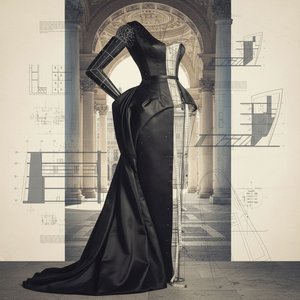
Cristóbal Balenciaga: Dekonstruktion der Haute Couture – Das architektonische Erbe eines Genies
Entdecken Sie das revolutionäre Werk von Cristóbal Balenciaga – dem Meister der Haute Couture. Architektur, Innovation und zeitloser Stil prägten sein Erbe. Für Kenner und Sammler.
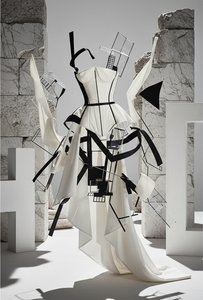
Gianfranco Ferré: Deconstructing Haute Couture – A Legacy of Architectural Form
Explore the revolutionary world of Gianfranco Ferré, 'the architect of fashion.' Discover his architectural approach to haute couture, iconic Dior designs, and lasting influence on luxury style. A deep dive for collectors & enthusiasts.
Draped Narratives: Fashion as Symbol & Subject in Historical Art
Explore the fascinating history of fashion as a symbol of power & status in art! Discover masterpieces from Gainsborough to Tissot and learn how clothing shaped societal narratives. Find museum-quality reproductions at ArtsDot.

Crimson Threads of Narrative: Exploring Symbolism & Representation in Artworks Featuring the Red Dress
Explore the rich symbolism of the red dress in art history! From ancient power displays to iconic portraits like Cézanne’s 'Madame Cezanne', discover the cultural and artistic significance behind this captivating color. Expert analysis & insights.
Echoes of Time: Nostalgia, Technique & Cultural Significance in Vintage Paintings
Explore the captivating world of vintage paintings! Discover key styles, cultural significance & collecting tips from art experts at ArtsDot. Find authentic reproductions and elevate your home décor.