

 Vorschau anzeigen
 Versenden
 Teilen
 Details anzeigen

 Herunterladen
 Ähnliche Objekte
 Röntgenaufnahme
 Diashow
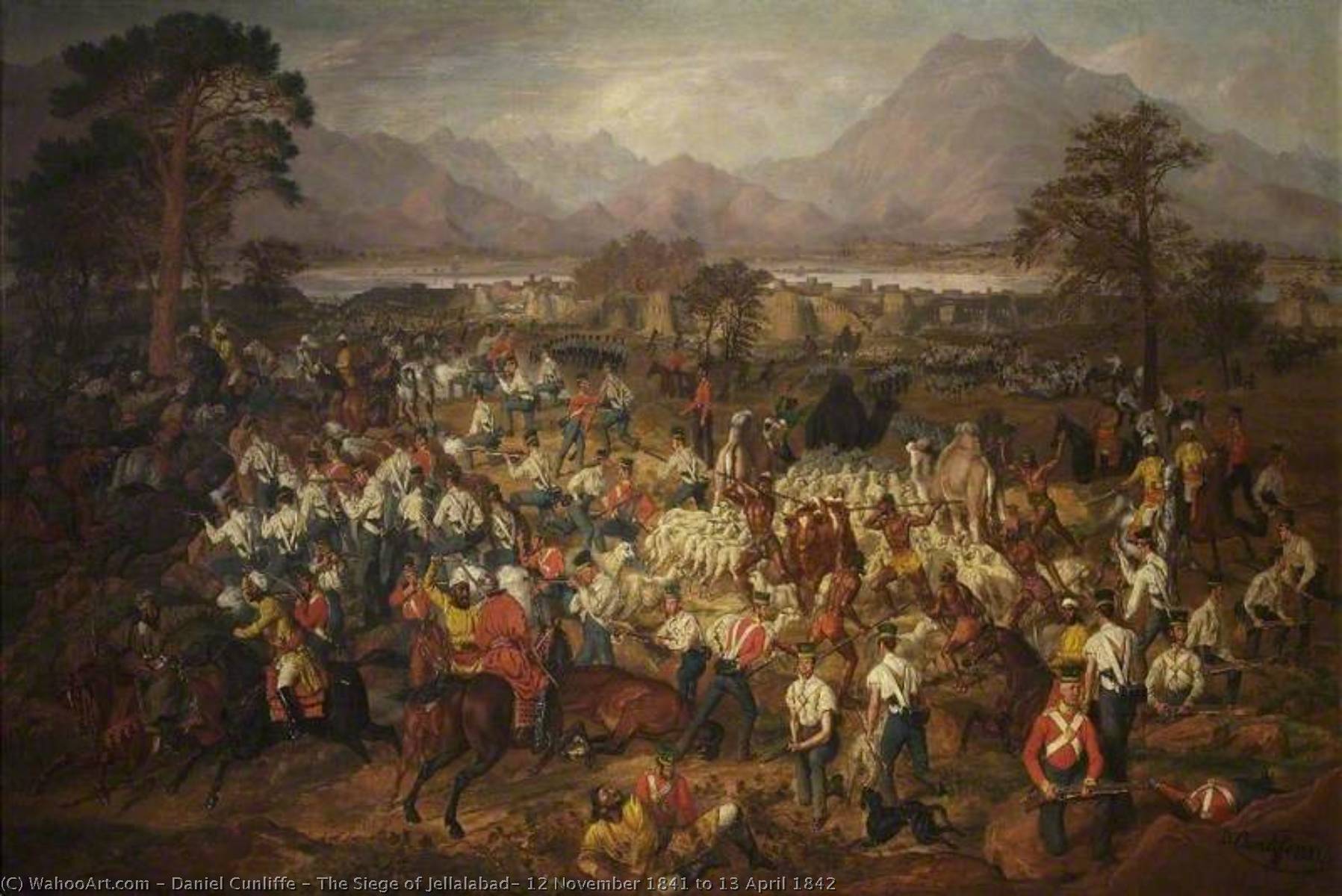
The Siege of Jellalabad, 12 November 1841 to 13 April 1842
 Historical Painting
 1851
1851 92.0 x 152.0 cm
 Weiterlesen
Giclée / Kunstdruck
Giclée- oder Leinwanddruck in Museumsqualität mit schneller Produktion und flexiblen Veredelungsoptionen. ( Handgemalte Reproduktion bestellen Bild kaufen)




































Wählen Sie aus unseren vordefinierten Formaten, die den ursprünglichen Proportionen des Kunstwerks entsprechen.

Sie können Ihre eigenen Maße eingeben, um ein bestimmtes Format oder einen speziellen Platz einzupassen. Wenn das von Ihnen gewählte Format nicht den Proportionen des Originalbildes entspricht, werden wir das Kunstwerk entweder beschneiden oder das Bild mit einem gespiegelten oder einfarbigen Rand erweitern. Ein digitaler Entwurf wird Ihnen zur Genehmigung zugesandt, bevor die Produktion beginnt.
Bitte beachten Sie, dass die Vorschau auf dem Bildschirm nicht den tatsächlichen Zuschnitt oder die Erweiterung widerspiegelt. Nur der Entwurf zeigt die endgültige Komposition präzise an.
Obwohl Sondermaße verfügbar sind, empfehlen wir die Auswahl eines Maßes aus der vordefinierten Liste, um die ursprünglichen Proportionen zu bewahren.
Weltweiter Versand () innerhalb von 2 Wochen statt der üblichen 4/5 Wochen. (29 August)

Kostenloser weltweiter Expressversand

Hochwertige Leinenleinwand

Umfassender Versicherungsschutz beim Versand

Zollgebühren-Rückerstattungsgarantie

Garantie für exakte Farbtreue

60 Tage Rückgaberecht (nur bei Mängeln)

100% Geld-zurück-Garantie

Mengenrabatt verfügbar
 Die Glasoption ist nur für Größen unter 110 cm verfügbar.

The Siege of Jellalabad, 12 November 1841 to 13 April 1842
Giclée / Kunstdruck
Format der Reproduktion
-


Gesamtpreis
$ 62
Ähnliche Kunstwerke
Über den Künstler
The Visionary of the Regiment: The Life and Art of Daniel Cunliffe
In the grand tapestry of British Romanticism, few artists captured the raw, unvarnished pulse of military existence as profoundly as Daniel Cunliffe. Born in 1801 in the historic town of Warwick, Warwickshire, Cunliffe emerged not merely as a painter of scenes, but as a chronicler of duty, discipline, and the heavy atmosphere of nineteenth-century warfare. His artistic journey was deeply rooted in the classical traditions of his era, having received foundational training under the esteemed John Opie. This early mentorship instilled in him a rigorous command of composition and a respect for the landscape tradition, yet Cunliffe would eventually pivot away from purely pastoral vistas to focus on a much more visceral subject: the human element within the machinery of the British military.
Cunliffe’s life was inextricably linked to the very subjects he immortalized on canvas. As an officer himself, his connection to the Royal Warwickshire Regiment provided him with an intimate, firsthand perspective on the realities of service. He did not view the military through a lens of distant romanticism; rather, he understood the grit, the physical exhaustion, and the psychological weight carried by those in uniform. This lived experience allowed him to bypass the idealized, often sanitized depictions favored by many of his contemporaries. Instead, he sought to capture the authentic essence of regimental life, from the rhythmic monotony of drilling exercises to the chaotic, smoke-filled intensity of actual battlefield confrontations.
A Mastery of Realism and Texture
The technical brilliance of Cunliffe’s work lies in his ability to marry meticulous realism with a powerful, tactile energy. He was a master of tonal gradation, using light and shadow to breathe life into the heavy fabrics of uniforms and the rugged terrain of the encampments. One of his most striking technical hallmarks was his use of thick impasto. By applying paint in heavy, textured layers, he achieved a sense of dynamism that made the movement of horses, the billowing of smoke, and the coarse texture of soldierly gear feel almost tangible to the viewer. His palette, often dominated by earthy, somber tones, reflected the somber reality of his subjects, grounding his monumental works in a palpable sense of historical truth.
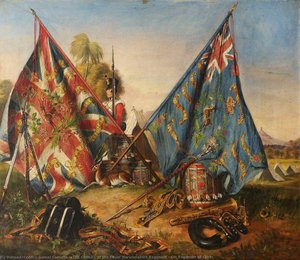
His approach to portraiture and group compositions was equally sophisticated. In works such as An Officer of the 6th Regiment of Foot, Cunliffe demonstrated an extraordinary eye for detail, capturing the intricate patterns of regimental attire—including the distinctive red and white elements of the 6th Regiment—with such precision that the authority and confidence of the subject are unmistakably conveyed. He possessed a rare talent for rendering the fine details of military insignia and weaponry while never losing sight of the emotional core of the individual, ensuring that every officer and soldier he painted possessed a distinct, commanding presence.
Legacy of a Military Chronicler
The historical significance of Daniel Cunliffe’s oeuvre cannot be overstated, as his paintings serve as vital visual records of British military history during a period of profound global expansion and conflict. His monumental canvases, such as The Siege of Jellalabad (1851), do more than depict a battle; they encapsulate the drama, the chaos, and the sheer scale of nineteenth-century siege warfare. Through these works, Cunliffe preserved the spirit of the Royal Warwickshire Regiment and other units, ensuring that the triumphs and tribulations of their service remained etched in the collective memory.
Ultimately, Cunliffe’s legacy is defined by his refusal to retreat into sentimentality. By choosing to portray the arduous tasks, the marches, and the physical strain of military duty, he elevated military art from mere illustration to a profound exploration of human endurance. His ability to translate the heavy atmosphere of camp life and the visceral intensity of combat into enduring works of fine art ensures his place as a vital figure in the history of British art, leaving behind a body of work that continues to resonate with its honesty, its strength, and its unwavering dedication to the truth of the soldier's experience.
daniel cunliffe
1801 - 1871
Kurzinfos
- Artistic Movement Or Style: Romanticism
- Artists Or Movements Influenced By This Artist: ['George Frederic Handel']
- Artists Who Influenced This Artist: ['William Hayley']
- Date Of Birth: 1801
- Date Of Death: 1871
- Full Name: Daniel Cunliffe
- Nationality: British
- Notable Artworks:
- The Siege of Jellalabad
- 6th Regiment
- Place Of Birth: Warwickshire, England
Ähnliche Artikel

Meisterwerke des 19. Jahrhunderts: Kunst für Ihr Zuhause | ArtsDot
Entdecken Sie die 10 bedeutendsten Kunstwerke des 19. Jahrhunderts! Von Impressionismus bis Realismus – erleben Sie die Geschichten berühmter Maler und ihre Meisterwerke. Hochwertige Reproduktionen für Ihr Zuhause auf ArtsDot.com.
Thomas Daniell: Navigating Light, Landscape & Cultural Exchange in Early 19th-Century India
Explore the captivating landscapes of Thomas Daniell, a pioneering artist who documented India's beauty in the 19th century. Discover his 'Oriental Scenery,' aquatint technique & lasting legacy. Hand-painted reproductions available at ArtsDot.
Daniel Maclise: Historische Erzählungen und romantische Ideale der britischen Kunst des 19. Jahrhunderts
Entdecken Sie das Werk von Daniel Maclise und die faszinierende Welt der Historienmalerei im viktorianischen England. Analysen, Hintergrundinformationen & Expertenwissen auf ArtsDot.
Panoramic Visions of Empire: The Daniells’ Artistic Collaboration & Legacy
Explore the captivating 'Oriental Scenery' by Thomas & William Daniell. Discover their pioneering aquatint prints of India, imperial context, artistic collaboration, and lasting legacy. A deep dive for history lovers.
Émile Vernet: Romantische Realität und die Darstellung des Lebens im 19. Jahrhundert
Entdecken Sie das faszinierende Werk von Émile Vernet! Expertenwissen über den französischen Maler der Romantik und des Realismus, seine ikonischen Schlachtszenen und orientalistischen Gemälde. Hochwertige Reproduktionen & individuelle Kunstberatung bei ArtsDot.

