Erasmus Engert’s ‘Viennese Domestic Garden’: A Window into 19th-Century Tranquility
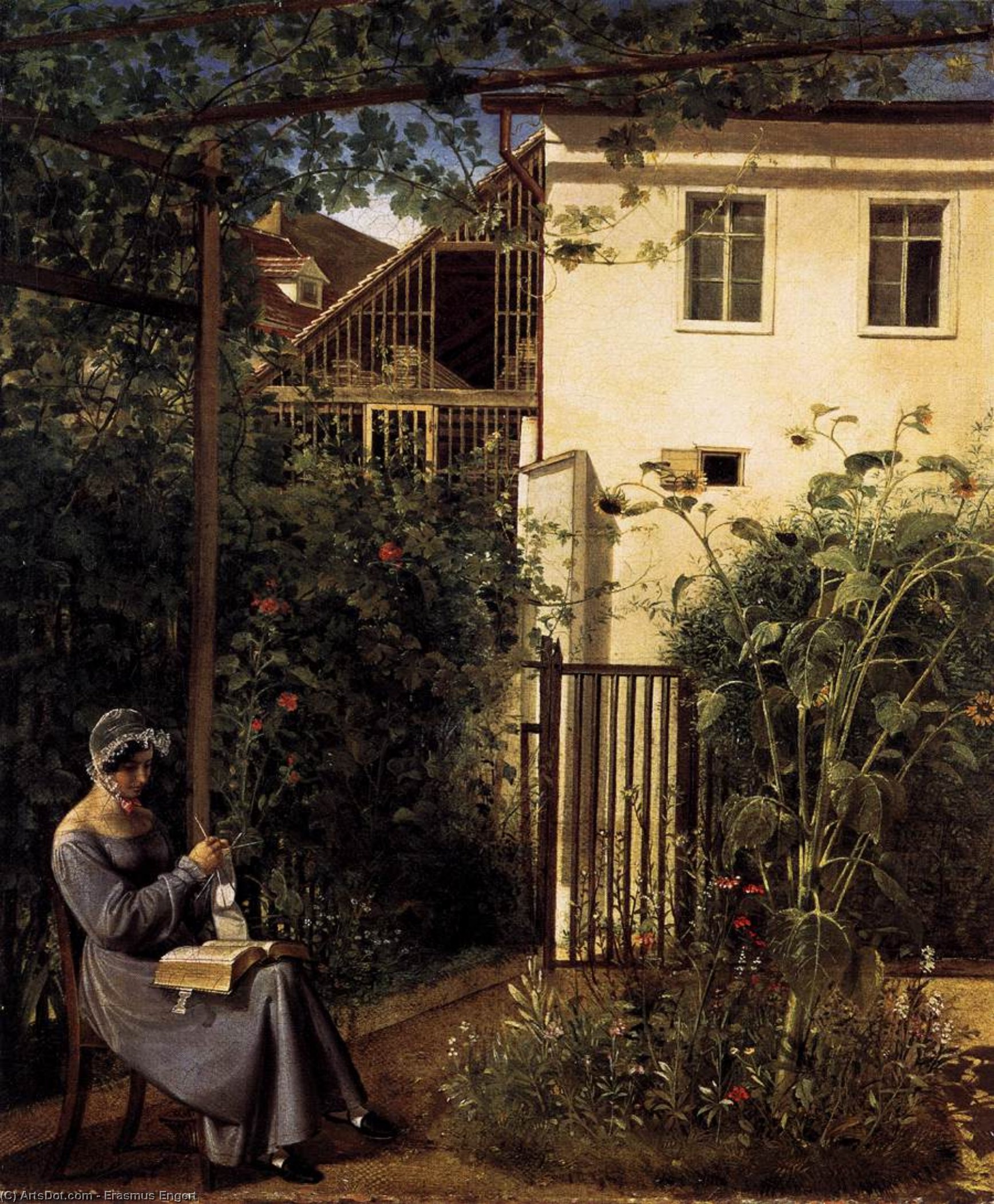
This exquisite oil painting, titled “Viennese Domestic Garden,” offers a captivating glimpse into the serene world of early 19th-century Vienna. Executed in 1828 by the Austrian painter Erasmus Engert (1796-1871), the artwork presents a meticulously rendered scene of a woman seated within a small, intimate garden courtyard – a tableau that speaks volumes about domesticity, leisure, and the burgeoning appreciation for nature’s restorative power. Measuring 32 x 26 cm, this piece is not merely a representation of a picturesque setting; it's a carefully constructed narrative imbued with symbolism and reflecting the artistic sensibilities of its time.
- Subject Matter: The central figure – a woman seated in a comfortable chair – immediately establishes a theme of domestic tranquility. Her presence within the garden evokes images of quiet contemplation, personal reflection, and perhaps even courtship.
- Composition & Perspective: The vertically oriented composition draws the viewer’s eye directly to the woman, while the surrounding elements—a weathered wooden gate, a partially visible building with windows, and lush greenery—create depth through layering. A flattened perspective enhances the sense of intimacy, inviting us into this private sanctuary.
- Color Palette & Lighting: The muted greens, blues, and browns dominate the color scheme, contributing to a tranquil atmosphere. Engert masterfully employs soft lighting, suggesting either late afternoon or early evening, casting gentle shadows that accentuate textures and heighten the sense of realism.
A Painter’s Dual Pursuit: Art and Evolutionary Thought
Erasmus Engert's artistic journey is particularly noteworthy due to his simultaneous engagement with scientific thought. Born in Vienna in 1796, he benefited from a privileged upbringing that nurtured both his artistic talent and an intellectual curiosity. His formal training at the Academy of Fine Arts in Vienna exposed him to classical traditions, yet he simultaneously cultivated interests in botany and geology – disciplines that would profoundly shape his worldview and inform his art. This dual pursuit is evident in his meticulous attention to detail, particularly in the rendering of natural forms like plants and stone, reflecting a burgeoning scientific interest in observation and accurate representation.
Technique & Materials: Meticulous Realism
The painting’s remarkable realism stems from Engert's skillful application of oil paints on canvas. The artist demonstrates a meticulous brushwork, capturing subtle nuances of light and shadow with impressive precision. Textures are richly varied – from the rough surface of the stone path to the delicate petals of roses and the weathered wood of the gate – creating a tactile experience for the viewer. This technique reflects the prevailing artistic trends of the early 19th century, which emphasized naturalistic representation and detailed observation.
Symbolism & Historical Context
“Viennese Domestic Garden” transcends a simple depiction of a garden scene; it’s laden with symbolic meaning. The garden itself represents peace, solitude, and perhaps contemplation – values highly prized in the era. Painted in 1828, this work reflects the growing importance of leisure and the appreciation for natural beauty within Viennese society. Engert's artistic legacy lies not only in his serene landscapes but also in his unexpected contribution to evolving scientific thought, making “Viennese Domestic Garden” a compelling piece of art history.