

 Vorschau anzeigen
 Versenden
 Teilen
 Details anzeigen

 Herunterladen
 Ähnliche Objekte
 Röntgenaufnahme
 Diashow
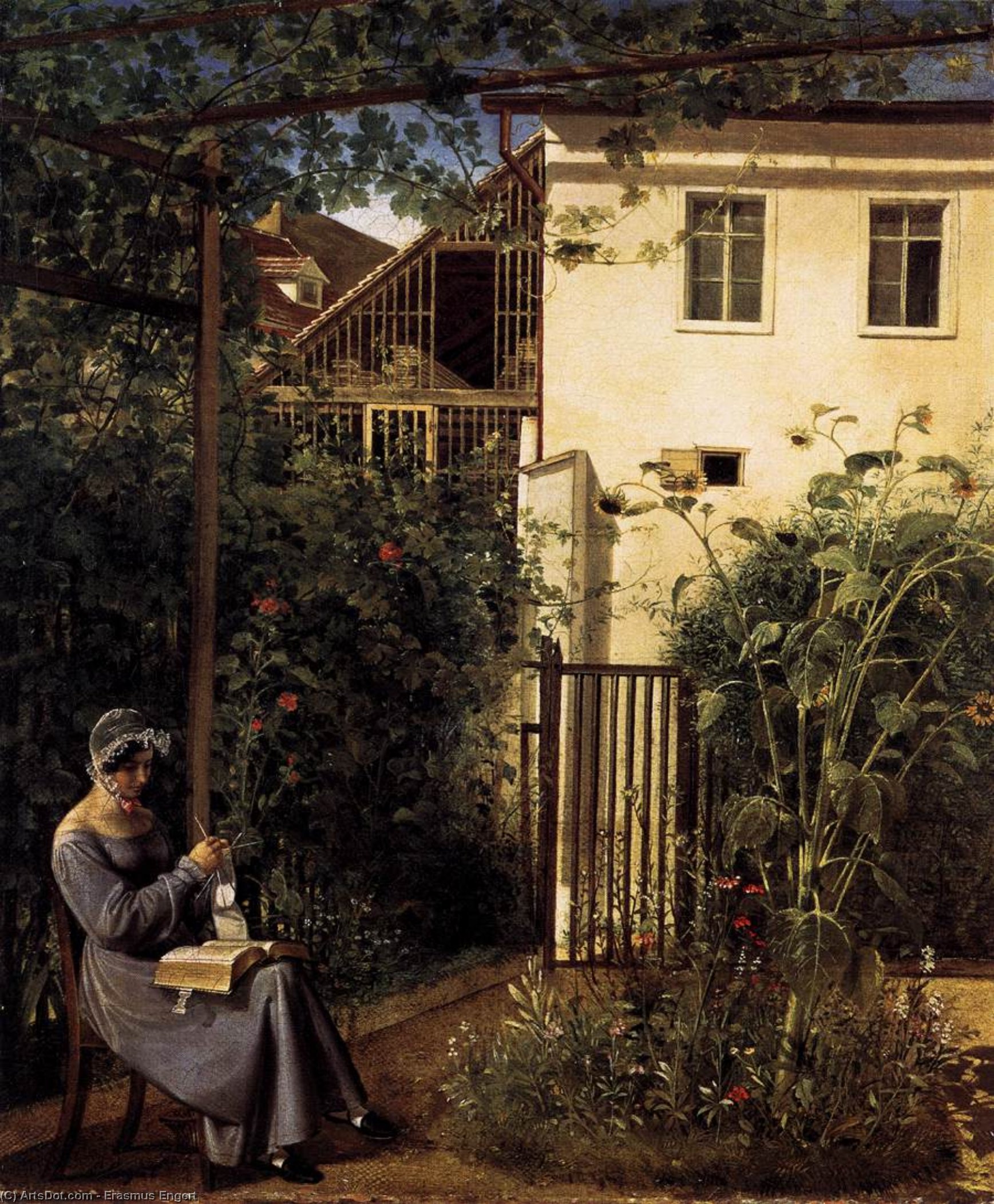
Viennese Domestic Garden
 Oil On Canvas
- WallArt
- Realism
 1828
1828 32.0 x 26.0 cm
 Nationalgalerie
 Weiterlesen
Handgefertigte Ölreproduktion
Handgemaltes Ölgemälde auf Leinwand in Ihrer Wunschgröße und mit Rahmen, auf Bestellung von unseren Künstlern angefertigt. ( Druck bestellen Bild kaufen)




P118B $10

P118H $10

P118W $10

P438Z $10

P508JH $12

P508YH $12

P805H $10

P805Z $10

P919BZ $10

P919G $10

P919XJ $10

P959ZH $10

P968JZ $12

W106C $8

W218G $10

W218JH $8

W218Y $10

W307PJ $10

W316G $10

W316PJ $8

W316Y $10

W398PJ $8

W4111J $10

W500HY $15

W500JH $15

W692G $12

W849H $8

W940BG $15

W953PJ $8




Wählen Sie aus unseren vordefinierten Formaten, die den ursprünglichen Proportionen des Kunstwerks entsprechen.

Sie können Ihre eigenen Maße eingeben, um einen bestimmten Rahmen oder Platz auszufüllen. Wenn die gewählte Größe nicht den Proportionen des Originalbildes entspricht, werden wir das Kunstwerk entweder beschneiden oder das Gemälde durch zusätzliche, handgemalte Elemente erweitern. Ein digitales Mockup wird Ihnen zur Genehmigung zugesandt, bevor die Produktion beginnt.
Bitte beachten Sie, dass die Bildschirmvorschau nicht die tatsächliche Beschneidung oder Erweiterung widerspiegelt. Nur das Mockup zeigt die endgültige Komposition exakt an.
Obwohl Sondermaße verfügbar sind, empfehlen wir, eine Größe aus der vordefinierten Liste zu wählen, um die ursprünglichen Proportionen beizubehalten.
Nach der Bestellung wird das ArtsDot.com-Team dem Kunden Anweisungen per E-Mail zusenden und eine Mockup-Vorschau bereitstellen.
Weltweiter Versand () in nur 3 bis 4 Wochen statt der üblichen 5 Wochen. (20 August). Keine Kompromisse bei der Qualität.

Kostenloser weltweiter Expressversand

Hochwertige Leinenleinwand

Umfassender Versicherungsschutz beim Versand

Zollgebühren-Rückerstattungsgarantie

Garantie für exakte Farbtreue

60 Tage Rückgaberecht (nur bei Mängeln)

100% Geld-zurück-Garantie

Mengenrabatt verfügbar
 Die Glasoption ist nur für Größen unter 110 cm verfügbar.

Viennese Domestic Garden
Art der Reproduktion
Format der Reproduktion
-


Gesamtpreis
$ 263
Beschreibung des Kunstwerks
Erasmus Engert’s ‘Viennese Domestic Garden’: A Window into 19th-Century Tranquility
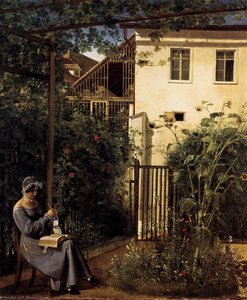
This exquisite oil painting, titled “Viennese Domestic Garden,” offers a captivating glimpse into the serene world of early 19th-century Vienna. Executed in 1828 by the Austrian painter Erasmus Engert (1796-1871), the artwork presents a meticulously rendered scene of a woman seated within a small, intimate garden courtyard – a tableau that speaks volumes about domesticity, leisure, and the burgeoning appreciation for nature’s restorative power. Measuring 32 x 26 cm, this piece is not merely a representation of a picturesque setting; it's a carefully constructed narrative imbued with symbolism and reflecting the artistic sensibilities of its time.
- Subject Matter: The central figure – a woman seated in a comfortable chair – immediately establishes a theme of domestic tranquility. Her presence within the garden evokes images of quiet contemplation, personal reflection, and perhaps even courtship.
- Composition & Perspective: The vertically oriented composition draws the viewer’s eye directly to the woman, while the surrounding elements—a weathered wooden gate, a partially visible building with windows, and lush greenery—create depth through layering. A flattened perspective enhances the sense of intimacy, inviting us into this private sanctuary.
- Color Palette & Lighting: The muted greens, blues, and browns dominate the color scheme, contributing to a tranquil atmosphere. Engert masterfully employs soft lighting, suggesting either late afternoon or early evening, casting gentle shadows that accentuate textures and heighten the sense of realism.
A Painter’s Dual Pursuit: Art and Evolutionary Thought
Erasmus Engert's artistic journey is particularly noteworthy due to his simultaneous engagement with scientific thought. Born in Vienna in 1796, he benefited from a privileged upbringing that nurtured both his artistic talent and an intellectual curiosity. His formal training at the Academy of Fine Arts in Vienna exposed him to classical traditions, yet he simultaneously cultivated interests in botany and geology – disciplines that would profoundly shape his worldview and inform his art. This dual pursuit is evident in his meticulous attention to detail, particularly in the rendering of natural forms like plants and stone, reflecting a burgeoning scientific interest in observation and accurate representation.
Technique & Materials: Meticulous Realism
The painting’s remarkable realism stems from Engert's skillful application of oil paints on canvas. The artist demonstrates a meticulous brushwork, capturing subtle nuances of light and shadow with impressive precision. Textures are richly varied – from the rough surface of the stone path to the delicate petals of roses and the weathered wood of the gate – creating a tactile experience for the viewer. This technique reflects the prevailing artistic trends of the early 19th century, which emphasized naturalistic representation and detailed observation.
Symbolism & Historical Context
“Viennese Domestic Garden” transcends a simple depiction of a garden scene; it’s laden with symbolic meaning. The garden itself represents peace, solitude, and perhaps contemplation – values highly prized in the era. Painted in 1828, this work reflects the growing importance of leisure and the appreciation for natural beauty within Viennese society. Engert's artistic legacy lies not only in his serene landscapes but also in his unexpected contribution to evolving scientific thought, making “Viennese Domestic Garden” a compelling piece of art history.
Ähnliche Kunstwerke
Über den Künstler
The Serene Vision of Erasmus Engert
In the heart of nineteenth-century Vienna, a period defined by both imperial grandeur and burgeoning scientific inquiry, lived an artist whose brush captured the quiet pulse of nature and the profound depths of human thought. Erasmus Ritter von Engert was far more than a mere chronicler of landscapes; he was a painter who bridged the gap between the romanticized beauty of the natural world and the rigorous observations of the scientific age. Born in 1796 into an aristocratic Viennese family, Engert’s early life was steeped in the privilege that allowed for a dual devotion to the arts and the intellect. His formal training at the Academy of Fine Arts in Vienna, which began as early as 1809, provided him with a classical foundation, yet his spirit remained restless, constantly seeking the intricate details found within botanical specimens and geological formations.
Engert’s artistic evolution is a captivating journey from meticulous botanical realism to the creation of atmospheric, tranquil garden scenes. In his early years, his work was characterized by an almost scientific precision, where every petal and leaf was rendered with a devotion that mirrored his interest in botany. This period reflected the influence of Romantic idealism, a movement that sought to find the divine within the natural order. As he matured, his focus shifted toward capturing the essence of the Viennese landscape, particularly the intimate, domestic gardens that offered a sanctuary from the bustling city. These works, such as his celebrated Viennese Domestic Garden, are not merely depictions of scenery but are windows into a lost era of peace and contemplation.
A Confluence of Art and Science
What truly distinguishes Engert from his contemporaries was his profound engagement with the intellectual currents of his time. His membership in the Lunar Society in Birmingham served as a transformative milestone, connecting him to a circle of thinkers dedicated to empirical observation. This exposure to groundbreaking biological theories, including the early whispers of Darwinian evolution, infused his artistic perspective with a deeper, more complex layer of meaning. He did not simply paint flowers; he painted life in its most fundamental, evolving state. This unique intersection of disciplines allowed him to infuse his landscapes with a sense of vitality and interconnectedness that resonated with the scientific spirit of the age.
Beyond his canvases, Engert’s professional life was marked by significant contributions to the preservation of art itself. His career saw him transition from a painter of portraits and historical scenes to a respected curator and restorer. In 1843, he took on the role of curator at the Imperial Painting Gallery in Belvedere Palace, where his expertise in restoration became vital to the upkeep of the Austrian masters' legacies. His dedication to the institution eventually led him to become its director in 1857. This period of his life highlights a man deeply committed to the continuity of culture, ensuring that the beauty of the past remained vibrant for future generations.
Legacy and Historical Significance
The legacy of Erasmus Engert is woven into the very fabric of Austrian art history. While he may not have achieved the widespread fame of contemporaries like Friedrich Hayden, his contribution remains indispensable for understanding the nuanced layers of nineteenth-century Viennese culture. His ability to harmonize the delicate aesthetics of a garden scene with the heavy intellectual weight of evolutionary thought offers a unique perspective on the Romantic era. He stands as a symbol of an age where the eye of the artist and the eye of the scientist were not in conflict, but rather working in tandem to decode the mysteries of the world.
Today, his works serve as poignant reminders of a time when nature was viewed through a lens of both reverence and inquiry. Whether through his meticulous botanical studies or his evocative domestic landscapes, Engert’s art continues to invite viewers into a space of quiet reflection. His life, marked by the noble title of Ritter bestowed upon him by Kaiser Franz Joseph I, reflects a journey of immense dignity—a journey from the disciplined halls of the Academy to the forefront of European intellectual and artistic life.
erasmus engert
1796 - 1871 , Italy
Kurzinfos
- Artistic Movement Or Style: Romanticism
- Artists Or Movements Influenced By This Artist: ['Romantic Landscape Painting']
- Artists Who Influenced This Artist: ['Caspar David Friedrich']
- Date Of Birth: February 24, 1796
- Date Of Death: April 14, 1871
- Full Name: Erasmus Ritter von Engert
- Nationality: Austrian
- Notable Artworks: ['Viennese Domestic Garden']
- Place Of Birth: Vienna, Italy
Ähnliche Artikel

The Interior Gaze: Exploring Representations of Domestic Space in Art History
Explore the fascinating history of domestic interiors in art! From Dutch Masters to Impressionism, discover how artists captured home life & social meaning. Expert analysis and insights at ArtsDot.
Cultivating Paradise: A Historical & Artistic Exploration of Gardens in Painting
Explore the rich history of gardens in painting! Discover masterpieces from Renaissance to Impressionism & beyond. Learn about symbolism, artists like Monet & Klimt, and find your perfect artwork at ArtsDot.
Intimate Interiors: Domestic Life & Artistic Representation from Renaissance to Impressionism
Explore the evolution of domestic life in Western art from the Renaissance to Impressionism. Discover symbolism, realism & artistic techniques shaping intimate interior scenes. Learn more with ArtsDot.

Meisterwerke des 19. Jahrhunderts: Kunst für Ihr Zuhause | ArtsDot
Entdecken Sie die 10 bedeutendsten Kunstwerke des 19. Jahrhunderts! Von Impressionismus bis Realismus – erleben Sie die Geschichten berühmter Maler und ihre Meisterwerke. Hochwertige Reproduktionen für Ihr Zuhause auf ArtsDot.com.

The Intimate Sphere: Domesticity & Representation in Western Art
Explore the rich history of domesticity in Western art, from Renaissance courts to Modernist masterpieces. Discover how artists captured everyday life and build your collection with ArtsDot.

