Giulio Romano’s Madonna and Child: A Roman Masterpiece of Grace and Mystery
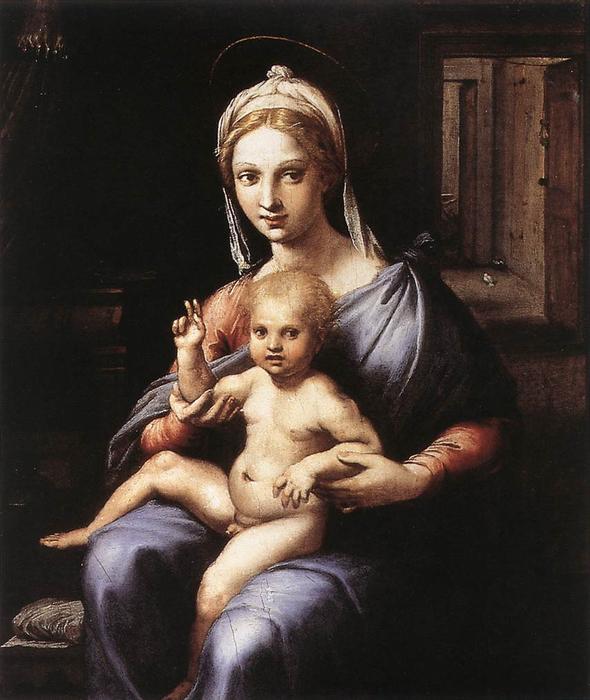
Giulio Romano's Madonna and Child, a captivating work housed within the esteemed collection of The Walters Art Museum in Baltimore, offers a profound glimpse into the heart of the Italian Renaissance. More than simply a depiction of the Virgin Mary cradling her infant son, this painting is a testament to Romano’s evolving artistic vision – a synthesis of Raphael's influence and his own burgeoning Mannerist style, reflecting a pivotal moment in art history. Completed around 1522-23 during his time in Mantua, it embodies a delicate balance between idealized beauty and subtly unsettling psychological depth.
The painting’s composition immediately draws the eye to the central figures: Mary, rendered with an exquisite blend of serenity and vulnerability, holds her child close. The infant Jesus, depicted not as a fully grown figure but as a miniature adult, gazes directly at the viewer – a deliberate choice that fosters a powerful sense of intimacy and connection. His pose, reminiscent of classical sculptures, subtly hints at his future role as the Lamb of God, foreshadowing his sacrifice. The surrounding architectural setting, a simplified yet evocative interior space, is not merely decorative; it serves to frame the scene and imbue it with a quiet dignity. The parapet at the bottom of the painting, a feature uncommon in earlier Italian works, creates an illusion of depth, drawing the viewer into the intimate world of the Madonna and Child.
The Shadow of Raphael and the Rise of Mannerism
Giulio Romano’s artistic journey is inextricably linked to that of his master, Raphael. He apprenticed under the great painter in Rome, absorbing not only technical skills but also a deep appreciation for classical ideals and harmonious composition. However, Romano quickly began to diverge from Raphael's High Renaissance style, embracing the principles of Mannerism – a movement characterized by elongated figures, distorted perspective, and an emphasis on emotional expression over strict realism. This shift is particularly evident in Madonna and Child, where the figures possess a heightened sense of elegance and dynamism compared to the more balanced compositions favored by Raphael.
The influence of Leonardo da Vinci is also palpable. Romano’s use of sfumato – a technique involving subtle gradations of tone to create a hazy, atmospheric effect – contributes to the painting's ethereal quality. Furthermore, the careful attention to detail in rendering fabrics and textures, combined with the delicate modeling of the figures, demonstrates Romano’s mastery of oil paint—a medium he skillfully employed to achieve remarkable luminosity and depth.
Symbolism and Spiritual Resonance
Beyond its aesthetic beauty, Madonna and Child is rich in symbolic meaning. The presence of St. John the Baptist, depicted as a young boy gazing at Christ with reverence, underscores the narrative arc of salvation – from innocence to sacrifice. The Lamb, held by Jesus, is a potent symbol of his future role as the sacrificial lamb, offering redemption for humanity. The muted color palette—primarily blues and browns—evokes a sense of solemnity and contemplation, inviting viewers to reflect on themes of faith, love, and mortality.
The choice of a domestic setting, rather than a grand landscape, further enhances the painting’s emotional impact. It suggests that the Madonna and Child are not distant figures but intimately connected members of a family—a powerful reminder of the nurturing role of Mary in the Christian faith. The overall effect is one of profound tenderness and spiritual resonance, inviting viewers to connect with the timeless themes explored within this masterpiece.
A Legacy of Artistic Innovation
Giulio Romano’s Madonna and Child stands as a pivotal work in the transition from High Renaissance to Mannerism. It showcases his evolving artistic style—a synthesis of Raphael's influence and his own innovative approach to composition, form, and color. The painting’s enduring appeal lies not only in its technical brilliance but also in its profound emotional depth and symbolic richness. It remains a testament to Romano’s genius and a captivating example of the transformative power of art.