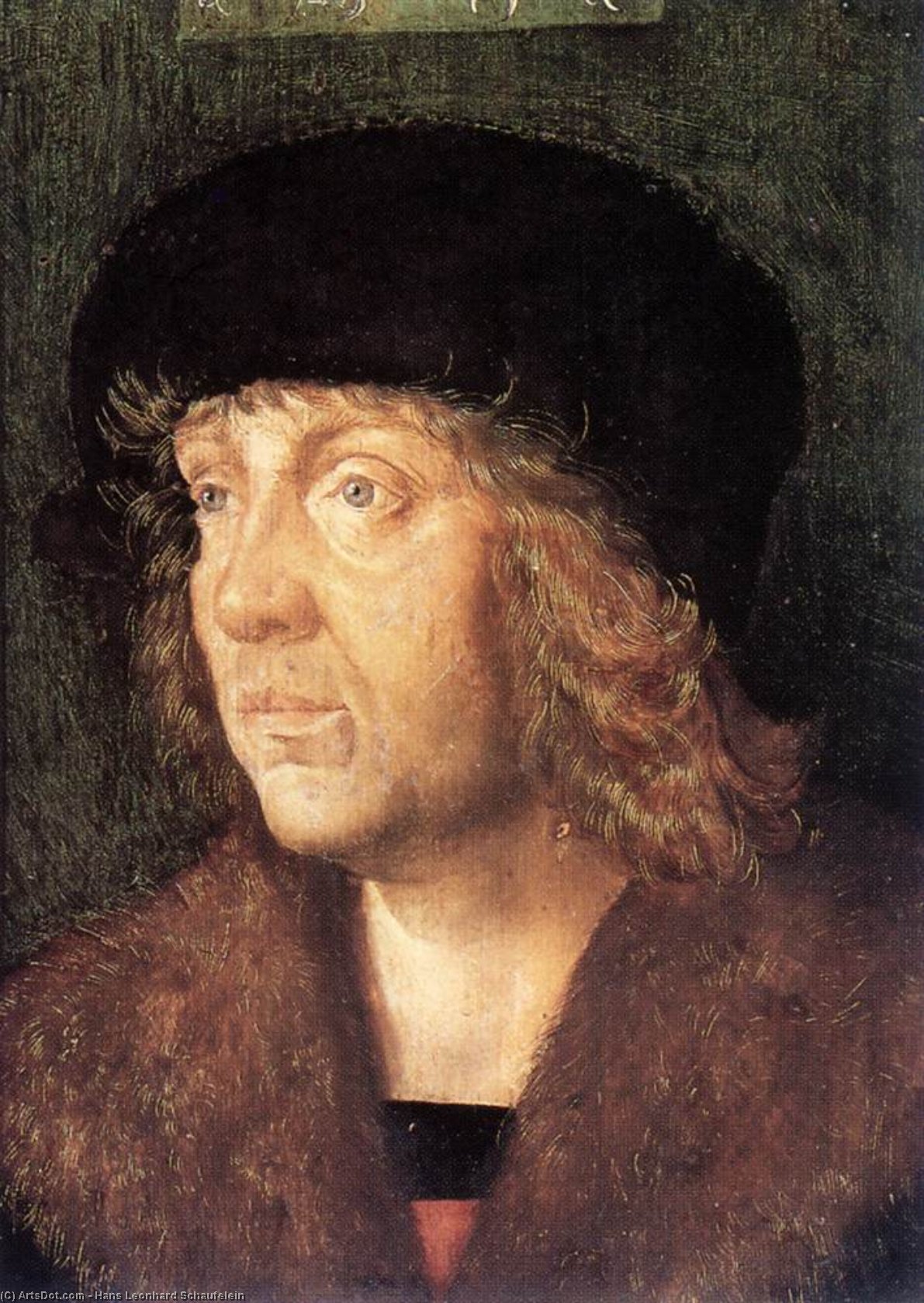
A striking study of Renaissance dignity, this 1505 oil portrait by Hans Leonhard Schäufelein uses masterful chiaroscuro to capture a noble man's likeness, inviting you to bring this piece of German history into your home.
Die ruhige Schönheit und präzise Ausführung von Hans Leonhard Schäufeleins Altäre sowie seine beeindruckenden Holzschnitte, insbesondere der „Tiegeraltar“, prägten sein künstlerisches Werk und seinen Ruf als Meister des deutschen Renaissancekunsthandwerks. Er verkörperte eine Verbindung zwischen niederländischer Tradition und nürnberger Kunstfertigkeit.
Entdecken Sie die Galleria Borghese in Rom! Meisterwerke von Bernini, Raffael & Caravaggio erwarten Sie in der prächtigen Villa Borghese. Buchen Sie jetzt Ihre Tickets!
Portrait of a Man by Hans Leonhard Schäufelein
Hans Leonhard Schäufelein’s “Portrait of a Man,” painted in 1505, stands as a testament to the burgeoning artistic spirit of Nuremberg during the High Renaissance. More than just a likeness, it embodies the humanist ideals prevalent at the time—a celebration of intellect and dignity rendered with remarkable precision and emotional depth by one of Germany’s foremost painters.
The Artist's Context: Nuremberg's Artistic Crucible
Schäufelein emerged from a vibrant artistic environment dominated by figures like Matthias Grünewald and Johann Wohlgemut, artists who championed expressive realism—a stylistic departure from the prevailing Gothic traditions. Nuremberg itself was rapidly transforming into a center of commerce and innovation, attracting skilled artisans and fostering an atmosphere conducive to artistic experimentation. Schäufelein’s formative years were profoundly shaped by his association with Albrecht Dürer, whose unwavering commitment to meticulous detail and compositional balance instilled in Schäufelein a similar aesthetic sensibility. This influence is evident throughout Schäufelein's oeuvre, particularly in the careful rendering of textures and surfaces—a hallmark of Nuremberg painting.
A Study in Renaissance Portraiture: Technique and Style
Executed in oil on canvas, “Portrait of a Man” exemplifies the stylistic conventions of Renaissance portraiture. Schäufelein skillfully employed chiaroscuro – dramatic contrasts between light and shadow – to sculpt the figure’s face and torso, creating an illusion of three-dimensionality that transcends mere representation. The artist meticulously observed anatomical proportions, capturing subtle nuances of musculature and bone structure with astonishing accuracy. Furthermore, Schäufelein's masterful use of color contributes significantly to the painting's emotive impact; muted hues dominate the palette, conveying a sense of solemn contemplation and understated elegance.
Symbolism Within Form: Clothing and Accessories
The portrait’s symbolism extends beyond its physical appearance. The man wears a dark velvet robe adorned with fur trim—a deliberate gesture indicative of wealth and status during the Renaissance. His black hat, embellished with a feather plume, symbolizes nobility and authority—a visual shorthand for conveying social standing. These details underscore Schäufelein's intention to portray not merely an individual but also his role within the broader societal hierarchy. The gaze of the subject is direct yet introspective, inviting viewers to contemplate themes of contemplation and inner reflection – core tenets of humanist philosophy.
A Legacy Enduring Through Time: Preservation and Influence
Currently housed at the Galleria Borghese in Rome, “Portrait of a Man” continues to captivate audiences with its timeless beauty and artistic merit. Its influence can be discerned in subsequent portraits produced by artists across Europe, cementing Schäufelein’s position as a pivotal figure in German Renaissance art history. The painting serves as an enduring reminder of the period's fascination with human dignity and intellectual pursuit—a masterpiece that transcends stylistic conventions to resonate powerfully with viewers centuries later.