Roderic O'Conor (1860-1940): Irischer Maler, beeinflusst von Impressionismus & Post-Impressionismus, u.a. durch Paul Gauguin in Pont-Aven. Entdecken Sie seine Landschaftsbilder, Porträts & lebendigen Farbpaletten – ein Schlüsselname der modernen irischen Kunst.
Te Papa
(Wellington, Neuseeland)
Entdecken Sie Te Papa, Neuseelands Nationalmuseum in Wellington! Erkunden Sie die Māori-Kultur, Kunst, Geschichte und natürliche Wunder durch interaktive Ausstellungen. Ein Schatz an Geschichten und kulturellen Erlebnissen erwartet Sie!
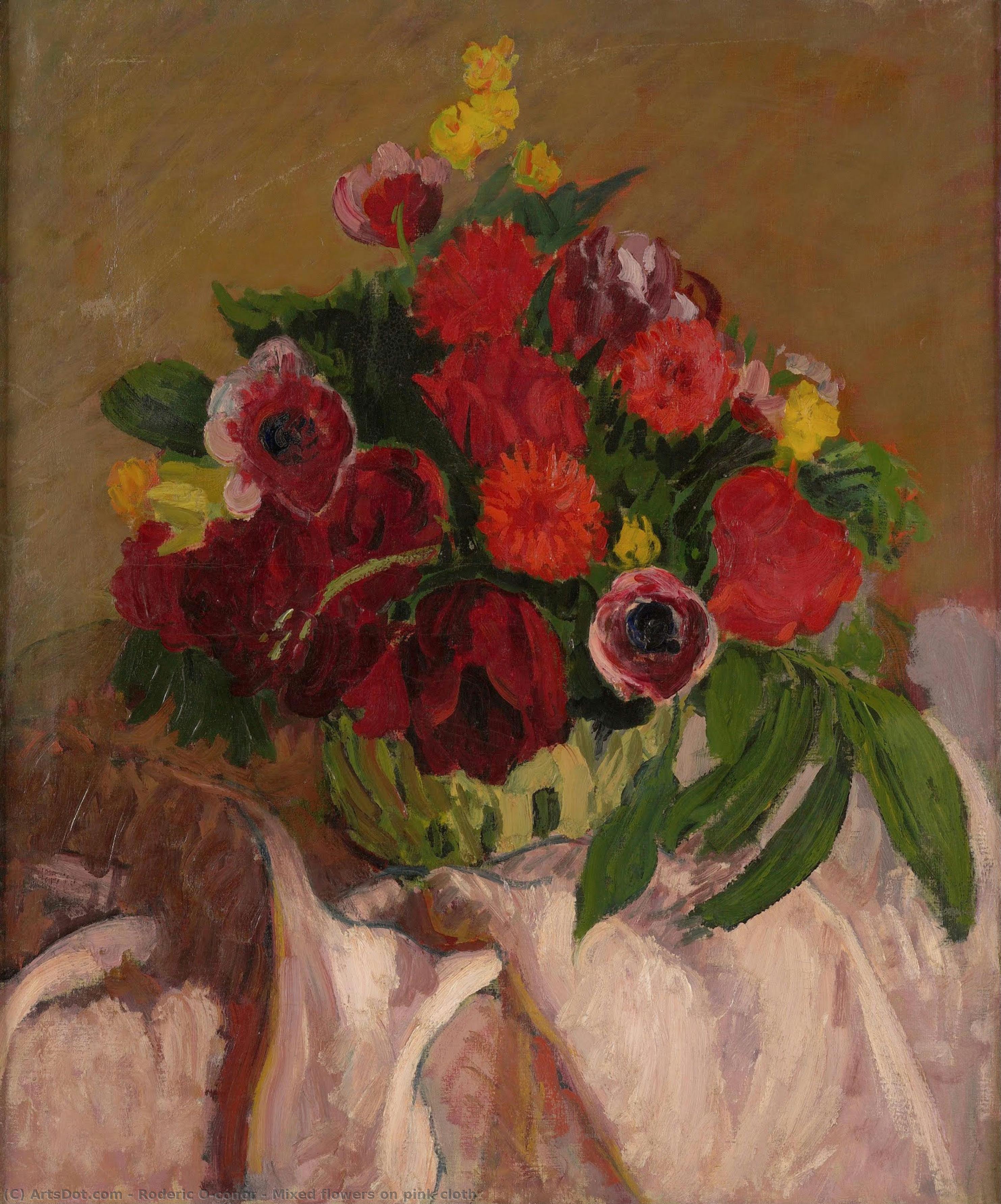
Roderic O’Conor: Mixed Flowers on Pink Cloth – A Symphony of Color and Emotion
Roderic O’Conor (1860-1940) stands as a pivotal figure in the Irish art landscape, embodying the spirit of Impressionism and forging a unique path within the burgeoning Expressionist movement. Born in Milltown, County Roscommon, his artistic journey began with formal training at Ampleforth College and the Royal Hibernian Academy, equipping him with both academic rigor and an innate sensitivity to visual experience—a duality that would profoundly shape his oeuvre. His formative years spent absorbing the influence of Van Gogh cemented a stylistic commitment to capturing fleeting moments of light and emotion through bold brushstrokes and vibrant hues, establishing him as one of the earliest adopters of this revolutionary technique. Crucially, O’Conor's artistic maturation occurred during his residency at Pont-Aven in Brittany—a collaborative crucible with Paul Gauguin—where he embraced synthetism, prioritizing subjective feeling alongside formal considerations. This embrace of Gauguin’s Romantic vision resulted in a distinctive aesthetic characterized by high-keyed palettes and expressive brushwork, mirroring the stylistic currents circulating throughout Europe at the time.
- Style: Primarily Impressionist and Post-Impressionist – O'Conor skillfully blended elements of both movements, prioritizing emotional resonance over meticulous realism.
- Technique: Employing “wet-on-wet” painting—a technique championed by Gauguin and Van Gogh—O’Conor achieved luminous effects through layering paint directly onto the canvas while it was still wet, allowing for seamless blending and capturing subtle nuances of light and color.
- Color Palette: Dominated by a fiery red scheme, punctuated by acidic greens and yellows, reflecting O’Conor's fascination with color as a vehicle for conveying emotion. The juxtaposition of crimson blooms against the pastel hues of the vase creates a dynamic visual interplay.
Historical Context & Influences
O’Conor’s artistic development coincided with the rise of Expressionism in Paris, where he joined forces with fellow artists like Maurice de Vlaminck and André Derain—a collective dedicated to exploring psychological depth and conveying subjective experience. This milieu fostered a dialogue between academic tradition and avant-garde experimentation, mirroring broader cultural shifts toward embracing emotion and challenging conventional artistic norms. The Pont-Aven colony served as an incubator for synthetism, encouraging artists to distill their observations into simplified forms imbued with symbolic significance—a stylistic impulse evident in O’Conor's work. Gauguin’s influence is palpable in the artist’s deliberate use of color and his exploration of primal emotions, mirroring the Romantic preoccupation with nature and spirituality.
Symbolism & Emotional Impact
The dominant red hue within *Mixed Flowers on Pink Cloth* transcends mere chromatic representation; it embodies passion, vitality, and perhaps even a hint of melancholy—a deliberate choice reflecting O’Conor's artistic sensibility. The luminous pink tablecloth acts as a visual anchor, suggesting an ethereal atmosphere that envelops the floral arrangement, inviting contemplation and conveying a sense of serenity amidst vibrant color. Furthermore, the artist’s technique—characterized by loose brushstrokes and impasto highlights—captures the tactile quality of the painting, engaging the viewer's senses and fostering an emotional connection to the subject matter. Like Pierre Bonnard, O’Conor sought to evoke feeling rather than depict precise detail, prioritizing visual suggestion over literal representation—a hallmark of his distinctive artistic vision.
Conclusion
Roderic O’Conor's *Mixed Flowers on Pink Cloth* remains a testament to the transformative power of Impressionism and Expressionism, demonstrating how artists can harness color and technique to communicate profound emotional truths. Its enduring appeal lies in its ability to capture not just the beauty of floral composition but also the intangible essence of human experience—a legacy that continues to inspire admiration and appreciation within the art world today.