Sebastiano del Piombo’s “The Visitation”: A Venetian Masterpiece of Spiritual Intimacy
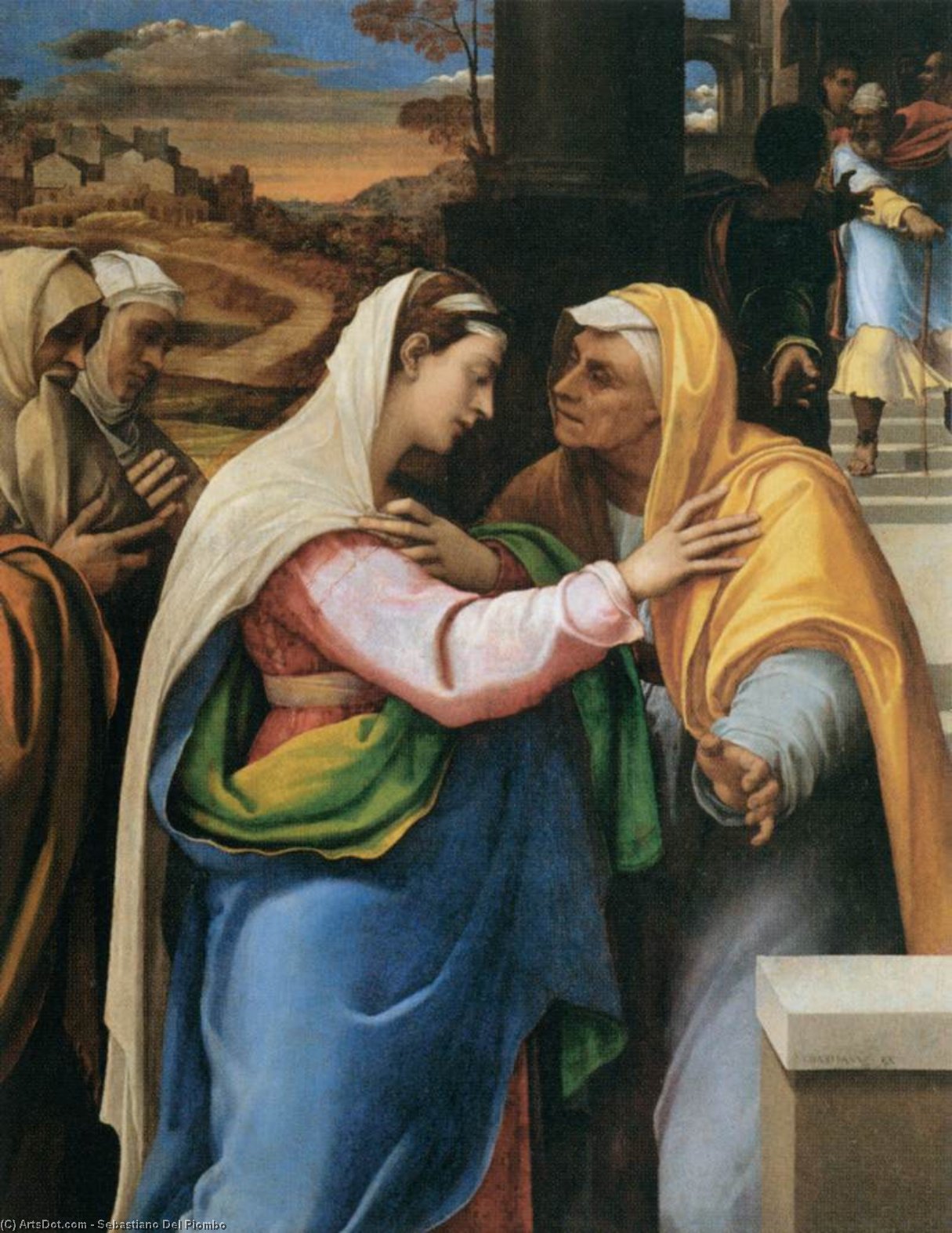
“The Visitation,” painted in 1518-19 by Sebastiano del Piombo, is not merely a depiction of a biblical scene; it's a profound meditation on faith, familial connection, and the quiet power of divine grace. Commissioned for Narbonne Cathedral in France, this monumental altarpiece—a rare example of a large-scale work from the artist—immediately captivates with its dramatic composition and luminous color palette, hallmarks of del Piombo’s distinctive Venetian style. It stands as a testament to his ability to synthesize the vibrant hues of Venice with the imposing grandeur of Rome, creating an image that is both deeply personal and universally resonant.
A Synthesis of Venetian Colorism and Roman Form
Del Piombo’s artistic journey was marked by a fascinating evolution. Initially trained in the traditions of Venice—influenced profoundly by Giorgione and Giovanni Bellini—he later relocated to Rome, where he encountered and absorbed the monumental scale and classical ideals championed by Michelangelo and Raphael. “The Visitation” brilliantly embodies this synthesis. The painting's rich, layered colors – deep reds, blues, and ochres – are distinctly Venetian, evoking a sense of warmth and intimacy. Yet, these vibrant hues are deployed within a carefully structured composition that echoes the principles of Roman art: a clear pyramidal arrangement, precise anatomical detail, and a deliberate use of light and shadow to create depth and drama. The figures themselves possess a dignified solemnity, reflecting the artist’s engagement with the classical tradition.
Symbolism and Narrative Depth
The scene depicted—the visit of Mary to Elizabeth, foretelling the birth of John the Baptist and Jesus – is rich in symbolic meaning. The figures are arranged within a carefully constructed architectural setting, suggesting a sacred space imbued with spiritual significance. Mary, clad in a flowing crimson robe, stands slightly forward, her gesture of blessing radiating outwards. Her youthful beauty contrasts subtly with Elizabeth’s more mature appearance, symbolizing the passage of time and the fulfillment of prophecy. The presence of the three birds—one perched near the top left corner, another towards the middle-left area, and the third at the bottom left corner – adds a layer of enigmatic symbolism, perhaps alluding to the Trinity or the divine messengers accompanying the sacred event. The inclusion of the Jewish figures in the background, contemplating the scene, subtly hints at the broader narrative arc of salvation.
Technique and Artistic Innovation
Del Piombo’s masterful technique is evident throughout “The Visitation.” He employs a complex layering of glazes to achieve remarkable luminosity and depth. The figures are rendered with meticulous detail, capturing not only their physical appearance but also their emotional states. Notably, the painting was originally conceived as a mural for Narbonne Cathedral, suggesting a scale and ambition rarely seen in his later works. While much of the original surface has been lost or altered over time, the surviving sections reveal the artist’s innovative approach to color and composition. The careful restoration efforts have also shed light on the multiple layers of paint beneath, revealing traces of earlier attempts at execution – a testament to the complexities of the work's history.
A Timeless Portrait of Spiritual Connection
“The Visitation” transcends its biblical subject matter to become a powerful meditation on human connection and faith. Del Piombo’s ability to capture both the physical beauty and the spiritual depth of his subjects is truly remarkable. The painting's enduring appeal lies in its capacity to evoke a sense of quiet contemplation, inviting viewers to reflect on themes of family, prophecy, and divine grace. It remains a significant work in the artist’s oeuvre, showcasing his unique synthesis of Venetian colorism and Roman grandeur—a masterpiece that continues to resonate with audiences today.