 Vorschau anzeigen
 Versenden
 Teilen
 Details anzeigen

 Herunterladen
 Ähnliche Objekte
 Röntgenaufnahme
 Diashow
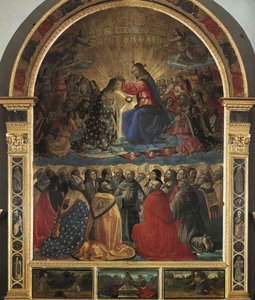
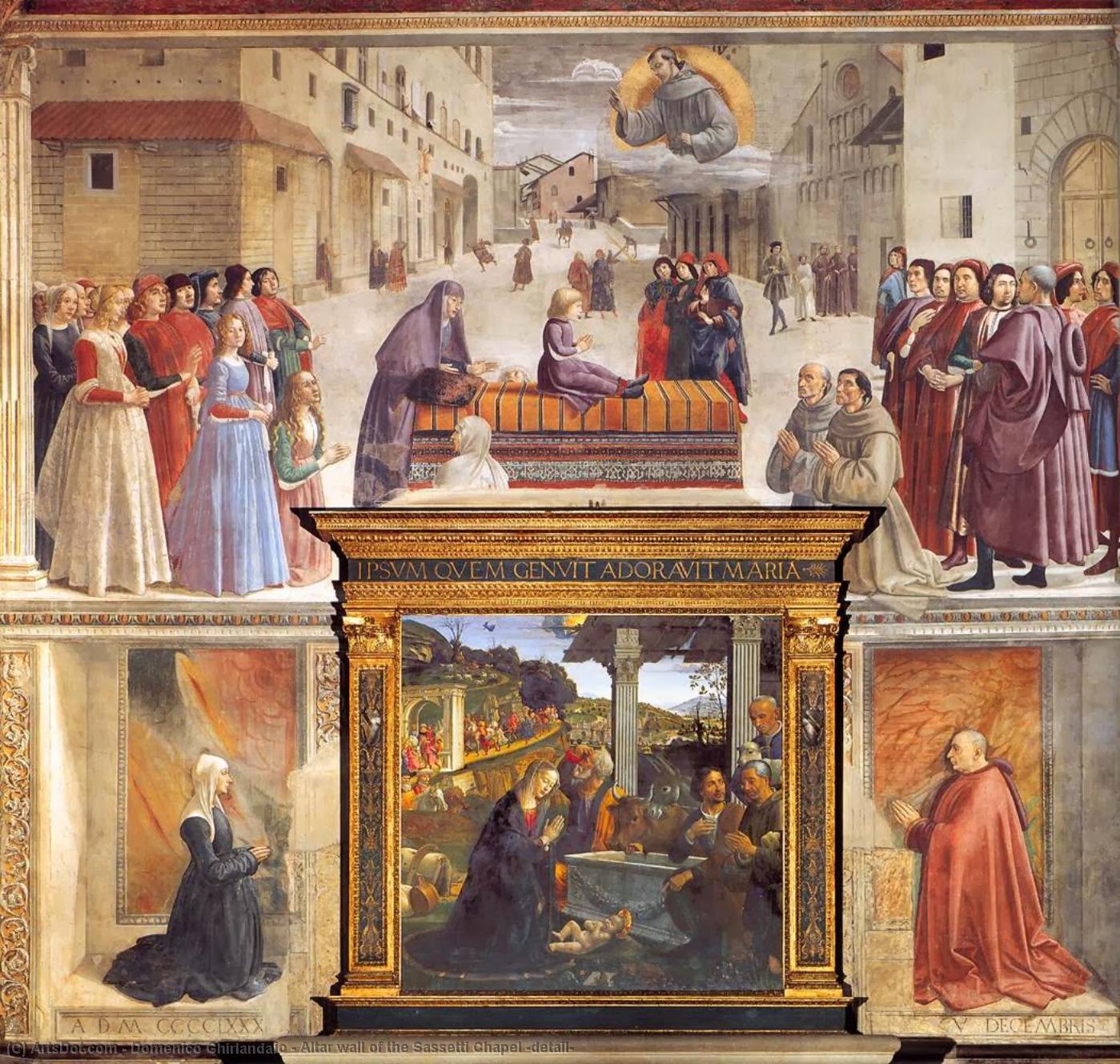
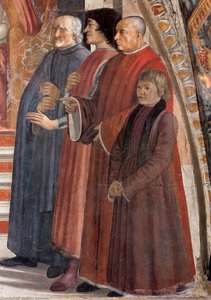
Altar wall of the Sassetti Chapel (detail)


 Weiterlesen
Giclée / Kunstdruck
Giclée- oder Leinwanddruck in Museumsqualität mit schneller Produktion und flexiblen Veredelungsoptionen. ( Handgemalte Reproduktion bestellen Bild kaufen)




P118B $10

P118H $10

P118W $10

P438Z $10

P508JH $12

P508YH $12

P805H $10

P805Z $10

P919BZ $10

P919G $10

P919XJ $10

P959ZH $10

P968JZ $12

W106C $8

W218G $10

W218JH $8

W218Y $10

W307PJ $10

W316G $10

W316PJ $8

W316Y $10

W398PJ $8

W4111J $10

W500HY $15

W500JH $15

W692G $12

W849H $8

W940BG $15

W953PJ $8




Wählen Sie aus unseren vordefinierten Formaten, die den ursprünglichen Proportionen des Kunstwerks entsprechen.

Sie können Ihre eigenen Maße eingeben, um ein bestimmtes Format oder einen speziellen Platz einzupassen. Wenn das von Ihnen gewählte Format nicht den Proportionen des Originalbildes entspricht, werden wir das Kunstwerk entweder beschneiden oder das Bild mit einem gespiegelten oder einfarbigen Rand erweitern. Ein digitaler Entwurf wird Ihnen zur Genehmigung zugesandt, bevor die Produktion beginnt.
Bitte beachten Sie, dass die Vorschau auf dem Bildschirm nicht den tatsächlichen Zuschnitt oder die Erweiterung widerspiegelt. Nur der Entwurf zeigt die endgültige Komposition präzise an.
Obwohl Sondermaße verfügbar sind, empfehlen wir die Auswahl eines Maßes aus der vordefinierten Liste, um die ursprünglichen Proportionen zu bewahren.
Weltweiter Versand () innerhalb von 2 Wochen statt der üblichen 4/5 Wochen. (2 September)

Kostenloser weltweiter Expressversand

Hochwertige Leinenleinwand

Umfassender Versicherungsschutz beim Versand

Zollgebühren-Rückerstattungsgarantie

Garantie für exakte Farbtreue

60 Tage Rückgaberecht (nur bei Mängeln)

100% Geld-zurück-Garantie

Mengenrabatt verfügbar
 Die Glasoption ist nur für Größen unter 110 cm verfügbar.

Altar wall of the Sassetti Chapel (detail)
Giclée / Kunstdruck
Format der Reproduktion
-


Gesamtpreis
$ 62
A Glimpse into Florentine Life: The Altar Wall of the Sassetti Chapel
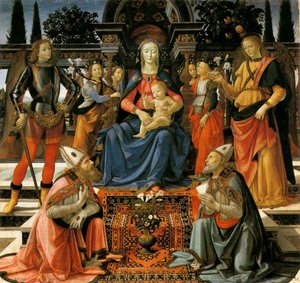
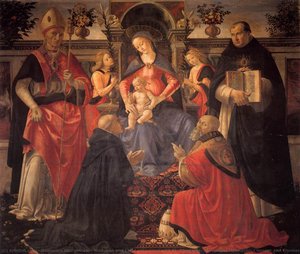
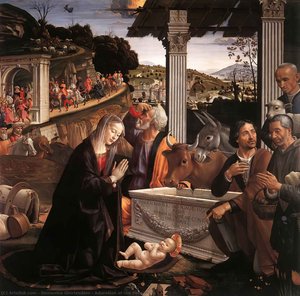
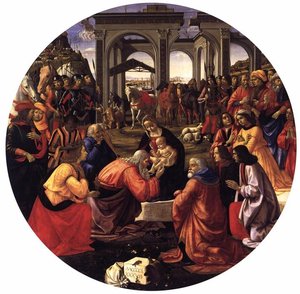
Domenico Ghirlandaio’s “Altar Wall of the Sassetti Chapel” is more than just a fresco; it's a vibrant snapshot of 15th-century Florence, meticulously rendered with an astonishing blend of realism and humanist ideals. Located within the intimate Sassetti Chapel in Santa Trinita Basilica, this detail offers a captivating window into the lives of Florentine citizens, merchants, and the powerful Medici family who shaped the city’s destiny. The scene unfolds as a lively tableau vivant – a bustling marketplace interwoven with religious symbolism, all bathed in the warm, diffused light characteristic of Ghirlandaio's masterful technique.
Ghirlandaio, a key figure in the Florentine Renaissance, was renowned for his ability to capture the essence of contemporary life within the framework of religious narratives. He skillfully employed *disegno*, the careful planning and drawing stage of artistic creation, ensuring that every figure, garment, and architectural detail was rendered with precision and accuracy. The fresco’s palette is rich and earthy – ochres, reds, and greens dominate, creating a sense of warmth and immediacy. Notice how Ghirlandaio uses subtle variations in tone to model the forms of the figures, giving them a remarkable three-dimensionality.
The Figures: A Portrait of Florentine Society
At the heart of the composition are Francesco Sassetti and his wife, Nera Corsi, prominent merchants who commissioned the chapel. Their portraits, positioned prominently at the altar, serve as both patrons and focal points for the scene. Surrounding them is a cast of characters representing various segments of Florentine society: a merchant haggling over prices, a young boy playing with a hoop, a woman carrying water – each figure imbued with individual personality and detail. Ghirlandaio’s genius lies in his ability to transform these everyday scenes into works of art, elevating the mundane to the level of timeless beauty.
The figures are not merely decorative; they are carefully arranged within a complex symbolic framework. The scene is framed by architectural elements – arches and pilasters – that echo the grandeur of Florentine palaces. These details subtly reinforce the chapel’s status as a testament to Sassetti's wealth and influence. Observe how Ghirlandaio integrates classical motifs, such as columns and pediments, into the composition, reflecting the Renaissance fascination with ancient Greece and Rome.
Symbolism and Narrative
Beyond its realistic depiction of Florentine life, the fresco is laden with religious symbolism. The central scene – the Adoration of the Shepherds – alludes to the Nativity story, while subtle references to biblical figures and themes are woven throughout the composition. The inclusion of a Roman notary’s son being revived by St. Francis speaks to the importance of faith and compassion within Florentine society. Ghirlandaio masterfully blends these religious elements with secular details, creating a harmonious whole that celebrates both the spiritual and earthly realms.
Furthermore, the use of perspective—particularly in the depiction of Florence’s skyline—demonstrates Ghirlandaio's innovative approach to Renaissance art. The distant view of the Romanesque façade of Santissima Trinita and the Palazzo Spini provides a sense of depth and realism that was groundbreaking for its time. This attention to detail not only enhances the visual impact of the fresco but also reflects Ghirlandaio’s deep understanding of Florentine geography and architecture.
A Legacy of Beauty
The “Altar Wall of the Sassetti Chapel” stands as a testament to Domenico Ghirlandaio's artistic skill, his keen observation of human nature, and his profound engagement with the cultural landscape of Renaissance Florence. Reproductions capture much of this beauty, offering a tangible connection to this remarkable work of art. It’s a window into a bygone era, inviting us to contemplate the lives of those who came before us and appreciate the enduring power of art to illuminate our understanding of history and humanity.
Ähnliche Kunstwerke
Über den Künstler
Frühes Leben und Ausbildung
Domenico di Tommaso Curradi di Doffo Bigordi, bekannt als Domenico Ghirlandaio, wurde 1449 in Florenz, Italien, geboren. Er gehörte zur sogenannten "dritten Generation" der Florentiner Renaissance, zusammen mit Verrocchio, den Pollaiolo-Brüdern und Sandro Botticelli. Ghirlandaios frühes Leben war geprägt von seiner Lehrzeit bei seinem Vater, einem Goldschmied, wo er seine Fähigkeiten in der Herstellung metallischer, garlandähnlicher Haarschmucke für florentinische Frauen entwickelte. Dies führte zu seinem Spitznamen "il Ghirlandaio" (Garlandmacher). Später studierte er Malerei und Mosaik unter Alesso Baldovinetti.Künstlerische Karriere
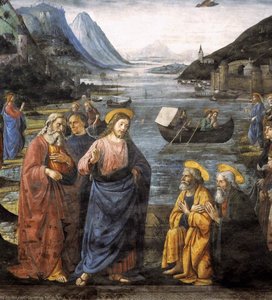
Ghirlandaios künstlerische Karriere zeichnet sich durch sein außergewöhnliches Talent aus, zeitgenössisches Leben und Porträts in religiöse Erzählungen einzubinden. Dies brachte ihm große Popularität und zahlreiche Großaufträge ein. Seine Werkstatt, die seine Brüder Davide und Benedetto Ghirlandaio umfasste, war äußerst effizient und produktiv.- Ghirlandaios bemerkenswerteste Werke sind die Freskenzyklen in der Sassetti-Kapelle von Santa Trinita (1482–1485) und die Berufung der Apostel in der Sixtinischen Kapelle (1483).
- Sein Stil ist durch seine Fähigkeit gekennzeichnet, Darstellungen des zeitgenössischen Lebens in religiöse Erzählungen zu integrieren und so seinen Werken eine gewisse Realität zu verleihen.
- Sein Schwager Sebastiano Mainardi assistierte ihm bei diesen Aufträgen und an den frühen Fresken in San Gimignano.
Wichtige Werke und Vermächtnis
Ghirlandaio hinterließ ein bedeutendes künstlerisches Erbe, das bis heute bewundert wird.- Erkunden Sie Domenico Ghirlandaios Werke auf ArtsDot
- St. Hieronymus in seiner Studienkammer (1480), ein Gegenstück zu Botticellis St. Augustinus in seiner Studienkammer, demonstriert Ghirlandaios Können im Freskenmalerei.
- Die Verherrlichung des St. Zenobius (1482) im Sala del Giglio, Palazzo Vecchio, ist ein Beispiel für seine kompositorische Fähigkeit und Perspektive.
Einflüsse und Entwicklung
Ghirlandaio wurde von Künstlern wie Alesso Baldovinetti und Andrea del Verrocchio beeinflusst. Er entwickelte seinen eigenen Stil, der sich durch eine klare Linienführung, lebendige Farben und eine realistische Darstellung von Figuren auszeichnete. Sein Interesse am zeitgenössischen Leben führte dazu, dass er seine Porträts oft mit Details aus dem Alltagsleben anreicherte, was seine Werke für viele Betrachter besonders ansprechend machte. Er war ein Meister der Freskenmalerei und schuf beeindruckende zyklische Darstellungen religiöser Geschichten. Sein Einfluss auf nachfolgende Künstler, insbesondere auf Michelangelo, ist unbestreitbar.Historische Bedeutung
Domenico Ghirlandaio spielte eine wichtige Rolle in der Florentiner Renaissance. Seine Fähigkeit, Realismus und zeitgenössische Elemente in seine religiösen Darstellungen zu integrieren, trug dazu bei, die Kunst dieser Epoche zu prägen. Er war ein gefragter Künstler für bedeutende Familien wie die Medici und Tornabuoni, was seinen Status als einer der führenden Maler seiner Zeit unterstreicht. Sein Werk beeinflusste zahlreiche nachfolgende Generationen von Künstlern und bleibt bis heute ein wichtiger Bestandteil des italienischen Kunstkanons.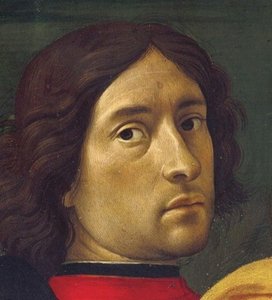
Domenico Ghirlandaio
1449 - 1494 , Italien
Kurzinfos
- Beeinflusste Künstler: ['Michelangelo Buonarroti']
- Bemerkenswerte Werke:
- St. Hieronymus in seiner Werkstatt
- Verkündigung (Detail)
- Die Berufung der Apostel
- Geburtsdatum: 2. Juni 1448
- Geburtsort: Florenz, Italien
- Künstlerische Bewegung: Frührenaissance
- Nationalität: Italiener
- Todatum: 11. Januar 1494
- Vollständiger Name: Domenico Ghirlandaio
Ähnliche Artikel

Das Familienerbe an die Wand bringen: Wandgemälde als Generationenschatz
Verwandeln Sie Ihre Familiengeschichte in ein beeindruckendes Wandgemälde! Expertenrat & hochwertige Handwerkskunst für einzigartige Kunstwerke, die Generationen verbinden. Entdecken Sie jetzt!

The Enduring Legacy of Fresco Painting: Techniques, History & Contemporary Relevance
Explore the rich history & enduring artistry of fresco painting – from Giotto to Michelangelo! Discover techniques, conservation efforts, & modern applications. Learn how ArtsDot brings this timeless art form to your home.

The Enduring Legacy of Fresco: Technique, History & Artistic Expression Across Cultures
Explore the rich history & enduring legacy of fresco painting! Discover ancient techniques, Giotto's masterpieces, and modern applications. Expert insights for art lovers & professionals.
Die bleibende Pracht der Freskomalerei: Technik, Geschichte und künstlerischer Ausdruck
Entdecken Sie die faszinierende Welt der Freskomalerei! Von den Ursprüngen bis zur Renaissance – wir beleuchten Technik, Geschichte und künstlerischen Ausdruck dieser einzigartigen Kunstform. Expertenwissen für Sammler & Liebhaber.

Kunst, die mit Ihnen lebt: Emotionale Kraft individueller Innenraumfresken
Entdecken Sie die emotionale Kraft individueller Innenraumfresken! Expertenberatung & hochwertige Wandmalerei für Hotels, Wohnräume & mehr. – Ihr Partner für einzigartige Kunst.