

 Vorschau anzeigen
 Versenden
 Teilen
 Details anzeigen

 Herunterladen
 Ähnliche Objekte
 Röntgenaufnahme
 Diashow
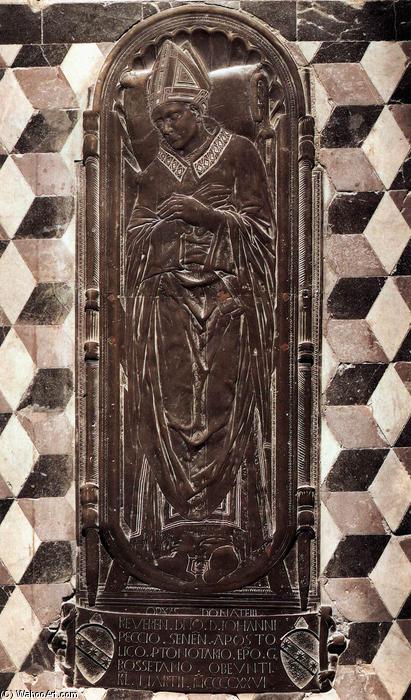
Tombstone of Bishop Giovanni Pecci
 Acrylic On Canvas
- WallArt
- Early Renaissance
 1426
1426 247.0 x 88.0 cm
 Duomo
Duomo
 Weiterlesen
Erwerben Sie ein hochauflösendes, optimiertes digitales Bild, das der Online-Vorschau weit überlegen ist.
Jede Datei wird von unseren hauseigenen Spezialisten mit modernsten Werkzeugen und fachmännischer manueller Retusche sorgfältig vorbereitet. Wir stellen sicher, dass jedes Bild eine außergewöhnliche Klarheit, präzise Farbgenauigkeit und feinste Details aufweist.
Die endgültige Datei wird innerhalb von 72 Stunden per E-Mail zugestellt und ist für den sofortigen Einsatz in professionellen, redaktionellen und Druckumgebungen optimiert. Es handelt sich um dieselbe Qualität, der führende Designstudios, Verlage und Galerien vertrauen.
Digitales Bild
Laden Sie eine hochauflösende Datei für die persönliche Präsentation, den Druck und kreative Projekte herunter. ( Druck bestellen Handgemalte Reproduktion bestellen)
In jeder Bestellung digitaler Bilder enthalten
Professionelle digitale Bereitstellung, garantiert
Wenn Sie sich für ArtsDot.com entscheiden, erhalten Sie nicht nur ein Bild – Sie erhalten ein professionell aufbereitetes digitales Kunstwerk, das mit höchster Präzision erstellt und durch eine Zufriedenheitsgarantie abgesichert wird. Hier ist alles, was automatisch mit Ihrer Bestellung geliefert wird:

Schnelle E-Mail-Zustellung
Ihre hochauflösende digitale Bilddatei wird Ihnen innerhalb von 72 Stunden nach der Bestellung per E-Mail zugestellt – bereit zur sofortigen Verwendung.

KI-optimierte digitale Datei
Ihre Kunstwerke werden professionell mithilfe fortschrittlicher KI-Tools und manueller Bearbeitung optimiert, um maximale Detailtreue, Klarheit und Farbgenauigkeit zu gewährleisten.

Lebenslanger kostenloser Neudruckservice
Datei versehentlich gelöscht oder verloren? Keine Sorge – wir senden sie Ihnen jederzeit kostenlos erneut zu.

Keine Einfuhrgebühren – jemals
Genießen Sie Ihr Kunstwerk sofort ohne Zollgebühren, Einfuhrabgaben oder Versandkosten – digitale Downloads sind immer steuerfrei.

Garantierte Farbtreue
Wir garantieren, dass Ihr digitales Bild mithilfe professioneller Werkzeuge und Farbmanagement die Originalfarben so präzise wie möglich wiedergibt.

60-Tage-Zufriedenheitsgarantie
Sollten Sie mit Ihrem digitalen Bild nicht zufrieden sein, werden wir es überarbeiten oder Ihnen innerhalb von 60 Tagen 100% erstatten – ohne Wenn und Aber.

100% Geld-zurück-Garantie
Nicht zufrieden? Erhalten Sie innerhalb von 60 Tagen nach Erhalt Ihrer digitalen Datei eine vollständige Rückerstattung – ohne Angabe von Gründen.

Rabatte bei Großbestellungen
3 Bilder kaufen, 10% sparen – 5 Bilder kaufen, 15% sparen – Ab 10 Bildern 20% sparen. Ideal für kreative Projekte, Galerien und Agenturen.
Details zum Sammlerstück
The Bishop’s Silent Testament: Donatello's Tombstone of Giovanni Pecci
Within the echoing grandeur of Siena Cathedral resides a sculpture that transcends mere funerary art – it is, fundamentally, a meditation on life, death, and the enduring power of memory. Donatello’s “Tombstone of Bishop Giovanni Pecci,” crafted around 1427, isn't simply a depiction of a deceased cleric; it’s an exquisitely realized illusion, a carefully constructed stage for contemplation, and a testament to the artist’s mastery of both classical form and deeply human emotion. The piece immediately captivates with its remarkably lifelike portrayal of Pecci, lying supine within a concave bier, his face serene yet imbued with a palpable sense of repose. This isn't a static representation; Donatello deliberately manipulates perspective to draw the viewer into the scene, creating an intimate and almost unsettlingly realistic encounter with the departed bishop.
A Renaissance Masterpiece: Technique and Materials
Sculted in pristine white marble, the tomb’s surface is a marvel of technical precision. Donatello employed a technique known as “contrapposto,” positioning Pecci's body with a subtle shift in weight that lends him an air of naturalism and movement. The drapery, meticulously rendered, cascades around his form, suggesting both the formality of ecclesiastical attire and the vulnerability of human flesh. Crucially, Donatello utilized a shallow relief technique – a departure from the more deeply incised forms favored by his predecessors – which allowed for greater detail and luminosity within the marble itself. This choice dramatically enhanced the illusion of three-dimensionality, making the tomb appear as if it were an actual space containing a tangible figure. The use of polished marble further contributes to this effect, reflecting light and creating a sense of depth and atmosphere.
Symbolism and Context: A Bishop’s Legacy
The “Tombstone of Giovanni Pecci” is deeply rooted in the cultural and religious context of 15th-century Siena. Pecci, as bishop of Grosseto and apostolic protonotary, held a significant position within the city's ecclesiastical hierarchy. The tomb’s placement within the cathedral’s central choir – a location reserved for prominent figures – underscores his importance and reflects the community’s desire to honor his memory. Beyond its purely commemorative function, the sculpture is laden with symbolic meaning. The concave bier itself represents the embrace of death, while the serene expression on Pecci's face suggests acceptance and peace. The inclusion of a book in his hand—a common motif in funerary art—symbolizes his spiritual life and readiness for judgment. Interestingly, Donatello’s work also reflects humanist ideals prevalent during the Renaissance, emphasizing human dignity and individual worth even in death.
Beyond the Stone: The Viewer's Role
Donatello wasn’t merely creating a portrait of a deceased bishop; he was designing an experience. The artist meticulously positioned the tomb to be viewed from a specific angle, inviting the viewer to step into the scene and become an active participant in Pecci’s remembrance. This deliberate manipulation of perspective—a technique often referred to as “active viewing”—transforms the tomb into a stage for contemplation. The illusion of depth created by Donatello's masterful carving draws the eye inward, fostering a sense of intimacy and connection with the departed figure. The placement within the cathedral further amplified this effect, creating a sacred space where visitors could pause, reflect, and engage in a silent dialogue with Pecci’s memory. It is a powerful reminder that art, at its most profound, invites us to transcend the boundaries of time and space.
A Timeless Reflection: Reproduction and Appreciation
Reproductions of Donatello's “Tombstone of Bishop Giovanni Pecci” offer a remarkable opportunity to experience the artistry and emotional depth of this iconic sculpture. When selecting a reproduction, consider the materials used – high-quality archival paper and pigment are essential for capturing the nuances of color and texture. The scale of the reproduction should also be carefully considered, allowing you to appreciate the intricate details of Donatello’s carving. Whether displayed in a private residence or a public space, this artwork continues to resonate with viewers, serving as a poignant reminder of the enduring power of art to capture the essence of human experience and preserve our collective memory.
Ähnliche Kunstwerke
Biografie des Künstlers
Frühes Leben und Karriere
Donato di Niccolò di Betto Bardi, bekannt als Donatello, wurde um 1386 in Florenz, Italien geboren. Er studierte klassische Bildhauerei, was seine Entwicklung eines frühen Renaissance-Stils stark beeinflusste. Dieser neue Ansatz für Kunst und Kultur sollte schließlich zum Kennzeichen der florentinischen Renaissance werden.Schlüsselwerke und Innovationen
Donatellos berühmtestes Werk, David, war seit der Antike die erste freistehende nackte männliche Skulptur. Sie wurde von der Familie Medici in Auftrag gegeben und zeigte seinen innovativen Stil und seine technische Expertise. Zu den anderen bemerkenswerten Werken gehören:- St. Louis von Toulouse (jetzt im Museum der Basilika di Santa Croce), das einen klassischen Rahmen aufwies, der von Donatello entworfen wurde.
- Das Opfer des Isaak, geschaffen für den Campanile von Santa Maria del Fiore in Florenz, zeichnete sich durch starke Porträtdetails aus.
- Kreuzifix (1425) für Santa Croce, das Christus in einem Moment der Agonie darstellte.
Künstlerischer Stil und Vermächtnis
Donatellos Stil lässt sich in breite Phasen einteilen, beginnend mit der Entwicklung von Ausdruckskraft und klassischer Monumentalität. Seine Arbeit wurde nicht sofort von der Gemeinschaft akzeptiert, entwickelte sich aber schließlich zum beliebtesten und beeinflusste andere italienische Höfe und europäische Künstler. Wichtige Kunstbewegungen:Persönliches Leben und Arbeitsweise
Donatello war bekannt dafür, liebenswert und gutmütig zu sein, aber schlecht in der geschäftlichen Seite seiner Karriere. Er nahm oft mehr Aufträge an, als er bewältigen konnte, und vollendete Werke häufig verspätet oder übergab sie anderen Bildhauern. Bemerkenswerte Kunstwerke und Künstler:- Leonardo da Vinci: Ankündigung (Detail)
- Amico Aspertini: Statua di Pan/Leone che azzanna un cavallo
- Michelangelo Buonarroti: Tondo Pitt
Museen und Kunstsammlungen:
- Museo della Collegiata (Empoli, Italien): Ein verstecktes Juwel der Renaissance mit Werken von Francesco Botticini und Raffaello Botticini.
- Die frühe italienische Kunstbewegung der Renaissance
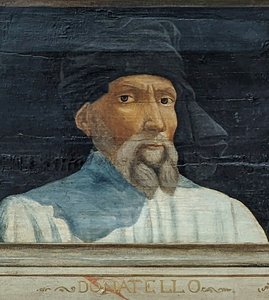
Donatello
1386 - 1466 , Italien
Kurzinfos
- Beeinflusste Künstler:
- Leonardo da Vinci
- Michelangelo Buonarroti
- Bemerkenswerte Werke:
- David
- St. Louis von Toulouse
- Das Opfer des Isaak
- Kreuzifix (1425)
- Geburtsdatum: ca. 1386
- Geburtsort: Florenz, Italien
- Künstlerische Bewegung:
- Frührenaissance
- Florentiner Renaissance
- Künstlerische Einflüsse: ['Antike Skulptur']
- Nationalität: Italiener
- Sterbedatum: 1466
- Vollständiger Name: Donatello (Donato di Niccolò)

