 Vorschau anzeigen
 Versenden
 Teilen
 Details anzeigen

 Herunterladen
 Ähnliche Objekte
 Röntgenaufnahme
 Diashow
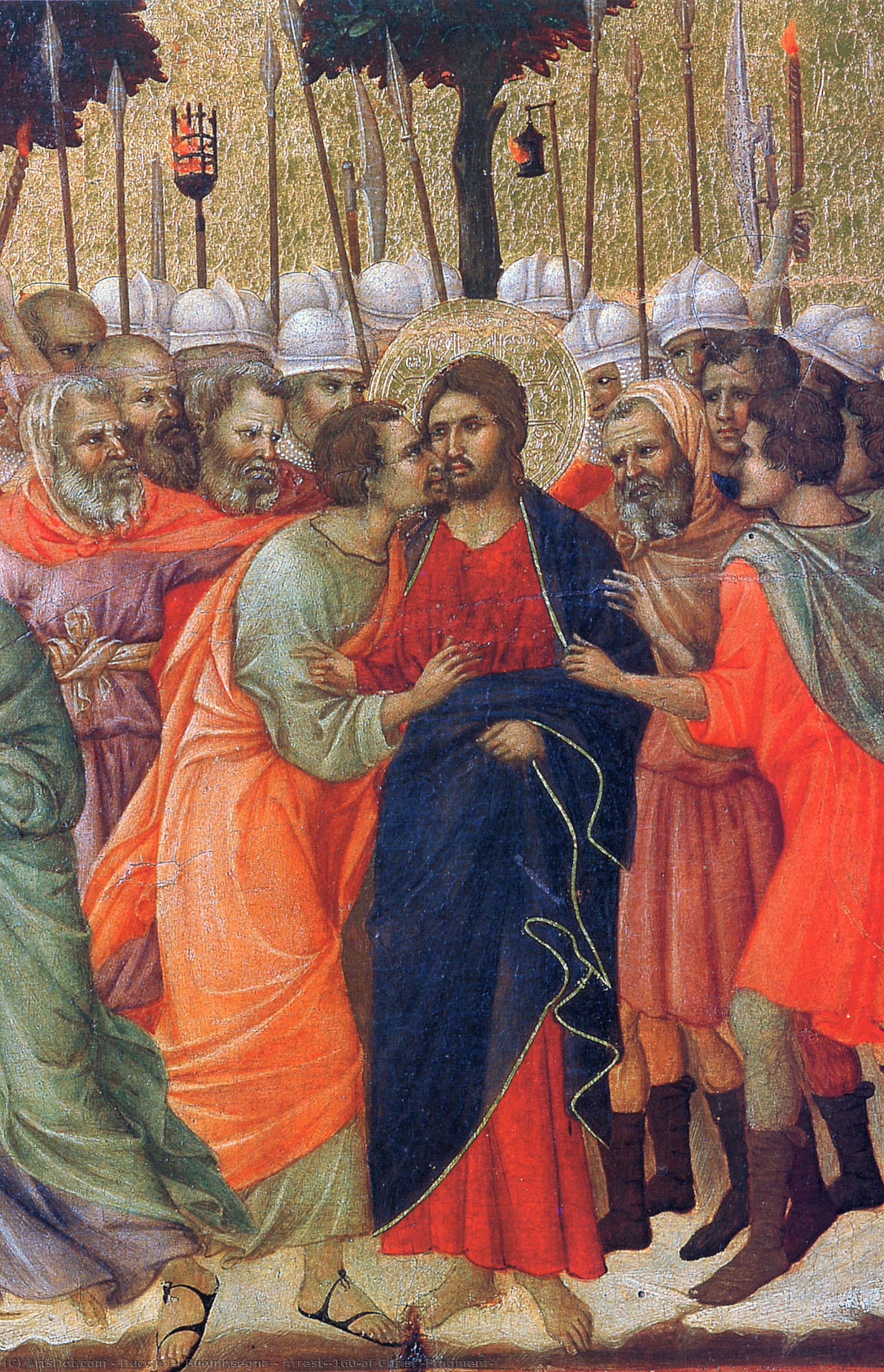
Arrest of Christ (Fragment)


 Weiterlesen
Giclée / Kunstdruck
Giclée- oder Leinwanddruck in Museumsqualität mit schneller Produktion und flexiblen Veredelungsoptionen. ( Handgemalte Reproduktion bestellen Bild kaufen)




P118B $10

P118H $10

P118W $10

P438Z $10

P508JH $12

P508YH $12

P805H $10

P805Z $10

P919BZ $10

P919G $10

P919XJ $10

P959ZH $10

P968JZ $12

W106C $8

W218G $10

W218JH $8

W218Y $10

W307PJ $10

W316G $10

W316PJ $8

W316Y $10

W398PJ $8

W4111J $10

W500HY $15

W500JH $15

W692G $12

W849H $8

W940BG $15

W953PJ $8




Wählen Sie aus unseren vordefinierten Formaten, die den ursprünglichen Proportionen des Kunstwerks entsprechen.

Sie können Ihre eigenen Maße eingeben, um ein bestimmtes Format oder einen speziellen Platz einzupassen. Wenn das von Ihnen gewählte Format nicht den Proportionen des Originalbildes entspricht, werden wir das Kunstwerk entweder beschneiden oder das Bild mit einem gespiegelten oder einfarbigen Rand erweitern. Ein digitaler Entwurf wird Ihnen zur Genehmigung zugesandt, bevor die Produktion beginnt.
Bitte beachten Sie, dass die Vorschau auf dem Bildschirm nicht den tatsächlichen Zuschnitt oder die Erweiterung widerspiegelt. Nur der Entwurf zeigt die endgültige Komposition präzise an.
Obwohl Sondermaße verfügbar sind, empfehlen wir die Auswahl eines Maßes aus der vordefinierten Liste, um die ursprünglichen Proportionen zu bewahren.
Weltweiter Versand () innerhalb von 2 Wochen statt der üblichen 4/5 Wochen. (25 August)

Kostenloser weltweiter Expressversand

Hochwertige Leinenleinwand

Umfassender Versicherungsschutz beim Versand

Zollgebühren-Rückerstattungsgarantie

Garantie für exakte Farbtreue

60 Tage Rückgaberecht (nur bei Mängeln)

100% Geld-zurück-Garantie

Mengenrabatt verfügbar
 Die Glasoption ist nur für Größen unter 110 cm verfügbar.

Arrest of Christ (Fragment)
Giclée / Kunstdruck
Format der Reproduktion
-


Gesamtpreis
$ 62
Sammlerstück-Beschreibung
A Moment Frozen in Time: The Drama of Duccio’s Arrest of Christ
In the quiet intensity of Duccio di Buoninsegna's Arrest of Christ (Fragment), we find ourselves standing at the precipice of a historical and spiritual revolution. Painted around 1311, this fragment is far more than a mere remnant of a larger altarpiece; it is a window into a transformative era where the rigid, celestial hierarchies of the Byzantine tradition began to yield to a burgeoning humanism. As we gaze upon the scene, the tension is palpable. The arrest of Jesus is not depicted as a distant, iconographic event, but as a visceral, unfolding tragedy. Through Duccio's masterful hand, the viewer is drawn into the chaotic energy of the crowd, where Roman soldiers and onlookers converge in a swirling composition of movement and mounting dread.
The technique employed here showcases the luminous brilliance of tempera on wood panel, a medium that allows for an extraordinary depth of color and fine textural detail. Duccio achieves a delicate balance between the stylized elegance of his predecessors and a new, daring naturalism. While the drapery of the figures retains a certain rhythmic, formal grace—echoing the spiritual authority of the Sienese School—there is an unmistakable sense of physical weight and emotional vulnerability in the faces and gestures. The artist’s ability to capture the play of light across surfaces creates a sense of divine presence amidst earthly turmoil, making the fragment feel alive with a pulse that has endured for over seven centuries.
Symbolism and the Soul of the Sienese School
Beyond the immediate narrative of conflict, every element within this composition whispers of deeper theological truths. The placement of objects near the central figure of Christ serves as a silent liturgy; for instance, the bowl and cup positioned near his head are not merely incidental details but profound symbols of the Eucharist, connecting the moment of his betrayal to the ultimate sacrifice of the sacrament. This layering of meaning ensures that the painting functions simultaneously as a historical record and a devotional tool, designed to stir the soul of the faithful and provoke contemplation on the nature of suffering and redemption.
For the discerning collector or interior designer, this piece offers an unparalleled opportunity to introduce a sense of profound history and intellectual depth into a space. A high-quality reproduction of this fragment brings with it the prestige of the Siena Cathedral’s legacy and the sophisticated aesthetic of the Proto-Renaissance. It is a work that commands attention not through sheer scale, but through its psychological complexity and the exquisite craftsmanship of its era. To possess such an image is to hold a piece of the dawn of modern Italian art, providing a focal point of grace, drama, and timeless beauty that can anchor any curated collection or elegantly designed room.
Ähnliche Kunstwerke
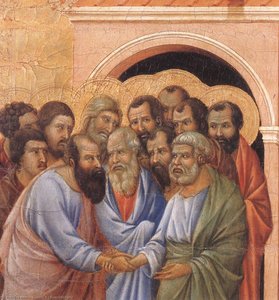
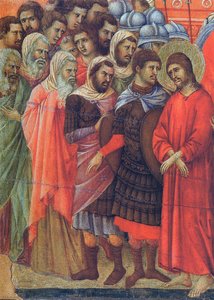
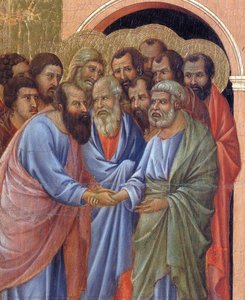
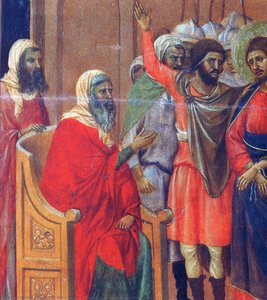
Über den Künstler
frühes Leben und Karriere
Duccio di Buoninsegna, ein renommierter italienischer Maler aus Siena, war in den späten 13. und frühen 14. Jahrhunderten tätig. Geboren im Jahr 1255, bleibt das persönliche Leben von Duccio in vielen Punkten ein Mysterium, wobei wenig über seinen Familienhintergrund oder seine frühe Lebenszeit bekannt ist. Dennoch sind seine Beiträge zur Trecento- und sienesischen Malstil gut dokumentiert.Künstlerischer Stil und Einflüsse
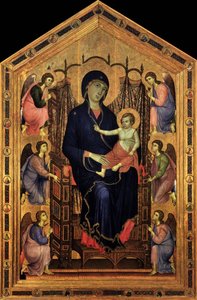
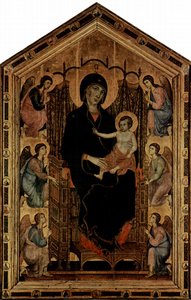
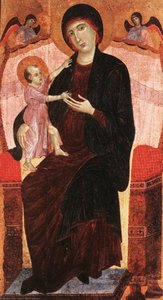
Die Werke von Duccio zeichnen sich durch die innovative Verwendung von Raum und Farbe aus, wie sie in seinem Meisterwerk die Rucellai Madonna (1285) zu sehen ist. Dieses Gemälde, das die Jungfrau Maria mit dem Christkind darstellt, umgeben von Engeln und Heiligen, zeigt Duccios einzigartigen Stil, der byzantinische Kunst mit neuen Techniken verbindet. Seine Verwendung von Modellierung und das Spiel mit Licht und Dunkelheit offenbaren Figuren unter schwerer Robenkleidung und schaffen so eine einladende und warme Atmosphäre.Bekannte Werke und Vermächtnis
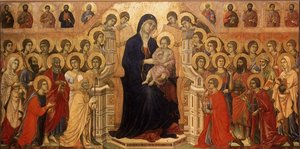
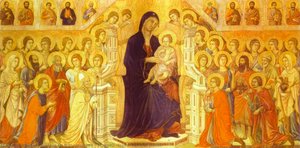
Zu Duccios bekanntesten Werken gehören:- Maestó (Vorderteil, Kronpaneele), Abschied der Apostel (Gotik, Öl) – ein Zeugnis seines innovativen Ansatzes für Raum und Farbe.
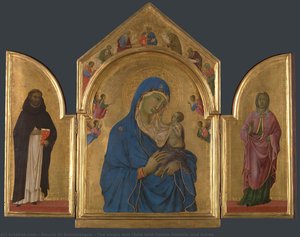
- Polyptych Nr. 28 (Die Heilige Jungfrau mit dem Christkind und vier Heiligen) (Gotik, Öl) – demonstriert Duccios Meisterschaft in der Komposition und Erzählung.
- Maestó (Rückseite, Unterbild), Versuchung auf einem Tempeldach (Gotik, Öl) – zeigt seine Fähigkeit, Licht und Dunkelheit auszugleichen.
Vermächtnis und Erinnerung
Trotz finanzieller Schwierigkeiten überwiegt Duccios künstlerisches Vermächtnis seine persönlichen Herausforderungen bei weitem. Seine Werke befinden sich in verschiedenen Museen und Galerien, darunter die Stadtgalerie Manchester, die zahlreiche Meisterwerke von renommierten Künstlern beherbergt. Anzeigen Sie Duccios di Buoninsegnas Kunstwerke auf ArtsDot.com Wikipedia: Duccio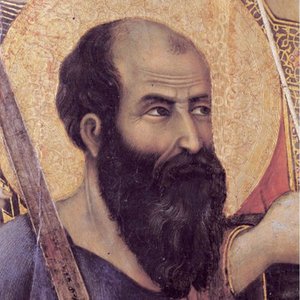
Duccio di Buoninsegna
1255 - 1319 , Italien
Kurzinfos
- Beeinflusste Künstler: ['Byzantinische Kunst']
- Bemerkenswerte Werke:
- Rucellai Madonna
- Maestà
- Flucht nach Ägypten
- Geburtsdatum: ca. 1255
- Geburtsort: Siena, Italien
- Künstlerische Bewegung: Trecento, Gotik
- Nationalität: Italienisch
- Sterbedatum: 1319
- Vollständiger Name: Duccio di Buoninsegna
- Von Ihm Beeinflusste Künstler: ['Sieneser Malerei']
Ähnliche Artikel
Meisterwerke des Hochmittelalters: 10 Kunstwerke für Ihr Zuhause | ArtsDot
Entdecken Sie die 10 bedeutendsten Meisterwerke des Hochmittelalters! Erfahren Sie Geschichten von Romanik, Gotik & berühmten Künstlern. Finden Sie hochwertige Reproduktionen für Ihr Zuhause auf ArtsDot.com.

Spätmittelalterliche Meisterwerke: 10 Kunstwerke für Ihr Zuhause | ArtsDot
Entdecken Sie die 10 bedeutendsten Meisterwerke des Spätmittelalters! Erfahren Sie die Geschichten hinter Jan van Eyck, Rogier van der Weyden & mehr. Hochwertige Kunst Reproduktionen für Ihr Zuhause – jetzt auf ArtsDot.com!
Sacred Narratives Embodied: A Comprehensive Exploration of Religious Iconography in Art History
Explore the rich history of religious iconography in art! Discover symbolism, movements & masterpieces from Byzantine to Renaissance periods. Expert insights for collectors and enthusiasts at ArtsDot.
Sacred Narratives on Canvas: Exploring Religious Scenes & Their Enduring Influence
Explore the rich history of religious art from Giotto to the Renaissance masters with ArtsDot. Discover symbolism, techniques & enduring legacies. Museum-quality reproductions available.
Proto-Renaissance Meisterwerke: Die 10 Kunstwerke, die eine Epoche prägten | ArtsDot
Entdecken Sie die 10 prägendsten Meisterwerke der Proto-Renaissance! Von Giotto bis Duccio – erleben Sie die Geschichten, Techniken & zeitlose Schönheit italienischer Frührenaissance Kunst. Hochwertige Reproduktionen auf ArtsDot.com.