 Vorschau anzeigen
 Versenden
 Teilen
 Details anzeigen

 Herunterladen
 Ähnliche Objekte
 Röntgenaufnahme
 Diashow
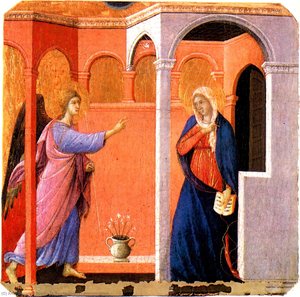
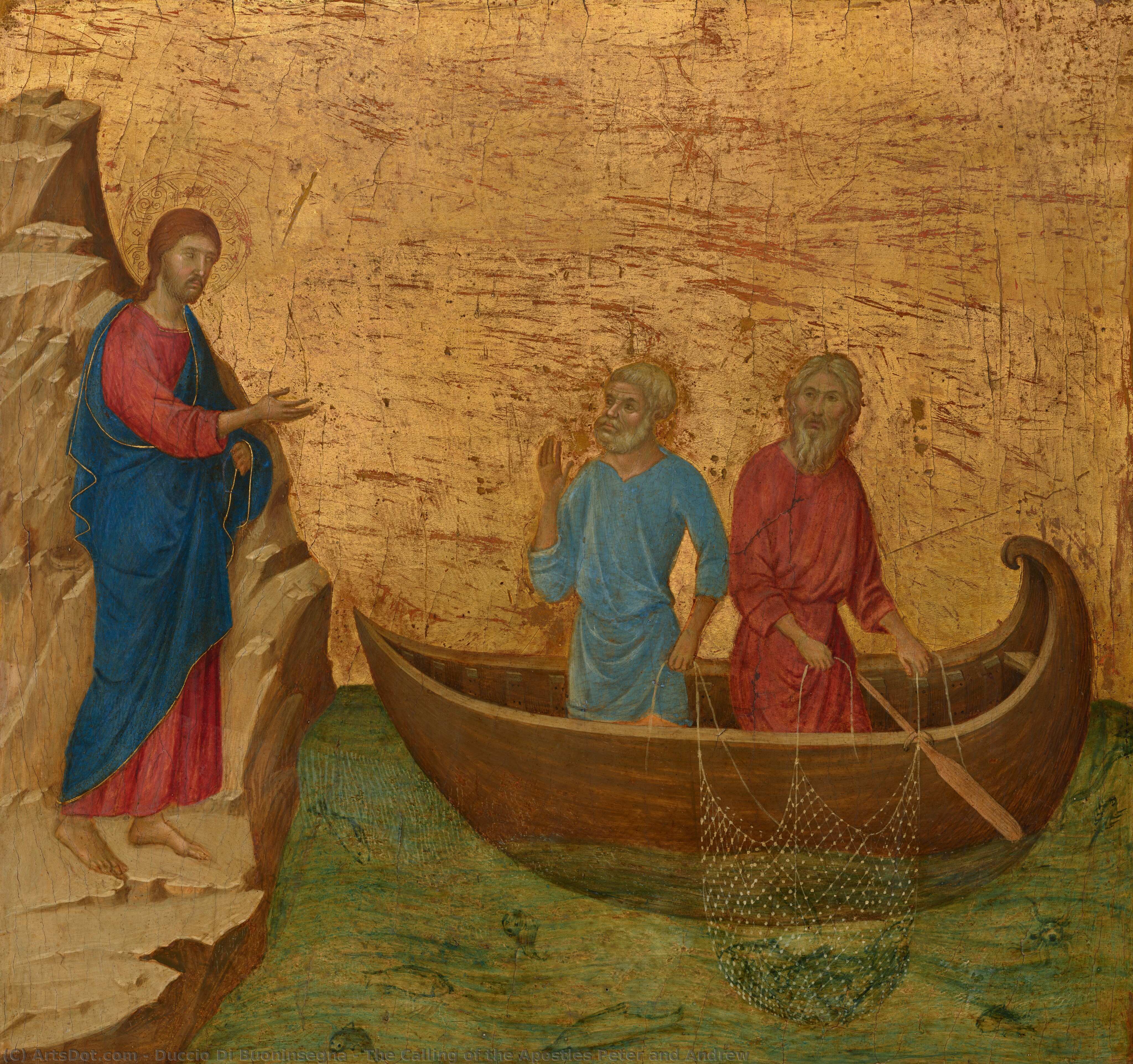
Die Berufung der Apostel Petrus und Andreas
 Acryl auf Leinwand
- Wandkunst
- Sienese Gothic Style
 1311
1311- Frühmittelalter
 43.0 x 46.0 cm
 Weiterlesen
Handgefertigte Ölreproduktion
Handgemaltes Ölgemälde auf Leinwand in Ihrer Wunschgröße und mit Rahmen, auf Bestellung von unseren Künstlern angefertigt. ( Druck bestellen Bild kaufen)




P118B $10

P118H $10

P118W $10

P438Z $10

P508JH $12

P508YH $12

P805H $10

P805Z $10

P919BZ $10

P919G $10

P919XJ $10

P959ZH $10

P968JZ $12

W106C $8

W218G $10

W218JH $8

W218Y $10

W307PJ $10

W316G $10

W316PJ $8

W316Y $10

W398PJ $8

W4111J $10

W500HY $15

W500JH $15

W692G $12

W849H $8

W940BG $15

W953PJ $8




Wählen Sie aus unseren vordefinierten Formaten, die den ursprünglichen Proportionen des Kunstwerks entsprechen.

Sie können Ihre eigenen Maße eingeben, um einen bestimmten Rahmen oder Platz auszufüllen. Wenn die gewählte Größe nicht den Proportionen des Originalbildes entspricht, werden wir das Kunstwerk entweder beschneiden oder das Gemälde durch zusätzliche, handgemalte Elemente erweitern. Ein digitales Mockup wird Ihnen zur Genehmigung zugesandt, bevor die Produktion beginnt.
Bitte beachten Sie, dass die Bildschirmvorschau nicht die tatsächliche Beschneidung oder Erweiterung widerspiegelt. Nur das Mockup zeigt die endgültige Komposition exakt an.
Obwohl Sondermaße verfügbar sind, empfehlen wir, eine Größe aus der vordefinierten Liste zu wählen, um die ursprünglichen Proportionen beizubehalten.
Nach der Bestellung wird das ArtsDot.com-Team dem Kunden Anweisungen per E-Mail zusenden und eine Mockup-Vorschau bereitstellen.
Weltweiter Versand () in nur 3 bis 4 Wochen statt der üblichen 5 Wochen. (24 August). Keine Kompromisse bei der Qualität.

Kostenloser weltweiter Expressversand

Hochwertige Leinenleinwand

Umfassender Versicherungsschutz beim Versand

Zollgebühren-Rückerstattungsgarantie

Garantie für exakte Farbtreue

60 Tage Rückgaberecht (nur bei Mängeln)

100% Geld-zurück-Garantie

Mengenrabatt verfügbar
 Die Glasoption ist nur für Größen unter 110 cm verfügbar.

Die Berufung der Apostel Petrus und Andreas
Art der Reproduktion
Format der Reproduktion
-


Gesamtpreis
$ 263
Beschreibung des Kunstwerks
Die Berufung der Apostel Petrus und Andreas – Ein Fenster in die Seele des Mittelalters
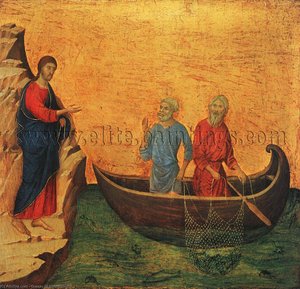
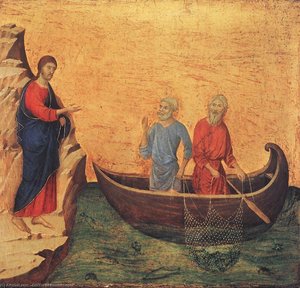
Duccio di Buoninsegna’s “The Calling of the Apostles Peter and Andrew,” painted in 1311, is more than just a religious depiction; it's a profound meditation on faith, invitation, and the nascent shift towards humanism within Italian art. This square panel, measuring a modest 43 x 46 cm, pulsates with an arresting energy, drawing the viewer into a pivotal moment from Christian scripture – the genesis of Peter and Andrew’s commitment to Christ. The scene unfolds against a backdrop of shimmering gold, a deliberate choice that elevates the event beyond the earthly realm and imbues it with a divine significance. The artist masterfully employs tempera on panel, a technique favored during this period, allowing for rich colors and intricate detail – a testament to Duccio’s meticulous approach.
Ein Tanz von Licht und Schatten: Farbe, Komposition und Technik
Duccio's genius lies not just in the subject matter but also in his masterful manipulation of color and composition. The palette is dominated by a harmonious blend of blues – ranging from the sky-blue tunic of one apostle to the deep, resonant blue of the mantle draped over Christ’s figure – reds – embodied in the crimson robe and brick-red garment of another apostle – and the grounding warmth of gold. These colors aren't merely decorative; they carry symbolic weight. Blue often represents piety and heaven, while red signifies sacrifice and divine passion. The use of gold, particularly around Christ’s halo, reinforces his sacred status and draws attention to this central figure. The composition itself is carefully balanced: the rocky outcropping on which Christ stands provides a strong vertical anchor, contrasting with the horizontal expanse of the boat and the sea. This interplay creates a dynamic tension that mirrors the spiritual struggle between earthly temptation and divine calling.
- Technique: Tempera on Panel – Offers rich colors and detail.
- Color Palette: Dominated by blues, reds, and gold, each carrying symbolic weight.
- Composition: Balanced with a strong vertical anchor (the cliff) and horizontal elements (the boat).
Symbolik und Ausdruck: Die Figuren und ihre Bedeutung
The figures themselves are rendered with remarkable sensitivity, hinting at the humanity beneath their divine roles. Christ’s gesture – a raised hand extending towards the apostles – is both inviting and commanding, conveying a profound sense of urgency. The pale skin of the apostles, tinged with gray but punctuated by rosy cheeks, suggests vulnerability and earthly existence, reminding us that even those chosen for greatness are still subject to human limitations. The beards worn by all three figures—Christ’s long brown hair, Peter's and Andrew’s ash-blond—are characteristic of the period and contribute to a sense of timelessness. The nets overflowing with fish symbolize abundance and the rewards of faith, while the undulating waves of the copper-green sea represent both the challenges and the potential of the spiritual journey. Notably, Duccio subtly incorporates details that draw the viewer’s eye – the gaping mouths of the fish, for instance – adding layers of visual interest and prompting deeper contemplation.
Ein Blick in die Sienesche Kunstwelt: Kontext und Einfluss
“The Calling of the Apostles Peter and Andrew” is a quintessential example of Sienese art during the early 14th century. Duccio di Buoninsegna, born in Siena around 1255, was a pivotal figure bridging the gap between Byzantine artistic traditions – characterized by their emphasis on gold backgrounds and stylized figures – and the emerging naturalism of Italian painting. His work represents a crucial step towards a more expressive and emotionally resonant style. He wasn’t simply replicating religious iconography; he was imbuing it with human feeling, subtly shifting the focus from rigid formality to a deeper connection between the divine and the earthly realm. This piece reflects the broader cultural shifts of the time – a growing interest in human experience alongside a continued devotion to faith. It's a window into the soul of Siena during this transformative period.
ArtsDot offers exquisite, hand-painted reproductions of this masterpiece, allowing you to bring its beauty and profound symbolism into your home or office. Each reproduction is meticulously crafted by skilled artists, ensuring an authentic representation of Duccio’s vision while capturing the emotional depth and spiritual resonance of this iconic work.
Ähnliche Kunstwerke
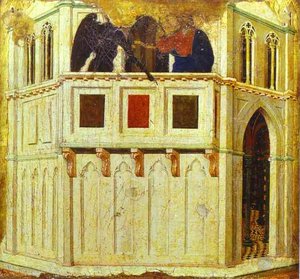
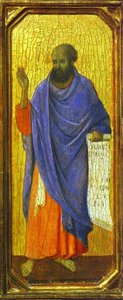
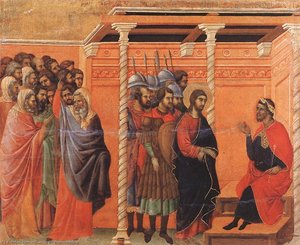
Über den Künstler
frühes Leben und Karriere
Duccio di Buoninsegna, ein renommierter italienischer Maler aus Siena, war in den späten 13. und frühen 14. Jahrhunderten tätig. Geboren im Jahr 1255, bleibt das persönliche Leben von Duccio in vielen Punkten ein Mysterium, wobei wenig über seinen Familienhintergrund oder seine frühe Lebenszeit bekannt ist. Dennoch sind seine Beiträge zur Trecento- und sienesischen Malstil gut dokumentiert.Künstlerischer Stil und Einflüsse
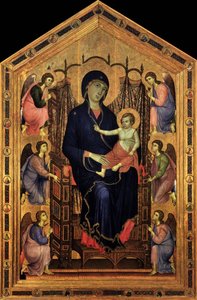
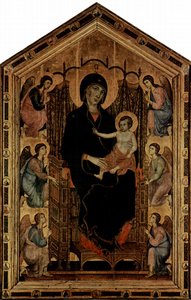
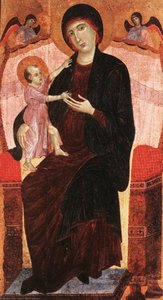
Die Werke von Duccio zeichnen sich durch die innovative Verwendung von Raum und Farbe aus, wie sie in seinem Meisterwerk die Rucellai Madonna (1285) zu sehen ist. Dieses Gemälde, das die Jungfrau Maria mit dem Christkind darstellt, umgeben von Engeln und Heiligen, zeigt Duccios einzigartigen Stil, der byzantinische Kunst mit neuen Techniken verbindet. Seine Verwendung von Modellierung und das Spiel mit Licht und Dunkelheit offenbaren Figuren unter schwerer Robenkleidung und schaffen so eine einladende und warme Atmosphäre.Bekannte Werke und Vermächtnis
Zu Duccios bekanntesten Werken gehören:- Maestó (Vorderteil, Kronpaneele), Abschied der Apostel (Gotik, Öl) – ein Zeugnis seines innovativen Ansatzes für Raum und Farbe.
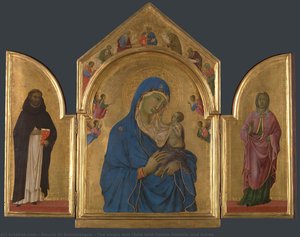
- Polyptych Nr. 28 (Die Heilige Jungfrau mit dem Christkind und vier Heiligen) (Gotik, Öl) – demonstriert Duccios Meisterschaft in der Komposition und Erzählung.
- Maestó (Rückseite, Unterbild), Versuchung auf einem Tempeldach (Gotik, Öl) – zeigt seine Fähigkeit, Licht und Dunkelheit auszugleichen.
Vermächtnis und Erinnerung
Trotz finanzieller Schwierigkeiten überwiegt Duccios künstlerisches Vermächtnis seine persönlichen Herausforderungen bei weitem. Seine Werke befinden sich in verschiedenen Museen und Galerien, darunter die Stadtgalerie Manchester, die zahlreiche Meisterwerke von renommierten Künstlern beherbergt. Anzeigen Sie Duccios di Buoninsegnas Kunstwerke auf ArtsDot.com Wikipedia: Duccio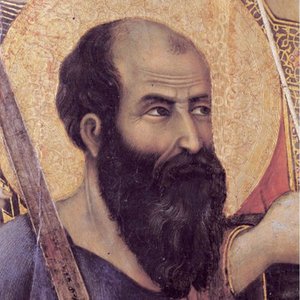
Duccio di Buoninsegna
1255 - 1319 , Italien
Kurzinfos
- Beeinflusste Künstler: ['Byzantinische Kunst']
- Bemerkenswerte Werke:
- Rucellai Madonna
- Maestà
- Flucht nach Ägypten
- Geburtsdatum: ca. 1255
- Geburtsort: Siena, Italien
- Künstlerische Bewegung: Trecento, Gotik
- Nationalität: Italienisch
- Sterbedatum: 1319
- Vollständiger Name: Duccio di Buoninsegna
- Von Ihm Beeinflusste Künstler: ['Sieneser Malerei']
Ähnliche Artikel
Giotto di Bondone: Die 25 Meisterwerke des Frührenaissance – Kunst für Ihr Zuhause
Entdecken Sie die 25 Meisterwerke von Giotto di Bondone! Erleben Sie die Frührenaissance, religiöse Kunst & ikonische Fresken wie in der Scrovegni Kapelle. Hochwertige Kunstdrucke online bei ArtsDot.com – für zeitlose Eleganz in Ihrem Zuhause.

Spätmittelalterliche Meisterwerke: 10 Kunstwerke für Ihr Zuhause | ArtsDot
Entdecken Sie die 10 bedeutendsten Meisterwerke des Spätmittelalters! Erfahren Sie die Geschichten hinter Jan van Eyck, Rogier van der Weyden & mehr. Hochwertige Kunst Reproduktionen für Ihr Zuhause – jetzt auf ArtsDot.com!
Meisterwerke des Hochmittelalters: 10 Kunstwerke für Ihr Zuhause | ArtsDot
Entdecken Sie die 10 bedeutendsten Meisterwerke des Hochmittelalters! Erfahren Sie Geschichten von Romanik, Gotik & berühmten Künstlern. Finden Sie hochwertige Reproduktionen für Ihr Zuhause auf ArtsDot.com.
Meisterwerke der Temperamalerei: 10 Panelbilder, die Kunstgeschichte schrieben | ArtsDot
Entdecken Sie die 10 legendärsten Meisterwerke der Temperamalerei auf Holz! Von Giotto bis Botticelli – erfahren Sie die Geschichten hinter ikonischen Panelbildern und lassen Sie sich von Renaissance-Kunst inspirieren. Hochwertige Reproduktionen finden Sie auf ArtsDot.com.
Proto-Renaissance Meisterwerke: Die 10 Kunstwerke, die eine Epoche prägten | ArtsDot
Entdecken Sie die 10 prägendsten Meisterwerke der Proto-Renaissance! Von Giotto bis Duccio – erleben Sie die Geschichten, Techniken & zeitlose Schönheit italienischer Frührenaissance Kunst. Hochwertige Reproduktionen auf ArtsDot.com.