Vorschau anzeigen
 Versenden
 Teilen
 Details anzeigen

 Herunterladen
 Ähnliche Objekte
 Röntgenaufnahme
 Diashow
Die Straße nach Emmaus
 Acryl auf Leinwand
- Wandkunst
- Sienese School Renaissance
 1308
1308 51.0 x 57.0 cm
 Museo dell'Opera del Duomo
 Weiterlesen
Handgefertigte Ölreproduktion
Handgemaltes Ölgemälde auf Leinwand in Ihrer Wunschgröße und mit Rahmen, auf Bestellung von unseren Künstlern angefertigt. ( Druck bestellen Bild kaufen)




P118B $10

P118H $10

P118W $10

P438Z $10

P508JH $12

P508YH $12

P805H $10

P805Z $10

P919BZ $10

P919G $10

P919XJ $10

P959ZH $10

P968JZ $12

W106C $8

W218G $10

W218JH $8

W218Y $10

W307PJ $10

W316G $10

W316PJ $8

W316Y $10

W398PJ $8

W4111J $10

W500HY $15

W500JH $15

W692G $12

W849H $8

W940BG $15

W953PJ $8




Wählen Sie aus unseren vordefinierten Formaten, die den ursprünglichen Proportionen des Kunstwerks entsprechen.

Sie können Ihre eigenen Maße eingeben, um einen bestimmten Rahmen oder Platz auszufüllen. Wenn die gewählte Größe nicht den Proportionen des Originalbildes entspricht, werden wir das Kunstwerk entweder beschneiden oder das Gemälde durch zusätzliche, handgemalte Elemente erweitern. Ein digitales Mockup wird Ihnen zur Genehmigung zugesandt, bevor die Produktion beginnt.
Bitte beachten Sie, dass die Bildschirmvorschau nicht die tatsächliche Beschneidung oder Erweiterung widerspiegelt. Nur das Mockup zeigt die endgültige Komposition exakt an.
Obwohl Sondermaße verfügbar sind, empfehlen wir, eine Größe aus der vordefinierten Liste zu wählen, um die ursprünglichen Proportionen beizubehalten.
Nach der Bestellung wird das ArtsDot.com-Team dem Kunden Anweisungen per E-Mail zusenden und eine Mockup-Vorschau bereitstellen.
Weltweiter Versand () in nur 3 bis 4 Wochen statt der üblichen 5 Wochen. (23 August). Keine Kompromisse bei der Qualität.

Kostenloser weltweiter Expressversand

Hochwertige Leinenleinwand

Umfassender Versicherungsschutz beim Versand

Zollgebühren-Rückerstattungsgarantie

Garantie für exakte Farbtreue

60 Tage Rückgaberecht (nur bei Mängeln)

100% Geld-zurück-Garantie

Mengenrabatt verfügbar
 Die Glasoption ist nur für Größen unter 110 cm verfügbar.

Die Straße nach Emmaus
Art der Reproduktion
Format der Reproduktion
-


Gesamtpreis
$ 263
Beschreibung des Kunstwerks
Die Straße nach Emmaus: Eine Reise der Erkenntnis und des Lichts
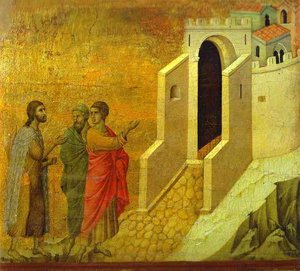
Duccio di Buoninsegna’s “Road to Emmaus,” painted in 1308, is more than just a religious depiction; it's a profound meditation on faith, doubt, and the transformative power of human connection. Emerging from the heart of Siena during a period of significant artistic transition – a time when Byzantine formality was yielding to the burgeoning naturalism of Italian painting – Duccio masterfully captures a pivotal moment in Christian scripture. The scene unfolds with an almost palpable serenity, inviting the viewer into a shared experience of contemplation and revelation.
The composition itself is deceptively simple yet remarkably effective. Three figures, clad in the rich robes characteristic of Sienese religious art, journey along a winding road, ascending towards a distant horizon. Their postures are relaxed, their gazes fixed on one another – not on a divine spectacle, but on each other. This deliberate focus immediately establishes an intimate and deeply human dynamic within the sacred narrative. The two figures in the background, partially obscured by the landscape, subtly reinforce the idea of a journey undertaken collectively, suggesting that this encounter is not merely personal but part of a larger spiritual pilgrimage.
Die Kunst des Detail und die Farbenlehre
Duccio’s technical prowess is immediately evident. He employs a masterful use of *sfumato*, a technique borrowed from the Byzantine tradition but subtly adapted to create a softer, more atmospheric effect than the stark contrasts often found in earlier works. The colors are rich and luminous – deep blues and purples dominate the sky, contrasted with the earthy tones of the road and the figures’ robes. Notice particularly the subtle gradations of color within the drapery; Duccio doesn't simply outline folds but renders them with a delicate layering of pigments that gives them an almost tactile quality. The landscape itself is painted with remarkable detail, suggesting a sense of depth and perspective – a significant departure from the flattened perspectives common in earlier Italian art.
The artist’s attention to detail extends beyond mere representation; it serves to heighten the emotional impact of the scene. The subtle variations in light and shadow, the delicate rendering of textures, all contribute to a sense of realism that draws the viewer into the narrative. Duccio's use of gold leaf, particularly on the figures’ garments and the horizon line, adds a layer of spiritual radiance, symbolizing divine grace and illuminating the path towards understanding.
Symbolik und spirituelle Bedeutung
The “Road to Emmaus” is steeped in biblical symbolism. The journey itself represents the disciples' initial disbelief and subsequent enlightenment following Jesus’ resurrection. The road symbolizes not just a physical route but also the arduous process of spiritual awakening – a path fraught with doubt, questioning, and ultimately, revelation. The figures are not simply observing; they are actively engaged in dialogue, sharing their experiences and wrestling with the implications of what they have witnessed.
The doorway glimpsed on the right side of the painting is particularly intriguing. It’s often interpreted as a symbolic representation of salvation or entrance into God's presence. It offers a visual suggestion that this encounter, this shared journey, leads to something beyond the immediate scene – a deeper understanding and connection with the divine. The placement of this doorway subtly directs the viewer’s eye towards the horizon, reinforcing the idea of hope and transcendence.
Ein Meisterwerk für Sammler und Innendesign
Duccio di Buoninsegna's “Road to Emmaus” is a cornerstone of Sienese art and a testament to his innovative spirit. ArtsDot offers meticulously crafted, hand-painted reproductions that faithfully capture the essence of this remarkable painting. Whether you are an art collector seeking to expand your collection or an interior designer searching for a piece that evokes contemplation and spiritual depth, our reproduction provides an authentic representation of Duccio’s masterpiece. The size of 51 x 57 cm makes it ideal for smaller spaces, while still commanding attention with its rich colors and evocative imagery. Experience the profound beauty and timeless wisdom of “Road to Emmaus” in a stunningly reproduced form – a piece that will enrich your home and inspire reflection for years to come.
Ähnliche Kunstwerke
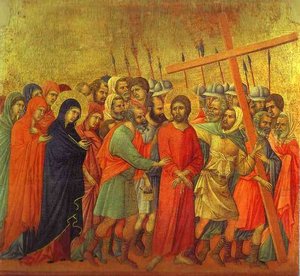
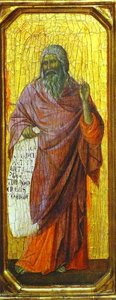
Über den Künstler
frühes Leben und Karriere
Duccio di Buoninsegna, ein renommierter italienischer Maler aus Siena, war in den späten 13. und frühen 14. Jahrhunderten tätig. Geboren im Jahr 1255, bleibt das persönliche Leben von Duccio in vielen Punkten ein Mysterium, wobei wenig über seinen Familienhintergrund oder seine frühe Lebenszeit bekannt ist. Dennoch sind seine Beiträge zur Trecento- und sienesischen Malstil gut dokumentiert.Künstlerischer Stil und Einflüsse
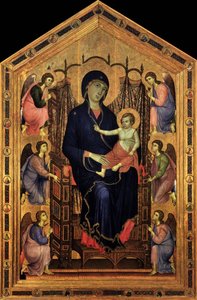
Die Werke von Duccio zeichnen sich durch die innovative Verwendung von Raum und Farbe aus, wie sie in seinem Meisterwerk die Rucellai Madonna (1285) zu sehen ist. Dieses Gemälde, das die Jungfrau Maria mit dem Christkind darstellt, umgeben von Engeln und Heiligen, zeigt Duccios einzigartigen Stil, der byzantinische Kunst mit neuen Techniken verbindet. Seine Verwendung von Modellierung und das Spiel mit Licht und Dunkelheit offenbaren Figuren unter schwerer Robenkleidung und schaffen so eine einladende und warme Atmosphäre.Bekannte Werke und Vermächtnis
Zu Duccios bekanntesten Werken gehören:- Maestó (Vorderteil, Kronpaneele), Abschied der Apostel (Gotik, Öl) – ein Zeugnis seines innovativen Ansatzes für Raum und Farbe.
- Polyptych Nr. 28 (Die Heilige Jungfrau mit dem Christkind und vier Heiligen) (Gotik, Öl) – demonstriert Duccios Meisterschaft in der Komposition und Erzählung.
- Maestó (Rückseite, Unterbild), Versuchung auf einem Tempeldach (Gotik, Öl) – zeigt seine Fähigkeit, Licht und Dunkelheit auszugleichen.
Vermächtnis und Erinnerung
Trotz finanzieller Schwierigkeiten überwiegt Duccios künstlerisches Vermächtnis seine persönlichen Herausforderungen bei weitem. Seine Werke befinden sich in verschiedenen Museen und Galerien, darunter die Stadtgalerie Manchester, die zahlreiche Meisterwerke von renommierten Künstlern beherbergt. Anzeigen Sie Duccios di Buoninsegnas Kunstwerke auf ArtsDot.com Wikipedia: Duccio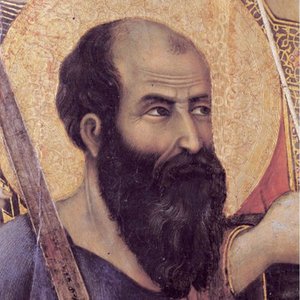
Duccio di Buoninsegna
1255 - 1319 , Italien
Kurzinfos
- Beeinflusste Künstler: ['Byzantinische Kunst']
- Bemerkenswerte Werke:
- Rucellai Madonna
- Maestà
- Flucht nach Ägypten
- Geburtsdatum: ca. 1255
- Geburtsort: Siena, Italien
- Künstlerische Bewegung: Trecento, Gotik
- Nationalität: Italienisch
- Sterbedatum: 1319
- Vollständiger Name: Duccio di Buoninsegna
- Von Ihm Beeinflusste Künstler: ['Sieneser Malerei']
Ähnliche Artikel
Simone Martini: Innovation, Spiritualität und höfische Raffinesse der Sienischen Malerei
Entdecken Sie Simone Martini, einen Meister der Sienischen Malerei! Erfahren Sie mehr über seine Innovationen, seinen Stil und die spirituelle Tiefe seiner Werke. Kunstgeschichte pur – jetzt lesen!
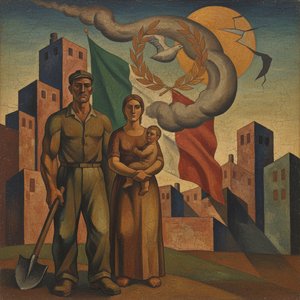
Mario Sironi: Eine Poetik der modernen italienischen Identität zwischen Symbolismus und Gesellschaftskritik
Entdecken Sie Mario Sironis wegweisendes Werk und seine Auseinandersetzung mit der italienischen Identität. Analysen, Biografie, Novecento Italiano & die politische Dimension – Expertenwissen auf ArtsDot.
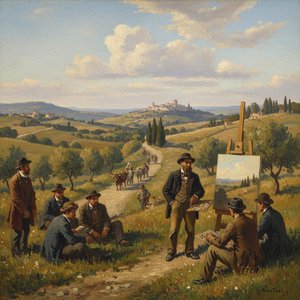
Giovanni Fattori: Realismus, Identität und die toskanische Landschaft – Ein Meister der Macchiaioli
Entdecken Sie Giovanni Fattori und die Macchiaioli! Erfahren Sie mehr über den italienischen Realismus, seine historischen Wurzeln und die einzigartige Darstellung der toskanischen Landschaft. Expertenwissen für Kunstliebhaber.
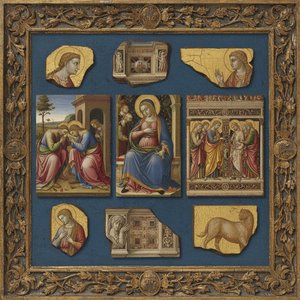
Proto-Renaissance Meisterwerke: Die 10 Kunstwerke, die eine Epoche prägten | ArtsDot
Entdecken Sie die 10 prägendsten Meisterwerke der Proto-Renaissance! Von Giotto bis Duccio – erleben Sie die Geschichten, Techniken & zeitlose Schönheit italienischer Frührenaissance Kunst. Hochwertige Reproduktionen auf ArtsDot.com.
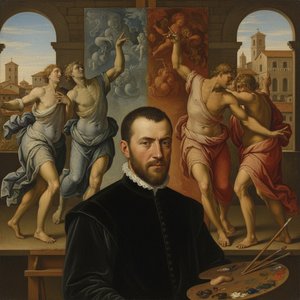
Domenico Beccafumi: Ein sizilianischer Meister zwischen Manierismus und der Vorahnung des Barock
Entdecken Sie das faszinierende Werk von Domenico Beccafumi, einem Meister des Manierismus. Expertenanalyse seiner Fresken, Einflüsse und Sammlerstücke. Wertvolle Einblicke für Kunstliebhaber und Investoren.