 Vorschau anzeigen
 Versenden
 Teilen
 Details anzeigen

 Herunterladen
 Ähnliche Objekte
 Röntgenaufnahme
 Diashow
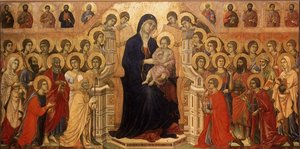
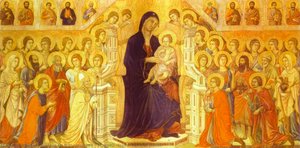
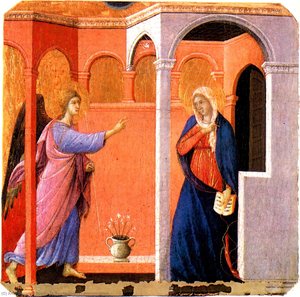
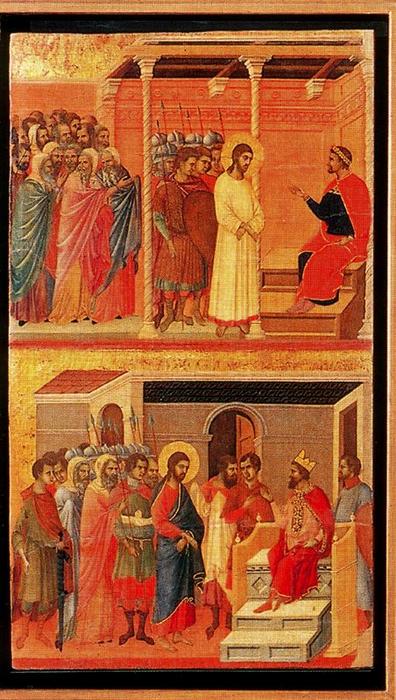
La Maestá. Cristo ante Pilatos y Cristo ante Herodes


 Weiterlesen
Giclée / Kunstdruck
Giclée- oder Leinwanddruck in Museumsqualität mit schneller Produktion und flexiblen Veredelungsoptionen. ( Handgemalte Reproduktion bestellen Bild kaufen)




P118B $10

P118H $10

P118W $10

P438Z $10

P508JH $12

P508YH $12

P805H $10

P805Z $10

P919BZ $10

P919G $10

P919XJ $10

P959ZH $10

P968JZ $12

W106C $8

W218G $10

W218JH $8

W218Y $10

W307PJ $10

W316G $10

W316PJ $8

W316Y $10

W398PJ $8

W4111J $10

W500HY $15

W500JH $15

W692G $12

W849H $8

W940BG $15

W953PJ $8




Wählen Sie aus unseren vordefinierten Formaten, die den ursprünglichen Proportionen des Kunstwerks entsprechen.

Sie können Ihre eigenen Maße eingeben, um ein bestimmtes Format oder einen speziellen Platz einzupassen. Wenn das von Ihnen gewählte Format nicht den Proportionen des Originalbildes entspricht, werden wir das Kunstwerk entweder beschneiden oder das Bild mit einem gespiegelten oder einfarbigen Rand erweitern. Ein digitaler Entwurf wird Ihnen zur Genehmigung zugesandt, bevor die Produktion beginnt.
Bitte beachten Sie, dass die Vorschau auf dem Bildschirm nicht den tatsächlichen Zuschnitt oder die Erweiterung widerspiegelt. Nur der Entwurf zeigt die endgültige Komposition präzise an.
Obwohl Sondermaße verfügbar sind, empfehlen wir die Auswahl eines Maßes aus der vordefinierten Liste, um die ursprünglichen Proportionen zu bewahren.
Weltweiter Versand () innerhalb von 2 Wochen statt der üblichen 4/5 Wochen. (5 September)

Kostenloser weltweiter Expressversand

Hochwertige Leinenleinwand

Umfassender Versicherungsschutz beim Versand

Zollgebühren-Rückerstattungsgarantie

Garantie für exakte Farbtreue

60 Tage Rückgaberecht (nur bei Mängeln)

100% Geld-zurück-Garantie

Mengenrabatt verfügbar
 Die Glasoption ist nur für Größen unter 110 cm verfügbar.

La Maestá. Cristo ante Pilatos y Cristo ante Herodes
Giclée / Kunstdruck
Format der Reproduktion
-


Gesamtpreis
$ 62
A Divine Trial: The Emotional Resonance of Duccio’s Narrative Mastery
In the quiet corridors of art history, few moments capture the tension between earthly injustice and divine destiny as poignantly as Duccio di Buoninsegna’s La Maestá. Cristo ante Pilatos y Cristo ante Herodes. This profound segment of his monumental altarpiece serves as a window into a pivotal moment of the Passion, where the sacred meets the profane. As we gaze upon the dual scenes of Christ being judged by King Herod and Pontius Pilate, we are not merely observers of a historical trial; we are witnesses to an unfolding drama of human emotion. The composition breathes with a restless energy, as thirteen distinct figures—rulers, soldiers, and onlookers—interact within a space that feels both intimate and cosmically significant. For the discerning collector or designer, this piece offers more than just visual beauty; it provides a profound narrative depth that can anchor a room with its weight of history and spiritual gravity.
The artistry of Duccio lies in his ability to bridge the rigid, iconic traditions of the Byzantine era with the burgeoning humanism of the Sienese Gothic style. Unlike the static, frozen figures of earlier centuries, the characters in this work possess a subtle anatomical vitality and an expressive range that was revolutionary for the late thirteenth century. One can almost feel the heavy texture of the intricately patterned drapery and the opulent grandeur of the garments, which reflect the prestige of the Benedictine Order that commissioned such a masterpiece. Duccio utilizes a sophisticated layering of colors, achieved through the meticulous application of pigments mixed with binders like egg yolk, to create a luminous depth. His mastery of glazing techniques allows light to dance across the surface, imbuing the scene with a celestial glow that makes the shadows feel as much a part of the story as the light itself.
A Symphony of Symbolism and Sienese Splendor
Beyond its technical brilliance, the painting is a complex tapestry of theological meaning. Every gesture and every gaze within these two judicial scenes serves to reinforce the themes of Marian theology and the sacrificial nature of Christ’s journey. The contrast between the two trials—one marked by the curiosity of Herod and the other by the political maneuvering of Pilate—creates a rhythmic tension that guides the viewer's eye across the panel. This duality is a hallmark of Duccio’s genius, as he uses the physical layout of the painting to mirror the spiritual conflict inherent in the narrative. For those looking to integrate such a piece into a curated interior, the artwork acts as a focal point of contemplation, inviting a slower pace of life and a deeper engagement with the nuances of light, shadow, and human struggle.
To possess a reproduction of this caliber is to bring a piece of the Siena Cathedral’s soul into one's own space. It is an invitation to celebrate the dawn of a new Italian vision—a period where art began to look more closely at the human face and the human heart. Whether placed in a grand library or a contemporary gallery setting, this work stands as a testament to the enduring power of the Sienese School, offering an unparalleled blend of historical prestige, technical sophistication, and an emotional resonance that remains as potent today as it was in the thirteenth century.
Ähnliche Kunstwerke
Über den Künstler
frühes Leben und Karriere
Duccio di Buoninsegna, ein renommierter italienischer Maler aus Siena, war in den späten 13. und frühen 14. Jahrhunderten tätig. Geboren im Jahr 1255, bleibt das persönliche Leben von Duccio in vielen Punkten ein Mysterium, wobei wenig über seinen Familienhintergrund oder seine frühe Lebenszeit bekannt ist. Dennoch sind seine Beiträge zur Trecento- und sienesischen Malstil gut dokumentiert.Künstlerischer Stil und Einflüsse
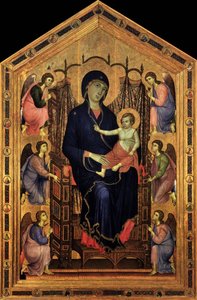
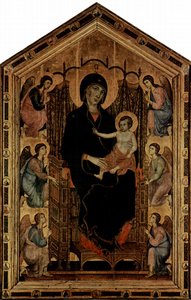
Die Werke von Duccio zeichnen sich durch die innovative Verwendung von Raum und Farbe aus, wie sie in seinem Meisterwerk die Rucellai Madonna (1285) zu sehen ist. Dieses Gemälde, das die Jungfrau Maria mit dem Christkind darstellt, umgeben von Engeln und Heiligen, zeigt Duccios einzigartigen Stil, der byzantinische Kunst mit neuen Techniken verbindet. Seine Verwendung von Modellierung und das Spiel mit Licht und Dunkelheit offenbaren Figuren unter schwerer Robenkleidung und schaffen so eine einladende und warme Atmosphäre.Bekannte Werke und Vermächtnis
Zu Duccios bekanntesten Werken gehören:- Maestó (Vorderteil, Kronpaneele), Abschied der Apostel (Gotik, Öl) – ein Zeugnis seines innovativen Ansatzes für Raum und Farbe.
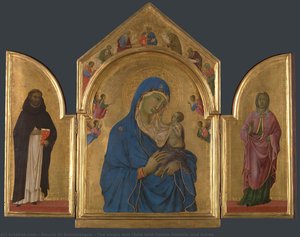
- Polyptych Nr. 28 (Die Heilige Jungfrau mit dem Christkind und vier Heiligen) (Gotik, Öl) – demonstriert Duccios Meisterschaft in der Komposition und Erzählung.
- Maestó (Rückseite, Unterbild), Versuchung auf einem Tempeldach (Gotik, Öl) – zeigt seine Fähigkeit, Licht und Dunkelheit auszugleichen.
Vermächtnis und Erinnerung
Trotz finanzieller Schwierigkeiten überwiegt Duccios künstlerisches Vermächtnis seine persönlichen Herausforderungen bei weitem. Seine Werke befinden sich in verschiedenen Museen und Galerien, darunter die Stadtgalerie Manchester, die zahlreiche Meisterwerke von renommierten Künstlern beherbergt. Anzeigen Sie Duccios di Buoninsegnas Kunstwerke auf ArtsDot.com Wikipedia: Duccio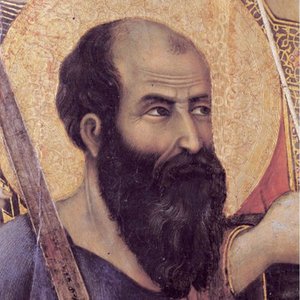
Duccio di Buoninsegna
1255 - 1319 , Italien
Kurzinfos
- Beeinflusste Künstler: ['Byzantinische Kunst']
- Bemerkenswerte Werke:
- Rucellai Madonna
- Maestà
- Flucht nach Ägypten
- Geburtsdatum: ca. 1255
- Geburtsort: Siena, Italien
- Künstlerische Bewegung: Trecento, Gotik
- Nationalität: Italienisch
- Sterbedatum: 1319
- Vollständiger Name: Duccio di Buoninsegna
- Von Ihm Beeinflusste Künstler: ['Sieneser Malerei']
Ähnliche Artikel

Giotto di Bondone: Die 25 Meisterwerke des Frührenaissance – Kunst für Ihr Zuhause
Entdecken Sie die 25 Meisterwerke von Giotto di Bondone! Erleben Sie die Frührenaissance, religiöse Kunst & ikonische Fresken wie in der Scrovegni Kapelle. Hochwertige Kunstdrucke online bei ArtsDot.com – für zeitlose Eleganz in Ihrem Zuhause.
Spätmittelalterliche Meisterwerke: 10 Kunstwerke für Ihr Zuhause | ArtsDot
Entdecken Sie die 10 bedeutendsten Meisterwerke des Spätmittelalters! Erfahren Sie die Geschichten hinter Jan van Eyck, Rogier van der Weyden & mehr. Hochwertige Kunst Reproduktionen für Ihr Zuhause – jetzt auf ArtsDot.com!
Simone Martini: Innovation, Spiritualität und höfische Raffinesse der Sienischen Malerei
Entdecken Sie Simone Martini, einen Meister der Sienischen Malerei! Erfahren Sie mehr über seine Innovationen, seinen Stil und die spirituelle Tiefe seiner Werke. Kunstgeschichte pur – jetzt lesen!
The Radiant Dusk of Medieval Vision: Exploring Late Gothic Art's Synthesis of Faith, Form & Emotionality (c. 1300-1500)
Explore the exquisite beauty & spiritual depth of Late Gothic art (c. 1300-1500). Discover key artists, symbolism, and its lasting influence on the Renaissance. Expert insights at ArtsDot.
Beyond Borders: The Spiritual & Stylistic Innovations of International Gothic Art
Explore the exquisite beauty & spiritual depth of International Gothic art. Discover key artists like Simone Martini & Pol de Limbourg, its origins, symbolism, and lasting influence on European painting. Expert insights at ArtsDot.