 Vorschau anzeigen
 Versenden
 Teilen
 Details anzeigen

 Herunterladen
 Ähnliche Objekte
 Röntgenaufnahme
 Diashow
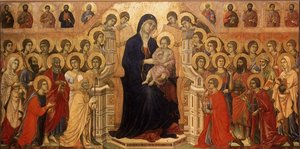
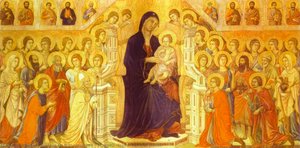
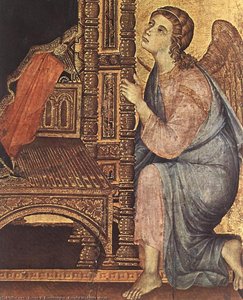
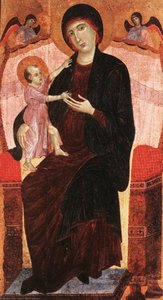
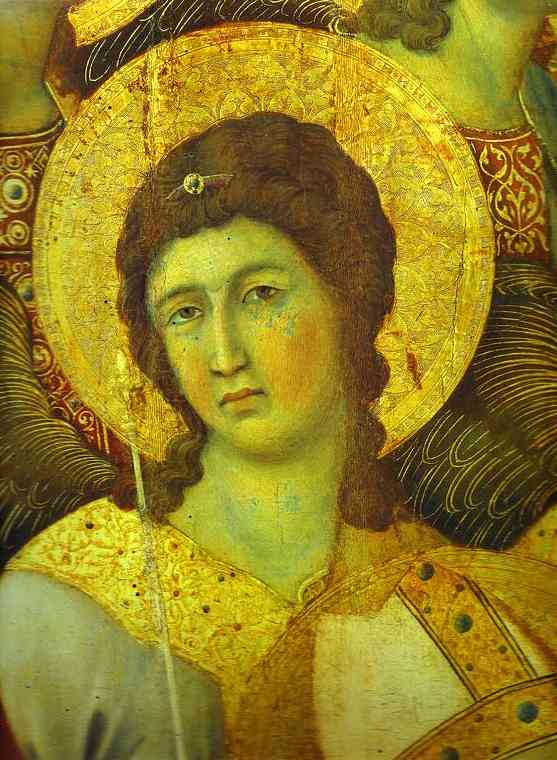
Maestá (Vorderseite, Mitteltafel, Detail), Ein Engel


 Weiterlesen
Handgefertigte Ölreproduktion
Handgemaltes Ölgemälde auf Leinwand in Ihrer Wunschgröße und mit Rahmen, auf Bestellung von unseren Künstlern angefertigt. ( Druck bestellen Bild kaufen)




P118B $10

P118H $10

P118W $10

P438Z $10

P508JH $12

P508YH $12

P805H $10

P805Z $10

P919BZ $10

P919G $10

P919XJ $10

P959ZH $10

P968JZ $12

W106C $8

W218G $10

W218JH $8

W218Y $10

W307PJ $10

W316G $10

W316PJ $8

W316Y $10

W398PJ $8

W4111J $10

W500HY $15

W500JH $15

W692G $12

W849H $8

W940BG $15

W953PJ $8




Wählen Sie aus unseren vordefinierten Formaten, die den ursprünglichen Proportionen des Kunstwerks entsprechen.

Sie können Ihre eigenen Maße eingeben, um einen bestimmten Rahmen oder Platz auszufüllen. Wenn die gewählte Größe nicht den Proportionen des Originalbildes entspricht, werden wir das Kunstwerk entweder beschneiden oder das Gemälde durch zusätzliche, handgemalte Elemente erweitern. Ein digitales Mockup wird Ihnen zur Genehmigung zugesandt, bevor die Produktion beginnt.
Bitte beachten Sie, dass die Bildschirmvorschau nicht die tatsächliche Beschneidung oder Erweiterung widerspiegelt. Nur das Mockup zeigt die endgültige Komposition exakt an.
Obwohl Sondermaße verfügbar sind, empfehlen wir, eine Größe aus der vordefinierten Liste zu wählen, um die ursprünglichen Proportionen beizubehalten.
Nach der Bestellung wird das ArtsDot.com-Team dem Kunden Anweisungen per E-Mail zusenden und eine Mockup-Vorschau bereitstellen.
Weltweiter Versand () in nur 3 bis 4 Wochen statt der üblichen 5 Wochen. (26 August). Keine Kompromisse bei der Qualität.

Kostenloser weltweiter Expressversand

Hochwertige Leinenleinwand

Umfassender Versicherungsschutz beim Versand

Zollgebühren-Rückerstattungsgarantie

Garantie für exakte Farbtreue

60 Tage Rückgaberecht (nur bei Mängeln)

100% Geld-zurück-Garantie

Mengenrabatt verfügbar
 Die Glasoption ist nur für Größen unter 110 cm verfügbar.

Maestá (Vorderseite, Mitteltafel, Detail), Ein Engel
Art der Reproduktion
Format der Reproduktion
-


Gesamtpreis
$ 263
Beschreibung des Kunstwerks
A Celestial Encounter: The Divine Grace of Duccio’s Angel
In the hallowed corridors of art history, few figures command as much reverence as Duccio di Buoninsegna, the Sienese master who breathed life into the rigid forms of the Byzantine tradition. His work, specifically the breathtaking detail from the central panel of the Maestà, serves as a profound window into a moment of divine intersection. This particular depiction of an angel is not merely a religious icon; it is a masterpiece of emotional nuance and technical brilliance. As one gazes upon the figure, there is an immediate sense of being transported to the late 13th century, where the boundaries between the earthly and the heavenly seemed remarkably thin. The angel emerges from a sea of luminous gold, its presence commanding both awe and a deep, quiet intimacy that invites the viewer into a state of spiritual contemplation.
The technique employed by Duccio represents a pivotal evolution in the Sienese School. Moving away from the flat, stylized aesthetics of his predecessors, Duccio utilized the delicate medium of egg tempera—and even experimented with the subtle gradations possible through early oil influences—to sculpt form out of light. The angel’s wings are a marvel of craftsmanship, where every feather seems to possess its own weight and texture, captured through meticulous brushwork that suggests a palpable sense of movement. This mastery of modeling—the interplay of light and shadow—allows the figure to transcend the two-dimensional plane, granting the celestial messenger a rounded, three-dimensional dignity that was revolutionary for its time.
Symbolism and the Radiance of the Divine
Every element within this composition is steeped in profound theological significance. The heavy use of gold leaf is not merely an aesthetic choice to denote wealth or prestige; it is a deliberate symbolic language used to represent the uncreated light of Heaven. As the gold catches the light, it creates a shimmering aura that envelops the angel, suggesting that the figure is composed of the very essence of divinity. The intricate patterns adorning the garments, often inlaid with hints of jewel-like colors, serve to reflect the opulence of the celestial realm, grounding the spiritual narrative in a visual splendor that was meant to inspire the faithful within the great Siena Cathedral.
Beyond the outward shimmer, there is a deeper emotional resonance found in the angel's expression. Unlike the stern, unyielding faces of earlier Byzantine icons, Duccio imbues his subjects with a tender, humanized grace. The posture of the angel conveys a serene authority, a messenger caught in a moment of profound purpose. For the modern collector or interior designer, this piece offers more than just historical value; it provides an emotional anchor. It brings a sense of tranquility and timeless elegance to any space, acting as a focal point that encourages reflection and peace.
A Legacy for the Modern Collector
To possess a reproduction of Duccio’s work is to hold a piece of the Renaissance's dawn. This artwork stands at the crossroads of history, marking the transition from the formal rigidity of the Middle Ages to the burgeoning naturalism that would soon define the Italian Renaissance. It is a testament to an era when art was the primary vessel for civic identity and religious fervor. For those seeking to curate a collection or design a sophisticated interior, this detail from the Maestà offers an unparalleled opportunity to integrate historical depth with aesthetic luxury.
Whether displayed in a private study, a grand gallery, or a curated living space, the presence of such a masterpiece evokes a sense of cultural continuity. It is an invitation to appreciate the meticulous devotion of a master who dared to soften the lines of heaven to make them more accessible to the human heart. Through high-quality hand-painted reproductions, the luminous spirit of Duccio’s vision remains vibrant and accessible, allowing the golden light of the Sienese tradition to illuminate the contemporary world.
Über den Künstler
frühes Leben und Karriere
Duccio di Buoninsegna, ein renommierter italienischer Maler aus Siena, war in den späten 13. und frühen 14. Jahrhunderten tätig. Geboren im Jahr 1255, bleibt das persönliche Leben von Duccio in vielen Punkten ein Mysterium, wobei wenig über seinen Familienhintergrund oder seine frühe Lebenszeit bekannt ist. Dennoch sind seine Beiträge zur Trecento- und sienesischen Malstil gut dokumentiert.Künstlerischer Stil und Einflüsse
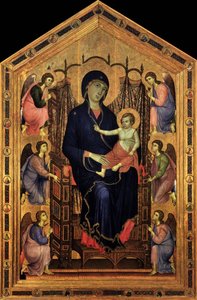
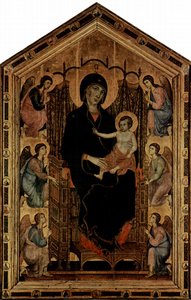
Die Werke von Duccio zeichnen sich durch die innovative Verwendung von Raum und Farbe aus, wie sie in seinem Meisterwerk die Rucellai Madonna (1285) zu sehen ist. Dieses Gemälde, das die Jungfrau Maria mit dem Christkind darstellt, umgeben von Engeln und Heiligen, zeigt Duccios einzigartigen Stil, der byzantinische Kunst mit neuen Techniken verbindet. Seine Verwendung von Modellierung und das Spiel mit Licht und Dunkelheit offenbaren Figuren unter schwerer Robenkleidung und schaffen so eine einladende und warme Atmosphäre.Bekannte Werke und Vermächtnis
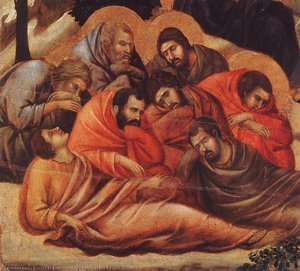
Zu Duccios bekanntesten Werken gehören:- Maestó (Vorderteil, Kronpaneele), Abschied der Apostel (Gotik, Öl) – ein Zeugnis seines innovativen Ansatzes für Raum und Farbe.
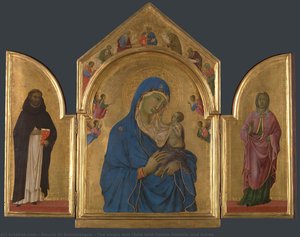
- Polyptych Nr. 28 (Die Heilige Jungfrau mit dem Christkind und vier Heiligen) (Gotik, Öl) – demonstriert Duccios Meisterschaft in der Komposition und Erzählung.
- Maestó (Rückseite, Unterbild), Versuchung auf einem Tempeldach (Gotik, Öl) – zeigt seine Fähigkeit, Licht und Dunkelheit auszugleichen.
Vermächtnis und Erinnerung
Trotz finanzieller Schwierigkeiten überwiegt Duccios künstlerisches Vermächtnis seine persönlichen Herausforderungen bei weitem. Seine Werke befinden sich in verschiedenen Museen und Galerien, darunter die Stadtgalerie Manchester, die zahlreiche Meisterwerke von renommierten Künstlern beherbergt. Anzeigen Sie Duccios di Buoninsegnas Kunstwerke auf ArtsDot.com Wikipedia: Duccio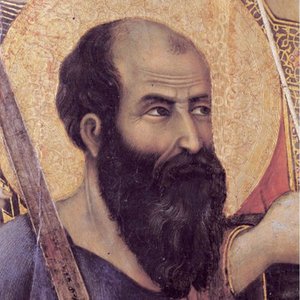
Duccio di Buoninsegna
1255 - 1319 , Italien
Kurzinfos
- Beeinflusste Künstler: ['Byzantinische Kunst']
- Bemerkenswerte Werke:
- Rucellai Madonna
- Maestà
- Flucht nach Ägypten
- Geburtsdatum: ca. 1255
- Geburtsort: Siena, Italien
- Künstlerische Bewegung: Trecento, Gotik
- Nationalität: Italienisch
- Sterbedatum: 1319
- Vollständiger Name: Duccio di Buoninsegna
- Von Ihm Beeinflusste Künstler: ['Sieneser Malerei']
Ähnliche Artikel

Giotto di Bondone: Die 25 Meisterwerke des Frührenaissance – Kunst für Ihr Zuhause
Entdecken Sie die 25 Meisterwerke von Giotto di Bondone! Erleben Sie die Frührenaissance, religiöse Kunst & ikonische Fresken wie in der Scrovegni Kapelle. Hochwertige Kunstdrucke online bei ArtsDot.com – für zeitlose Eleganz in Ihrem Zuhause.
Meisterwerke der Temperamalerei: 10 Panelbilder, die Kunstgeschichte schrieben | ArtsDot
Entdecken Sie die 10 legendärsten Meisterwerke der Temperamalerei auf Holz! Von Giotto bis Botticelli – erfahren Sie die Geschichten hinter ikonischen Panelbildern und lassen Sie sich von Renaissance-Kunst inspirieren. Hochwertige Reproduktionen finden Sie auf ArtsDot.com.
Spätmittelalterliche Meisterwerke: 10 Kunstwerke für Ihr Zuhause | ArtsDot
Entdecken Sie die 10 bedeutendsten Meisterwerke des Spätmittelalters! Erfahren Sie die Geschichten hinter Jan van Eyck, Rogier van der Weyden & mehr. Hochwertige Kunst Reproduktionen für Ihr Zuhause – jetzt auf ArtsDot.com!
Top 25 Kunstwerke der Biennale Venedig: Meisterwerke für Ihr Zuhause | ArtsDot
Entdecken Sie die 25 bedeutendsten Kunstwerke der Biennale Venedig! Erfahren Sie die Geschichten hinter berühmten Gemälden, Künstlern und Stilen. Hochwertige Kunstdrucke & Reproduktionen für Ihr Zuhause – jetzt auf ArtsDot.com!
Oil on Panel: A Historical Survey of Technique, Support & Aesthetic Evolution
Explore the rich history of oil on panel painting! Discover Renaissance techniques, support structures & aesthetic evolution. Expert insights for art collectors and enthusiasts.