 Vorschau anzeigen
 Versenden
 Teilen
 Details anzeigen

 Herunterladen
 Ähnliche Objekte
 Röntgenaufnahme
 Diashow
 Statistiken
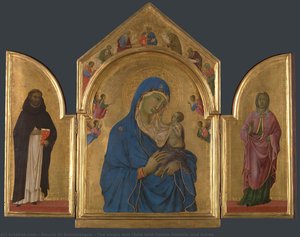
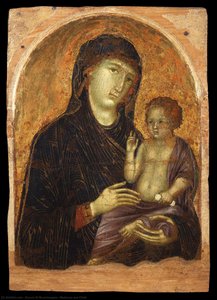
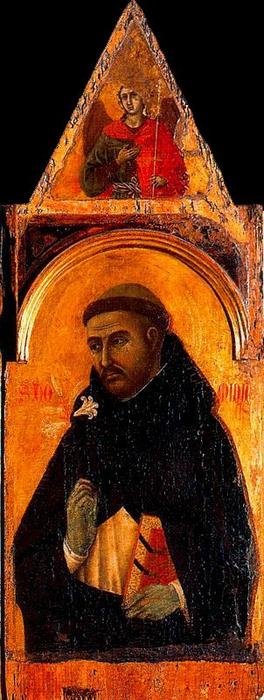
Virgen con niño y cuatro Santos


 Weiterlesen
Handgefertigte Ölreproduktion
Handgemaltes Ölgemälde auf Leinwand in Ihrer Wunschgröße und mit Rahmen, auf Bestellung von unseren Künstlern angefertigt. ( Zu Druck wechseln Zum digitalen Bild wechseln)




P118B $10

P118H $10

P118W $10

P438Z $10

P508JH $12

P508YH $12

P805H $10

P805Z $10

P919BZ $10

P919G $10

P919XJ $10

P959ZH $10

P968JZ $12

W106C $8

W218G $10

W218JH $8

W218Y $10

W307PJ $10

W316G $10

W316PJ $8

W316Y $10

W398PJ $8

W4111J $10

W500HY $15

W500JH $15

W692G $12

W849H $8

W940BG $15

W953PJ $8




Wählen Sie aus unseren vordefinierten Formaten, die den ursprünglichen Proportionen des Kunstwerks entsprechen.

Sie können Ihre eigenen Maße eingeben, um einen bestimmten Rahmen oder Platz auszufüllen. Wenn die gewählte Größe nicht den Proportionen des Originalbildes entspricht, werden wir das Kunstwerk entweder beschneiden oder das Gemälde durch zusätzliche, handgemalte Elemente erweitern. Ein digitales Mockup wird Ihnen zur Genehmigung zugesandt, bevor die Produktion beginnt.
Bitte beachten Sie, dass die Bildschirmvorschau nicht die tatsächliche Beschneidung oder Erweiterung widerspiegelt. Nur das Mockup zeigt die endgültige Komposition exakt an.
Obwohl Sondermaße verfügbar sind, empfehlen wir, eine Größe aus der vordefinierten Liste zu wählen, um die ursprünglichen Proportionen beizubehalten.
Nach der Bestellung wird das ArtsDot.com-Team dem Kunden Anweisungen per E-Mail zusenden und eine Mockup-Vorschau bereitstellen.
Weltweiter Versand () in nur 3 bis 4 Wochen statt der üblichen 5 Wochen. (9 September). Keine Kompromisse bei der Qualität.

Kostenloser weltweiter Expressversand

Hochwertige Leinenleinwand

Umfassender Versicherungsschutz beim Versand

Zollgebühren-Rückerstattungsgarantie

Garantie für exakte Farbtreue

100-Tage-Rückgaberecht (nur bei Mängeln)

100% Geld-zurück-Garantie

Mengenrabatt verfügbar
 Die Glasoption ist nur für Größen unter 110 cm verfügbar.

Virgen con niño y cuatro Santos
Art der Reproduktion
Format der Reproduktion
-


Gesamtpreis
$ 263
A Sienese Masterpiece: Duccio's *Virgen con Niño y Cuatro Santos*
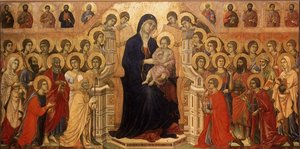
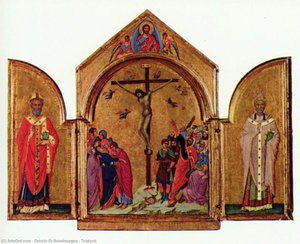
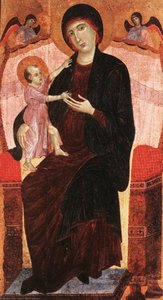
Duccio di Buoninsegna’s Virgen con Niño y Cuatro Santos stands as a monumental achievement, representing a crucial juncture in the evolution of Italian painting. Born in Siena around 1255, Duccio wasn't simply a painter; he was a visionary who skillfully navigated the transition from the rigid formality of Byzantine iconography to the burgeoning naturalism and emotional depth that would define the Sienese School. This particular work, depicting the Virgin Mary cradling the Christ Child alongside four revered saints, embodies this shift with remarkable grace and power. The painting’s impact resonates through its masterful composition, nuanced understanding of human emotion, and a subtle yet profound engagement with religious symbolism.
- Subject & Composition: The central focus is undeniably the Virgin Mary, presented with an unprecedented degree of tenderness and maternal dignity. Her gaze, direct and unwavering, invites the viewer into a deeply personal devotional experience. The inclusion of four saints – figures of significant spiritual importance within the Sienese context – adds layers of narrative complexity and reinforces the painting’s sacred purpose.
- Style & Technique: Duccio's style is characterized by its luminous color palette, achieved through his innovative use of oil paint (though still in its early stages during this period), and a remarkable attention to detail. The drapery flows with an almost ethereal quality, while the figures themselves possess a palpable sense of volume and realism – a departure from the flattened forms often found in earlier Byzantine works.
Historical Context & Influences
Painted during the late 13th or early 14th century, *Virgen con Niño y Cuatro Santos* reflects the artistic and intellectual climate of Siena at the time. The city was a major center for religious art production, deeply influenced by the legacy of Byzantine mosaics and illuminated manuscripts. However, Duccio’s work demonstrates a growing desire to move beyond mere imitation, seeking to imbue sacred subjects with genuine human emotion and psychological depth. As highlighted in resources like the Metropolitan Museum's collection of Duccio's works, his innovations alongside Giotto were pivotal in shaping the future of Italian painting.
- Byzantine Legacy: The influence of Byzantine art is undeniable, particularly in the composition and use of gold leaf – a hallmark of Byzantine iconography.
- Early Naturalism: Yet, Duccio’s work foreshadows the naturalistic tendencies that would later characterize the early Renaissance, evident in his depiction of human anatomy and emotional expression.
Symbolism & Spiritual Resonance
Beyond its aesthetic qualities, *Virgen con Niño y Cuatro Santos* is rich in symbolic meaning. The Virgin Mary represents purity, grace, and divine motherhood – central tenets of Christian faith. The Christ Child embodies redemption and salvation. The four saints, often identified as Saint Lawrence, Saint Stephen, Saint Catherine, and Saint Lucy, represent a diverse range of virtues and intercede for the viewer’s spiritual well-being. The presence of the cross further emphasizes the themes of sacrifice and resurrection.
- Color Symbolism: The use of vibrant colors – particularly blues and golds – held significant symbolic weight, representing heaven and divine glory.
- Gesture & Expression: Duccio’s masterful rendering of gesture and expression conveys a profound sense of reverence and devotion, inviting the viewer to participate in the spiritual experience depicted within the painting.
A Timeless Masterpiece – Recreated for Today
ArtsDot offers meticulously crafted hand-painted reproductions of *Virgen con Niño y Cuatro Santos*, allowing you to bring this iconic work of art into your home or office. Each reproduction is created using the highest quality materials and techniques, ensuring exceptional detail and color accuracy. Whether you are an art collector, interior designer, or simply someone who appreciates beauty, a ArtsDot reproduction offers a unique opportunity to own a piece of Sienese artistic history.
Ähnliche Kunstwerke
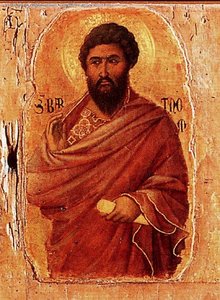
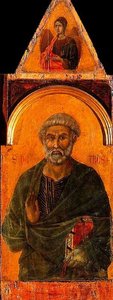
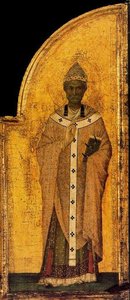
Über den Künstler
frühes Leben und Karriere
Duccio di Buoninsegna, ein renommierter italienischer Maler aus Siena, war in den späten 13. und frühen 14. Jahrhunderten tätig. Geboren im Jahr 1255, bleibt das persönliche Leben von Duccio in vielen Punkten ein Mysterium, wobei wenig über seinen Familienhintergrund oder seine frühe Lebenszeit bekannt ist. Dennoch sind seine Beiträge zur Trecento- und sienesischen Malstil gut dokumentiert.Künstlerischer Stil und Einflüsse
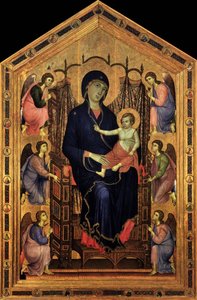
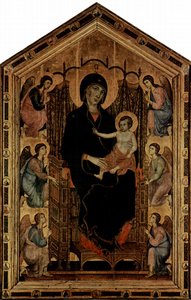
Die Werke von Duccio zeichnen sich durch die innovative Verwendung von Raum und Farbe aus, wie sie in seinem Meisterwerk die Rucellai Madonna (1285) zu sehen ist. Dieses Gemälde, das die Jungfrau Maria mit dem Christkind darstellt, umgeben von Engeln und Heiligen, zeigt Duccios einzigartigen Stil, der byzantinische Kunst mit neuen Techniken verbindet. Seine Verwendung von Modellierung und das Spiel mit Licht und Dunkelheit offenbaren Figuren unter schwerer Robenkleidung und schaffen so eine einladende und warme Atmosphäre.Bekannte Werke und Vermächtnis
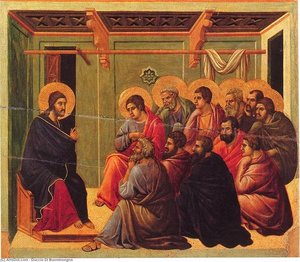
Zu Duccios bekanntesten Werken gehören:- Maestó (Vorderteil, Kronpaneele), Abschied der Apostel (Gotik, Öl) – ein Zeugnis seines innovativen Ansatzes für Raum und Farbe.
- Polyptych Nr. 28 (Die Heilige Jungfrau mit dem Christkind und vier Heiligen) (Gotik, Öl) – demonstriert Duccios Meisterschaft in der Komposition und Erzählung.
- Maestó (Rückseite, Unterbild), Versuchung auf einem Tempeldach (Gotik, Öl) – zeigt seine Fähigkeit, Licht und Dunkelheit auszugleichen.
Vermächtnis und Erinnerung
Trotz finanzieller Schwierigkeiten überwiegt Duccios künstlerisches Vermächtnis seine persönlichen Herausforderungen bei weitem. Seine Werke befinden sich in verschiedenen Museen und Galerien, darunter die Stadtgalerie Manchester, die zahlreiche Meisterwerke von renommierten Künstlern beherbergt. Anzeigen Sie Duccios di Buoninsegnas Kunstwerke auf ArtsDot.com Wikipedia: Duccio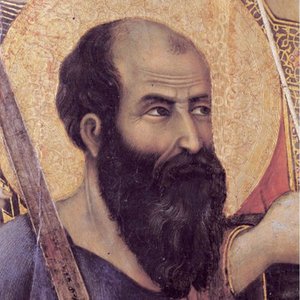
Duccio di Buoninsegna
1255 - 1319 , Italien
Kurzinfos
- Beeinflusste Künstler: ['Byzantinische Kunst']
- Bemerkenswerte Werke:
- Rucellai Madonna
- Maestà
- Flucht nach Ägypten
- Geburtsdatum: ca. 1255
- Geburtsort: Siena, Italien
- Künstlerische Bewegung: Trecento, Gotik
- Nationalität: Italienisch
- Sterbedatum: 1319
- Vollständiger Name: Duccio di Buoninsegna
- Von Ihm Beeinflusste Künstler: ['Sieneser Malerei']
Ähnliche Artikel

Raphael: Die 25 Meisterwerke des Renaissance-Genies – Kunst für Ihr Zuhause
Entdecken Sie die 25 schönsten Meisterwerke von Raphael! Tauchen Sie ein in die Welt der Renaissance-Kunst, erfahren Sie faszinierende Geschichten und lassen Sie sich von den Farben und Kompositionen inspirieren. Hochwertige Reproduktionen auf ArtsDot.com.
Illuminating Eternity: A Comprehensive Exploration of Byzantine Art's Legacy
Explore the rich history & stunning artistry of the Byzantine Empire! Discover iconic mosaics, profound symbolism, and lasting influence on Western art. A comprehensive guide for history lovers.

Die 25 Meisterwerke der Uffizien: Kunstgeschichte für Ihr Zuhause | ArtsDot
Entdecken Sie die 25 berühmtesten Meisterwerke der Uffizien, Florenz! Von Botticelli bis Leonardo da Vinci – Kunstgeschichte erleben. Hochwertige Reproduktionen & Inspiration für Ihr Zuhause auf ArtsDot.com.
Proto-Renaissance Meisterwerke: Die 10 Kunstwerke, die eine Epoche prägten | ArtsDot
Entdecken Sie die 10 prägendsten Meisterwerke der Proto-Renaissance! Von Giotto bis Duccio – erleben Sie die Geschichten, Techniken & zeitlose Schönheit italienischer Frührenaissance Kunst. Hochwertige Reproduktionen auf ArtsDot.com.
Discover the Divine: Inspiring Saint Anthony Artworks to Elevate Your Home Decor
Transform your home with the profound beauty of Saint Anthony artworks. Explore exquisite Baroque reproductions by Murillo and Zurbarán, hand-painted on 100% cotton canvas to bring divine serenity and timeless elegance to your interior design.