

 Vorschau anzeigen
 Versenden
 Teilen
 Details anzeigen

 Herunterladen
 Ähnliche Objekte
 Röntgenaufnahme
 Diashow
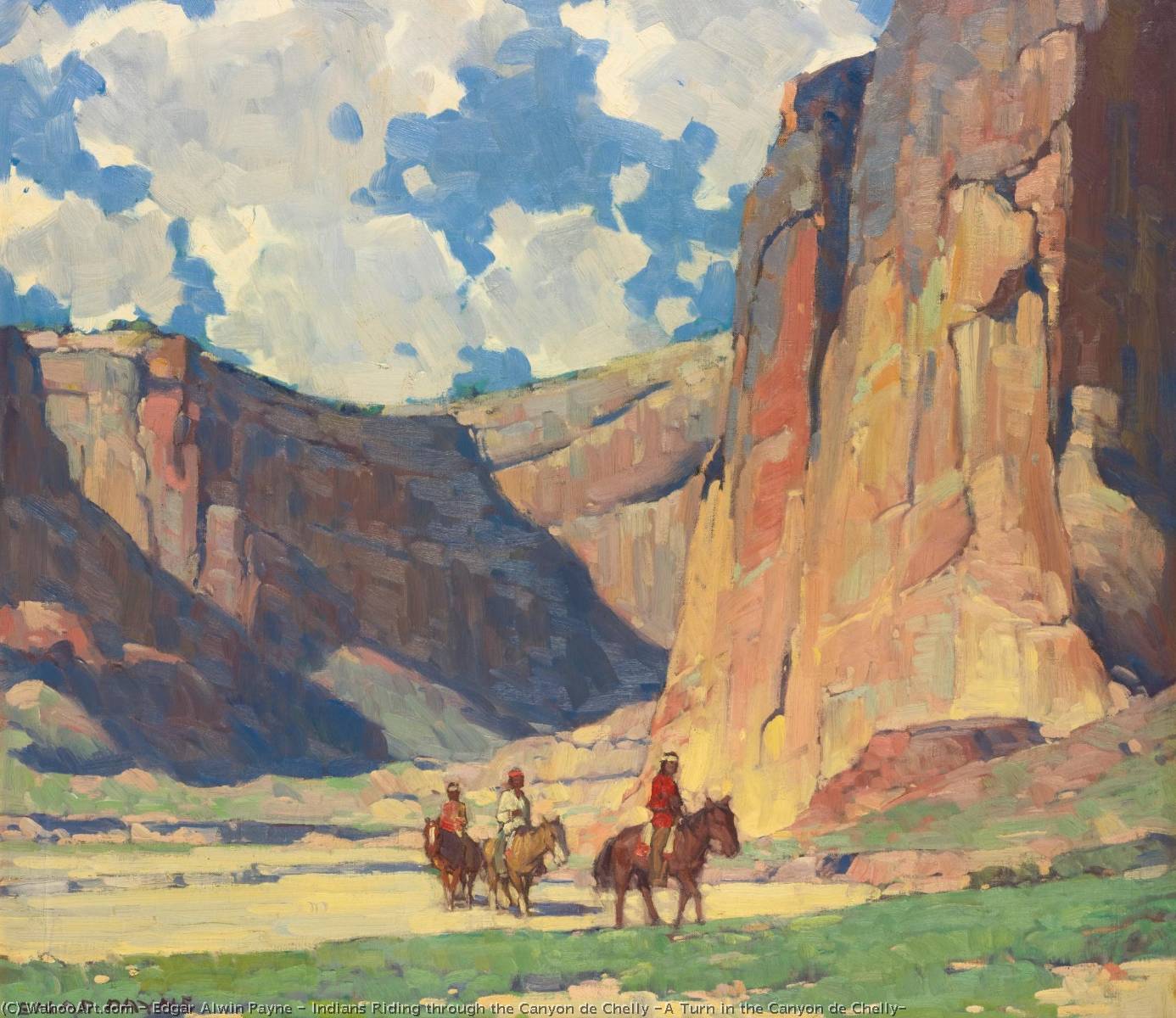
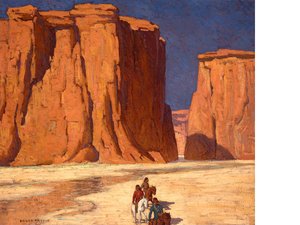
Indians Riding through the Canyon de Chelly (A Turn in the Canyon de Chelly)
 Impressionism
 76.0 x 86.0 cm
 Weiterlesen
Handgefertigte Ölreproduktion
Handgemaltes Ölgemälde auf Leinwand in Ihrer Wunschgröße und mit Rahmen, auf Bestellung von unseren Künstlern angefertigt. ( Druck bestellen Bild kaufen)




































Wählen Sie aus unseren vordefinierten Formaten, die den ursprünglichen Proportionen des Kunstwerks entsprechen.

Sie können Ihre eigenen Maße eingeben, um einen bestimmten Rahmen oder Platz auszufüllen. Wenn die gewählte Größe nicht den Proportionen des Originalbildes entspricht, werden wir das Kunstwerk entweder beschneiden oder das Gemälde durch zusätzliche, handgemalte Elemente erweitern. Ein digitales Mockup wird Ihnen zur Genehmigung zugesandt, bevor die Produktion beginnt.
Bitte beachten Sie, dass die Bildschirmvorschau nicht die tatsächliche Beschneidung oder Erweiterung widerspiegelt. Nur das Mockup zeigt die endgültige Komposition exakt an.
Obwohl Sondermaße verfügbar sind, empfehlen wir, eine Größe aus der vordefinierten Liste zu wählen, um die ursprünglichen Proportionen beizubehalten.
Nach der Bestellung wird das ArtsDot.com-Team dem Kunden Anweisungen per E-Mail zusenden und eine Mockup-Vorschau bereitstellen.
Weltweiter Versand () in nur 3 bis 4 Wochen statt der üblichen 5 Wochen. (21 August). Keine Kompromisse bei der Qualität.

Kostenloser weltweiter Expressversand

Hochwertige Leinenleinwand

Umfassender Versicherungsschutz beim Versand

Zollgebühren-Rückerstattungsgarantie

Garantie für exakte Farbtreue

60 Tage Rückgaberecht (nur bei Mängeln)

100% Geld-zurück-Garantie

Mengenrabatt verfügbar
 Die Glasoption ist nur für Größen unter 110 cm verfügbar.

Indians Riding through the Canyon de Chelly (A Turn in the Canyon de Chelly)
Art der Reproduktion
Format der Reproduktion
-


Gesamtpreis
$ 313
Ähnliche Kunstwerke
![Wild Horse Hunters [no. 2] — Charles Marion Russell, American Romanticism](/media/artworks/images/thumbnails/6a/6b/6a6b08c840334ee098142709d50244ef.jpg)
![Vida De Miguel De Cervantes Saavedra (leben Von Miguel De Cervantes Saavedra). Buch V Der Ausgabe Von Don Quijote (biblioteca Nacional De España) [7] — Martín Fernández De Navarrete, Akademische Kunst](/media/artworks/images/thumbnails/99/f9/99f969c294754562907a5ffd062310fa.jpg)
Über den Künstler
A Pioneer of Sierra Nevada Impressionism
Edgar Alwyn Payne (1883 – 1947) stands as a singular figure in American landscape painting, particularly renowned for his evocative depictions of the Sierra Nevada mountains and his contributions to Southwestern mural art. Born near Cassville, Missouri—a region steeped in Ozark folklore and rugged beauty—Payne’s early life instilled within him an adventurous spirit that would propel him across continents before establishing himself as a celebrated artist. His formative years were marked by extensive travel, beginning with youthful explorations of Europe and continuing through expeditions to Mexico and Canada, fostering a profound appreciation for diverse cultures and artistic traditions. However, it was the American West—specifically California—that irrevocably captured his imagination and became the primary focus of his creative endeavors.Early Influences & Artistic Training
Payne’s artistic journey commenced with carpentry apprenticeships in Arkansas, providing him with practical skills alongside an early exposure to visual arts. Recognizing his talent, he enrolled at the Art Institute of Chicago at a young age, albeit briefly abandoning formal instruction for self-directed study—a decision that proved pivotal in shaping his distinctive style. Rejecting the rigid academic conventions prevalent at the time, Payne embraced Impressionism’s emphasis on capturing fleeting moments of light and color, mirroring the influence of artists like Claude Monet and Camille Pissarro. This approach was further honed through experimentation with plein air painting—working directly from nature—a technique championed by luminaries such as John Muir and Ansel Adams, cementing his connection to the grandeur of the American wilderness. He believed that “mixing brains with paint” was essential for achieving true artistic excellence.The California Years & Artistic Style
California became Payne’s artistic sanctuary in 1909, where he spent considerable time honing his craft at Laguna Beach and immersing himself in the burgeoning San Francisco art scene. He befriended fellow artist Elsie Palmer, forging a relationship that blossomed into marriage—a testament to his personal conviction and artistic ambition. Returning to Illinois in 1911, Payne found Palmer pursuing her own artistic pursuits, symbolizing the reciprocal inspiration inherent in their partnership. His paintings are characterized by luminous color palettes, loose brushstrokes, and an acute sensitivity to atmospheric conditions—elements that convey not merely visual representation but also emotional resonance. He skillfully employed techniques like glazing and impasto to build up textured surfaces, capturing the essence of geological formations and conveying a palpable sense of movement. Payne’s masterful rendering of light was particularly noteworthy; he sought to capture the ephemeral qualities of sunlight filtering through mountain peaks and forests—a challenge that demanded unwavering dedication and meticulous observation.Major Achievements & Legacy
Payne’s prolific output encompassed landscapes, portraits, murals, and theater designs—demonstrating his versatility as an artist. His monumental murals adorning buildings in Santa Fe and Albuquerque stand as enduring symbols of Southwestern artistic heritage. Notably, “Indians Riding Through Canyon de Chelly” (1908), commissioned by the Navajo Nation, remains a seminal work capturing the spirit of Native American culture and the dramatic landscapes of Arizona. Payne’s paintings—particularly his Sierra Nevada series—are held in prestigious collections worldwide and continue to inspire artists today. His unwavering devotion to plein air painting and his masterful rendering of light and color solidified his place as one of America's foremost Impressionist landscape painters, leaving an indelible mark on the history of American art. He was recognized for his ability to convey both visual beauty and profound emotional depth—a rare accomplishment in any artistic discipline.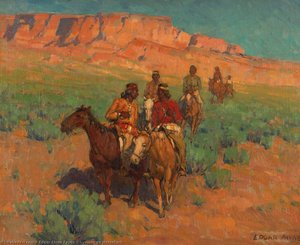
Edgar Alwyn Payne
1883 - 1947 , Vereinigte Staaten von Amerika
Kurzinfos
- Artistic Movement Or Style: Amerikanischer Impressionismus
- Artists Who Influenced This Artist:
- John Muir
- Ansel Adams
- Date Of Birth: 1883
- Date Of Death: 1947
- Full Name: Edgar Alwyn Payne
- Nationality: Amerikanisch
- Notable Artworks:
- Sardine Boats at Douarnenez
- View At Sabrina Lake
- Indians Riding through the Canyon de Chelly
- Place Of Birth: Cassville, Missouri
Ähnliche Artikel

Handelsanfragen
APS bietet seit 2004 hochwertige Kunst-Reproduktionen und individuelle Auftragsarbeiten an. Unternehmen, Hotels und ausgewählte Sammler vertrauen auf uns für museumsgerechte Kunstwerke, diskreten Service und umfassende künstlerische Lösungen. Kontaktieren Sie uns für ein individuelles Angebot!

Goya: Die 25 Meisterwerke des spanischen Genies – Kunst für Ihr Zuhause | ArtsDot
Entdecken Sie die 25 Meisterwerke von Francisco Goya! Tauchen Sie ein in die düstere Romantik spanischer Malerei, Porträts & Historienbilder. Hochwertige Kunstdrucke auf ArtsDot.com – für Kunstliebhaber und stilvolles Wohnen.

Über uns
Entdecken Sie unsere Geschichte! Wir bringen Weltklasse-Kunst in Ihr Leben durch fachkundige Auswahl, individuelle Kreationen und kostenlose Vorschauen. Seit dem Jahr 2000 von Privatpersonen und Unternehmen geschätzt.
Impressionistic Realism's Finest: 10 Masterpieces for Your Home | ArtsDot
Journey through Impressionistic Realism with 10 iconic masterpieces by Monet, Renoir & Van Gogh. Explore art history, techniques & find museum-quality reproductions for your home at ArtsDot.com. Discover all masterpieces online!

Pierre-Auguste Renoir: Die 25 Meisterwerke des Impressionismus für Ihr Zuhause | ArtsDot
Entdecken Sie die 25 schönsten Meisterwerke von Pierre-Auguste Renoir! Tauchen Sie ein in die Welt des Impressionismus, erleben Sie berühmte Gemälde wie 'Bal au moulin de la Galette' und finden Sie hochwertige Kunstdrucke für Ihr Zuhause. Jetzt auf ArtsDot.com!

