

 Vorschau anzeigen
 Versenden
 Teilen
 Details anzeigen

 Herunterladen
 Ähnliche Objekte
 Röntgenaufnahme
 Diashow
 Statistiken
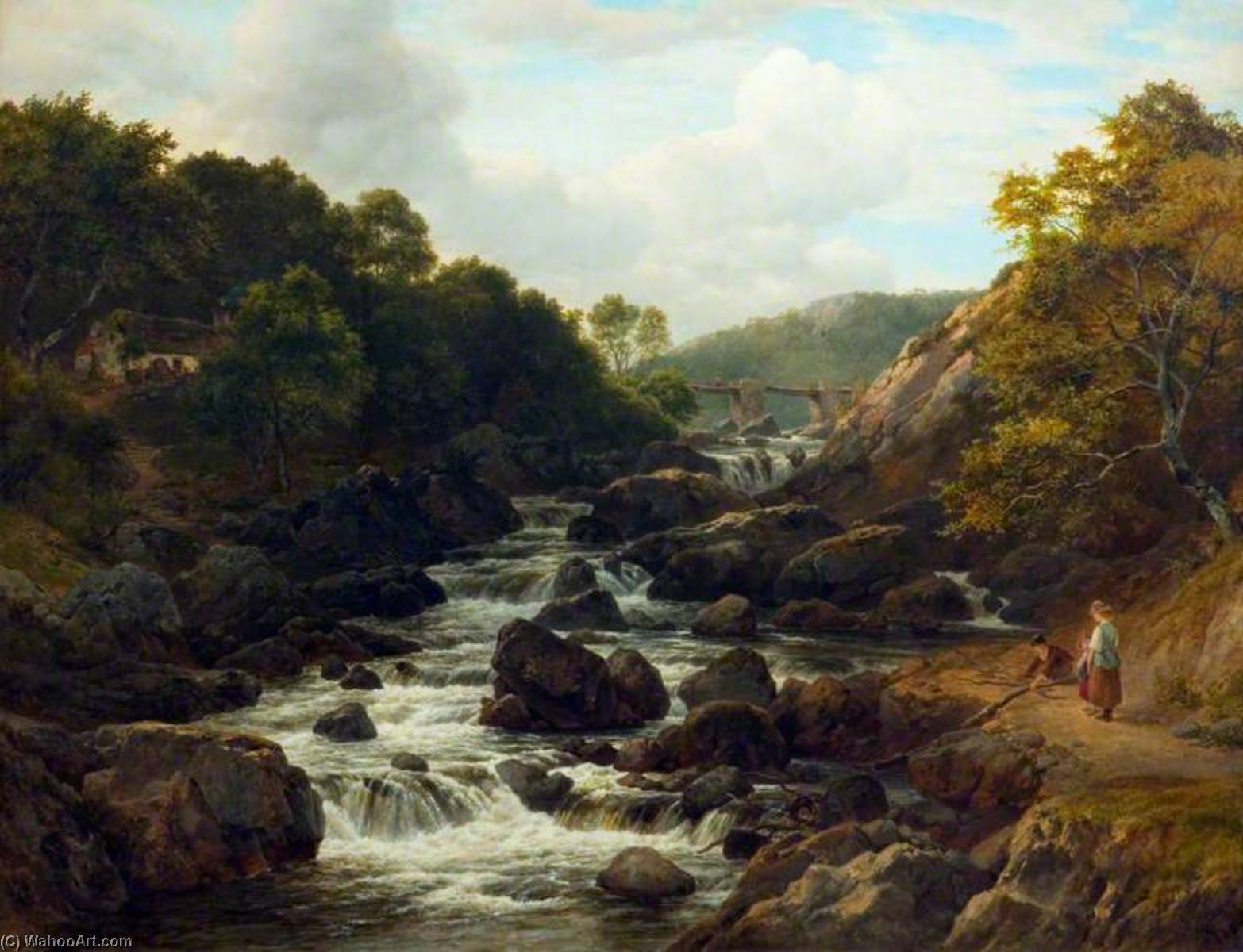
On the Lledr
 1864
1864 86.0 x 111.0 cm
 Weiterlesen
Handgefertigte Ölreproduktion
Handgemaltes Ölgemälde auf Leinwand in Ihrer Wunschgröße und mit Rahmen, auf Bestellung von unseren Künstlern angefertigt. ( Zu Druck wechseln Zum digitalen Bild wechseln)




































Wählen Sie aus unseren vordefinierten Formaten, die den ursprünglichen Proportionen des Kunstwerks entsprechen.

Sie können Ihre eigenen Maße eingeben, um einen bestimmten Rahmen oder Platz auszufüllen. Wenn die gewählte Größe nicht den Proportionen des Originalbildes entspricht, werden wir das Kunstwerk entweder beschneiden oder das Gemälde durch zusätzliche, handgemalte Elemente erweitern. Ein digitales Mockup wird Ihnen zur Genehmigung zugesandt, bevor die Produktion beginnt.
Bitte beachten Sie, dass die Bildschirmvorschau nicht die tatsächliche Beschneidung oder Erweiterung widerspiegelt. Nur das Mockup zeigt die endgültige Komposition exakt an.
Obwohl Sondermaße verfügbar sind, empfehlen wir, eine Größe aus der vordefinierten Liste zu wählen, um die ursprünglichen Proportionen beizubehalten.
Nach der Bestellung wird das ArtsDot.com-Team dem Kunden Anweisungen per E-Mail zusenden und eine Mockup-Vorschau bereitstellen.
Weltweiter Versand () in nur 3 bis 4 Wochen statt der üblichen 5 Wochen. (10 September). Keine Kompromisse bei der Qualität.

Kostenloser weltweiter Expressversand

Hochwertige Leinenleinwand

Umfassender Versicherungsschutz beim Versand

Zollgebühren-Rückerstattungsgarantie

Garantie für exakte Farbtreue

100-Tage-Rückgaberecht (nur bei Mängeln)

100% Geld-zurück-Garantie

Mengenrabatt verfügbar
 Die Glasoption ist nur für Größen unter 110 cm verfügbar.

On the Lledr
Art der Reproduktion
Format der Reproduktion
-


Gesamtpreis
$ 263
Composition and Style
The composition of On the Lledr is well-balanced, with the man standing near the center of the image, drawing attention to the natural beauty surrounding him. The use of oil on canvas allows for a rich and vibrant color palette, with the rocks and trees rendered in exquisite detail. The style of Edmund Marriner Gill is reminiscent of other notable landscape artists, such as Thomas Cole, who also explored the relationship between nature and humanity in their work. Key Features of the painting include:- The serene atmosphere, created by the gentle flow of the river and the surrounding trees
- The detailed rendering of the rocks and foliage, showcasing Gill's technical skill as an artist
- The sense of depth and perspective, achieved through the use of atmospheric effects and clever composition
Artist and Museum
Edmund Marriner Gill was a talented artist who created On the Lledr in 1864. The painting is now part of the collection at the Victoria and Albert Museum, which is also home to works by other notable artists, such as Edmund Marriner Gill and Isaak Ilyich Levitan. For more information on the museum and its collection, visit The Fitzwilliam Museum page on ArtsDot.To experience the beauty of On the Lledr for yourself, consider purchasing a handmade oil painting reproduction from ArtsDot. Our team of skilled artists can create a stunning replica of this piece, using only the highest-quality materials and techniques. Visit our website to learn more about our handmade oil paintings and to explore our collection of artworks by Edmund Marriner Gill and other notable artists.
Ähnliche Kunstwerke








Über den Künstler
The Serene Vision of Edmund Marriner Gill
Edmund Marriner Gill (1820–1894) may not possess the thunderous fame of his contemporaries, yet his canvases offer a profound and quiet power that resonates with anyone who has found solace in the wild beauty of the British Isles. Born in Clerkenwood, London, into a family steeped in artistic tradition, Gill was destined for a life shaped by the brush. His father, Edmund Ward Gill, was a respected portrait painter, and his brothers, William and George, also pursued the fine arts. However, while his lineage leaned toward the structured world of portraiture, Edmund’s heart wandered toward the untamed landscapes of the English, Welsh, and Scottish countrysides. He became a master of the atmospheric, specializing in the dramatic movement of waterfalls and the rhythmic flow of rushing rivers.
His artistic journey was one of remarkable self-discovery and focused observation. Although he studied at the Royal Academy, much of his stylistic essence was forged through personal encounter and mentorship rather than rigid academic dogma. A pivotal moment occurred in 1841 in Birmingham, where Gill met the legendary landscape painter David Cox. This meeting would forever alter the trajectory of his work. From Cox, Gill absorbed a deep appreciation for atmospheric effects—the way light filters through mist, the subtle shifts in color during a passing storm, and the ability to render nature not just as a static scene, but as a living, breathing entity. This influence is woven into the very fabric of his technique, blending a meticulous eye for detail with a Romantic sensibility that celebrates the sublime.
Mastery of Water and Light
Gill’s true passion lay in the rugged terrains of Wales, particularly the Lledr Valley and the banks of the River Conway. He possessed an almost meditative ability to translate the visual poetry of these locations onto canvas. His subject matter often centered on the kinetic energy of water; whether it was a cascading mountain torrent or the gentle, swirling eddies of a riverbed, Gill captured the dual nature of water—its terrifying strength and its profound tranquility. In works such as On the Lledr, created in 1864, one can observe his ability to balance a sense of human presence within a vast, overwhelming landscape, using oil on canvas to create a rich, vibrant palette that brings the textures of rock and foliage to life.
The technical brilliance of his work is most evident in his handling of light and composition. He did not merely paint scenery; he painted the air itself. His landscapes often feature:
- Atmospheric Depth: The use of soft edges and hazy horizons to create a sense of immense distance and scale.
- Textural Contrast: The juxtaposition of smooth, flowing water against the jagged, unyielding surfaces of ancient stones.
- Luminous Color: A mastery of light that suggests the fleeting moments of dawn or the heavy, moisture-laden atmosphere of a Welsh afternoon.
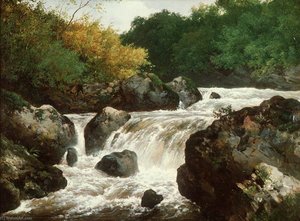
In masterpieces like River with Rapids (1876), Gill demonstrates his capacity to harmonize the majestic presence of mountains with the energetic movement of water, creating a sense of equilibrium that is both breathtaking and peaceful.
A Lasting Legacy in the Landscape
Throughout his career, which saw him exhibiting at the Royal Academy from 1842 to 1886, Gill remained a dedicated observer of the natural world. His life, spent moving between London, Ludlow, and Hereford, allowed him to draw inspiration from diverse terrains, yet he always returned to the elemental beauty of the water's edge. While his name might not dominate the grand narratives of art history textbooks, his significance lies in his contribution to the 19th-century landscape tradition—a period defined by a deep, spiritual connection to the land.
Today, his works serve as vital windows into a vanished era of British naturalism. Pieces such as Matlock Dale, Derbyshire (1894) stand as poignant final testaments to his ability to capture the enduring spirit of the countryside. Gill’s legacy is found in the quiet moments of awe experienced by those who view his work—a reminder that there is a profound, lasting beauty in the movement of a stream and the steadfastness of a mountain, captured forever through the eyes of a man who truly saw the world.
edmund marriner gill
1820 - 1894
Kurzinfos
- Artistic Movement Or Style: Romantic Landscape
- Artists Or Movements Influenced By This Artist: ['None listed']
- Artists Who Influenced This Artist: ['David Cox']
- Date Of Birth: 1820
- Date Of Death: 1894
- Full Name: Edmund Marriner Gill
- Nationality: English
- Notable Artworks:
- River with Rapids
- On the Lledr
- A Welsh Mountain Torrent
- Place Of Birth: London, England