 Vorschau anzeigen
 Versenden
 Teilen
 Details anzeigen

 Herunterladen
 Ähnliche Objekte
 Röntgenaufnahme
 Diashow
 Statistiken
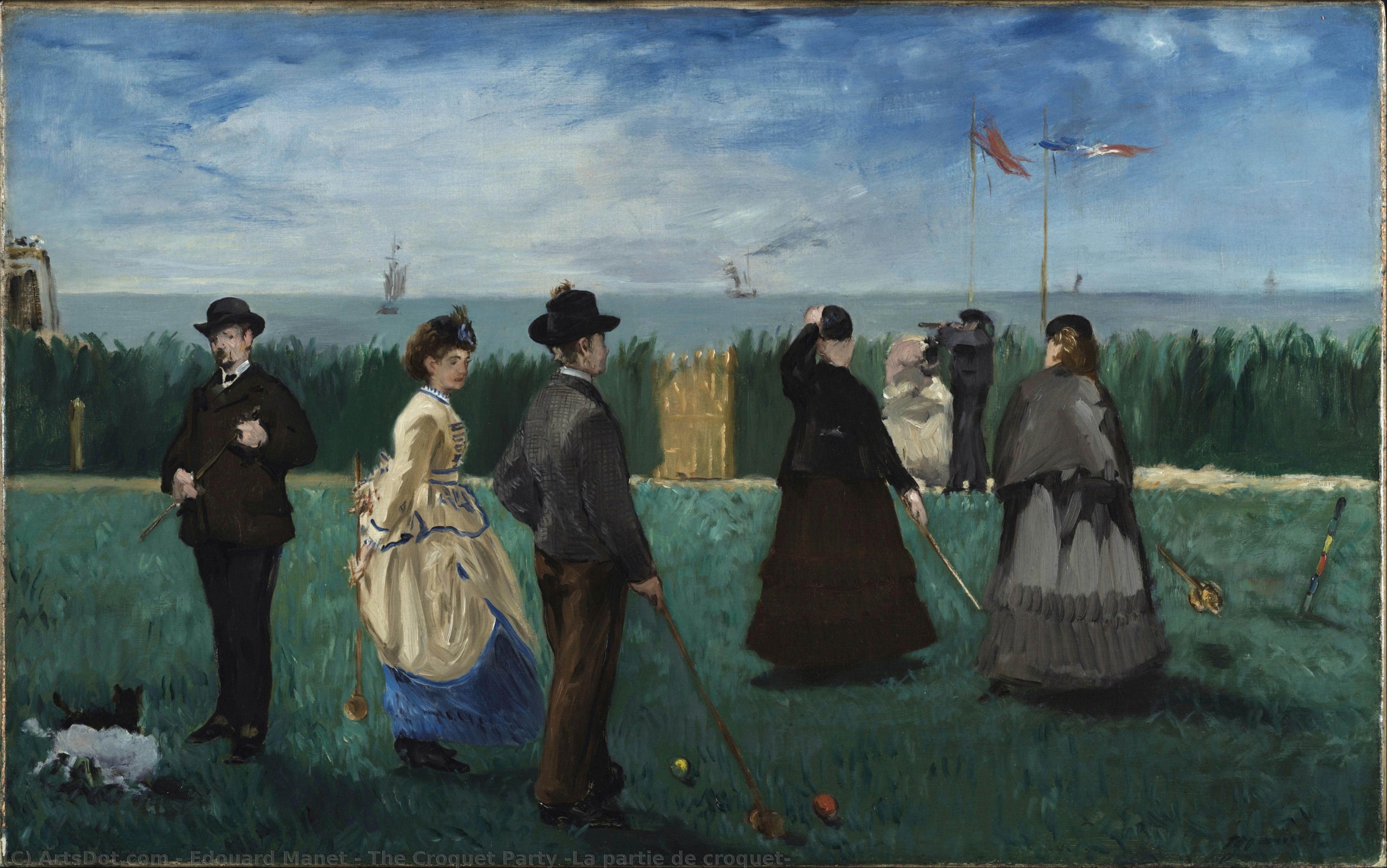
Der Croquet-Spieler
 Acryl auf Leinwand
- Wandkunst
- Realist Modernism
 1871
1871 69.0 x 96.0 cm
 Nelson-Atkins Museum of Art
 Weiterlesen
Giclée / Kunstdruck
Giclée- oder Leinwanddruck in Museumsqualität mit schneller Produktion und flexiblen Veredelungsoptionen. ( Handgemalte Reproduktion bestellen Zum digitalen Bild wechseln)




P118B $10

P118H $10

P118W $10

P438Z $10

P508JH $12

P508YH $12

P805H $10

P805Z $10

P919BZ $10

P919G $10

P919XJ $10

P959ZH $10

P968JZ $12

W106C $8

W218G $10

W218JH $8

W218Y $10

W307PJ $10

W316G $10

W316PJ $8

W316Y $10

W398PJ $8

W4111J $10

W500HY $15

W500JH $15

W692G $12

W849H $8

W940BG $15

W953PJ $8




Wählen Sie aus unseren vordefinierten Formaten, die den ursprünglichen Proportionen des Kunstwerks entsprechen.

Sie können Ihre eigenen Maße eingeben, um ein bestimmtes Format oder einen speziellen Platz einzupassen. Wenn das von Ihnen gewählte Format nicht den Proportionen des Originalbildes entspricht, werden wir das Kunstwerk entweder beschneiden oder das Bild mit einem gespiegelten oder einfarbigen Rand erweitern. Ein digitaler Entwurf wird Ihnen zur Genehmigung zugesandt, bevor die Produktion beginnt.
Bitte beachten Sie, dass die Vorschau auf dem Bildschirm nicht den tatsächlichen Zuschnitt oder die Erweiterung widerspiegelt. Nur der Entwurf zeigt die endgültige Komposition präzise an.
Obwohl Sondermaße verfügbar sind, empfehlen wir die Auswahl eines Maßes aus der vordefinierten Liste, um die ursprünglichen Proportionen zu bewahren.
Weltweiter Versand () innerhalb von 2 Wochen statt der üblichen 4/5 Wochen. (8 September)

Kostenloser weltweiter Expressversand

Hochwertige Leinenleinwand

Umfassender Versicherungsschutz beim Versand

Zollgebühren-Rückerstattungsgarantie

Garantie für exakte Farbtreue

100-Tage-Rückgaberecht (nur bei Mängeln)

100% Geld-zurück-Garantie

Mengenrabatt verfügbar
 Die Glasoption ist nur für Größen unter 110 cm verfügbar.

Der Croquet-Spieler
Giclée / Kunstdruck
Format der Reproduktion
-


Gesamtpreis
$ 62
Das Spiel der Gesellschaft: Manets „La partie de croquet“
Édouard Manet’s “La partie de croquet” (1871) isn't merely a depiction of a leisurely afternoon pastime; it’s a carefully constructed tableau vivant, a snapshot of Parisian society grappling with the allure and anxieties of modernity. Painted during a period of rapid social change in France, the artwork offers a glimpse into the burgeoning leisure culture of the Second Empire, where the newly imported game of croquet became a symbol of fashionable entertainment and, subtly, of shifting social dynamics.
The scene unfolds on the Normandy coast at Boulogne, bathed in the hazy light characteristic of Manet’s style. The composition is deceptively simple: a group of elegantly dressed individuals engaged in a game of croquet amidst a verdant field. Yet, within this apparent tranquility lies a complex web of relationships and unspoken tensions. Manet masterfully captures the fleeting effects of the sea breeze – the way it whips through skirts, dances with flags, and momentarily distracts Jeanne Gonzalès, a young artist, from her game. Her posture, slightly off-balance as she clutches her hat, hints at an awareness of something beyond the immediate activity.
Die Technik und der Impressionismus
Manet’s technique is instantly recognizable – a bold departure from the academic traditions that still dominated the art world. He employs loose brushstrokes and a flattened perspective, prioritizing the capture of light and atmosphere over meticulous detail. The painting isn't about precise representation; it’s about conveying an *impression* of a moment in time. Notice how he uses broken color to suggest movement and texture – the shimmering effect on the water, the dappled sunlight filtering through the trees. This deliberate disregard for traditional realism is a hallmark of Impressionism, though Manet often resisted being strictly categorized as such.
The use of black and white in this particular reproduction highlights the painting’s inherent theatricality. It evokes the style of a vintage photograph, adding to the sense of looking back at a bygone era. However, it also allows the viewer to focus on Manet's masterful manipulation of light and shadow, elements that are crucial to understanding his artistic vision.
Symbolik und soziale Nuancen
Beyond the surface depiction of a croquet game, “La partie de croquet” is rich in symbolic meaning. The presence of Léon Leenhoff, Manet’s stepson, and Jeanne Gonzalès, a young artist, immediately draws attention to their flirtatious interaction. Croquet was frequently associated with opportunities for discreet encounters – a space where social boundaries blurred and romantic possibilities arose. Manet subtly suggests a connection between them through their proximity and the way they regard each other; a silent exchange of glances that speaks volumes.
The inclusion of the dog and cat adds an unexpected layer to the scene, grounding it in everyday life and hinting at domesticity amidst the fashionable gathering. These animals are not merely decorative elements; they represent a connection to nature and a reminder of the simple pleasures of rural life – a contrast to the artificiality of the social setting.
Ein Kunstwerk für die Moderne
“La partie de croquet” remains a captivating work, offering a poignant reflection on Parisian society in the 1870s. It’s a painting that invites us to observe, to interpret, and to contemplate the complexities of human relationships within a rapidly changing world. A reproduction by ArtsDot.com allows you to bring this evocative image into your home or office, serving as a beautiful reminder of Manet's revolutionary approach to art and his enduring fascination with modern life. The painting’s timeless appeal lies in its ability to capture not just a scene, but an atmosphere – the scent of salt air, the murmur of conversation, and the unspoken desires that simmer beneath the surface of polite society.
Ähnliche Kunstwerke
Über den Künstler
frühes Leben und Karriere
Édouard Manet, ein französischer modernistischer Maler, wurde am 23. Januar 1832 in Paris geboren. Er widersetzte sich seinen bürgerlichen Wurzeln und einem vorgezeichneten Seekriegspfad und etablierte sich als mutiger französischer Modernist, dessen Leinwände die Lebendigkeit des 19. Jahrhunderts einfingen. Er wird weithin für seine Rolle bei der Pionierarbeit des Impressionismus gelobt, der die Kunst von der Malerei in unbekannte Gebiete lenkte.Bekannte Werke
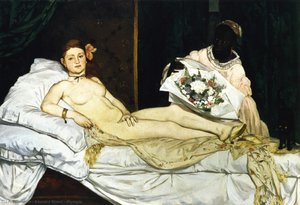
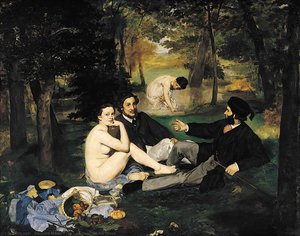
Manets frühe Meisterwerke, Das Picknick auf der Wiese (Le déjeuner sur l'herbe) (1863) und Olympia (1865), waren radikal, stellten künstlerische Normen in Frage und lösten Empörung bei Traditionalisten aus. Diese provokanten Werke wurden von fortschrittlichen Kollegen anerkannt und säten die Saat des Impressionismus. * Das Picknick auf der Wiese (Le déjeuner sur l'herbe) (1863) - ein Gemälde, das sowohl bei Kritikern als auch bei der Kunstakademie für Kontroversen sorgte. * Olympia (1865) – ein Werk, das aufgrund seiner Darstellung einer nackten weißen Frau in Begleitung einer schwarzen Dienstmädchen große Aufregung auslöste.Museen und Sammlungen
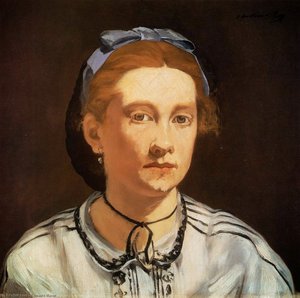
Manets Werke befinden sich in verschiedenen Museen auf der ganzen Welt, darunter: * Musée d'Orsay (Paris, Frankreich) – beherbergt eine umfangreiche Sammlung von Manets Gemälden, darunter Olympia. * Museum of Fine Arts (Boston, USA) – zeigt Manets Porträt von Victorine Meurent, ein bemerkenswertes Werk seines Oeuvres.Vermächtnis und Einfluss
Manets innovativer Stil, der durch breite, schnelle Pinselstriche, Studiobeleuchtung und geringe Tiefenwirkung gekennzeichnet ist, hat zukünftige Maler maßgeblich beeinflusst. Sein Vermächtnis kann in den Werken zahlreicher Künstler gesehen werden, die auf seinen Füßen folgen.- Impressionismus: Seine Pionierarbeit in diesem Stil hat ihn zu einer bekannten Figur unter Kunstliebhabern gemacht.
- Realismus: Seine Ablehnung traditioneller realistischer Ansätze ebnete den Weg für eine neue Generation von Künstlern.
- Moderne Kunst: Manets Beiträge zur Entwicklung der modernen Kunst sind unbestreitbar und festigen seinen Platz in den Annalen der Kunstgeschichte.
Weitere Literatur und Erkundung
* Entdecken Sie mehr über das Leben und Werk von Édouard Manet auf ArtsDot. * Erkunden Sie die Musée d'Orsay Sammlung, die eine umfangreiche Auswahl von Manets Gemälden, darunter Olympia, auf ArtsDot’s Museum Seite bietet.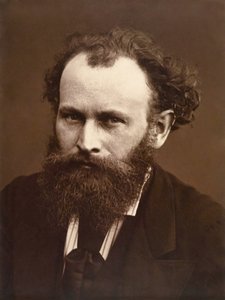
Édouard Manet
1832 - 1883 , Frankreich
Kurzinfos
- Beeinflusste Künstler:
- Claude Monet
- Pierre-Auguste Renoir
- Edgar Degas
- Bemerkenswerte Werke:
- Le Déjeuner sur l'herbe
- Olympia
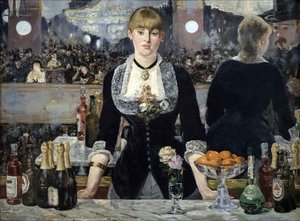
- A Bar at the Folies-Bergère
- Einflussreiche Künstler:
- Caravaggio
- Diego Velázquez
- Gustave Courbet
- Geburtsdatum: 23. Januar 1832
- Geburtsort: Paris, Frankreich
- Künstlerische Richtung: Impressionismus, Realismus
- Nationalität: Französisch
- Todatum: 1883
- Vollständiger Name: Édouard Manet
Ähnliche Artikel
Édouard Manet: Wegbereiter der Moderne und die Herausforderung künstlerischer Konventionen
Entdecken Sie Édouard Manets revolutionären Einfluss auf die Moderne! Analysieren Sie seine Skandale, seinen Stil und sein Vermächtnis – fundiert & verständlich. Jetzt lesen!

Impressionismus Meisterwerke: Die Top 10 Kunstwerke für Ihr Zuhause | ArtsDot
Entdecken Sie die Top 10 Meisterwerke des Impressionismus! Von Monet bis Renoir – erfahren Sie die Geschichten hinter berühmten Gemälden, Techniken & Farben. Hochwertige Kunstdrucke auf ArtsDot.com.
Édouard Manet: Die 25 Meisterwerke des Impressionismus für Ihr Zuhause | ArtsDot
Entdecken Sie die 25 Meisterwerke von Édouard Manet! Tauchen Sie ein in Impressionismus, Pariser Leben & revolutionäre Kunst. Hochwertige Reproduktionen für Ihr Zuhause – jetzt auf ArtsDot.com!
Impressionismus: Die 10 Meisterwerke, die eine Kunstbewegung prägten |
Entdecken Sie die 10 Meisterwerke des Impressionismus! Von Monet bis Renoir – erfahren Sie die Geschichten hinter berühmten Gemälden & ihre einzigartigen Techniken. Kunstdrucke in Museumsqualiät auf .
Impressionismus: Die 10 Meisterwerke, die eine Kunstbewegung prägten | ArtsDot
Entdecken Sie die 10 Meisterwerke des Impressionismus! Von Monet bis Renoir – erleben Sie die Geschichten, Techniken & Farben berühmter Künstler. Kunstdrucke in Museumsqualiät auf ArtsDot.com.