

 Vorschau anzeigen
 Versenden
 Teilen
 Details anzeigen

 Herunterladen
 Ähnliche Objekte
 Röntgenaufnahme
 Diashow
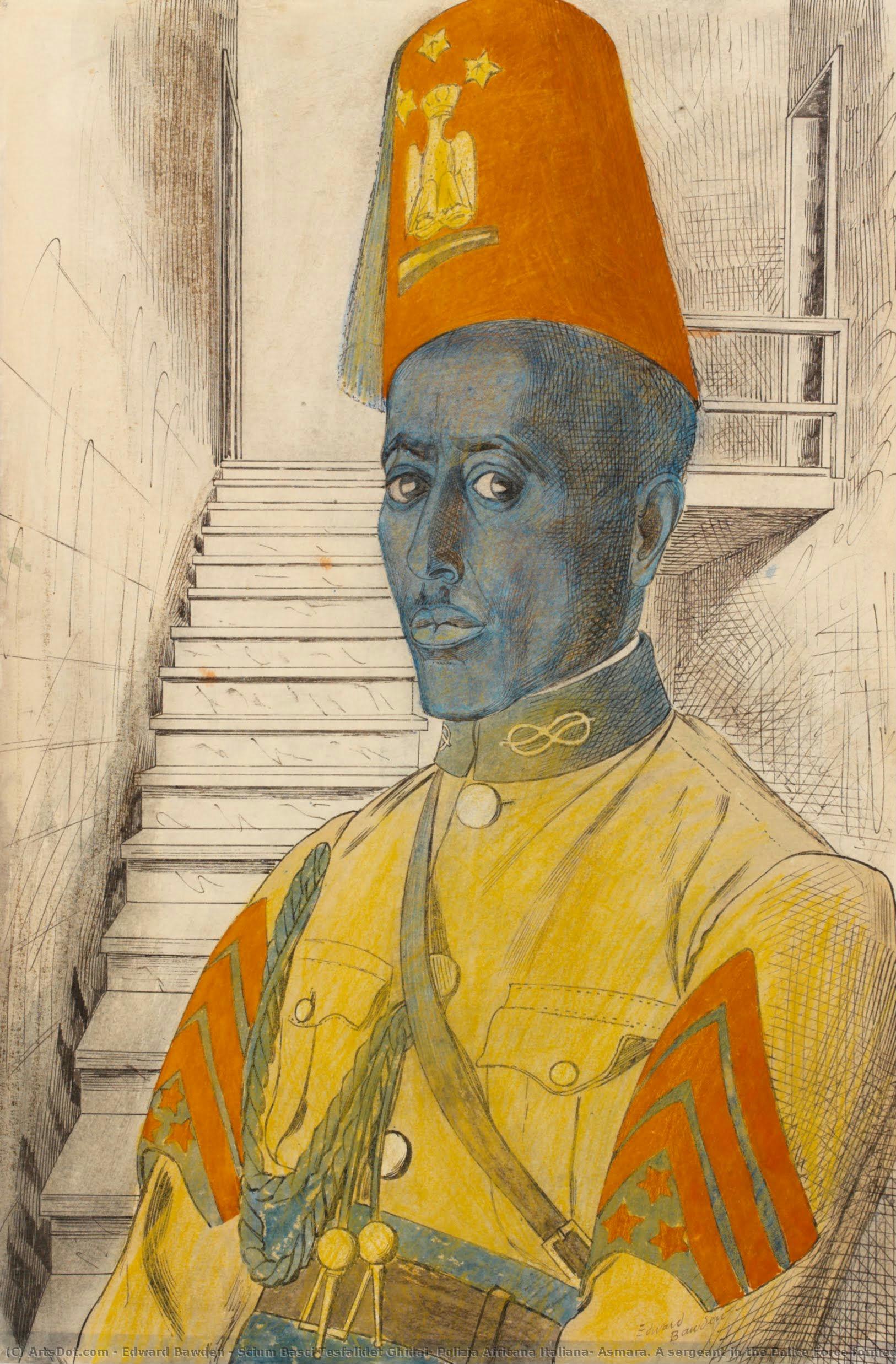
Scium Basci Tesfalidet Ghidai: Polizia Africana Italiana, Asmara. A sergeant in the Police Force formed by the Italians
 Acrylic On Canvas
- WallArt
- British War Art
 1942
1942 33.0 x 50.0 cm
 Imperial War Museums
 Weiterlesen
Giclée / Kunstdruck
Giclée- oder Leinwanddruck in Museumsqualität mit schneller Produktion und flexiblen Veredelungsoptionen. ( Handgemalte Reproduktion bestellen Bild kaufen)




P118B $10

P118H $10

P118W $10

P438Z $10

P508JH $12

P508YH $12

P805H $10

P805Z $10

P919BZ $10

P919G $10

P919XJ $10

P959ZH $10

P968JZ $12

W106C $8

W218G $10

W218JH $8

W218Y $10

W307PJ $10

W316G $10

W316PJ $8

W316Y $10

W398PJ $8

W4111J $10

W500HY $15

W500JH $15

W692G $12

W849H $8

W940BG $15

W953PJ $8




Wählen Sie aus unseren vordefinierten Formaten, die den ursprünglichen Proportionen des Kunstwerks entsprechen.

Sie können Ihre eigenen Maße eingeben, um ein bestimmtes Format oder einen speziellen Platz einzupassen. Wenn das von Ihnen gewählte Format nicht den Proportionen des Originalbildes entspricht, werden wir das Kunstwerk entweder beschneiden oder das Bild mit einem gespiegelten oder einfarbigen Rand erweitern. Ein digitaler Entwurf wird Ihnen zur Genehmigung zugesandt, bevor die Produktion beginnt.
Bitte beachten Sie, dass die Vorschau auf dem Bildschirm nicht den tatsächlichen Zuschnitt oder die Erweiterung widerspiegelt. Nur der Entwurf zeigt die endgültige Komposition präzise an.
Obwohl Sondermaße verfügbar sind, empfehlen wir die Auswahl eines Maßes aus der vordefinierten Liste, um die ursprünglichen Proportionen zu bewahren.
Weltweiter Versand () innerhalb von 2 Wochen statt der üblichen 4/5 Wochen. (1 September)

Kostenloser weltweiter Expressversand

Hochwertige Leinenleinwand

Umfassender Versicherungsschutz beim Versand

Zollgebühren-Rückerstattungsgarantie

Garantie für exakte Farbtreue

60 Tage Rückgaberecht (nur bei Mängeln)

100% Geld-zurück-Garantie

Mengenrabatt verfügbar
 Die Glasoption ist nur für Größen unter 110 cm verfügbar.

Scium Basci Tesfalidet Ghidai: Polizia Africana Italiana, Asmara. A sergeant in the Police Force formed by the Italians
Giclée / Kunstdruck
Format der Reproduktion
-


Gesamtpreis
$ 62
A Sergeant’s Gaze: Bawden Captures Asmara's Vitality
Edward Bawden’s “Scium Basci Tesfalidet Ghidai: Polizia Africana Italiana, Asmara,” painted in 1942, is more than a simple portrait; it’s a vibrant snapshot of a pivotal moment – the British advance into Ethiopia and the burgeoning presence of Italian colonial forces. Bawden, already renowned for his meticulous illustrations and distinctive graphic style, found himself documenting this complex transition as an official war artist, tasked with capturing the essence of a rapidly changing landscape and its inhabitants. The painting immediately draws the eye to the central figure: a sergeant in the Polizia Africana Italiana, seated with a quiet intensity that belies the turbulent events unfolding around him. His uniform, a striking yellow punctuated by a bold red hat, speaks volumes about his role – a symbol of Italian authority amidst a shifting power dynamic. Yet, it’s not merely military attire; there's an undeniable theatricality to the garment, hinting at a carefully constructed image designed to project strength and control.A Watercolor World: Technique and Atmosphere
Bawden’s masterful use of watercolor is central to the painting’s impact. He eschews photographic realism in favor of a looser, more expressive approach, capturing not just the physical appearance of the sergeant but also the atmosphere of Asmara itself. The background – a pale wash of muted blues and greens – creates a sense of distance and suggests an expansive, almost dreamlike quality to the city. Bawden’s brushstrokes are visible, adding texture and movement to the scene. Notice how he builds up layers of color to define the sergeant's uniform, using subtle variations in tone to create depth and form. The careful rendering of his face – a slight furrow of the brow, a hint of weariness in his eyes – conveys a quiet dignity and an underlying sense of observation. The inclusion of two figures in the background, one on the left and another further back on the right, adds a layer of narrative complexity, hinting at the social fabric of this colonial outpost.Echoes of Colonialism: Context and Symbolism
Painted during World War II, “Scium Basci Tesfalidet Ghidai” offers a poignant glimpse into the complexities of colonialism. The Polizia Africana Italiana was comprised largely of Italian nationals serving in East Africa, alongside indigenous African recruits. Bawden’s portrayal subtly acknowledges this hybridity, presenting the sergeant as an individual caught between two worlds – representing both Italian authority and the realities of colonial administration. The title itself—a direct translation from Italian—underscores the painting's historical context. It speaks to the specific unit depicted and the broader military campaign unfolding in Ethiopia. The choice of Asmara, a strategically important city and a hub for Italian operations, highlights the significance of this moment in the war’s trajectory. The vibrant colors of the uniform stand out against the subdued background, symbolizing the assertive presence of the Italian forces within the region.A Moment Frozen in Time: Emotional Resonance
Beyond its historical and artistic merits, “Scium Basci Tesfalidet Ghidai” possesses a remarkable emotional resonance. The sergeant’s gaze – direct and unwavering – invites the viewer to contemplate his thoughts and experiences. There's a sense of quiet contemplation, perhaps even melancholy, in his expression, suggesting the weight of responsibility and the uncertainties of war. Bawden masterfully captures this intangible quality, transforming a simple portrait into a powerful meditation on identity, power, and the human condition. The painting’s enduring appeal lies not only in its technical skill but also in its ability to evoke a sense of place and time, transporting us back to a pivotal moment in history—a moment captured with remarkable sensitivity and artistic vision. Reproductions of this artwork offer a tangible connection to this fascinating period, allowing viewers to appreciate Bawden’s artistry and the historical context of this compelling image.Ähnliche Kunstwerke
Über den Künstler
Edward Bawden: Ein Leben in der Kunst
- Geboren: 10. März 1903, Braintree, Essex, England
- Gestorben: 21. November 1989
- Nationalität: Englisch
- Bekannt für: Malerei, Illustration, Grafikdesign, Drucke, Buchumschläge, Plakate, Gartenmöbel aus Metall
Frühes Leben und Ausbildung
- Bawdens frühes Leben war geprägt von einer einsamen Kindheit, die er mit Zeichnen und der Erkundung der Natur verbrachte. Seine Eltern, methodistische Christen, förderten seine künstlerischen Neigungen.
- Er besuchte die Braintree High School und später die Friends’ School in Saffron Walden.
- Von 1919 bis 1921 studierte er an der Cambridge School of Art.
- 1922 erhielt er ein Stipendium für die Royal College of Art School of Design in London, wo er bis 1925 Illustration studierte. Hier lernte er Eric Ravilious kennen und knüpfte eine bedeutende künstlerische Partnerschaft.
- In dieser Zeit zeigte Bawden frühzeitig Talent mit Aufträgen wie den Fliesen für die Londoner U-Bahn, die auf der Internationalen Ausstellung für Bauhandwerk 1928 ausgestellt wurden.
Künstlerische Entwicklung und Hauptwerke
- Frühe kommerzielle Arbeit: Bawdens Karriere umfasste umfangreiche kommerzielle Arbeiten für Unternehmen wie London Transport, Westminster Bank, Twinings, Poole Potteries, Shell-Mex & BP, die Folio Society, Chatto & Windus und Penguin Books. Dies schärfte seine Fähigkeiten im Grafikdesign und in der Illustration.
- Mural am Morley College: Ein bedeutendes frühes Projekt war das Wandgemälde, das er zusammen mit Ravilious und Charles Mahoney für das Morley College in London (1928-1930) schuf.
- Die Künstler von Great Bardfield: Bawden wurde eine zentrale Figur der Great Bardfield Arts Group, neben Künstlern wie Eric Ravilious. Diese Gemeinschaft förderte die Zusammenarbeit und gemeinsame künstlerische Werte.
- Kriegskünstler: Während des Zweiten Weltkriegs diente Bawden als offizieller Kriegskünstler für das britische Militär und dokumentierte seine Erfahrungen in Frankreich, Nordafrika, dem Nahen Osten und im Irak. Diese Werke bieten eine wertvolle historische Aufzeichnung des Kriegslebens.
- Ausgezeichneter Stil: Bawden entwickelte einen unverwechselbaren Stil, der durch detaillierte Beobachtung, lineare Präzision und eine Mischung aus Humor und Melancholie gekennzeichnet ist. Seine Aquarellfarben werden besonders für ihre eindringlichen Darstellungen von Landschaften und Alltagsszenen gefeiert.
Einflüsse und Vermächtnis
- Frühe Einflüsse: Bawden wurde von Künstlern wie Louis Wain, Burne Jones, Aubrey Beardsley, Richard Doyle und William Morris beeinflusst.
- Zeitgenössische Zusammenarbeit: Seine enge Zusammenarbeit mit Eric Ravilious prägte seine künstlerische Entwicklung maßgeblich.
- Spätere Anerkennung: Bawdens Werk erlangte später im Leben größere Anerkennung und beeinflusste Grafikdesigner wie Edward Gorey und David Gentleman.
- Historische Bedeutung: Bawdens Beiträge zur britischen Kunst sind bedeutend für seine Vielseitigkeit als Illustrator, Maler und Designer. Seine Kriegsdokumentation bietet eine einzigartige Perspektive auf die Ära, während seine kommerziellen Designs dazu beitrugen, das visuelle Erscheinungsbild des mittleren 20. Jahrhunderts in Großbritannien zu prägen.
Familie und späte Jahre
- 1932 heiratete Bawden Charlotte Epton, ebenfalls Künstlerin und Töpferin. Sie hatten zwei Kinder, Joanna und Richard, die beide Künstler wurden.
- Das Paar lebte jahrzehntelang in Great Bardfield, Essex, und wurde integraler Bestandteil der lokalen Kunstgemeinschaft.
- Nach dem Tod seiner Frau im Jahr 1970 zog Bawden nach Saffron Walden um, wo er bis zu seinem Tod 1989 weiterarbeitete.
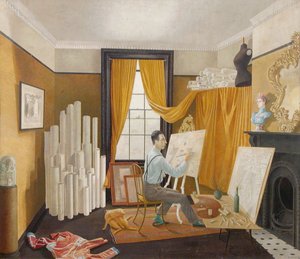
Edward Bawden
1903 - 1989 , Vereinigtes Königreich
Kurzinfos
- Beeinflusste Künstler:
- Edward Gorey
- David Gentleman
- Bemerkenswerte Werke:
- Rocky Shore und Meer
- Chop Suey
- Untitled (2358)
- Die Stadt
- Sonntag
- Cape Cod Evening
- Cape Cod Morgen
- Geburtsdatum: 10. März 1903
- Geburtsort: Braintree, Vereinigtes Königreich
- Künstlerische Einflüsse:
- Aubrey Beardsley
- Richard Doyle
- William Morris
- Künstlerische Richtung: Grafik, Illustration
- Nationalität: Englisch
- Sterbedatum: 21. November 1989
- Vollständiger Name: Edward Bawden
Ähnliche Artikel
Die 10 legendärsten Aquarellwerke der Kunstgeschichte – Meisterwerke für Ihr Zuhause
Entdecken Sie die 10 legendärsten Aquarellwerke der Kunstgeschichte! Von Turner bis Monet – erleben Sie die Geschichten, Techniken & Farben dieser Meisterwerke. Finden Sie hochwertige Kunstdrucke auf ArtsDot.com und gestalten Sie Ihr Zuhause mit zeitloser Eleganz.
Edward Hopper: Die 25 Meisterwerke des amerikanischen Realismus | ArtsDot
Entdecken Sie die 25 Meisterwerke von Edward Hopper! Tauchen Sie ein in amerikanische Kunst, Realismus & Isolation. Hochwertige Reproduktionen & Inspiration für Ihr Zuhause bei ArtsDot.com.

Ephemeral Visions: Exploring the Artistic Legacy & Contemporary Practice of Watercolor Painting
Explore the captivating world of watercolor painting! Discover its rich history, essential techniques, influential artists & collecting tips. A comprehensive guide for art enthusiasts from ArtsDot.
Flüchtige Visionen: Die Geschichte und emotionale Resonanz der Aquarellmalerei
Entdecken Sie die faszinierende Welt der Aquarellmalerei! Von historischen Ursprüngen bis zu modernen Techniken – wir bieten Expertenwissen, Inspiration und Tipps für Anfänger & Fortgeschrittene.

Ephemeral Visions: Exploring the Artistic Legacy & Nuances of Watercolor Painting
Explore the captivating world of watercolor painting! Discover its rich history, essential techniques, influential artists & collecting tips from art experts. A comprehensive guide for enthusiasts.

