 Vorschau anzeigen
 Versenden
 Teilen
 Details anzeigen

 Herunterladen
 Ähnliche Objekte
 Röntgenaufnahme
 Diashow
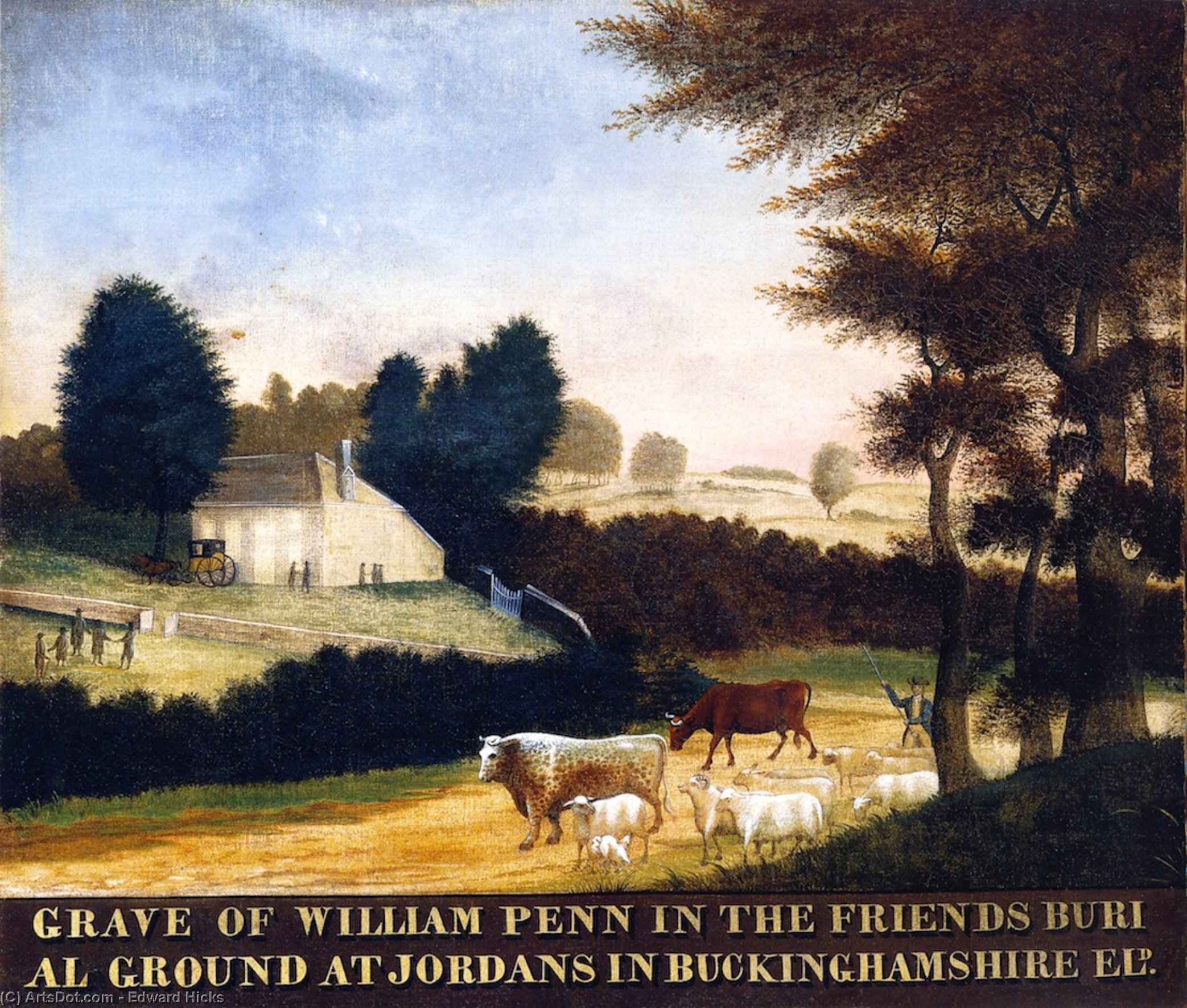
Grave of William Penn at Jordans in England


 Weiterlesen
Giclée / Kunstdruck
Giclée- oder Leinwanddruck in Museumsqualität mit schneller Produktion und flexiblen Veredelungsoptionen. ( Handgemalte Reproduktion bestellen Bild kaufen)




P118B $10

P118H $10

P118W $10

P438Z $10

P508JH $12

P508YH $12

P805H $10

P805Z $10

P919BZ $10

P919G $10

P919XJ $10

P959ZH $10

P968JZ $12

W106C $8

W218G $10

W218JH $8

W218Y $10

W307PJ $10

W316G $10

W316PJ $8

W316Y $10

W398PJ $8

W4111J $10

W500HY $15

W500JH $15

W692G $12

W849H $8

W940BG $15

W953PJ $8




Wählen Sie aus unseren vordefinierten Formaten, die den ursprünglichen Proportionen des Kunstwerks entsprechen.

Sie können Ihre eigenen Maße eingeben, um ein bestimmtes Format oder einen speziellen Platz einzupassen. Wenn das von Ihnen gewählte Format nicht den Proportionen des Originalbildes entspricht, werden wir das Kunstwerk entweder beschneiden oder das Bild mit einem gespiegelten oder einfarbigen Rand erweitern. Ein digitaler Entwurf wird Ihnen zur Genehmigung zugesandt, bevor die Produktion beginnt.
Bitte beachten Sie, dass die Vorschau auf dem Bildschirm nicht den tatsächlichen Zuschnitt oder die Erweiterung widerspiegelt. Nur der Entwurf zeigt die endgültige Komposition präzise an.
Obwohl Sondermaße verfügbar sind, empfehlen wir die Auswahl eines Maßes aus der vordefinierten Liste, um die ursprünglichen Proportionen zu bewahren.
Weltweiter Versand () innerhalb von 2 Wochen statt der üblichen 4/5 Wochen. (25 August)

Kostenloser weltweiter Expressversand

Hochwertige Leinenleinwand

Umfassender Versicherungsschutz beim Versand

Zollgebühren-Rückerstattungsgarantie

Garantie für exakte Farbtreue

60 Tage Rückgaberecht (nur bei Mängeln)

100% Geld-zurück-Garantie

Mengenrabatt verfügbar
 Die Glasoption ist nur für Größen unter 110 cm verfügbar.

Grave of William Penn at Jordans in England
Giclée / Kunstdruck
Format der Reproduktion
-


Gesamtpreis
$ 62
Sammlerstück-Beschreibung
The Soul of Pennsylvania: William Penn at Jordans
Edward Hicks’ “Grave of William Penn at Jordans in England” isn't merely a painting; it’s a carefully constructed tableau of faith, community, and the nascent ideals of colonial America. Completed in 1847 and now residing within the hallowed halls of the Yale University Art Gallery, this oil on canvas offers a poignant glimpse into the heart of the Quaker movement and the legacy of its most influential figure. Hicks, a devout Quaker himself, imbued this scene with an almost palpable sense of reverence, transforming a simple burial ground into a microcosm of peaceful coexistence – a deliberate statement reflecting his own beliefs and the core tenets of his faith.
The painting immediately draws the eye to William Penn’s grave marker, a central element radiating quiet solemnity. Hicks masterfully employs a balanced composition, anchoring the scene with this focal point while subtly directing the viewer's gaze outwards into the surrounding landscape. The muted palette – dominated by earthy browns, soft greens, and gentle blues – contributes significantly to the painting’s atmosphere of tranquility. Notice how Hicks uses light not as a dramatic tool, but rather as a unifying element, bathing the scene in a diffused glow that softens edges and invites contemplation.
A Symphony of Detail: Technique and Artistic Vision
Hicks' distinctive style is immediately recognizable through his meticulous attention to detail. He doesn’t simply depict; he meticulously renders, layering brushstrokes with remarkable precision. The texture of the grave marker – rough-hewn stone contrasted against smoother painted surfaces – is rendered with astonishing realism. Observe how he captures the individual strands of hay in the cows' coats, or the subtle folds in the clothing of the figures gathered around the grave. This dedication to detail isn’t merely decorative; it speaks to Hicks’ deep respect for his subject and his desire to convey a sense of authenticity.
The artist’s use of oil paint allows him to build up layers of color, creating rich depth and luminosity. He skillfully employs atmospheric perspective – objects in the distance appearing paler and less defined – to establish a believable sense of space. The inclusion of animals – cows, horses, and even a dog – adds a touch of rustic charm and reinforces the painting’s connection to rural life. These elements aren't simply background filler; they contribute to the overall narrative, suggesting a harmonious relationship between humanity and nature, a core value within Quaker philosophy.
Symbolism and the Quaker Ideal
Beyond its visual beauty, “Grave of William Penn at Jordans” is rich in symbolic meaning. The presence of the individuals carrying handbags and books speaks to the importance of education and intellectual pursuits within the Quaker community – a commitment reflected in Penn’s own life and his establishment of Pennsylvania as a haven for religious freedom and learning. The act of gathering around the grave signifies remembrance, respect, and a shared sense of heritage.
Furthermore, the inclusion of animals—often associated with gentleness and simplicity—underscores the Quaker belief in the inherent goodness of all creatures. Hicks’ deliberate choice to depict these figures engaged in quiet contemplation reinforces the painting's central theme: a celebration of peace, humility, and the pursuit of inner harmony. The scene subtly embodies the Quaker ideal of living in accordance with God’s will, finding solace in simplicity, and striving for justice and equality.
A Timeless Masterpiece
“Grave of William Penn at Jordans in England” transcends its historical context to offer a profound meditation on faith, community, and the enduring power of human connection. Edward Hicks’ masterful technique, combined with his deeply held beliefs, has created a work that continues to resonate with viewers today. Whether you appreciate it for its artistic merit or its historical significance, this painting serves as a poignant reminder of William Penn's vision for a just and peaceful society – a vision that remains remarkably relevant in our own time. Consider commissioning a hand-painted reproduction from ArtsDot.com to bring this iconic image into your home or office, allowing you to experience the soul of Pennsylvania firsthand.
Ähnliche Kunstwerke
Über den Künstler
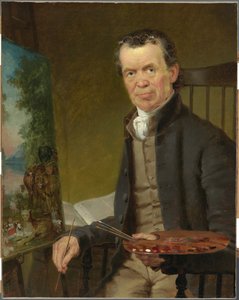
Frühes Leben und Hintergrund
- Geboren: 4. April 1780 in Attleboro (heute Langhorne), Bucks County, Pennsylvania
- Gestorben: 23. August 1849
- Seine Eltern waren Anglikaner, aber er wurde von Matron Elizabeth Twining, einer Quäkerin, aufgezogen. Dies führte ihn schon in jungen Jahren an die quakerischen Glaubensvorstellungen heran.
- Im Alter von dreizehn Jahren begann er eine Lehre bei den Karrenbauern William und Henry Tomlinson und lernte dort Karrenmaltechniken.
- Er verließ die Firma im Jahr 1800, um als unabhängiger Haus- und Karrenmaler zu arbeiten.
Quäkerisches Wirken und künstlerische Entwicklung
- Er wurde 1803 in die Religious Society of Friends aufgenommen und begann regelmäßig an Quäkerversammlungen teilzunehmen.
- Er heiratete Sarah Worstall, ebenfalls eine Quäkerin, und wurde im ganzen Philadelphia ein reisender Prediger.
- Um seine Familie zu unterstützen, erweiterte er seine Malerei um Haushaltsgegenstände, landwirtschaftliche Geräte und Wirtshausschilder.
- Er gab 1815 aufgrund finanzieller Schwierigkeiten kurzzeitig die Zierdekorationsmalerei auf, nahm sie aber 1816 wieder auf.
Künstlerischer Stil und Hauptwerke
- Autodidakt: Hicks war weitgehend autodidaktisch tätig und entwickelte einen einzigartigen Folk-Art-Stil.
- Quäkerische Einflüsse: Seine Arbeit spiegelte die quäkerischen Glaubensvorstellungen vom "Inneren Licht" wider, wobei er persönliche spirituelle Erfahrungen betonte. Dies zeigt sich in seinen einfachen Kompositionen und seinem Fokus auf die Natur.
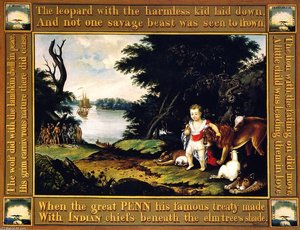
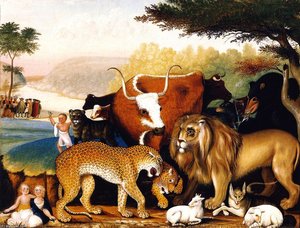
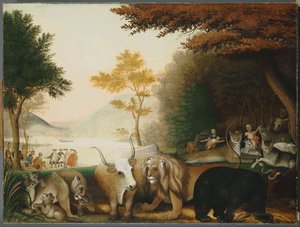
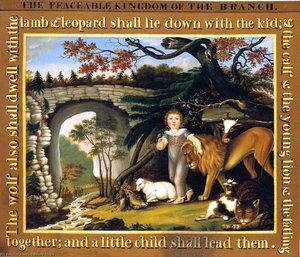
- Die Friedensreich-Serie: Seine berühmteste Serie umfasst 62 Versionen und stellt eine Vision der Harmonie zwischen Mensch und Tier dar, die Frieden und Koexistenz symbolisiert.
- Bemerkenswerte Gemälde:
- Friedensreich (31) – Beherbergt in der Yale University Art Gallery
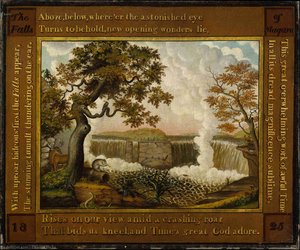
- Niagarafälle – Beherbergt im Abby Aldrich Rockefeller Folk Art Center
- George Washington mit seiner Armee, die den Delaware überquert – Ebenfalls beherbergt im Abby Aldrich Rockefeller Folk Art Center
- Friedensreich (34) - Stellt in einem ruhigen Ölgemälde Noahs Arche dar.
- Grab von William Penn in Jordans, England - Eine Darstellung ländlicher englischer Szenerie, die das quäkerische Erbe zeigt.
Vermächtnis und historische Bedeutung
- Folk-Art-Ikone: Edward Hicks gilt als bedeutende Figur der amerikanischen Folk Art, bekannt für seinen unverwechselbaren Stil und seine wiederkehrenden Themen.
- Darstellung quäkerischer Werte: Seine Gemälde geben wertvolle Einblicke in die Glaubensvorstellungen und Werte der Religious Society of Friends im 19. Jahrhundert.
- Einzigartige künstlerische Vision: Hicks verband religiösen Glauben mit künstlerischem Ausdruck und schuf ein Werk, das sowohl optisch ansprechend als auch spirituell bedeutsam ist.
- Fortwährende Wertschätzung: Seine Werke werden in wichtigen Museen ausgestellt und werden weiterhin für ihre historische und künstlerische Bedeutung studiert und geschätzt.
Edward Hicks
1780 - 1849 , Vereinigte Staaten von Amerika
Kurzinfos
- Artistic Movement Or Style: Volkskunst
- Date Of Birth: 4. April 1780
- Date Of Death: 23. August 1849
- Full Name: Edward Hicks
- Nationality: Amerikanisch
- Notable Artworks:
- Peaceable Kingdom (31)
- Falls of Niagara
- George Washington Crossing Delaware
- Peaceable Kingdom (34)
- Grave of William Penn
- Place Of Birth (City And Country): Attleboro, USA
Ähnliche Artikel
Edward Hopper: Die 25 Meisterwerke des amerikanischen Realismus | ArtsDot
Entdecken Sie die 25 Meisterwerke von Edward Hopper! Tauchen Sie ein in amerikanische Kunst, Realismus & Isolation. Hochwertige Reproduktionen & Inspiration für Ihr Zuhause bei ArtsDot.com.
Edward Hicks’ ‘Peaceable Kingdom’: American Folk Art & the Shaping of a National Identity
Explore the profound symbolism & historical context of Edward Hicks’ ‘Peaceable Kingdom.’ Discover how this iconic American folk art masterpiece reflects Quaker values and shaped a nation's identity. Learn more at ArtsDot.

The Enduring Legacy of Oil on Canvas: Technique, History & Aesthetic Impact
Explore the rich history & techniques of oil painting – from Renaissance masters to Impressionism. Discover pigments, layering methods, and why this timeless medium endures. Expert insights for artists & art enthusiasts.

Öl auf Leinwand: Eine historische und technische Erkundung eines zeitlosen künstlerischen Mediums
Entdecken Sie die faszinierende Welt der Ölmalerei! Von historischen Techniken bis zur modernen Anwendung – wir bieten Expertenwissen, Restaurierungstipps und hochwertige Reproduktionen. Jetzt informieren!

The Enduring Power of Painting: A Historical & Contemporary Exploration of Form and Emotion
Explore the rich history & enduring techniques of oil painting with ArtsDot. Discover masterpieces, learn about art collecting, and find authentic handmade reproductions crafted by skilled artists.