

 Vorschau anzeigen
 Versenden
 Teilen
 Details anzeigen

 Herunterladen
 Ähnliche Objekte
 Röntgenaufnahme
 Diashow
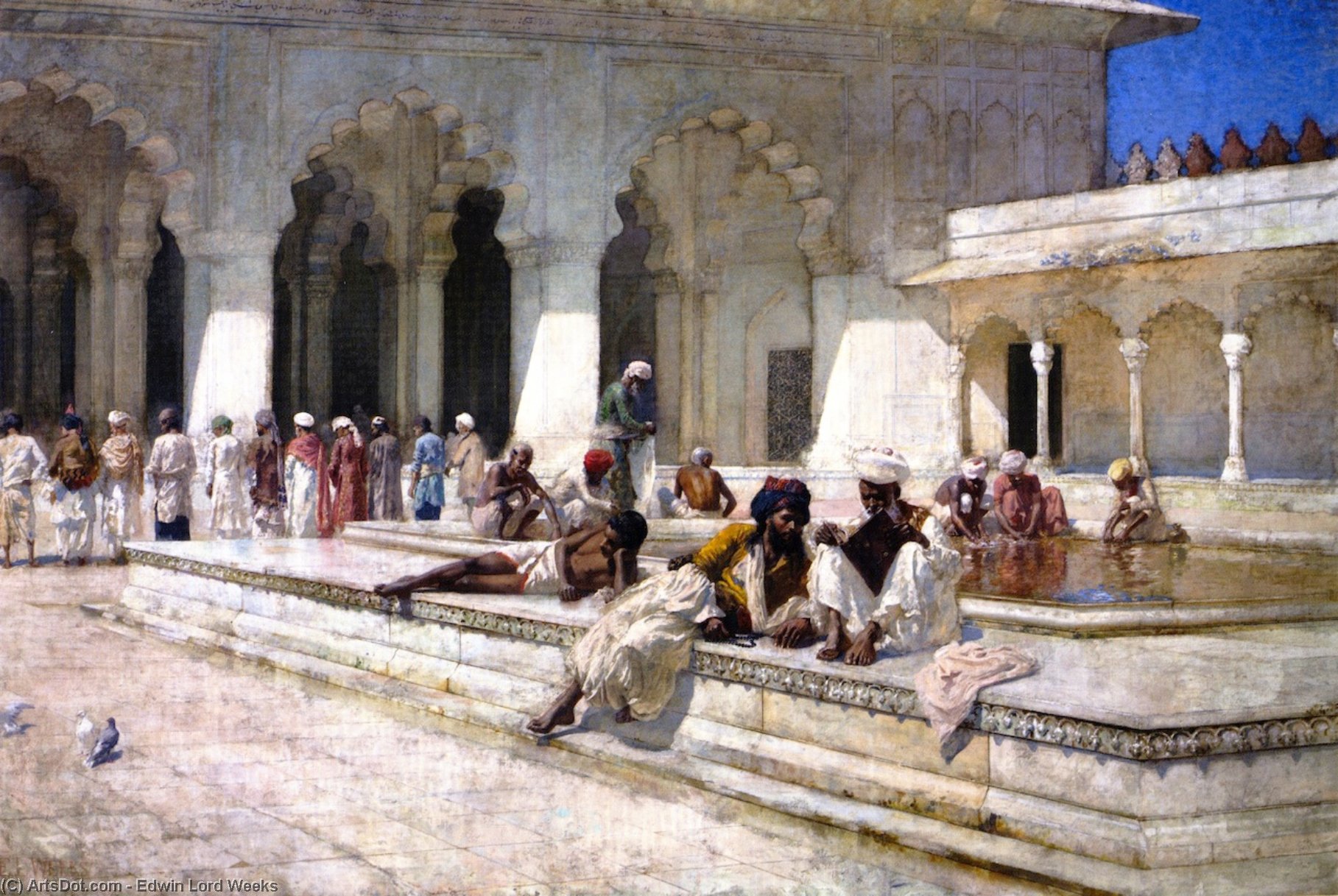
The Hour of Prayer at Moti Mushid (The Pearl Mosque), Agra


 Weiterlesen
Handgefertigte Ölreproduktion
Handgemaltes Ölgemälde auf Leinwand in Ihrer Wunschgröße und mit Rahmen, auf Bestellung von unseren Künstlern angefertigt. ( Druck bestellen Bild kaufen)




P118B $10

P118H $10

P118W $10

P438Z $10

P508JH $12

P508YH $12

P805H $10

P805Z $10

P919BZ $10

P919G $10

P919XJ $10

P959ZH $10

P968JZ $12

W106C $8

W218G $10

W218JH $8

W218Y $10

W307PJ $10

W316G $10

W316PJ $8

W316Y $10

W398PJ $8

W4111J $10

W500HY $15

W500JH $15

W692G $12

W849H $8

W940BG $15

W953PJ $8




Wählen Sie aus unseren vordefinierten Formaten, die den ursprünglichen Proportionen des Kunstwerks entsprechen.

Sie können Ihre eigenen Maße eingeben, um einen bestimmten Rahmen oder Platz auszufüllen. Wenn die gewählte Größe nicht den Proportionen des Originalbildes entspricht, werden wir das Kunstwerk entweder beschneiden oder das Gemälde durch zusätzliche, handgemalte Elemente erweitern. Ein digitales Mockup wird Ihnen zur Genehmigung zugesandt, bevor die Produktion beginnt.
Bitte beachten Sie, dass die Bildschirmvorschau nicht die tatsächliche Beschneidung oder Erweiterung widerspiegelt. Nur das Mockup zeigt die endgültige Komposition exakt an.
Obwohl Sondermaße verfügbar sind, empfehlen wir, eine Größe aus der vordefinierten Liste zu wählen, um die ursprünglichen Proportionen beizubehalten.
Nach der Bestellung wird das ArtsDot.com-Team dem Kunden Anweisungen per E-Mail zusenden und eine Mockup-Vorschau bereitstellen.
Weltweiter Versand () in nur 3 bis 4 Wochen statt der üblichen 5 Wochen. (2 September). Keine Kompromisse bei der Qualität.

Kostenloser weltweiter Expressversand

Hochwertige Leinenleinwand

Umfassender Versicherungsschutz beim Versand

Zollgebühren-Rückerstattungsgarantie

Garantie für exakte Farbtreue

60 Tage Rückgaberecht (nur bei Mängeln)

100% Geld-zurück-Garantie

Mengenrabatt verfügbar
 Die Glasoption ist nur für Größen unter 110 cm verfügbar.

The Hour of Prayer at Moti Mushid (The Pearl Mosque), Agra
Art der Reproduktion
Format der Reproduktion
-


Gesamtpreis
$ 263
A Moment Frozen in Time: Edwin Lord Weeks' Reverie at Moti Mushid
The Hour of Prayer at Moti Mushid (The Pearl Mosque), Agra, painted by American artist Edwin Lord Weeks in 1888, transcends mere depiction; it embodies a profound connection to Eastern spirituality and artistic mastery. Now residing within the Virginia Museum of Fine Arts’ impressive collection of American Art, this monumental canvas offers viewers an unparalleled glimpse into the Victorian fascination with Orientalism – a movement that sought to capture exotic landscapes and cultures through idealized representations. Weeks' ambition wasn't simply to record what he saw; it was to distill the essence of faith and community within the serene confines of India’s most revered mosque.The Artist's Vision: Weeks and Orientalist Art
Edwin Lord Weeks (1849-1903) emerged as a prominent figure in late 19th-century American art, largely thanks to his unwavering dedication to exploring distant lands and translating their beauty onto canvas. Influenced by luminaries like Jean-Léon Gérôme and Gustave Dore, Weeks embraced the Orientalist style—characterized by lush colors, meticulous detail, and narratives rooted in Middle Eastern folklore and religious traditions. Unlike many of his contemporaries who prioritized spectacle, Weeks possessed a remarkable sensitivity to capturing subtle emotions and conveying spiritual contemplation. His travels throughout Persia, Egypt, and India fueled his artistic imagination and cemented his reputation as America’s foremost Orientalist painter.A Symphony of Color and Composition
Weeks' technique is immediately striking—a masterful blend of realism and expressive brushwork. He employed oil paints on canvas with exceptional precision, layering pigments to achieve luminous hues that capture the diffused light filtering through the mosque’s arched windows. Diagonal lines dominate the composition, guiding the eye across the scene and creating a dynamic sense of movement despite the stillness of prayer. The artist skillfully utilizes perspective to convey depth, emphasizing the grandeur of the building and highlighting the figures gathered before it. Vibrant reds, golds, and blues—colors traditionally associated with piety and royalty—are interwoven throughout the painting, reinforcing its symbolic significance.Symbolism Within Serenity: Capturing the Spirit of Prayer
The scene depicts a congregation of men kneeling in prayer at Moti Mushid, Agra’s iconic Pearl Mosque. The mosque itself stands as a testament to Mughal architectural prowess, symbolizing power and divine grace. Weeks' depiction isn't merely visual; it aims to evoke a feeling of reverence and tranquility. The figures are rendered with careful attention to anatomical accuracy, yet imbued with an aura of solemn contemplation—a reflection of the spiritual devotion central to Islamic faith. Furthermore, the inclusion of handbags adds a subtle element of everyday life juxtaposed against the sacred ritual, prompting viewers to consider the intersection between spirituality and human experience.A Legacy Enduring Through Reproduction
The Virginia Museum of Fine Arts recognizes Weeks’ contribution to American Art history. You can delve deeper into this masterpiece's story at ArtsDot.com and Wikipedia. If you aspire to own a stunning reproduction of “The Hour of Prayer at Moti Mushid,” ArtsDot.com offers exceptional handcrafted oil paintings that faithfully recreate Weeks’ vision, allowing you to experience the beauty and serenity of this unforgettable artwork firsthand.Ähnliche Kunstwerke

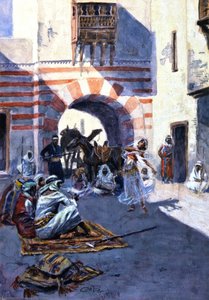
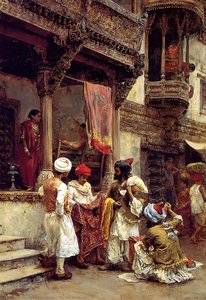
Über den Künstler
Ein Leben voller künstlerischer Erkundungen
Edwin Lord Weeks, ein amerikanischer Künstler, hinterließ mit seinen fesselnden Werken einen bleibenden Eindruck in der Kunstwelt. Geboren 1849 in Boston, Massachusetts, war sein Leben ein Beweis für den Wohlstand seiner Familie, der es ihm ermöglichte, seine Leidenschaft für Malerei und Reisen zu verfolgen.Frühe Jahre und künstlerische Entwicklung
Als junger Mann besuchte Weeks die Florida Keys, um dort zu zeichnen, was seine künstlerischen Grundlagen weiter festigte. Seine frühesten bekannten Gemälde stammen aus dem Jahr 1867, als er achtzehn Jahre alt war. Erst sein Landschaftsbild mit einem Eisvogel, datiert auf 1871 und im Everglades gemalt, zeigte eine Geschicklichkeit der Technik und ein Auge für Komposition.Pariser Aufenthalt und Orientalistische Themen
Im Jahr 1872 zog Weeks nach Paris und wurde Schüler von Léon Bonnat und Jean-Léon Gérôme. Dies markierte den Beginn seines Aufstiegs zu einem der bedeutendsten amerikanischen Maler orientalistischer Sujets. Während seines Erwachsenenalters war er ein unermüdlicher Reisender, der Südamerika (1869), Ägypten und Persien (1870), Marokko (häufig zwischen 1872 und 1878) und Indien (1882–83) bereiste.Wichtige Werke und Veröffentlichungen
Zu Weeks' bemerkenswertesten Werken gehören:- Ein Maratha, der zum Jagdgehengen vom Gwalior Fort aufbricht
- Der Maratha-König von Gwalior in seinem Palast
- Ein Freiluftrestaurant in der Nähe der Wazir Khan Moschee, Lahore
- Ein königlicher Elefant am Tor zur Jama Masjid, Mathura
Auszeichnungen und Vermächtnis
Weeks erhielt zahlreiche Auszeichnungen, darunter eine Medaille der Ehre im Jahr 1884, eine dritte Klassenmedaille im Jahr 1889, eine Goldmedaille auf der Internationalen Ausstellung von 1889 und die Legion of Honor im Jahr 1896. Er war außerdem Mitglied der Légion d'honneur, Frankreich, Offizier des Ordens St. Michael (Bayern) und Mitglied der Münchner Secession.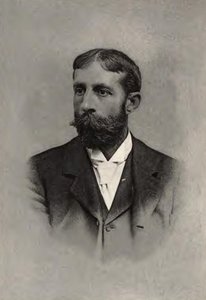
Edwin Lord Weeks
1849 - 1903 , Vereinigte Staaten von Amerika
Kurzinfos
- Bemerkenswerte Werke:
- A Maratha, Leaving for Hunting
- Maratha King of Gwalior at his Palace
- An Open-Air Restaurant near Wazir Khan
- Royal Elephant at the Gateway to Jama Masjid
- Geburtsdatum: 1849
- Geburtsort (Stadt Und Land): Boston, USA
- Künstler, Die Diesen Künstler Beeinflussten:
- Léon Bonnat
- Jean-Léon Gérôme
- Künstlerische Bewegung Oder Stil: Orientalismus
- Nationalität: Amerikanisch
- Sterbedatum: 1903
- Vollständiger Name: Edwin Lord Weeks
Ähnliche Artikel
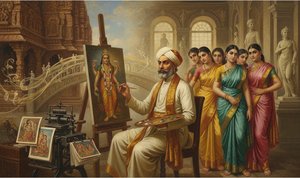
Raja Ravi Varma: Bridging Tradition & Modernity in 19th-Century Indian Art
Explore the life & art of Raja Ravi Varma, a pioneer who fused European techniques with Indian iconography. Discover his iconic paintings, lasting legacy, and influence on modern Indian art at ArtsDot.

Meisterwerke des 19. Jahrhunderts: Kunst für Ihr Zuhause | ArtsDot
Entdecken Sie die 10 bedeutendsten Kunstwerke des 19. Jahrhunderts! Von Impressionismus bis Realismus – erleben Sie die Geschichten berühmter Maler und ihre Meisterwerke. Hochwertige Reproduktionen für Ihr Zuhause auf ArtsDot.com.
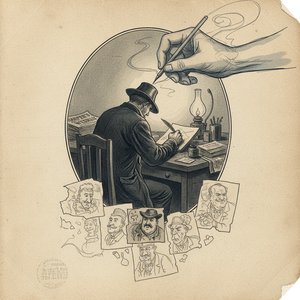
Harper's Weekly & the Anonymous Hand: Artistic Identity in 19th-Century America
Explore the fascinating world of Harper's Weekly & its often-anonymous artists! Discover Winslow Homer, Thomas Nast, and the impact of 19th-century illustration on American visual culture. A deep dive for art history enthusiasts.
Globaler Versand in 3/4 Wochen – Framed in 4, Unframed in 3 statt 5: Schnelle, hochwertige Kunstlieferung für Hotel‑Designer via ArtsDot
Entdecken Sie bei ArtsDot handgemalte Kunstreproduktionen für Hotels – schneller Versand in 3‑4 Wochen, Framed in 4, Unframed in 3. Vertrauen Sie unserer Expertise, Qualität und 100% Zufriedenheitsgarantie für ein wertvolles Design.
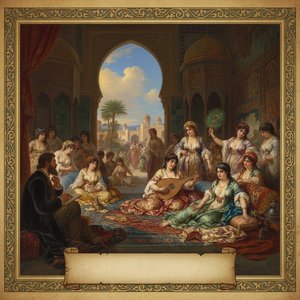
The Allure of the Exotic: Orientalism in 19th-Century Art
Explore the captivating world of 19th-century Orientalist art! Discover iconic painters like Gérôme & Benjamin-Constant, key themes, and collecting insights. Expert analysis at ArtsDot.

