

 Vorschau anzeigen
 Versenden
 Teilen
 Details anzeigen

 Herunterladen
 Ähnliche Objekte
 Röntgenaufnahme
 Diashow
 Statistiken
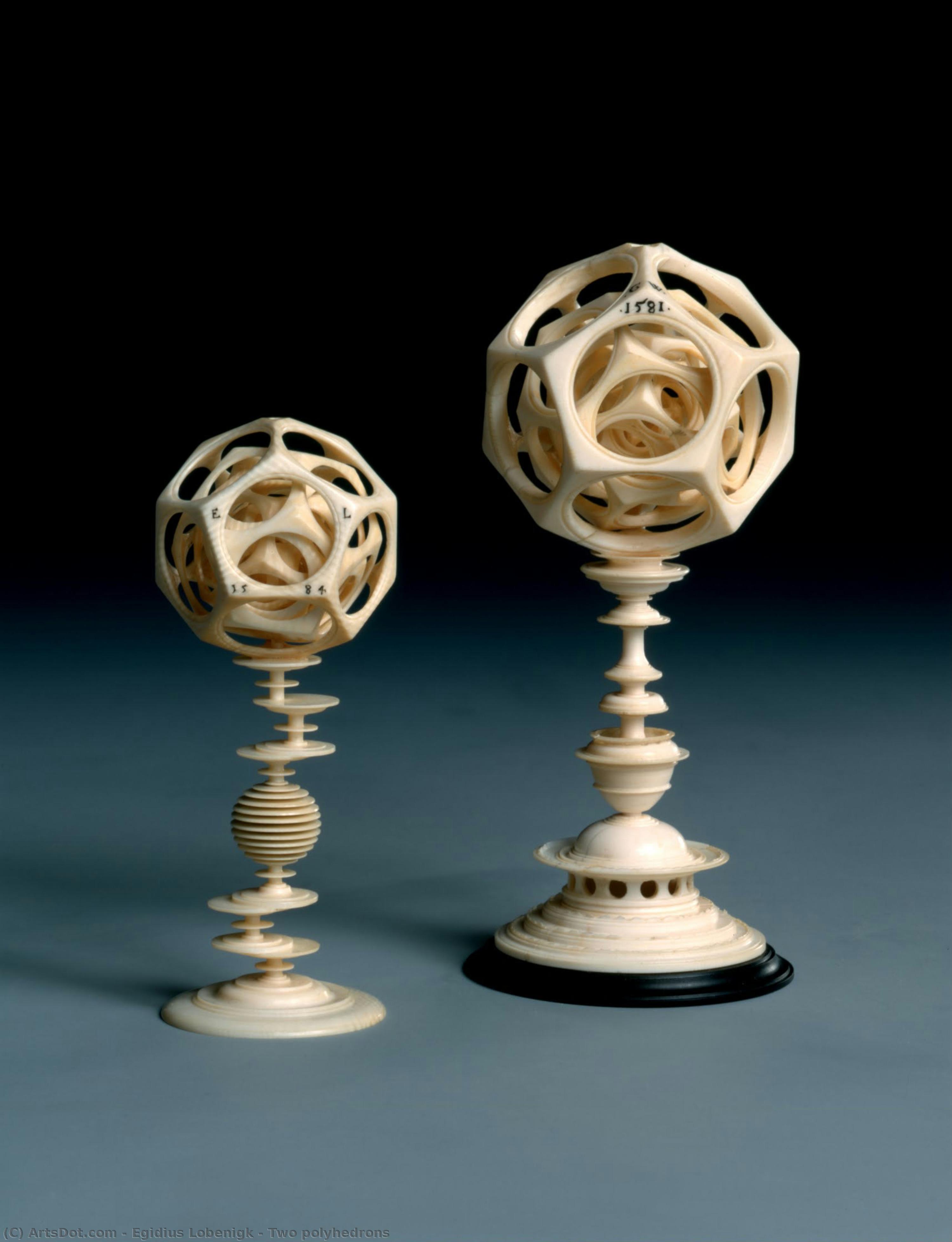
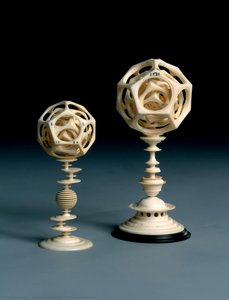
Two polyhedrons


 Weiterlesen
Handgefertigte Ölreproduktion
Handgemaltes Ölgemälde auf Leinwand in Ihrer Wunschgröße und mit Rahmen, auf Bestellung von unseren Künstlern angefertigt. ( Zu Druck wechseln Zum digitalen Bild wechseln)




































Wählen Sie aus unseren vordefinierten Formaten, die den ursprünglichen Proportionen des Kunstwerks entsprechen.

Sie können Ihre eigenen Maße eingeben, um einen bestimmten Rahmen oder Platz auszufüllen. Wenn die gewählte Größe nicht den Proportionen des Originalbildes entspricht, werden wir das Kunstwerk entweder beschneiden oder das Gemälde durch zusätzliche, handgemalte Elemente erweitern. Ein digitales Mockup wird Ihnen zur Genehmigung zugesandt, bevor die Produktion beginnt.
Bitte beachten Sie, dass die Bildschirmvorschau nicht die tatsächliche Beschneidung oder Erweiterung widerspiegelt. Nur das Mockup zeigt die endgültige Komposition exakt an.
Obwohl Sondermaße verfügbar sind, empfehlen wir, eine Größe aus der vordefinierten Liste zu wählen, um die ursprünglichen Proportionen beizubehalten.
Nach der Bestellung wird das ArtsDot.com-Team dem Kunden Anweisungen per E-Mail zusenden und eine Mockup-Vorschau bereitstellen.
Weltweiter Versand () in nur 3 bis 4 Wochen statt der üblichen 5 Wochen. (9 September). Keine Kompromisse bei der Qualität.

Kostenloser weltweiter Expressversand

Hochwertige Leinenleinwand

Umfassender Versicherungsschutz beim Versand

Zollgebühren-Rückerstattungsgarantie

Garantie für exakte Farbtreue

100-Tage-Rückgaberecht (nur bei Mängeln)

100% Geld-zurück-Garantie

Mengenrabatt verfügbar
 Die Glasoption ist nur für Größen unter 110 cm verfügbar.

Two polyhedrons
Art der Reproduktion
Format der Reproduktion
-


Gesamtpreis
$ 263
Ähnliche Kunstwerke







Über den Künstler
The Architect of Ivory: The Visionary Artistry of Egidius Lobenigk
In the grand tapestry of the early Baroque era, few names resonate with the mathematical elegance and sculptural precision of Egidius Lobenigk. Born around 1595 in the culturally vibrant city of Cologne, Germany, Lobenigk was far more than a mere artisan; he was a pioneer who dared to bridge the gap between fine art and complex geometry. His work represents a singular moment in history where the delicate medium of ivory was transformed into a playground for mathematical wonder, challenging the very boundaries of what sculptural form could achieve.
Lobenigky’s journey began in the meticulous workshops of Cologne, where he underwent rigorous training in the art of ornamental turning. It was here that he apprenticed under Hans Wecker, a master whose influence would ripple through the decades. This early exposure to the disciplined world of turning instilled in Lobenigk a profound respect for symmetry and structural integrity. Through this lineage, he connected himself to a tradition of craftsmanship that valued both aesthetic beauty and technical perfection, laying the groundwork for his later, more radical experiments with nested solids and complex polyhedrons.
A Royal Commission and the Dresden Revolution
The trajectory of Lobenigk’s career shifted dramatically when his extraordinary talents caught the eye of Augustus II, Elector Saxon. Invited to join the prestigious Dresden court, Lobenigk was granted a rare opportunity: the mandate to transform the royal turning room into a laboratory for artistic and scientific innovation. This appointment was not merely a change in location but a fundamental shift in his creative mission. Under the patronage of the Dresden court, he moved away from traditional decorative motifs toward a pursuit of geometric harmony.
His work during this period became a mesmerizing dialogue between art and mathematics. He sought to capture the essence of perfection through the creation of intricate ivory structures that seemed to defy the physical limitations of their material. His most profound achievement, the celebrated "Two Polyhedrons," stands as a testament to this era. These works, characterized by their nested, interlocking shapes, exemplify his ability to manipulate ivory into forms that are both intellectually stimulating and visually breathtaking. In these pieces, the artist achieved a sense of mathematical sublime, where every edge and vertex serves a greater purpose in a larger, harmonious whole.
Legacy of Geometric Perfection
The historical significance of Egidius Lobenigk lies in his ability to elevate ivory carving from a decorative craft to a sophisticated medium of intellectual expression. While many of his contemporaries focused on the emotive and fluid lines of the Baroque, Lobenigk looked toward the eternal truths of geometry. His legacy is found in the way he forced the viewer to contemplate the relationship between space, volume, and form.
Today, his contributions are remembered through several key artistic milestones:
- The Mastery of Material: His ability to execute incredibly fine, precise cuts in ivory without compromising the structural integrity of the piece.
- Mathematical Innovation: The introduction of complex polyhedral forms into the repertoire of European sculpture.
- Courtly Influence: The transformation of the Dresden court into a global center for high-precision artistic experimentation.
Though his active years were concentrated in a specific historical window, the echoes of Lobenigk’s precision can be felt in the evolution of decorative arts and scientific modeling. He remains a singular figure—a sculptor who used the tools of a turner to carve out a permanent place for geometry within the heart of fine art.
egidius lobenigk
1595 - , Germany
Kurzinfos
- Artistic Movement Or Style: Early Modern Art
- Artists Or Movements Influenced By This Artist: ['Renaissance art']
- Artists Who Influenced This Artist: ['George Wecker']
- Full Name: Egidius Lobenigk
- Nationality: German
- Notable Artworks: ['Two polyhedrons']
- Place Of Birth: Cologne