 Vorschau anzeigen
 Versenden
 Teilen
 Details anzeigen

 Herunterladen
 Ähnliche Objekte
 Röntgenaufnahme
 Diashow
 Statistiken
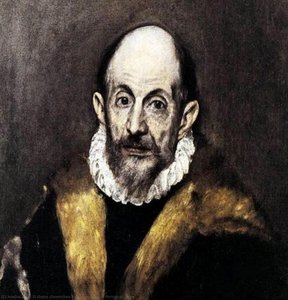
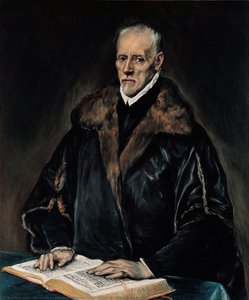
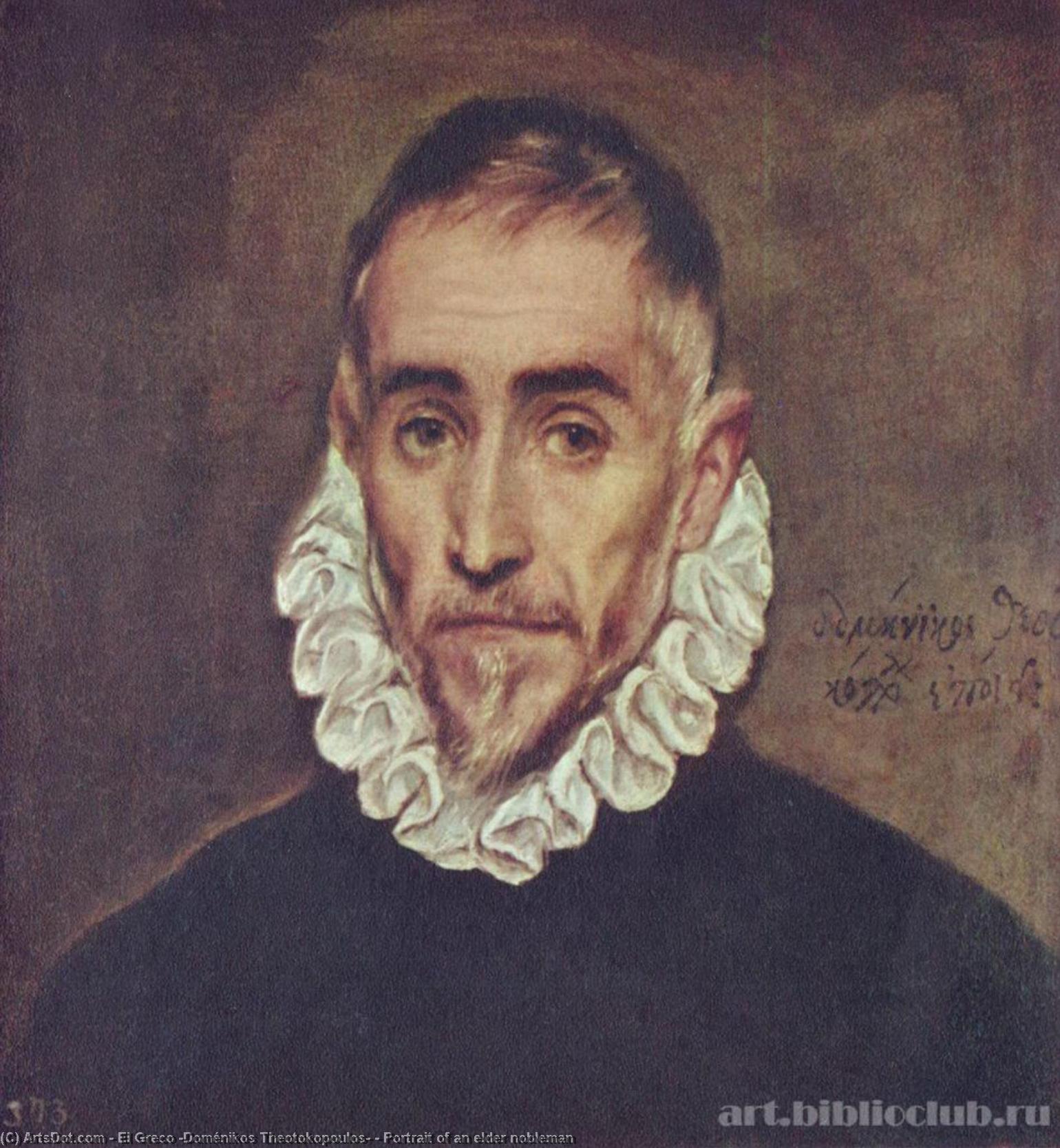
Portrait of an elder nobleman
 Acrylic
- WallArt
- Spanish Mannerism
 1585
1585 46.0 x 43.0 cm
 Weiterlesen
Giclée / Kunstdruck
Giclée- oder Leinwanddruck in Museumsqualität mit schneller Produktion und flexiblen Veredelungsoptionen. ( Handgemalte Reproduktion bestellen Zum digitalen Bild wechseln)




P118B $10

P118H $10

P118W $10

P438Z $10

P508JH $12

P508YH $12

P805H $10

P805Z $10

P919BZ $10

P919G $10

P919XJ $10

P959ZH $10

P968JZ $12

W106C $8

W218G $10

W218JH $8

W218Y $10

W307PJ $10

W316G $10

W316PJ $8

W316Y $10

W398PJ $8

W4111J $10

W500HY $15

W500JH $15

W692G $12

W849H $8

W940BG $15

W953PJ $8




Wählen Sie aus unseren vordefinierten Formaten, die den ursprünglichen Proportionen des Kunstwerks entsprechen.

Sie können Ihre eigenen Maße eingeben, um ein bestimmtes Format oder einen speziellen Platz einzupassen. Wenn das von Ihnen gewählte Format nicht den Proportionen des Originalbildes entspricht, werden wir das Kunstwerk entweder beschneiden oder das Bild mit einem gespiegelten oder einfarbigen Rand erweitern. Ein digitaler Entwurf wird Ihnen zur Genehmigung zugesandt, bevor die Produktion beginnt.
Bitte beachten Sie, dass die Vorschau auf dem Bildschirm nicht den tatsächlichen Zuschnitt oder die Erweiterung widerspiegelt. Nur der Entwurf zeigt die endgültige Komposition präzise an.
Obwohl Sondermaße verfügbar sind, empfehlen wir die Auswahl eines Maßes aus der vordefinierten Liste, um die ursprünglichen Proportionen zu bewahren.
Weltweiter Versand () innerhalb von 2 Wochen statt der üblichen 4/5 Wochen. (12 September)

Kostenloser weltweiter Expressversand

Hochwertige Leinenleinwand

Umfassender Versicherungsschutz beim Versand

Zollgebühren-Rückerstattungsgarantie

Garantie für exakte Farbtreue

100-Tage-Rückgaberecht (nur bei Mängeln)

100% Geld-zurück-Garantie

Mengenrabatt verfügbar
 Die Glasoption ist nur für Größen unter 110 cm verfügbar.

Portrait of an elder nobleman
Giclée / Kunstdruck
Format der Reproduktion
-


Gesamtpreis
$ 62
A Portrait Steeped in Dignity and Spiritual Reflection
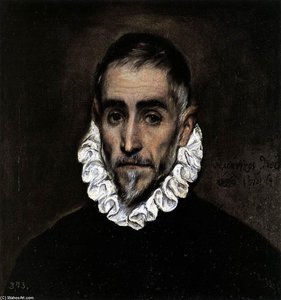
The painting “Portrait of an Elder Nobleman,” executed by El Greco in 1585, transcends mere representation; it embodies a profound meditation on age, wisdom, and faith. Captured with remarkable precision by the Cretan artist – whose Greek name, Krḗs, signified his unwavering connection to his homeland – this oil on canvas depicts a man of considerable stature, distinguished by flowing white hair and a beard that speaks volumes about experience. His gaze directs itself squarely at the viewer, conveying an aura of solemn seriousness and contemplative introspection.- Subject Matter: The portrait focuses on an aristocratic gentleman, embodying the ideals of nobility and refinement prevalent in Renaissance Spain.
- Style: El Greco’s distinctive style—often termed Mannerism—is characterized by elongated figures, distorted proportions, and dramatic lighting effects. These stylistic choices deliberately depart from the naturalistic conventions of earlier artists, prioritizing expressive intensity over realistic accuracy.
- Technique: Employing a masterful blend of chiaroscuro (the interplay of light and shadow), El Greco achieved an ethereal quality that elevates the portrait beyond a simple likeness. The artist skillfully manipulated pigments to create subtle gradations of color and texture, enhancing the sense of depth and conveying a palpable emotional resonance.
Historical Context: Toledo’s Spiritual Crucible
Painted during El Greco's time in Toledo, Spain—a city renowned for its Catholic fervor—the portrait reflects the prevailing cultural climate of the era. Toledo served as a bastion of religious piety and artistic patronage, attracting artists like El Greco who sought to express spiritual truths through their art. The painting’s solemn demeanor aligns perfectly with the moral seriousness demanded by the Counter-Reformation, demonstrating the artist's commitment to conveying profound ideas about faith and mortality.Symbolism: Layers of Meaning Beyond Appearance
Beyond its visual elements, “Portrait of an Elder Nobleman” is laden with symbolic significance. The white hair and beard represent purity and wisdom—attributes traditionally associated with spiritual leaders and revered elders. The ruffled collar symbolizes status and aristocratic lineage, highlighting the subject’s position within society. Furthermore, El Greco's deliberate distortion of form serves as a conduit for conveying inner turmoil and emotional depth, suggesting that true beauty resides not merely in outward appearance but also in the contemplation of profound truths.Emotional Impact: A Window into Inner Sanctum
Ultimately, this portrait succeeds in capturing a moment of contemplative stillness—a glimpse into the soul of an individual grappling with existential questions. The artist’s masterful use of light and shadow creates an atmosphere of solemn grandeur, inviting viewers to engage in a dialogue about faith, age, and the enduring quest for spiritual understanding. It's a piece that lingers in the mind long after viewing, prompting reflection on the complexities of human experience and the timeless beauty of artistic expression.Ähnliche Kunstwerke
Über den Künstler
**frühes Leben und Ausbildung**
El Greco (Doménikos Theotokopoulos), ein renommierter griechischer Maler, Bildhauer und Architekt, wurde 1541 in Kreta geboren, das damals unter venezianischer Herrschaft stand. Sein Geburtsname war Doménikos Theotokopoulos. El Grecos frühe Ausbildung als Ikonenmaler der kreter Schule, einem führenden Zentrum für byzantinische Kunst nach dem Fall des Reiches, legte den Grundstein für seine zukünftigen künstlerischen Bemühungen.**Künstlerische Entwicklung und Einflüsse**
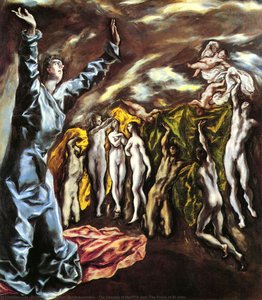
El Gredos künstlerischer Stil wurde durch seine Reisen nach Venedig und Rom geprägt, wo er Manierismus- und Renaissance-Stile aufnahm, insbesondere von Tintoretto und Tizian beeinflusst. Seine Umsiedlung nach Toledo, Spanien, im Jahr 1577 markierte eine Periode fruchtbarer Schaffenskraft, die zu Meisterwerken wie Ansicht von Toledo und das Öffnen des fünften Siegels führte.**Bekannte Werke und Stil**
* Allegorie der Camaldulitenorden (Manierismus, Öl) – ein Zeugnis für El Gredos einzigartige Mischung aus byzantinischen Traditionen und westlichen stilistischen Elementen. * Fabel (Manierismus, Öl) – demonstriert seine Verwendung ungewöhnlicher, lebhafter Farben. * Giacomo Bosio (Manierismus, Öl) – zeigt El Gredos Meisterschaft im Manierismus-Stil.**Vermächtnis und Einfluss**
El Gredos dramatischer und expressiver Stil, der durch verlängerte Figuren und fantastische Pigmentierung gekennzeichnet ist, war eine Quelle der Inspiration für Dichter und Schriftsteller. Er gilt als Vorläufer des Expressionismus und Kubismus. Für mehr Informationen über das Leben und Werk von El Greco besuchen Sie [https://ArtsDot.com/@/el-greco-(domenikos-theotokopoulos)](https://ArtsDot.com/@/el-greco-(domenikos-theotokopoulos)).- **Betrachten Sie El Gredos Gemälde** unter [https://ArtsDot.com/@@/85fr95-el-greco-(domenikos-theotokopoulos)-allegory-of-the-camaldolite-order](https://ArtsDot.com/@@/85fr95-el-greco-(domenikos-theotokopoulos)-allegory-of-the-camaldolite-order)
- **Erfahren Sie mehr über das Leben und Werk von El Greco** unter [https://en.wikipedia.org/wiki/el_greco](https://en.wikipedia.org/wiki/el_greco)
- **Entdecken Sie das Hellenische Institut für byzantinische und post-byzantinische Studien**, das eine breite Palette von Artefakten umfasst, die das reiche künstlerische Erbe Byzants zu reflektieren, unter /de/art/show/art-d3b8bv-de/
El Greco
1541 - 1614 , Griechenland
Kurzinfos
- Beeinflusste Künstler:
- Tintoretto
- Tizian
- Bemerkenswerte Werke:
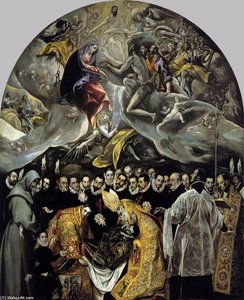
- Grablegung des Grafen Orgaz
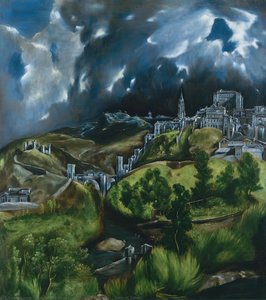
- Blick auf Toledo
- Öffnung des fünften Siegels
- Geburtsdatum: 1541
- Geburtsort: Kreta, Griechenland
- Künstlerische Richtung: Manierismus, Spanische Renaissance
- Nationalität: Griechisch-Spanisch
- Todatum: 1614
- Vollständiger Name: El Greco (Doménikos Theotokópoulos)
- Von Künstlern Beeinflusst: ['Byzantinische Traditionen']
Ähnliche Artikel
El Greco: Spiritualität, Stil und Innovation – Das Vermächtnis eines Renaissance-Meisters
Entdecken Sie das faszinierende Werk von El Greco! Erfahren Sie mehr über seine einzigartigen Stilmerkmale, den Manierismus und sein spirituelles Vermächtnis. Expertenwissen zur Renaissance-Malerei.

El Greco: Die 25 Meisterwerke – Kunst für Ihr Zuhause | ArtsDot
Entdecken Sie die 25 bedeutendsten Meisterwerke von El Greco! Erleben Sie die spirituelle Tiefe und den dramatischen Stil des griechischen Malers. Hochwertige Kunstdrucke & Inspiration für Ihr Zuhause auf ArtsDot.com.

The Enduring Legacy of Oil on Canvas: Technique, History & Aesthetic Impact
Explore the rich history & techniques of oil painting – from Renaissance masters to Impressionism. Discover pigments, layering methods, and why this timeless medium endures. Expert insights for artists & art enthusiasts.
Museo del Prado: Die 25 Meisterwerke – Kunst für Ihr Zuhause | ArtsDot
Entdecken Sie die 25 Meisterwerke des Museo del Prado! Von Velázquez bis Goya – Kunstgeschichte, Techniken & Geschichten berühmter Gemälde. Finden Sie hochwertige Reproduktionen für Ihr Zuhause auf ArtsDot.com.

Öl auf Leinwand: Eine historische und technische Erkundung eines zeitlosen künstlerischen Mediums
Entdecken Sie die faszinierende Welt der Ölmalerei! Von historischen Techniken bis zur modernen Anwendung – wir bieten Expertenwissen, Restaurierungstipps und hochwertige Reproduktionen. Jetzt informieren!