 Vorschau anzeigen
 Versenden
 Teilen
 Details anzeigen

 Herunterladen
 Ähnliche Objekte
 Röntgenaufnahme
 Diashow
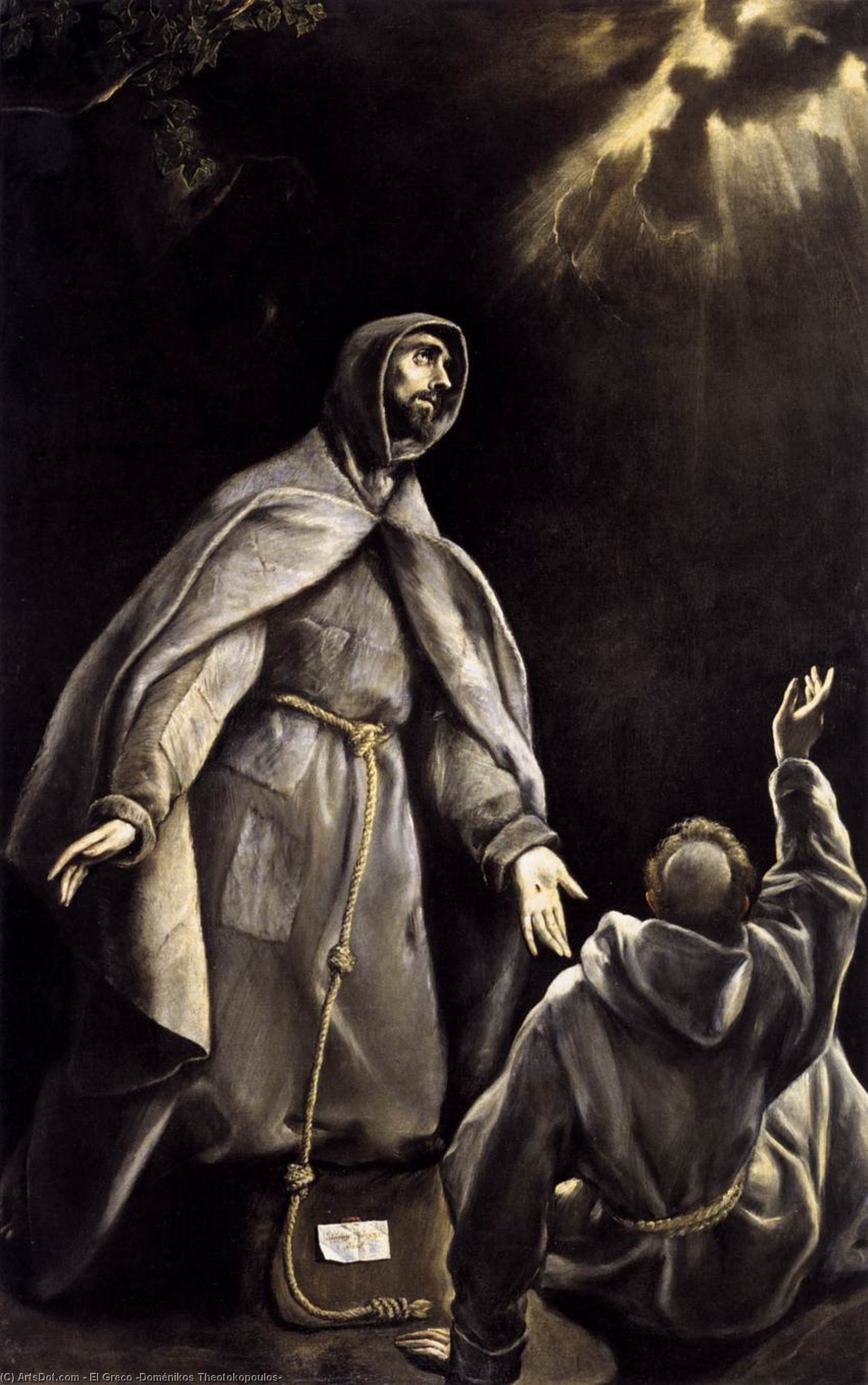
St. Francis’ Vision of the Flaming Torch
 Öl auf Leinwand
- Wandkunst
- Mannerismus
 1600
1600- Renaissance
 203.0 x 148.0 cm
 Hospital de Nuestra Señora del Carmen
 Weiterlesen
Handgefertigte Ölreproduktion
Handgemaltes Ölgemälde auf Leinwand in Ihrer Wunschgröße und mit Rahmen, auf Bestellung von unseren Künstlern angefertigt. ( Druck bestellen Bild kaufen)




P118B $10

P118H $10

P118W $10

P438Z $10

P508JH $12

P508YH $12

P805H $10

P805Z $10

P919BZ $10

P919G $10

P919XJ $10

P959ZH $10

P968JZ $12

W106C $8

W218G $10

W218JH $8

W218Y $10

W307PJ $10

W316G $10

W316PJ $8

W316Y $10

W398PJ $8

W4111J $10

W500HY $15

W500JH $15

W692G $12

W849H $8

W940BG $15

W953PJ $8




Wählen Sie aus unseren vordefinierten Formaten, die den ursprünglichen Proportionen des Kunstwerks entsprechen.

Sie können Ihre eigenen Maße eingeben, um einen bestimmten Rahmen oder Platz auszufüllen. Wenn die gewählte Größe nicht den Proportionen des Originalbildes entspricht, werden wir das Kunstwerk entweder beschneiden oder das Gemälde durch zusätzliche, handgemalte Elemente erweitern. Ein digitales Mockup wird Ihnen zur Genehmigung zugesandt, bevor die Produktion beginnt.
Bitte beachten Sie, dass die Bildschirmvorschau nicht die tatsächliche Beschneidung oder Erweiterung widerspiegelt. Nur das Mockup zeigt die endgültige Komposition exakt an.
Obwohl Sondermaße verfügbar sind, empfehlen wir, eine Größe aus der vordefinierten Liste zu wählen, um die ursprünglichen Proportionen beizubehalten.
Nach der Bestellung wird das ArtsDot.com-Team dem Kunden Anweisungen per E-Mail zusenden und eine Mockup-Vorschau bereitstellen.
Weltweiter Versand () in nur 3 bis 4 Wochen statt der üblichen 5 Wochen. (20 August). Keine Kompromisse bei der Qualität.

Kostenloser weltweiter Expressversand

Hochwertige Leinenleinwand

Umfassender Versicherungsschutz beim Versand

Zollgebühren-Rückerstattungsgarantie

Garantie für exakte Farbtreue

60 Tage Rückgaberecht (nur bei Mängeln)

100% Geld-zurück-Garantie

Mengenrabatt verfügbar
 Die Glasoption ist nur für Größen unter 110 cm verfügbar.

St. Francis’ Vision of the Flaming Torch
Art der Reproduktion
Format der Reproduktion
-


Gesamtpreis
$ 263
Beschreibung des Kunstwerks
St. Francis’s Vision of the Flaming Torch – A Journey into Spiritual Intensity
Doménikos Theotokópoulos, universally known as El Greco, remains one of the most singularly captivating figures in Western art history. His work transcends mere representation; it plunges directly into the realm of emotion and spiritual experience. Among his vast oeuvre, “St. Francis’s Vision of the Flaming Torch” (c. 1600), housed within the Hospital de Nuestra Señora del Carmen in Cádiz, Spain, stands as a particularly potent example of this artistic intensity. This oil on canvas, measuring a modest 203 x 148 cm, is not simply a depiction of a religious scene; it’s an invitation into a profound moment of divine revelation.
The painting immediately draws the eye with its dramatic use of light and shadow – a hallmark of El Greco's distinctive Mannerist style. The composition centers around St. Francis of Assisi, kneeling in humble reverence beside another man, whose outstretched hand offers a gesture of support or perhaps guidance. This figure, often interpreted as Brother Leo, is rendered with elongated proportions, a characteristic feature of El Greco’s technique that lends an almost ethereal quality to his subjects. The setting is deliberately austere – a rocky landscape shrouded in darkness – emphasizing the importance of the central event: St. Francis's vision. Scattered figures populate the background, adding depth and suggesting a community witnessing this sacred moment, while a book lies open at the bottom center, symbolizing knowledge and divine instruction.
The Symbolism of Fire and Revelation
At the heart of the painting is the flaming torch – a potent symbol of divine inspiration and enlightenment. It’s not merely a visual element; it represents the moment when St. Francis receives a direct vision from God, a transformative experience that defines his life's mission as a preacher and mystic. The torch doesn’t burn with destructive fire but rather radiates a luminous glow, suggesting purity and grace. The color palette is deliberately restrained – browns, greys, and blacks dominate – creating a sense of solemnity and drawing attention to the vibrant, almost otherworldly light emanating from the torch itself. This contrast between darkness and illumination powerfully conveys the idea of divine revelation piercing through earthly obscurity.
El Greco’s Unique Artistic Language
El Greco's style is instantly recognizable, characterized by elongated figures, dynamic poses, and a heightened sense of emotional intensity. He masterfully blends Byzantine influences – particularly in his use of color and symbolism – with the emerging trends of the Western Renaissance. “St. Francis’s Vision” exemplifies this fusion perfectly. The artist employs a technique known as *sfumato*, subtly blurring outlines and creating an atmospheric effect that contributes to the painting's dreamlike quality. Notice, too, how El Greco uses perspective not for realistic depth but to heighten the drama of the scene, pulling the viewer directly into St. Francis’s experience.
Historical Context and Artistic Legacy
The Hospital de Nuestra Señora del Carmen in Cádiz, where this painting resides, is itself a significant landmark – a testament to centuries of religious devotion and civic pride. El Greco spent much of his later life in Toledo, Spain, and it was here that he produced many of his most celebrated works, often commissioned by the local church community. His work reflects both the spiritual fervor of the Counter-Reformation era and his own deeply personal artistic vision. Beyond “St. Francis’s Vision,” El Greco's oeuvre includes iconic pieces like "St. Martin and the Beggar" and "St. Joseph with the Christ Child," all demonstrating his mastery of religious themes and his unique, emotionally charged style. His influence on subsequent artists – from Impressionists to Expressionists – is undeniable, cementing his place as a truly revolutionary figure in art history.
Bringing “St. Francis’s Vision” Home
ArtsDot offers meticulously crafted hand-painted reproductions of “St. Francis’s Vision of the Flaming Torch,” allowing you to experience this masterpiece firsthand. Our skilled artists faithfully recreate El Greco's distinctive style, capturing the painting's dramatic lighting, emotional intensity, and symbolic richness. Whether for a grand salon or a contemplative study, our reproduction provides an authentic and beautiful addition to any collection. Explore our range of sizes and canvas options to find the perfect representation of this extraordinary work – a timeless testament to faith, vision, and artistic genius.
Ähnliche Kunstwerke
Über den Künstler
**frühes Leben und Ausbildung**
El Greco (Doménikos Theotokopoulos), ein renommierter griechischer Maler, Bildhauer und Architekt, wurde 1541 in Kreta geboren, das damals unter venezianischer Herrschaft stand. Sein Geburtsname war Doménikos Theotokopoulos. El Grecos frühe Ausbildung als Ikonenmaler der kreter Schule, einem führenden Zentrum für byzantinische Kunst nach dem Fall des Reiches, legte den Grundstein für seine zukünftigen künstlerischen Bemühungen.**Künstlerische Entwicklung und Einflüsse**
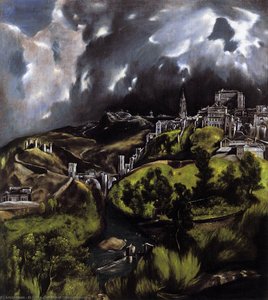
El Gredos künstlerischer Stil wurde durch seine Reisen nach Venedig und Rom geprägt, wo er Manierismus- und Renaissance-Stile aufnahm, insbesondere von Tintoretto und Tizian beeinflusst. Seine Umsiedlung nach Toledo, Spanien, im Jahr 1577 markierte eine Periode fruchtbarer Schaffenskraft, die zu Meisterwerken wie Ansicht von Toledo und das Öffnen des fünften Siegels führte.**Bekannte Werke und Stil**
* Allegorie der Camaldulitenorden (Manierismus, Öl) – ein Zeugnis für El Gredos einzigartige Mischung aus byzantinischen Traditionen und westlichen stilistischen Elementen. * Fabel (Manierismus, Öl) – demonstriert seine Verwendung ungewöhnlicher, lebhafter Farben. * Giacomo Bosio (Manierismus, Öl) – zeigt El Gredos Meisterschaft im Manierismus-Stil.**Vermächtnis und Einfluss**
El Gredos dramatischer und expressiver Stil, der durch verlängerte Figuren und fantastische Pigmentierung gekennzeichnet ist, war eine Quelle der Inspiration für Dichter und Schriftsteller. Er gilt als Vorläufer des Expressionismus und Kubismus. Für mehr Informationen über das Leben und Werk von El Greco besuchen Sie [https://ArtsDot.com/@/el-greco-(domenikos-theotokopoulos)](https://ArtsDot.com/@/el-greco-(domenikos-theotokopoulos)).- **Betrachten Sie El Gredos Gemälde** unter [https://ArtsDot.com/@@/85fr95-el-greco-(domenikos-theotokopoulos)-allegory-of-the-camaldolite-order](https://ArtsDot.com/@@/85fr95-el-greco-(domenikos-theotokopoulos)-allegory-of-the-camaldolite-order)
- **Erfahren Sie mehr über das Leben und Werk von El Greco** unter [https://en.wikipedia.org/wiki/el_greco](https://en.wikipedia.org/wiki/el_greco)
- **Entdecken Sie das Hellenische Institut für byzantinische und post-byzantinische Studien**, das eine breite Palette von Artefakten umfasst, die das reiche künstlerische Erbe Byzants zu reflektieren, unter /de/art/show/art-d3b8bv-de/
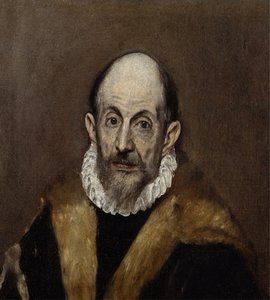
El Greco
1541 - 1614 , Griechenland
Kurzinfos
- Beeinflusste Künstler:
- Tintoretto
- Tizian
- Bemerkenswerte Werke:
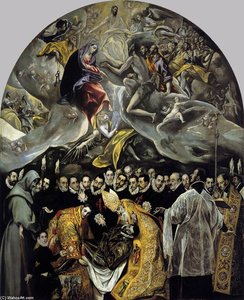
- Grablegung des Grafen Orgaz
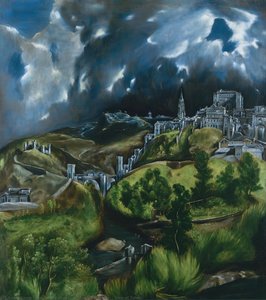
- Blick auf Toledo
- Öffnung des fünften Siegels
- Geburtsdatum: 1541
- Geburtsort: Kreta, Griechenland
- Künstlerische Richtung: Manierismus, Spanische Renaissance
- Nationalität: Griechisch-Spanisch
- Todatum: 1614
- Vollständiger Name: El Greco (Doménikos Theotokópoulos)
- Von Künstlern Beeinflusst: ['Byzantinische Traditionen']
Ähnliche Artikel

El Greco: Die 25 Meisterwerke – Kunst für Ihr Zuhause | ArtsDot
Entdecken Sie die 25 bedeutendsten Meisterwerke von El Greco! Erleben Sie die spirituelle Tiefe und den dramatischen Stil des griechischen Malers. Hochwertige Kunstdrucke & Inspiration für Ihr Zuhause auf ArtsDot.com.
Francis Bacon: Die 25 Meisterwerke des existentiellen Schmerzes | ArtsDot
Entdecken Sie die 25 Meisterwerke von Francis Bacon! Erleben Sie existenzielle Schmerz, expressive Porträts & dunkle Farben. Kunstreproduktionen in Museumsqualiät auf ArtsDot.com – für Ihre Wanddekoration.
El Greco: Spiritualität, Stil und Innovation – Das Vermächtnis eines Renaissance-Meisters
Entdecken Sie das faszinierende Werk von El Greco! Erfahren Sie mehr über seine einzigartigen Stilmerkmale, den Manierismus und sein spirituelles Vermächtnis. Expertenwissen zur Renaissance-Malerei.
Museo del Prado: Die 25 Meisterwerke – Kunst für Ihr Zuhause | ArtsDot
Entdecken Sie die 25 Meisterwerke des Museo del Prado! Von Velázquez bis Goya – Kunstgeschichte, Techniken & Geschichten berühmter Gemälde. Finden Sie hochwertige Reproduktionen für Ihr Zuhause auf ArtsDot.com.
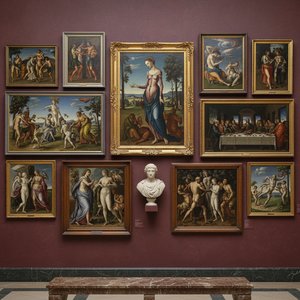
Mannerismus Meisterwerke: Die Top 10, die Kunstgeschichte prägten | ArtsDot
Entdecken Sie die Top 10 Meisterwerke des Mannerismus! Pontormo, Rosso Fiorentino & Co. prägten eine neue Eleganz in der Kunst. Erfahren Sie mehr über Künstler, Techniken und bestellen Sie hochwertige Reproduktionen auf ArtsDot.com.