

 Vorschau anzeigen
 Versenden
 Teilen
 Details anzeigen

 Herunterladen
 Ähnliche Objekte
 Röntgenaufnahme
 Diashow
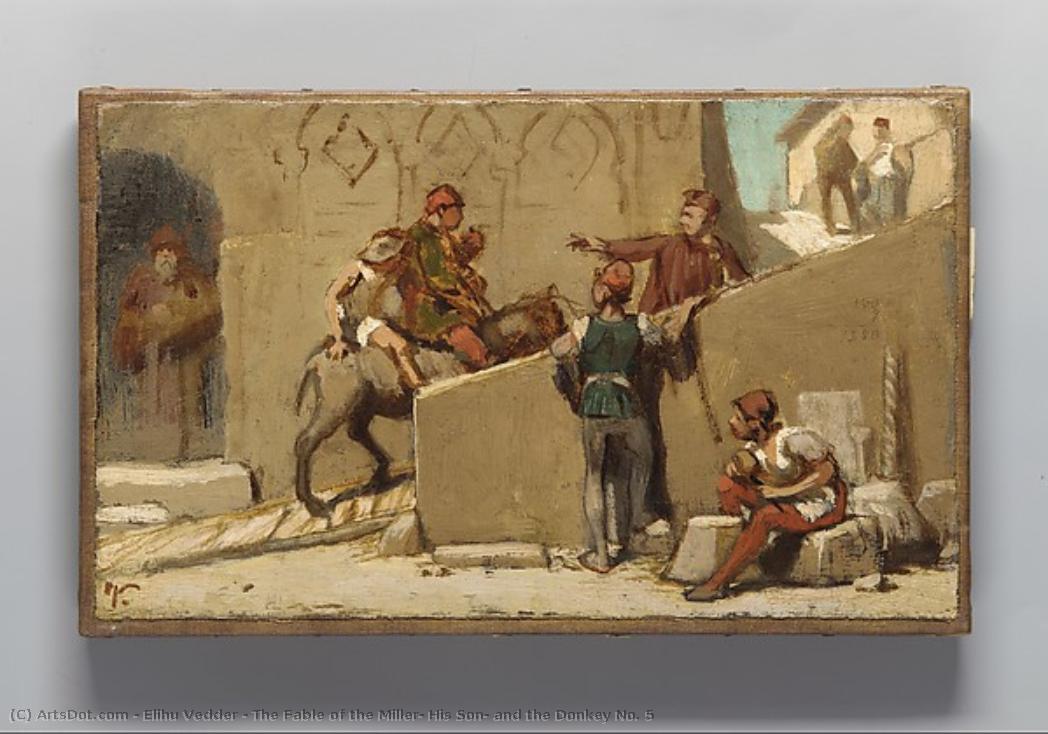
The Fable of the Miller, His Son, and the Donkey No. 5
 Oil On Canvas
- WallArt
- Symbolism
 1867
1867- 19th Century
 17.0 x 27.0 cm
 Metropolitan Museum of Art
 Weiterlesen
Erwerben Sie ein hochauflösendes, optimiertes digitales Bild, das der Online-Vorschau weit überlegen ist.
Jede Datei wird von unseren hauseigenen Spezialisten mit modernsten Werkzeugen und fachmännischer manueller Retusche sorgfältig vorbereitet. Wir stellen sicher, dass jedes Bild eine außergewöhnliche Klarheit, präzise Farbgenauigkeit und feinste Details aufweist.
Die endgültige Datei wird innerhalb von 72 Stunden per E-Mail zugestellt und ist für den sofortigen Einsatz in professionellen, redaktionellen und Druckumgebungen optimiert. Es handelt sich um dieselbe Qualität, der führende Designstudios, Verlage und Galerien vertrauen.
Digitales Bild
Laden Sie eine hochauflösende Datei für die persönliche Präsentation, den Druck und kreative Projekte herunter. ( Druck bestellen Handgemalte Reproduktion bestellen)
In jeder Bestellung digitaler Bilder enthalten
Professionelle digitale Bereitstellung, garantiert
Wenn Sie sich für ArtsDot.com entscheiden, erhalten Sie nicht nur ein Bild – Sie erhalten ein professionell aufbereitetes digitales Kunstwerk, das mit höchster Präzision erstellt und durch eine Zufriedenheitsgarantie abgesichert wird. Hier ist alles, was automatisch mit Ihrer Bestellung geliefert wird:

Schnelle E-Mail-Zustellung
Ihre hochauflösende digitale Bilddatei wird Ihnen innerhalb von 72 Stunden nach der Bestellung per E-Mail zugestellt – bereit zur sofortigen Verwendung.

KI-optimierte digitale Datei
Ihre Kunstwerke werden professionell mithilfe fortschrittlicher KI-Tools und manueller Bearbeitung optimiert, um maximale Detailtreue, Klarheit und Farbgenauigkeit zu gewährleisten.

Lebenslanger kostenloser Neudruckservice
Datei versehentlich gelöscht oder verloren? Keine Sorge – wir senden sie Ihnen jederzeit kostenlos erneut zu.

Keine Einfuhrgebühren – jemals
Genießen Sie Ihr Kunstwerk sofort ohne Zollgebühren, Einfuhrabgaben oder Versandkosten – digitale Downloads sind immer steuerfrei.

Garantierte Farbtreue
Wir garantieren, dass Ihr digitales Bild mithilfe professioneller Werkzeuge und Farbmanagement die Originalfarben so präzise wie möglich wiedergibt.

60-Tage-Zufriedenheitsgarantie
Sollten Sie mit Ihrem digitalen Bild nicht zufrieden sein, werden wir es überarbeiten oder Ihnen innerhalb von 60 Tagen 100% erstatten – ohne Wenn und Aber.

100% Geld-zurück-Garantie
Nicht zufrieden? Erhalten Sie innerhalb von 60 Tagen nach Erhalt Ihrer digitalen Datei eine vollständige Rückerstattung – ohne Angabe von Gründen.

Rabatte bei Großbestellungen
3 Bilder kaufen, 10% sparen – 5 Bilder kaufen, 15% sparen – Ab 10 Bildern 20% sparen. Ideal für kreative Projekte, Galerien und Agenturen.
A Rustic Tale Painted in Stone and Shadow: Elihu Vedder’s “The Fable of the Miller, His Son, and the Donkey No. 5”
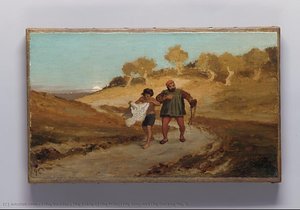
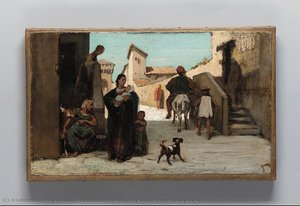
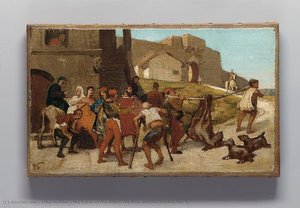
Elihu Vedder's "The Fable of the Miller, His Son, and the Donkey No. 5," painted in 1867, isn’t merely a depiction of a classic Aesop fable; it’s a poignant meditation on human folly, the relentless pursuit of approval, and the quiet dignity of acceptance. This small yet powerfully resonant oil painting, measuring just 17 x 27 cm, transports us to a sun-drenched Italian landscape—a setting meticulously chosen by Vedder to evoke the timelessness of the story itself—where a weary miller and his son grapple with the capricious judgments of passersby. The scene unfolds within a modest stone structure, its walls hinting at both shelter and confinement, mirroring the characters’ own predicament. Vedder masterfully employs a muted palette dominated by earthy ochres, warm browns, and subtle beiges, creating an atmosphere of quiet contemplation—a deliberate choice that underscores the painting's thematic weight rather than relying on dramatic color contrasts. The brushwork is deliberately loose and impressionistic; visible strokes suggest movement and texture, imbuing the scene with a sense of immediacy and capturing the fleeting nature of human interaction.A Symbolist Vision Rooted in Italian Renaissance Influence
Vedder’s work firmly resides within the Symbolist movement, yet he transcends simple imitation, forging his own unique visual language. His debt to the Italian Renaissance is palpable—particularly in the careful rendering of architectural details and the use of light and shadow, reminiscent of masters like Leonardo da Vinci and Raphael. However, Vedder departs from traditional academic realism, prioritizing emotional resonance over photographic accuracy. The figures are simplified, almost archetypal, embodying universal human experiences rather than representing specific individuals. This stylistic choice aligns perfectly with Symbolism’s core tenets: to express ideas and emotions through suggestive imagery, often drawing upon mythology, folklore, and dreamlike states. The painting's connection to the Macchiaioli movement—Italian painters who favored loose brushwork and capturing fleeting moments of light—further informs its expressive quality, adding a vibrant energy beneath the surface of apparent stillness.Decoding the Narrative: Folly, Frustration, and Fatal Missteps
At first glance, the scene appears straightforward: a miller and his son attempt to navigate a marketplace or public space, encountering a series of critical comments regarding their handling of the donkey. Yet, Vedder layers this simple narrative with profound symbolism. The donkey itself represents burdens—both literal and metaphorical—that we often carry through life, burdened by expectations, judgments, and the relentless pressure to please others. Each critique from the onlookers highlights the futility of seeking external validation; no matter how carefully one adjusts their actions, someone will always find fault. The painting’s central tension arises from the father's increasingly desperate attempts to appease these critics—a cycle that ultimately leads to a tragic outcome: the donkey’s demise. This isn’t simply a story about a lost animal; it’s an allegory for the destructive nature of vanity and the impossibility of satisfying everyone.The Artistry of Observation and Emotional Resonance
Vedder's skill lies not just in his technical proficiency but also in his ability to capture the essence of human behavior through careful observation. The composition is remarkably balanced, drawing the eye across the crowded scene while subtly emphasizing the characters’ isolation. The use of linear perspective creates a sense of depth, guiding the viewer into the heart of the drama. Notice how Vedder renders the textures—the rough stone walls, the worn clothing of the figures, and the coarse fur of the donkey—adding tactile richness to the image. The lighting, diffused and naturalistic, casts long shadows that heighten the painting’s melancholic mood. Ultimately, “The Fable of the Miller, His Son, and the Donkey No. 5” is a testament to Vedder's profound understanding of human nature—a timeless masterpiece that continues to resonate with viewers today, prompting reflection on our own desires for approval and the inherent limitations of seeking it from others.A Legacy of Symbolist Vision: Exploring Related Works
Elihu Vedder’s artistic journey is richly documented, beginning in New York City under Tompkins H. Matteson before he spent formative years studying in Paris with François-Édouard Picot and later immersing himself in the vibrant art scene of Italy. His time there profoundly shaped his style, fostering a deep connection to Italian Renaissance ideals while simultaneously embracing Symbolist principles. Explore related works such as “The Fable of the Miller, His Son, and the Donkey No. 1” and “The Fable of the Miller, His Son, and the Donkey No. 2,” each offering unique perspectives on this enduring fable. Furthermore, consider Vedder’s illustrations for Edward FitzGerald's "Rubaiyat of Omar Khayyam," a project that cemented his reputation as a visionary artist capable of blending classical allusions with evocative symbolism.- Useful Links: Wikipedia
- Artworks Database: The Fable of the Miller, His Son, and the Donkey No. 1
- Artworks Database: The Fable of the Miller, His Son, and the Donkey No. 5
- Artists Database: Elihu Vedder
Ähnliche Kunstwerke
Biografie des Künstlers
Frühes Leben und Künstlerische Ausbildung
- Geboren: 26. Februar 1836, New York City, Vereinigte Staaten
- Gestorben: 29. Januar 1923, Rom, Italien
Elijah Vedder wurde in eine Familie geboren, deren Eltern Cousins waren. Sein frühes Leben war geprägt von vielfältigen Erfahrungen. Sein Vater, der zunächst Zahnarzt war, zog nach Kuba, was den jungen Elihu’s Kindheit beeinflusste. Er verbrachte Zeit zwischen seinem mütterlichen Großvater Alexander Vedder in Schenectady und einem Internat. Trotz seiner Vaters anfänglicher Bedenken bezüglich einer künstlerischen Karriere unterstützte Vedders Mutter seine Ambitionen.
- Frühe Ausbildung: Vedder begann seine formelle Ausbildung in New York City unter Tompkins H. Matteson.
- Europäische Studien: Er vertiefte sein Studium in Paris bei François-Édouard Picot und später in Italien, wo er stark von der italienischen Renaissance und den Macchiaioli-Malern beeinflusst wurde.
- Italienischer Einfluss: Seine Zeit in Italien förderte eine tiefe emotionale Verbindung mit dem Maler Giovanni Costa, was zu idyllischen Reisen durch das Land führte, bevor finanzielle Zwänge ihn zur Rückkehr nach Amerika zwangen.
Karrierehöhepunkte und Bemerkenswerte Werke
Vedders Karriere umfasste verschiedene künstlerische Disziplinen, von Malerei und Illustration bis hin zu Wandgestaltungen und Poesie. Er pflegte Freundschaften mit bedeutenden Persönlichkeiten wie Walt Whitman und Herman Melville.
- Illustrationen für das Rubaiyat: Vedder ist vielleicht am besten bekannt für seine fünfzigfünf Illustrationen, die Edward FitzGerald’s Übersetzung des Rubáiyát von Omar Khayyam begleiteten (Deluxe-Ausgabe). Diese Illustrationen gelten als Meisterwerke der Symbolismuskunst.
- Visionäre Gemälde: Bemerkenswerte Gemälde sind "Das Roc's Ei", “Der Fischer und der Genii” und “Die Höhle des Meeresdrachen”, die seinen visionären Stil und seine fantasievollen Themen zeigen.
- Wandmalerei: Er dekorierte die Halle des Lesesaals in der Washington Library of Congress mit Wandgemälden, ein Beweis für sein Können als dekorativer Künstler.
- Tiffany-Zusammenarbeit: Vedder arbeitete mit Louis Comfort Tiffany zusammen und entwarf Glaswaren, Mosaike und Statuetten für die Tiffany Company.
Künstlerischer Stil und Einflüsse
Vedders künstlerischer Stil ist durch seine visionäre Natur, romantische Bildsprache und die häufige Einarbeitung orientalischer Einflüsse gekennzeichnet. Er ließ sich von einer Reihe von Quellen inspirieren:
- Symbolismus: Vedder war eine Schlüsselfigur der Symbolismusbewegung und betonte Emotionen und Individualität gegenüber strengem Realismus.
- Präraffaeliten: Seine Zeit in England führte ihn an die Präraffaelitenbruderschaft heran, was seinen künstlerischen Stil hin zu größerer Klarheit und Detailtreue beeinflusste.
- Englische und irische Mystiker: Er wurde von den Werken von William Blake und William Butler Yeats beeinflusst, was eine Faszination für Mystik und Spiritualität widerspiegelt.
- Italienische Renaissance & Macchiaioli: Seine Studien in Italien prägten sein Verständnis von Form, Farbe und Komposition.
Vermächtnis und Späteres Leben
Vedders Beiträge zur amerikanischen Kunst reichten über die Malerei hinaus. Er half bei der Gründung der Gruppe In Arte Libertas in Italien und hinterließ eine Reihe schriftlicher Werke, darunter autobiografische Reflexionen und Poesie.
- Mitgliedschaft: Vedder war Mitglied der American Academy of Arts and Letters, was seine bedeutenden Beiträge zur Kunst würdigte.
- Literarische Bestrebungen: Er veröffentlichte The Digressions of V (1910), Miscellaneous Moods in Verse (1914) und Doubt and Other Things (1922) und demonstrierte damit sein poetisches Talent.
- Spätere Jahre: Vedder verbrachte seine späteren Jahre hauptsächlich in Italien, wo er weiterhin Kunst schuf und schrieb, bis zu seinem Tod in Rom im Jahr 1923. Sein Vermächtnis lebt durch seine eindringlichen Gemälde und Illustrationen weiter, die das Publikum auch heute noch fesseln.
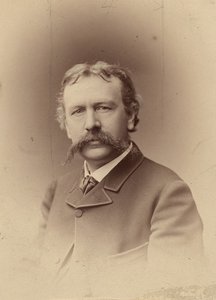
Elihu Vedder
1836 - 1923 , Vereinigte Staaten von Amerika
Kurzinfos
- Beeinflusste Künstler:
- François-Édouard Picot
- Giovanni Costa
- William Blake
- William Butler Yeats
- Bemerkenswerte Werke:
- Das Roc's Ei
- Der Fischer und der Genii
- Die Höhle des Meeresdrachen
- Rubaiyat-Illustrationen
- Geburtsdatum: 26. Februar 1836
- Geburtsort: New York City, USA
- Künstlerische Richtung: Symbolismus, Romantik
- Nationalität: Amerikanisch
- Sterbedatum: 29. Januar 1923
- Vollständiger Name: Elihu Vedder

