

 Vorschau anzeigen
 Versenden
 Teilen
 Details anzeigen

 Herunterladen
 Ähnliche Objekte
 Röntgenaufnahme
 Diashow
 Statistiken
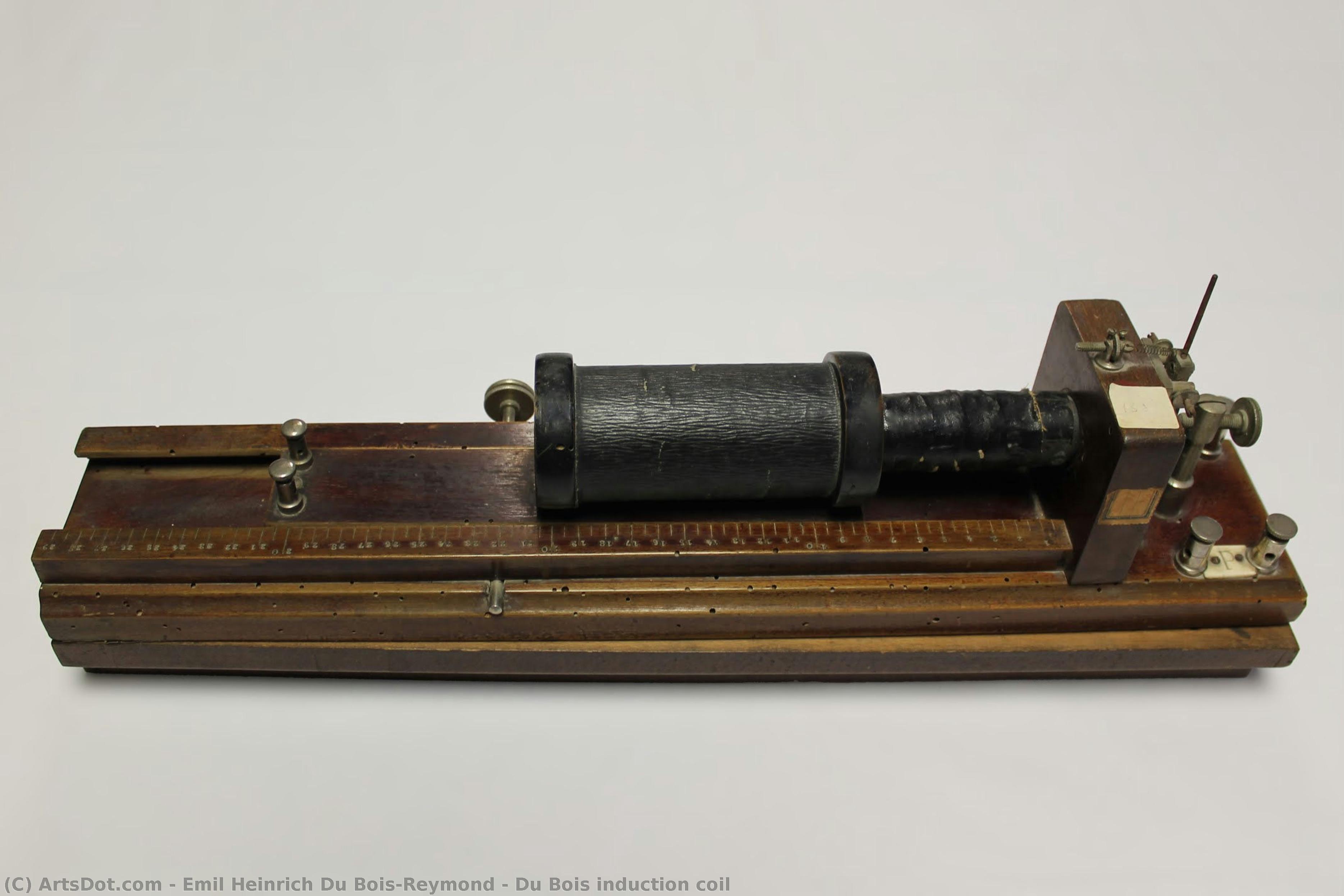
Du Bois induction coil


 Weiterlesen
Handgefertigte Ölreproduktion
Handgemaltes Ölgemälde auf Leinwand in Ihrer Wunschgröße und mit Rahmen, auf Bestellung von unseren Künstlern angefertigt. ( Zu Druck wechseln Zum digitalen Bild wechseln)




P118B $10

P118H $10

P118W $10

P438Z $10

P508JH $12

P508YH $12

P805H $10

P805Z $10

P919BZ $10

P919G $10

P919XJ $10

P959ZH $10

P968JZ $12

W106C $8

W218G $10

W218JH $8

W218Y $10

W307PJ $10

W316G $10

W316PJ $8

W316Y $10

W398PJ $8

W4111J $10

W500HY $15

W500JH $15

W692G $12

W849H $8

W940BG $15

W953PJ $8




Wählen Sie aus unseren vordefinierten Formaten, die den ursprünglichen Proportionen des Kunstwerks entsprechen.

Sie können Ihre eigenen Maße eingeben, um einen bestimmten Rahmen oder Platz auszufüllen. Wenn die gewählte Größe nicht den Proportionen des Originalbildes entspricht, werden wir das Kunstwerk entweder beschneiden oder das Gemälde durch zusätzliche, handgemalte Elemente erweitern. Ein digitales Mockup wird Ihnen zur Genehmigung zugesandt, bevor die Produktion beginnt.
Bitte beachten Sie, dass die Bildschirmvorschau nicht die tatsächliche Beschneidung oder Erweiterung widerspiegelt. Nur das Mockup zeigt die endgültige Komposition exakt an.
Obwohl Sondermaße verfügbar sind, empfehlen wir, eine Größe aus der vordefinierten Liste zu wählen, um die ursprünglichen Proportionen beizubehalten.
Nach der Bestellung wird das ArtsDot.com-Team dem Kunden Anweisungen per E-Mail zusenden und eine Mockup-Vorschau bereitstellen.
Weltweiter Versand () in nur 3 bis 4 Wochen statt der üblichen 5 Wochen. (9 September). Keine Kompromisse bei der Qualität.

Kostenloser weltweiter Expressversand

Hochwertige Leinenleinwand

Umfassender Versicherungsschutz beim Versand

Zollgebühren-Rückerstattungsgarantie

Garantie für exakte Farbtreue

100-Tage-Rückgaberecht (nur bei Mängeln)

100% Geld-zurück-Garantie

Mengenrabatt verfügbar
 Die Glasoption ist nur für Größen unter 110 cm verfügbar.

Du Bois induction coil
Art der Reproduktion
Format der Reproduktion
-


Gesamtpreis
$ 263
Ähnliche Kunstwerke
Über den Künstler
Emil Heinrich Du Bois-Reymond: Pioneer of Nerve Action Potential and Electrophysiology
Emil Heinrich du Bois-Reymond (7 November 1818 – 26 December 1896) was a German physiologist, the co-discoverer of nerve action potential, and the developer of experimental electrophysiology. His lectures on science and culture earned him great esteem during the latter half of the 19th century. He stands as a pivotal figure in bridging the gap between physics and biology, fundamentally reshaping our understanding of how nerves transmit signals – a legacy that continues to resonate within neuroscience today.Early Life and Education: A Huguenot Heritage
Du Bois-Reymond’s upbringing instilled in him an intellectual curiosity rooted in his family's Huguenot heritage—a tradition valuing education and critical thought. Born in Berlin, he descended from a wealthy immigrant family originating in Neuchâtel, Switzerland, where his father Felix Henri du Bois-Reymond practiced law and served as representative to the Prussian government. His mother Minette Henry was of noble lineage, carrying the influence of Huguenot culture—a diaspora fleeing religious persecution in France—which fostered a spirit of inquiry and independence within Emil’s formative years. Educated initially at the French College in Berlin, he pursued his studies diligently, demonstrating an early aptitude for diverse disciplines including theology, philosophy, and mathematics – preparing him for a lifetime dedicated to scientific exploration.The Spark of Electrophysiology: Matteucci's Influence
A transformative encounter occurred when Emil du Bois-Reymond was introduced to the groundbreaking research of Carlo Matteucci on animal electricity. Matteucci’s pioneering experiments demonstrated that animals could generate electrical currents, sparking Du Bois-Reymond’s fascination with bioelectricity—the electrochemical processes underpinning life itself. This inspiration propelled him toward a profound investigation into nerve cells and muscle fibers, recognizing their ability to transmit signals through electrical impulses. He meticulously documented these phenomena, establishing the foundation for what would become modern electrophysiology and fundamentally altering perceptions of biological function.“Untersuchungen über thierische Elektricität”: A Monumental Contribution
Du Bois-Reymond’s magnum opus, *Untersuchungen über thierische Elektricität* (“Investigations of Animal Electricity”), published in two volumes between 1848 and 1884, cemented his place as a titan of scientific thought. This ambitious undertaking systematically dissected the electrical properties of muscle and nerve cells, integrating experimental data with theoretical models to illuminate the mechanisms of bioelectricity. Crucially, Du Bois-Reymond demonstrated that nerve impulses originate from depolarization—a shift in membrane potential—and propagate along axons as “waves of relative negativity.” His meticulous observations challenged prevailing vitalistic theories, advocating instead for a physicochemical explanation of biological processes – a paradigm shift that profoundly impacted subsequent scientific discourse and influenced thinkers like Sigmund Freud.Helmholtz Collaboration: Shaping Scientific Discourse
Du Bois-Reymond’s intellectual partnership with Hermann Ludwig Ferdinand von Helmholtz—another luminary of German physiology—proved instrumental in shaping the trajectory of science during his era. Together, they championed a “physico-chemical program,” aiming to reduce physiology to fundamental physical principles and chemistry. This collaborative effort fostered groundbreaking research into topics ranging from nerve conduction to muscle contraction, establishing Berlin as a center for scientific innovation and profoundly impacting psychological theories—a testament to Du Bois-Reymond’s enduring influence on the intellectual landscape of the 19th century. ### Legacy: Nerve Action Potential and Beyond Emil du Bois-Reymond's discovery of nerve action potential remains one of the most significant breakthroughs in neuroscience history. His meticulous research laid the groundwork for understanding how neurons communicate, shaping our comprehension of brain function and influencing countless subsequent investigations into neurological disorders. Though later studies refined his initial model, Du Bois-Reymond’s foundational contribution continues to inspire scientists today—a legacy etched in the annals of scientific achievement.
Emil Heinrich Du Bois-Reymond
1818 - 1896 , Deutschland
Kurzinfos
- Artistic Movement Or Style: Experimentelle Elektrophysiologie
- Artists Or Movements Influenced By This Artist: ['Helmholtz']
- Artists Who Influenced This Artist: ['Johannes Müller']
- Date Of Birth: 7 November 1818
- Full Name: Emil Heinrich Du Bois-Reymond
- Nationality: Deutsch
- Notable Artworks: ['Du Bois Induction Coil']
- Place Of Birth: Berlin, Deutschland
Ähnliche Artikel
Echoes of Time: Exploring the Enduring Appeal of Vintage Artwork
Explore the captivating world of vintage art! Discover its history, enduring appeal, & how to build your own collection. Expert advice, custom reproductions & museum-quality prints at ArtsDot.
Echoes of Time: Nostalgia, Technique & Cultural Significance in Vintage Paintings
Explore the captivating world of vintage paintings! Discover key styles, cultural significance & collecting tips from art experts at ArtsDot. Find authentic reproductions and elevate your home décor.
Meisterwerke des 19. Jahrhunderts: Kunst für Ihr Zuhause | ArtsDot
Entdecken Sie die 10 bedeutendsten Kunstwerke des 19. Jahrhunderts! Von Impressionismus bis Realismus – erleben Sie die Geschichten berühmter Maler und ihre Meisterwerke. Hochwertige Reproduktionen für Ihr Zuhause auf ArtsDot.com.
Ferdinand du Puigaudeau: Bridging Impressionism & Symbolism in Breton Landscapes
Discover Ferdinand du Puigaudeau's captivating Breton landscapes – a bridge between Impressionism & Symbolism. Explore his life, unique style, and enduring legacy with ArtsDot.

Echoes of Time: Exploring the Enduring Appeal & Historical Context of Vintage Art Prints
Explore the captivating world of vintage art prints! Discover their history, collecting tips & enduring appeal. Expert insights on chromolithography and building a legacy collection with ArtsDot.