

 Vorschau anzeigen
 Versenden
 Teilen
 Details anzeigen

 Herunterladen
 Ähnliche Objekte
 Röntgenaufnahme
 Diashow
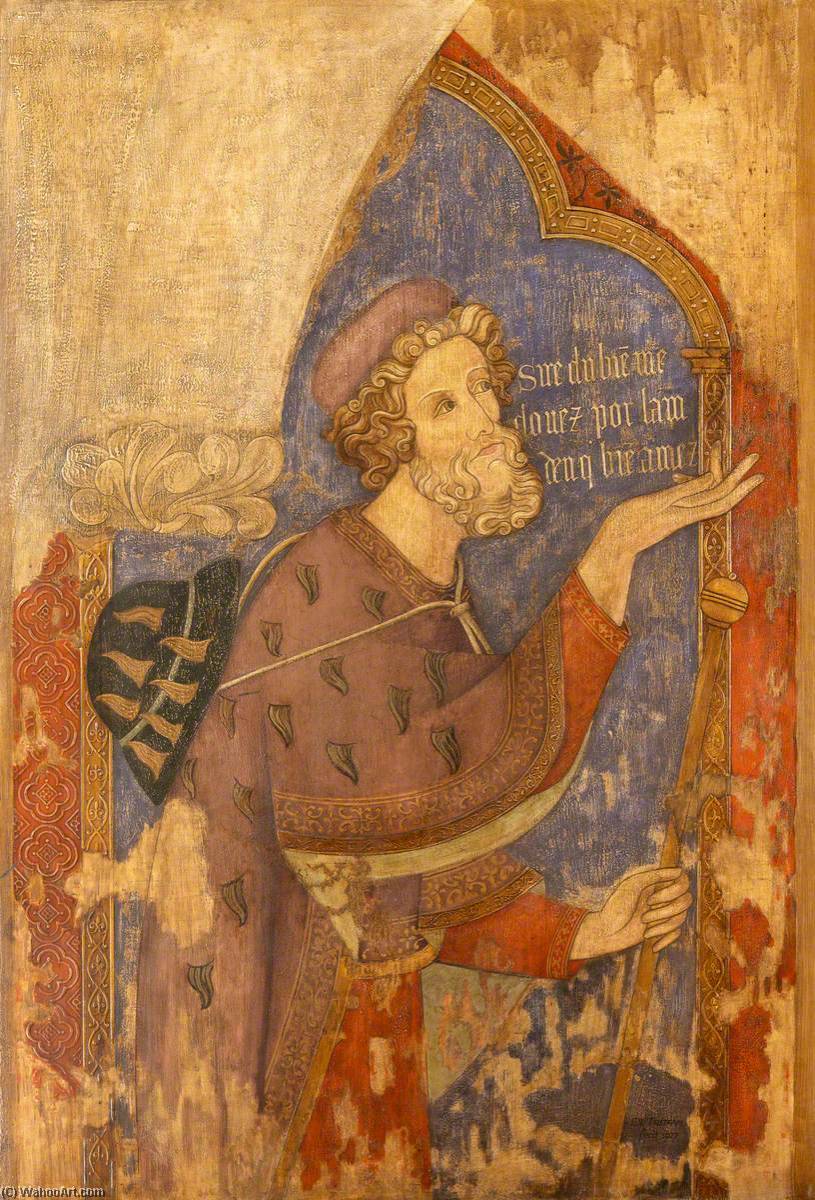
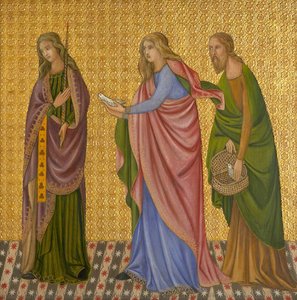
Reconstruction of Medieval Mural Painting, Saint John
 1927
1927 140.0 x 97.0 cm
 Weiterlesen
Erwerben Sie ein hochauflösendes, optimiertes digitales Bild, das der Online-Vorschau weit überlegen ist.
Jede Datei wird von unseren hauseigenen Spezialisten mit modernsten Werkzeugen und fachmännischer manueller Retusche sorgfältig vorbereitet. Wir stellen sicher, dass jedes Bild eine außergewöhnliche Klarheit, präzise Farbgenauigkeit und feinste Details aufweist.
Die endgültige Datei wird innerhalb von 72 Stunden per E-Mail zugestellt und ist für den sofortigen Einsatz in professionellen, redaktionellen und Druckumgebungen optimiert. Es handelt sich um dieselbe Qualität, der führende Designstudios, Verlage und Galerien vertrauen.
Digitales Bild
Laden Sie eine hochauflösende Datei für die persönliche Präsentation, den Druck und kreative Projekte herunter. ( Druck bestellen Handgemalte Reproduktion bestellen)
In jeder Bestellung digitaler Bilder enthalten
Professionelle digitale Bereitstellung, garantiert
Wenn Sie sich für ArtsDot.com entscheiden, erhalten Sie nicht nur ein Bild – Sie erhalten ein professionell aufbereitetes digitales Kunstwerk, das mit höchster Präzision erstellt und durch eine Zufriedenheitsgarantie abgesichert wird. Hier ist alles, was automatisch mit Ihrer Bestellung geliefert wird:

Schnelle E-Mail-Zustellung
Ihre hochauflösende digitale Bilddatei wird Ihnen innerhalb von 72 Stunden nach der Bestellung per E-Mail zugestellt – bereit zur sofortigen Verwendung.

KI-optimierte digitale Datei
Ihre Kunstwerke werden professionell mithilfe fortschrittlicher KI-Tools und manueller Bearbeitung optimiert, um maximale Detailtreue, Klarheit und Farbgenauigkeit zu gewährleisten.

Lebenslanger kostenloser Neudruckservice
Datei versehentlich gelöscht oder verloren? Keine Sorge – wir senden sie Ihnen jederzeit kostenlos erneut zu.

Keine Einfuhrgebühren – jemals
Genießen Sie Ihr Kunstwerk sofort ohne Zollgebühren, Einfuhrabgaben oder Versandkosten – digitale Downloads sind immer steuerfrei.

Garantierte Farbtreue
Wir garantieren, dass Ihr digitales Bild mithilfe professioneller Werkzeuge und Farbmanagement die Originalfarben so präzise wie möglich wiedergibt.

60-Tage-Zufriedenheitsgarantie
Sollten Sie mit Ihrem digitalen Bild nicht zufrieden sein, werden wir es überarbeiten oder Ihnen innerhalb von 60 Tagen 100% erstatten – ohne Wenn und Aber.

100% Geld-zurück-Garantie
Nicht zufrieden? Erhalten Sie innerhalb von 60 Tagen nach Erhalt Ihrer digitalen Datei eine vollständige Rückerstattung – ohne Angabe von Gründen.

Rabatte bei Großbestellungen
3 Bilder kaufen, 10% sparen – 5 Bilder kaufen, 15% sparen – Ab 10 Bildern 20% sparen. Ideal für kreative Projekte, Galerien und Agenturen.
Ähnliche Kunstwerke

Biografie des Künstlers
The Guardian of Medieval Splendor: The Life and Legacy of Ernest William Tristram
In the quiet, hallowed corridors of British art history, few figures possess the dual mastery of scientific precision and artistic soul quite like Ernest William Tristram. Born in 1882 in the historic town of Carmarthen, Wales, Tristram was a man whose life’s work served as a bridge between the fading echoes of the Middle Ages and the modern era of conservation. His journey began not merely with a brush in hand, but with an exceptional aptitude for chemistry—a discipline that would later allow him to peer beneath the layers of time, analyzing the very pigments that once adorned the walls of England’s most sacred spaces.
Tristram’s artistic identity was forged at the Royal College of Art, where he studied under the legendary W. R. Lethaby. This period of his life was transformative, instilling in him a profound respect for the decorative arts and the structural integrity of historical design. As he transitioned from student to scholar, Tristram became more than just a painter; he became a detective of the past. His fascination with the visual heritage of Britain led him to a career defined by the meticulous documentation of medieval wall paintings, a vocation that required both the eye of an artist and the rigor of an archaeologist.
A Visionary of Reconstruction and Conservation
To understand Tristram is to understand his unique ability to breathe life back into lost grandeur. While many historians were content with mere cataloging, Tristram sought to reconstruct. He did not simply observe the remnants of Gothic murals; he reimagined them in their full, luminous glory. His work on the chancel wall panels for St Elisabeth's Eastbourne and his contributions to York Minster stand as testaments to this creative resurrection. Through his use of tempera and a deep understanding of Byzantine and Gothic aesthetics, he was able to translate fragmented historical evidence into vibrant, symbolic narratives.
< Key Artistic Achievements:- The Reconstruction of Medieval Murals: His ability to interpret faded pigments into complete, cohesive scenes, such as the striking depictions of biblical figures and royal attendants.
- Academic Leadership: Serving as the Professor of Design at the Royal College of Art from 1926 to 1948, where he shaped the next generation of British designers.
- Scientific Conservation: Applying his background in chemistry to the preservation of medieval monuments, including significant work on King Edward's Chair in Westminster Abbey.
- Scholarly Publications: Authoring definitive texts such as English Medieval Wall Painting, which provided a foundational understanding of the twelfth and thirteenth centuries.
The Enduring Resonance of a Scholarly Artist
Tristram’s legacy is etched into the very stone and plaster of the cathedrals he loved. His work was never solely about the preservation of objects, but about the preservation of meaning. Through his paintings—ranging from the poignant "Story of Hezekiah" to the opulent, gold-flecked panels of royal figures—he ensured that the spiritual and social complexities of the medieval world remained accessible to the modern eye. His art was a dialogue between the centuries, a way of ensuring that the light of the past would not be extinguished by the passage of time.
Though he retired in 1948 and passed away in 1952, the impact of his meticulous research and evocative reconstructions continues to resonate. He remains a pioneer who proved that the conservation of art is not merely a technical necessity, but a profound act of cultural storytelling. In every reconstructed line and every carefully analyzed pigment, Ernest William Tristram lives on, reminding us that history is not just something we read, but something we can see, feel, and touch.
ernest william tristram
1882 - 1952
Kurzinfos
- Artistic Movement Or Style: Academic Art Style
- Artists Or Movements Influenced By This Artist: ['English Medieval Painting']
- Artists Who Influenced This Artist: ['W. R. Lethaby']
- Date Of Birth: 1882
- Date Of Death: 1952
- Full Name: Ernest William Tristram
- Nationality: British
- Notable Artworks:
- La Païva
- The Sir William Dunn School of Pathology
- Place Of Birth: Carmarthen, Wales

