

 Vorschau anzeigen
 Versenden
 Teilen
 Details anzeigen

 Herunterladen
 Ähnliche Objekte
 Röntgenaufnahme
 Diashow
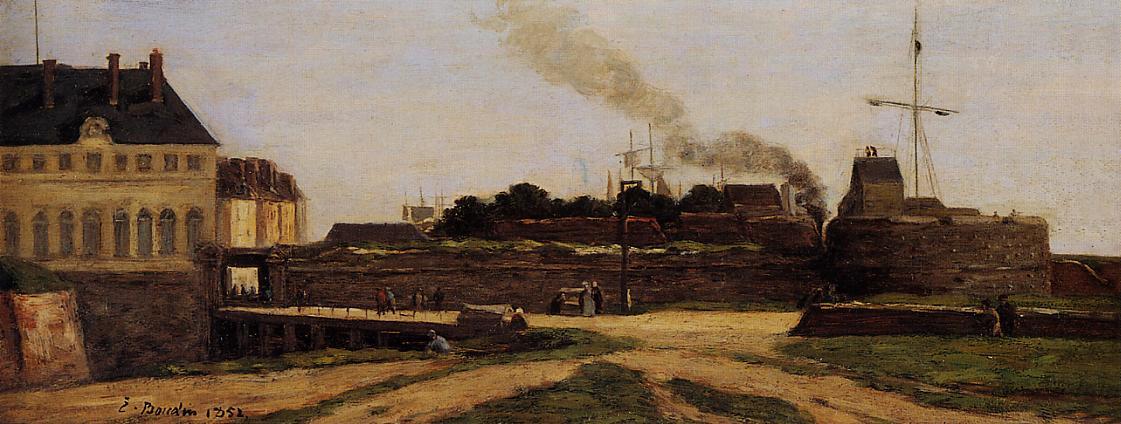
Le Havre, the Town Hotel and the Francois I Tower


 Weiterlesen
Erwerben Sie ein hochauflösendes, optimiertes digitales Bild, das der Online-Vorschau weit überlegen ist.
Jede Datei wird von unseren hauseigenen Spezialisten mit modernsten Werkzeugen und fachmännischer manueller Retusche sorgfältig vorbereitet. Wir stellen sicher, dass jedes Bild eine außergewöhnliche Klarheit, präzise Farbgenauigkeit und feinste Details aufweist.
Die endgültige Datei wird innerhalb von 72 Stunden per E-Mail zugestellt und ist für den sofortigen Einsatz in professionellen, redaktionellen und Druckumgebungen optimiert. Es handelt sich um dieselbe Qualität, der führende Designstudios, Verlage und Galerien vertrauen.
Digitales Bild
Laden Sie eine hochauflösende Datei für die persönliche Präsentation, den Druck und kreative Projekte herunter. ( Druck bestellen Handgemalte Reproduktion bestellen)
In jeder Bestellung digitaler Bilder enthalten
Professionelle digitale Bereitstellung, garantiert
Wenn Sie sich für ArtsDot.com entscheiden, erhalten Sie nicht nur ein Bild – Sie erhalten ein professionell aufbereitetes digitales Kunstwerk, das mit höchster Präzision erstellt und durch eine Zufriedenheitsgarantie abgesichert wird. Hier ist alles, was automatisch mit Ihrer Bestellung geliefert wird:

Schnelle E-Mail-Zustellung
Ihre hochauflösende digitale Bilddatei wird Ihnen innerhalb von 72 Stunden nach der Bestellung per E-Mail zugestellt – bereit zur sofortigen Verwendung.

KI-optimierte digitale Datei
Ihre Kunstwerke werden professionell mithilfe fortschrittlicher KI-Tools und manueller Bearbeitung optimiert, um maximale Detailtreue, Klarheit und Farbgenauigkeit zu gewährleisten.

Lebenslanger kostenloser Neudruckservice
Datei versehentlich gelöscht oder verloren? Keine Sorge – wir senden sie Ihnen jederzeit kostenlos erneut zu.

Keine Einfuhrgebühren – jemals
Genießen Sie Ihr Kunstwerk sofort ohne Zollgebühren, Einfuhrabgaben oder Versandkosten – digitale Downloads sind immer steuerfrei.

Garantierte Farbtreue
Wir garantieren, dass Ihr digitales Bild mithilfe professioneller Werkzeuge und Farbmanagement die Originalfarben so präzise wie möglich wiedergibt.

60-Tage-Zufriedenheitsgarantie
Sollten Sie mit Ihrem digitalen Bild nicht zufrieden sein, werden wir es überarbeiten oder Ihnen innerhalb von 60 Tagen 100% erstatten – ohne Wenn und Aber.

100% Geld-zurück-Garantie
Nicht zufrieden? Erhalten Sie innerhalb von 60 Tagen nach Erhalt Ihrer digitalen Datei eine vollständige Rückerstattung – ohne Angabe von Gründen.

Rabatte bei Großbestellungen
3 Bilder kaufen, 10% sparen – 5 Bilder kaufen, 15% sparen – Ab 10 Bildern 20% sparen. Ideal für kreative Projekte, Galerien und Agenturen.
Eugène Louis Boudin: Capturing Light and Atmosphere in Le Havre
Eugène Louis Boudin (1824-1898), a pivotal figure in the burgeoning Impressionist movement, stands as an enduring testament to the transformative power of plein air painting—the practice of creating artwork outdoors directly from observation. Born in Honfleur, France, Boudin’s formative years were steeped in the maritime traditions of his hometown, where he witnessed firsthand the capricious dance between light and water – experiences that would indelibly shape his artistic vision.
Rather than adhering to the rigid conventions of academic art academies, Boudin embarked on a path of independent exploration, beginning his working life aboard steamboats traversing between Le Havre and Honfleur at just ten years old. It was during these voyages that he discovered his innate talent for capturing fleeting impressions of light and color with rapid sketches in the margins of his books—a habit that foreshadowed his lifelong dedication to portraying the natural world with unprecedented accuracy and emotional resonance.
His relocation to Le Havre, where his father established a shop for stationery and picture frames, solidified Boudin’s immersion within an artistic milieu. He diligently honed his skills alongside his family, eventually establishing his own modest atelier—a space dedicated to fostering creativity and pursuing artistic excellence. This environment nurtured his ability to translate the sensory experience of nature onto canvas with remarkable sensitivity.
“Le Havre, the Town Hotel and the Francois I Tower”: A Study in Coastal Realism
"Le Havre, the Town Hotel and the François I Tower," painted in 1859, exemplifies Boudin’s masterful embrace of Realism—a stylistic approach that prioritized truthful representation over idealized beauty. Unlike Romantic painters who sought to evoke emotion through dramatic landscapes and fantastical narratives, Boudin focused on capturing the tangible qualities of his surroundings with meticulous detail.
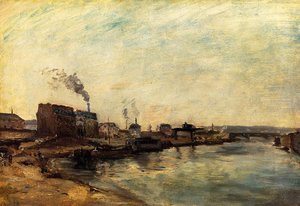
The painting depicts Le Havre harbor during a period of significant industrial expansion, reflecting the burgeoning economic dynamism of France in the mid-nineteenth century. Boudin skillfully renders the imposing Town Hotel—a symbol of civic pride and architectural grandeur—its façade bathed in warm sunlight. Adjacent to it is the bustling docks, where steamboats emit plumes of smoke, conveying a palpable sense of activity and progress.
Dominating the composition is the François I Tower—a monumental structure commemorating the reign of Francis I, representing France’s historical legacy amidst the rapid transformations of modernity. Boudin's masterful use of light—particularly the diffused glow emanating from the tower—creates an atmosphere of contemplative serenity, inviting viewers to contemplate the interplay between past and present.
Technique and Impressionistic Vision
Boudin’s technique is characterized by loose brushstrokes and a vibrant palette—elements that are hallmarks of Impressionism. He eschewed blending colors on the palette entirely, opting instead for juxtaposing complementary hues directly onto the canvas to achieve luminous effects. This approach allowed him to capture the subtle nuances of light and color as they shifted throughout the day.
Furthermore, Boudin meticulously observed atmospheric conditions—such as haze and mist—incorporating these elements into his paintings to heighten their emotional impact. By conveying the ephemeral beauty of nature with unwavering honesty, Boudin cemented his place as one of the pioneers of Impressionism—a movement that irrevocably altered the course of art history.
Symbolic Resonance: Light, Industry, and Heritage
"Le Havre, the Town Hotel and the François I Tower" transcends mere visual representation; it embodies profound symbolic resonance. The tower stands as a reminder of France’s enduring cultural heritage—a bastion against the encroaching forces of industrialization. Simultaneously, the harbor scene celebrates the dynamism of economic progress—the transformative influence of steam power on maritime trade.
However, most importantly, Boudin's painting captures the essence of human experience—the quiet contemplation afforded by observing the natural world and appreciating its sublime beauty. Through his unwavering commitment to capturing light and atmosphere with unparalleled sensitivity, Boudin bequeathed to posterity a timeless masterpiece that continues to inspire awe and admiration.
Ähnliche Kunstwerke
Biografie des Künstlers
Frühes Leben und Karriere
Eugène Louis Boudin wurde am 12. Juli 1824 in Honfleur, Frankreich, geboren. Er war der Sohn eines Hafenlotsen und entwickelte schon früh eine starke Verbundenheit zum Meer. Boudins künstlerische Reise begann mit seiner Tätigkeit auf einem Dampfer zwischen Le Havre und Honfleur im Alter von 10 Jahren.Künstlerischer Einfluss und Stil
Boudins Stil wurde stark von niederländischen Meistern des 17. Jahrhunderts beeinflusst, insbesondere nachdem er Johan Jongkind getroffen hatte, der ihn an das Malen en plein air (im Freien) heranführte. Dieser Ansatz ermöglichte es Boudin, das ständig wechselnde Licht und die Farben der Natur einzufangen. Seine Pastelle, die als zusammenfassend und wirtschaftlich beschrieben werden können, zogen große Aufmerksamkeit von Charles Baudelaire und Corot auf sich, der ihn als den "König der Himmel" bezeichnete.Wichtige Werke und Ausstellungen
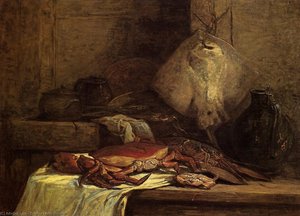
- Stillleben mit Hummer auf weißem Tischtuch (Nature morte au homard sur un nappe blanche), das sich jetzt im High Museum of Art in Atlanta befindet, zeigt Boudins ernsten, aber edlen Ansatz bei Stilllebenmalereien.
- Boudins Teilnahme an der ersten Impressionisten-Ausstellung im Jahr 1873, zusammen mit Claude Monet und anderen jungen Künstlern, festigte seinen Einfluss auf die Kunstwelt.
- Seine Werke sind in verschiedenen Museen zu finden, darunter das Musée d'Orsay in Paris, das mehrere seiner Gemälde beherbergt, wie z.B. Landschaft mit Sonnenuntergang.
Entwicklung und Errungenschaften
Boudin entwickelte sich von einem frühen Interesse an der Darstellung maritimer Szenen zu einem Landschaftsmaler, der die Atmosphäre und das Licht des nordfranzösischen Küstenraums einfing. Er experimentierte mit Pastellfarben und Ölfarben und schuf Werke, die für ihre Leichtigkeit und ihren impressionistischen Charakter bekannt sind. Wichtige Errungenschaften umfassen:- Eine dritte Auszeichnung beim Pariser Salon von 1881.
- Eine Goldmedaille bei der Weltausstellung von 1889.
- Die Ernennung zum Ritter der Légion d'Honneur im Jahr 1892.
Historische Bedeutung und Vermächtnis
Eugène Louis Boudins Vermächtnis geht über seine eigenen Werke hinaus, da er eine entscheidende Rolle bei der Gestaltung der Karrieren junger Künstler wie Claude Monet spielte. Er gilt als einer der wichtigsten Vorläufer des Impressionismus und trug dazu bei, die Kunstwelt von traditionellen akademischen Konventionen zu befreien. Der Eugène Boudin Preis, der von der Société Nationale des Beaux-Arts verliehen wird, ist ein Beweis für seinen bleibenden Einfluss auf die Kunstwelt.- Weitere Werke von Boudin finden Sie unter https://ArtsDot.com/@/eugene-louis-boudin
- Erkunden Sie die Sammlung des Musée d'Orsay, das mehrere Gemälde von Boudin zeigt, unter https://ArtsDot.com/@@/a@d3aulp-discover-the-charm-of-musee-eugene-boudin-(france)-and-its-impressionist-ma..
- Erfahren Sie mehr über französische Kunst und ihre Geschichte unter https://en.wikipedia.org/wiki/french_art
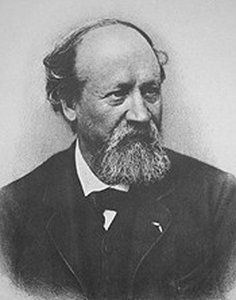
Eugène Louis Boudin
1824 - 1898 , Frankreich
Kurzinfos
- Beeinflusste Künstler:
- Johan Jongkind
- Claude Monet
- Bemerkenswerte Werke:
- Stillleben mit Hummer
- Marina
- Fecamp, der Hafen
- Landschaft bei Sonnenuntergang
- Geburtsdatum: 12. Juli 1824
- Geburtsort: Honfleur, Frankreich
- Künstlerische Bewegung: Impressionismus
- Nationalität: Französisch
- Sterbedatum: 8. August 1898
- Vollständiger Name: Eugène Louis Boudin
- Von Künstlern Beeinflusst: ['Niederländische Meister (17. Jh.)']

