

 Vorschau anzeigen
 Versenden
 Teilen
 Details anzeigen

 Herunterladen
 Ähnliche Objekte
 Röntgenaufnahme
 Diashow
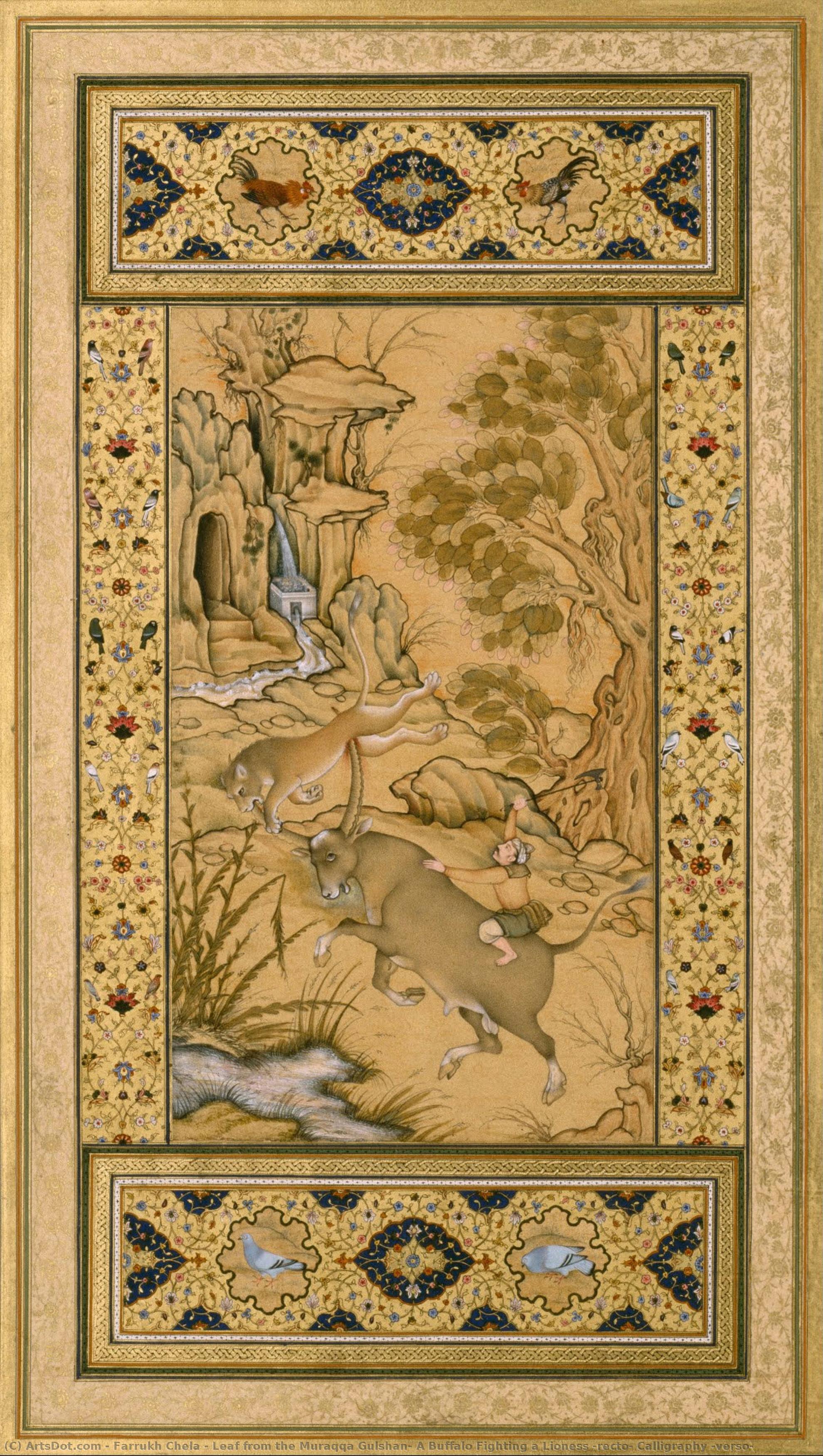
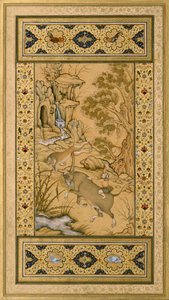
Leaf from the Muraqqa Gulshan: A Buffalo Fighting a Lioness (recto) Calligraphy (verso)


 Weiterlesen
Handgefertigte Ölreproduktion
Handgemaltes Ölgemälde auf Leinwand in Ihrer Wunschgröße und mit Rahmen, auf Bestellung von unseren Künstlern angefertigt. ( Druck bestellen Bild kaufen)




P118B $10

P118H $10

P118W $10

P438Z $10

P508JH $12

P508YH $12

P805H $10

P805Z $10

P919BZ $10

P919G $10

P919XJ $10

P959ZH $10

P968JZ $12

W106C $8

W218G $10

W218JH $8

W218Y $10

W307PJ $10

W316G $10

W316PJ $8

W316Y $10

W398PJ $8

W4111J $10

W500HY $15

W500JH $15

W692G $12

W849H $8

W940BG $15

W953PJ $8




Wählen Sie aus unseren vordefinierten Formaten, die den ursprünglichen Proportionen des Kunstwerks entsprechen.

Sie können Ihre eigenen Maße eingeben, um einen bestimmten Rahmen oder Platz auszufüllen. Wenn die gewählte Größe nicht den Proportionen des Originalbildes entspricht, werden wir das Kunstwerk entweder beschneiden oder das Gemälde durch zusätzliche, handgemalte Elemente erweitern. Ein digitales Mockup wird Ihnen zur Genehmigung zugesandt, bevor die Produktion beginnt.
Bitte beachten Sie, dass die Bildschirmvorschau nicht die tatsächliche Beschneidung oder Erweiterung widerspiegelt. Nur das Mockup zeigt die endgültige Komposition exakt an.
Obwohl Sondermaße verfügbar sind, empfehlen wir, eine Größe aus der vordefinierten Liste zu wählen, um die ursprünglichen Proportionen beizubehalten.
Nach der Bestellung wird das ArtsDot.com-Team dem Kunden Anweisungen per E-Mail zusenden und eine Mockup-Vorschau bereitstellen.
Weltweiter Versand () in nur 3 bis 4 Wochen statt der üblichen 5 Wochen. (26 August). Keine Kompromisse bei der Qualität.

Kostenloser weltweiter Expressversand

Hochwertige Leinenleinwand

Umfassender Versicherungsschutz beim Versand

Zollgebühren-Rückerstattungsgarantie

Garantie für exakte Farbtreue

60 Tage Rückgaberecht (nur bei Mängeln)

100% Geld-zurück-Garantie

Mengenrabatt verfügbar
 Die Glasoption ist nur für Größen unter 110 cm verfügbar.

Leaf from the Muraqqa Gulshan: A Buffalo Fighting a Lioness (recto) Calligraphy (verso)
Art der Reproduktion
Format der Reproduktion
-


Gesamtpreis
$ 263
Beschreibung des Kunstwerks
Ähnliche Kunstwerke
Über den Künstler
The Expressive Vision of Farrukh Chela
In the vibrant, sun-drenched workshops of the Mughal Empire, amidst the scent of pigments and the rustle of fine parchment, lived a painter whose brush captured the very soul of an era. Farrukh Chela, active from approximately 1580 to 1604, was not merely a craftsman but a vital storyteller within the opulent court of Emperor Akbar. While history often reserves its highest accolades for a select few royal favorites, Chela’s legacy is etched into the very fabric of Mughal manuscript illustration. He emerged during a period of unparalleled artistic synthesis, where Persian elegance met Indian vitality, creating a visual language that was as much about emotional truth as it was about technical precision.
Though the specific details of his early life remain shrouded in the mists of the sixteenth century, his presence is felt strongly in the workshops of Fatehpur Sikri. It was here, under the patronage of Akbar, that Chela honed a style that would become uniquely his own. He was part of a grand tradition of illustrators who breathed life into epic narratives, ranging from the sacred Hindu texts of the Ramayana and Mahabharata to the sophisticated Persian tales that graced the imperial library. His work served as a bridge between cultures, translating complex religious and historical themes into miniature masterpieces that could be held in the palm of a hand.
A Style Defined by Idiosyncrasy and Motion
What truly distinguishes Farrukh Chela from his contemporaries is an unmistakable, almost idiosyncratic, creative spirit. While many Mughal artists sought a refined, idealized perfection, Chela often embraced a more expressive and sometimes distorted anatomy to convey movement and psychological depth. His figures are rarely static; they are caught in the heat of battle, the tension of an elephant fight, or the quiet contemplation of a garden scene. This sense of dynamism is paired with a meticulous attention to detail—the delicate curve of a flowering branch, the intricate gold chains adorning a royal elephant, or the rugged texture of a rocky hillside.
His technique often reflected the dual influences of his time. One can observe the Persian influence in his use of landscape elements, such as stylized clouds and delicate flora, which evoke a sense of poetic brevity and grace. Yet, there is an underlying Indian robustness in his characterizations. In works like Jahangir Watching an Elephant Fight, the viewer is transported into the spectacle of the court, where the tension between man and beast is rendered with such clarity that the sounds of the crowd seem almost audible. This ability to blend the decorative with the dramatic allowed him to contribute significantly to the most prestigious manuscripts of the Mughal era.
Legacy in the Imperial Archives
The historical significance of Farrukh Chela lies in his role as a foundational pillar of the Mughal school. He was a prolific contributor, lending his hand to the major illustrated projects that defined Akbar's reign. His work has survived the centuries to reside in some of the world's most prestigious institutions, ensuring that his unique vision continues to inspire scholars and art lovers alike. To study Chela is to study the heartbeat of the Mughal Renaissance.
His enduring impact can be seen through several key contributions:
- Narrative Mastery: His ability to translate complex epic poetry into visual sequences that maintain emotional continuity.
- Stylistic Innovation: The introduction of a more idiosyncratic, expressive figure style that broke away from rigid formalism.
- Cultural Synthesis: The seamless integration of Persian aesthetic sensibilities with the vibrant, naturalistic traditions of Indian painting.
- Institutional Presence: A body of work preserved in global collections such as the Art Institute of Chicago, the Freer Gallery of Art, and the Chester Beatty Library.
Though he may be described by some historians as a "quiet titan," Farrukh Chela’s voice remains loud and clear through his pigments. He remains an essential figure for anyone seeking to understand the complex, beautiful, and deeply human world of Mughal miniature painting.
farrukh chela
1604 , India
Kurzinfos
- Artistic Movement Or Style: Mughal Miniature Painting
- Date Of Death: 1604
- Full Name: Farrukh Chela
- Nationality: Indian
- Notable Artworks: ['Leaf from the Muraqqa Gulshan: A Buffalo Fighting a Lioness']
- Place Of Birth: India
Ähnliche Artikel
Franz Xaver Winterhalter: Hofmaler, Akademiker und Inbegriff des Porträts im 19. Jahrhundert
Entdecken Sie das Werk von Franz Xaver Winterhalter, dem Hofmaler der europäischen Aristokratie! Erfahren Sie mehr über seine Aufträge, Techniken und den bleibenden Einfluss seiner Porträts. Wertvolle Einblicke für Kunstsammler.
Charles-André van Loo: A Study in Rococo Portraiture & the French Court's Artistic Dynamics
Explore the elegant world of Charles-André van Loo, a master of Rococo portraiture at the French court. Discover his life, techniques, and enduring influence on 18th-century art. Hand-painted reproductions available.
Agnolo Bronzino: Meister der Höfischen Porträtkunst und der rätselhafte Blick der Florentiner Renaissance
Entdecken Sie die faszinierende Welt von Agnolo Bronzino! Expertenanalyse seiner Meisterwerke der Renaissance-Porträtmalerei, Manierismus und die verborgenen Botschaften höfischer Kunst. Jetzt mehr erfahren!
Hans von Aachen: Mannerism's Courtly Visionary & Imperial Portraiture
Explore the captivating world of Hans von Aachen, a leading Mannerist painter renowned for his exquisite imperial portraits & mythological scenes. Discover his legacy and influence on 16th-century European art.
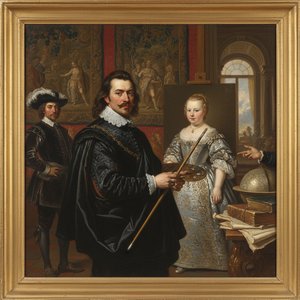
Diego Velázquez: Meister der spanischen Goldenen Ära – Technik, Einfluss und die Porträtkunst des Hofes
Entdecken Sie Diego Velázquez, den Meister des spanischen Barock! Expertenwissen über seine Technik, berühmte Werke wie Las Meninas und seinen Einfluss auf die Kunstgeschichte. Hochwertige Reproduktionen bei ArtsDot.

