 Vorschau anzeigen
 Versenden
 Teilen
 Details anzeigen

 Herunterladen
 Ähnliche Objekte
 Röntgenaufnahme
 Diashow
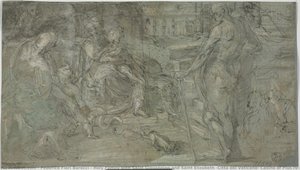
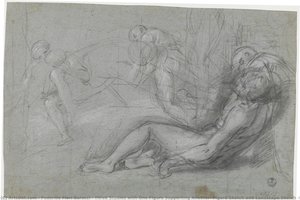
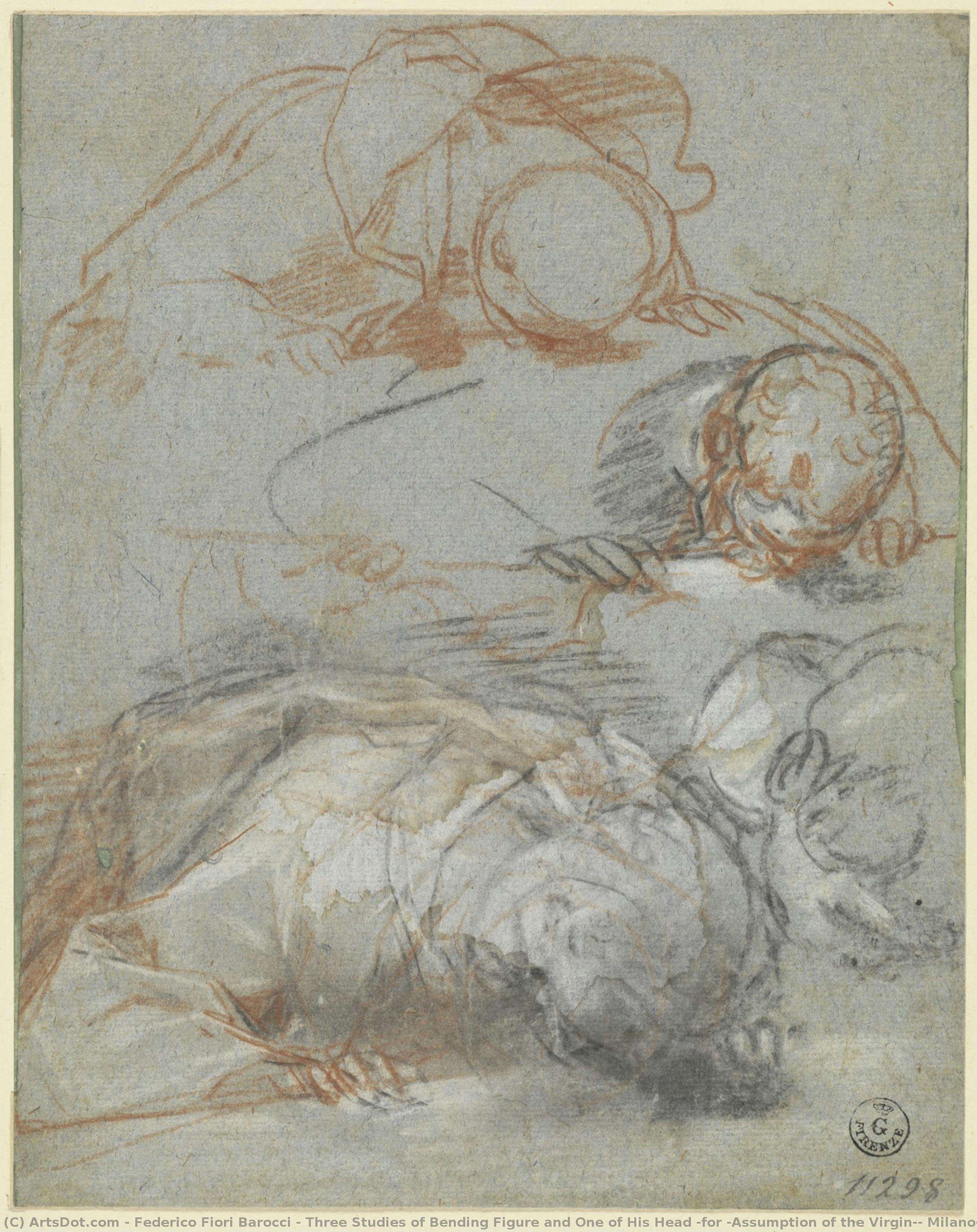
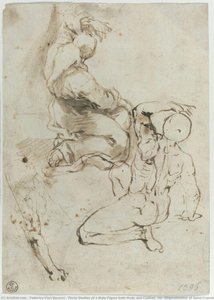
Three Studies of Bending Figure and One of His Head (for “Assumption of the Virgin”, Milano, Collezione Castelbarco Albani)
 Acrylic On Canvas
- WallArt
- Baroque Style
 1612
1612 24.0 x 19.0 cm
 Galleria degli Uffizi
 Weiterlesen
Giclée / Kunstdruck
Giclée- oder Leinwanddruck in Museumsqualität mit schneller Produktion und flexiblen Veredelungsoptionen. ( Handgemalte Reproduktion bestellen Bild kaufen)




P118B $10

P118H $10

P118W $10

P438Z $10

P508JH $12

P508YH $12

P805H $10

P805Z $10

P919BZ $10

P919G $10

P919XJ $10

P959ZH $10

P968JZ $12

W106C $8

W218G $10

W218JH $8

W218Y $10

W307PJ $10

W316G $10

W316PJ $8

W316Y $10

W398PJ $8

W4111J $10

W500HY $15

W500JH $15

W692G $12

W849H $8

W940BG $15

W953PJ $8




Wählen Sie aus unseren vordefinierten Formaten, die den ursprünglichen Proportionen des Kunstwerks entsprechen.

Sie können Ihre eigenen Maße eingeben, um ein bestimmtes Format oder einen speziellen Platz einzupassen. Wenn das von Ihnen gewählte Format nicht den Proportionen des Originalbildes entspricht, werden wir das Kunstwerk entweder beschneiden oder das Bild mit einem gespiegelten oder einfarbigen Rand erweitern. Ein digitaler Entwurf wird Ihnen zur Genehmigung zugesandt, bevor die Produktion beginnt.
Bitte beachten Sie, dass die Vorschau auf dem Bildschirm nicht den tatsächlichen Zuschnitt oder die Erweiterung widerspiegelt. Nur der Entwurf zeigt die endgültige Komposition präzise an.
Obwohl Sondermaße verfügbar sind, empfehlen wir die Auswahl eines Maßes aus der vordefinierten Liste, um die ursprünglichen Proportionen zu bewahren.
Weltweiter Versand () innerhalb von 2 Wochen statt der üblichen 4/5 Wochen. (31 August)

Kostenloser weltweiter Expressversand

Hochwertige Leinenleinwand

Umfassender Versicherungsschutz beim Versand

Zollgebühren-Rückerstattungsgarantie

Garantie für exakte Farbtreue

60 Tage Rückgaberecht (nur bei Mängeln)

100% Geld-zurück-Garantie

Mengenrabatt verfügbar
 Die Glasoption ist nur für Größen unter 110 cm verfügbar.

Three Studies of Bending Figure and One of His Head (for “Assumption of the Virgin”, Milano, Collezione Castelbarco Albani)
Giclée / Kunstdruck
Format der Reproduktion
-


Gesamtpreis
$ 62
Federico Fiori Barocci’s “Three Studies of Bending Figure and One of His Head” – A Dance of Form and Faith
Federico Fiori Barocci, known affectionately as "Il Baroccio," stands as a pivotal figure bridging the Mannerist elegance of the late Renaissance with the burgeoning dynamism of the Baroque. Born in Urbino in 1535 and tragically passing away in 1612, his life’s work embodies a captivating synthesis of observation, technical mastery, and deeply felt spirituality. “Three Studies of Bending Figure and One of His Head,” created around 1612, offers a profound glimpse into Barocci's artistic vision – a study in human form, gesture, and the evocative power of light and shadow.
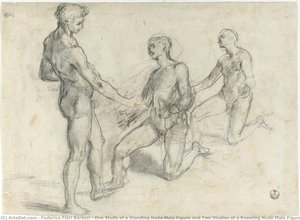
The painting itself is deceptively simple in its composition. Three figures dominate the canvas: a reclining male nude on the left, a standing figure to his right, and a seated individual positioned between them. These aren’t idealized representations; rather, they are studies in movement, captured with an almost unsettling immediacy. The figures appear caught mid-action, their limbs contorted into expressive poses that suggest both physical exertion and profound contemplation. This deliberate lack of static repose was characteristic of Barocci's approach – he sought to convey not just the appearance of a body but its very essence in motion.
A Masterclass in Technique and Light
Barocci’s technique is immediately striking, revealing a remarkable command of color and texture. He employs a layered glazing method, building up thin washes of paint to create an illusion of depth and luminosity. Notice the subtle variations in tone – the velvety smoothness of the skin contrasted with the sharper definition of the musculature. The artist's use of chiaroscuro—the dramatic interplay between light and dark—is particularly noteworthy. Light doesn’t simply illuminate; it sculpts, defining form and creating a sense of theatrical drama. The figures are bathed in a soft, diffused glow, emanating from an unseen source, which emphasizes their vulnerability and inner intensity.
Furthermore, Barocci's meticulous attention to detail is evident in the rendering of fabrics and drapery. The folds of clothing aren’t merely decorative; they contribute to the overall sense of movement and dynamism. The subtle shifts in color and texture suggest the weight and volume of the garments, adding a tactile quality to the image.
Historical Context: Faith, Form, and the Renaissance Spirit
Created during a period of intense religious and artistic transformation, “Three Studies” reflects the prevailing intellectual currents of the time. The painting’s subject matter—the human body in motion—resonates with the humanist emphasis on the beauty and dignity of mankind. However, Barocci imbues this celebration of the physical form with a distinctly spiritual dimension. The figures' postures and expressions suggest a deep engagement with faith, hinting at an inner life beyond mere physicality.
Interestingly, the painting’s commission for “Assumption of the Virgin” in Milan points to its intended role within a larger devotional context. The studies served as preparatory sketches for a monumental altarpiece, demonstrating Barocci's commitment to both artistic innovation and religious piety. The reference to "Milano, Collezione Castelbarco Albani" indicates that this piece is part of a significant private collection, further adding to its historical importance.
Symbolism and Emotional Resonance
While the precise symbolism within the painting remains open to interpretation, several elements invite contemplation. The reclining figure could represent humility or submission before God, while the standing and seated figures might embody active faith and contemplative prayer. The overall composition evokes a sense of quiet drama—a moment suspended in time, filled with both physical and spiritual tension.
Barocci’s ability to capture such profound emotion through seemingly simple forms is a testament to his artistic genius. “Three Studies of Bending Figure and One of His Head” isn't merely a depiction of human bodies; it’s an exploration of the human condition—a poignant meditation on faith, movement, and the enduring power of art to illuminate the mysteries of life.
Ähnliche Kunstwerke
Über den Künstler
Frühes Leben und Ausbildung
- Geboren: Urbino, Italien (1535)
- Gestorben: 1612
- Federico Fiori Barocci, ein italienischer Renaissance-Maler und Grafiker, wurde 1535 in Urbino, Italien, geboren.
- Sein ursprünglicher Name war Federico Fiori, und er erhielt den Spitznamen "il Baroccio", was im nordwestitalienischen Dialekt eine zweirädrige Karre bedeutet, die von Ochsen gezogen wird.
- Barocci erhielt seine erste Ausbildung bei seinem Vater, Ambrogio Barocci, einem Bildhauer von örtlicher Bedeutung.
- Anschließend wurde er beim Maler Battista Franco in Urbino ausgebildet. Diese Ausbildung legte den Grundstein für seinen späteren Erfolg.
Künstlerische Karriere und Einflüsse
- Baroccis Werk war hoch angesehen und einflussreich und kündigte den Stil Peter Paul Rubens' an.
- Er arbeitete im renommierten Studio von Taddeo und Federico Zuccari in Rom, wo er verschiedenen künstlerischen Einflüssen ausgesetzt war.
- Seine erste bemerkenswerte Arbeit war eine St. Margarete, die für die Confraternity of the Holy Sacrament geschaffen wurde.
- Er wurde von Papst Pius IV eingeladen, bei der Dekoration des Vatikan Belvedere Palastes in Rom zu helfen, wo er die Jungfrau Maria und das Jesuskind mit mehreren Heiligen sowie eine Decke in Fresko malte, die die Verkündigung darstellten.
- Baroccis Stil war durch eine Mischung aus Manierismus- und Barockelementen gekennzeichnet.
Bemerkenswerte Werke und Vermächtnis
- Fünf Studien einer männlichen Figur und zwei seiner rechten Hand und Arms (Uffizien Galerie, Florenz, Italien) – ein Beweis für Baroccis Geschick im Festhalten der menschlichen Form.
- Kompositionsstudie (für „Beschneidung“, Paris, Musée du Louvre) – demonstriert seine Fähigkeit, Komposition und Emotion in Einklang zu bringen.
- Kopf eines Mannes (für „Rufer des Heiligen Andreas“, Brüssel, Königliche Museen der Schönen Künste von Belgien) – zeigt Baroccis Liebe zum Detail und Ausdruckskraft.
- Die Mariä Geburt (1597 Öl auf Leinwand im Prado).
- Madonna del Popolo (Uffizien Galerie, Florenz, Italien).
- Die Madonna mit der Katze (La Madonna del Gatto)
- Verkündigung (1582)
Entwicklung und Bedeutung
- Obwohl er sich nach einem vermeintlichen Giftanschlag 1563 dauerhaft aus Rom zurückzog und hauptsächlich in Urbino tätig war, entwickelte Barocci seinen Stil weiter.
- Er nutzte neue Zeichentechniken, die es ihm ermöglichten, unorthodoxe malerische Methoden zu entwickeln.
- Seine Werke zeichnen sich durch Wärme des Gefühls und tiefe Spiritualität aus.
Vermächtnis und Rezeption
- Barocci gilt als ein wichtiger Vorläufer des Barockstils und beeinflusste Künstler wie Peter Paul Rubens maßgeblich. Sein Werk steht für den Übergang von Manierismus zum Barock und spiegelt die religiösen und künstlerischen Strömungen der Gegenreformation wider.
- Er war einer der bedeutendsten und individuellsten Maler seiner Zeit in Mittelitalien.
- Baroccis Einfluss ist in den Werken verschiedener Künstler sichtbar, darunter Peter Paul Rubens, der von Baroccis dramatischem und emotionalem Pinselstrich inspiriert wurde. Sein Vermächtnis wird weiterhin gefeiert durch seine zahlreichen Werke, die sich nun in Museen wie der Uffizien Galerie (Florenz, Italien) und dem Musée du Louvre (Paris, Frankreich) befinden.
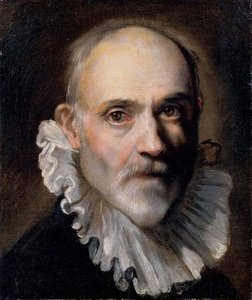
Federico Fiori Barocci
1535 - 1612 , Italien
Kurzinfos
- Beeinflusste Künstler: ['Battista Franco']
- Bemerkenswerte Werke:
- Die Mariä Geburt
- Madonna del Popolo
- Verkündigung
- Geburtsdatum: 1535
- Geburtsort: Urbino, Italien
- Künstlerischer Stil: Renaissance, Barock
- Nationalität: Italiener
- Sterbedatum: 1612
- Vollständiger Name: Federico Fiori Barocci
- Von Künstlern Beeinflusst: ['Peter Paul Rubens']
Ähnliche Artikel

Leonardo da Vinci: Die 25 Meisterwerke für Ihr Zuhause | ArtsDot
Entdecken Sie die 25 Meisterwerke von Leonardo da Vinci! Erfahren Sie faszinierende Geschichten hinter Gemälden wie der Mona Lisa & Das letzte Abendmahl. Hochwertige Reproduktionen für Ihr Zuhause – jetzt bei ArtsDot entdecken!
The Intimate Gaze: Study & Intellectual Pursuit in Western Art
Explore the fascinating history of study and intellectual pursuit in Western art! Discover Renaissance scholars, iconic portraits like Holbein's Erasmus, and Leonardo’s studies – a journey through humanist ideals & artistic mastery. Learn more at ArtsDot.
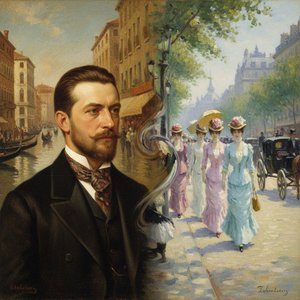
Federico Zandomeneghi: Bridging Venetian Tradition & Parisian Impressionism
Discover Federico Zandomeneghi (1841-1917), a captivating Italian Impressionist bridging Venetian tradition and Parisian modernity. Explore his intimate scenes, unique style & legacy with ArtsDot.

Sir Alfred James Munnings: Die 25 Meisterwerke des Pferdebildes | ArtsDot
Entdecken Sie die 25 Meisterwerke von Sir Alfred James Munnings! Erleben Sie seine beeindruckenden Pferdebilder, geprägt vom Impressionismus und Realismus. Hochwertige Kunstdrucke & Reproduktionen auf ArtsDot.com – für elegante Wandkunst & stilvolles Interieurdesign.
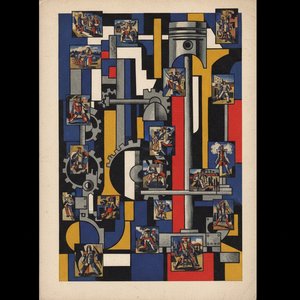
Fernand Léger: Die 25 Meisterwerke des Kubismus für Ihr Zuhause | ArtsDot
Entdecken Sie die 25 Meisterwerke von Fernand Léger! Tauchen Sie ein in die Welt des Kubismus, Tubismus & der Avantgarde. Hochwertige Kunstreproduktionen für Ihr Zuhause – jetzt auf ArtsDot.com!