 Vorschau anzeigen
 Versenden
 Teilen
 Details anzeigen

 Herunterladen
 Ähnliche Objekte
 Röntgenaufnahme
 Diashow
 Stats
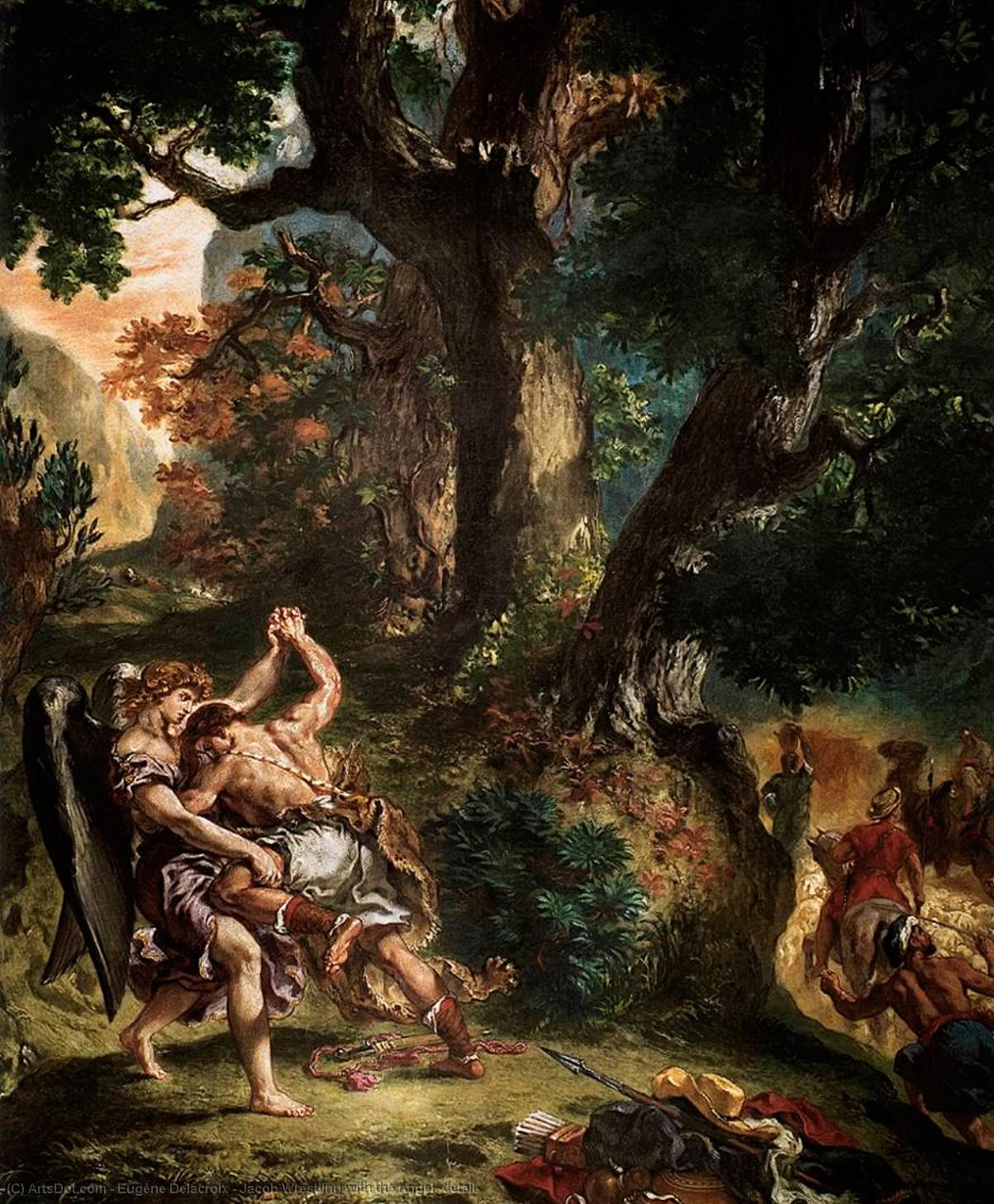
StatsJacob Wrestling with the Angel (detail)
 Acrylic
- WallArt
- Romantic Expressionism
 1854
1854 751.0 x 485.0 cm
 Saint-Sulpice
 Weiterlesen
Giclée / Kunstdruck
Giclée- oder Leinwanddruck in Museumsqualität mit schneller Produktion und flexiblen Veredelungsoptionen. ( Handgemalte Reproduktion bestellen Switch to Digital Image)




P118B $10

P118H $10

P118W $10

P438Z $10

P508JH $12

P508YH $12

P805H $10

P805Z $10

P919BZ $10

P919G $10

P919XJ $10

P959ZH $10

P968JZ $12

W106C $8

W218G $10

W218JH $8

W218Y $10

W307PJ $10

W316G $10

W316PJ $8

W316Y $10

W398PJ $8

W4111J $10

W500HY $15

W500JH $15

W692G $12

W849H $8

W940BG $15

W953PJ $8




Wählen Sie aus unseren vordefinierten Formaten, die den ursprünglichen Proportionen des Kunstwerks entsprechen.

Sie können Ihre eigenen Maße eingeben, um ein bestimmtes Format oder einen speziellen Platz einzupassen. Wenn das von Ihnen gewählte Format nicht den Proportionen des Originalbildes entspricht, werden wir das Kunstwerk entweder beschneiden oder das Bild mit einem gespiegelten oder einfarbigen Rand erweitern. Ein digitaler Entwurf wird Ihnen zur Genehmigung zugesandt, bevor die Produktion beginnt.
Bitte beachten Sie, dass die Vorschau auf dem Bildschirm nicht den tatsächlichen Zuschnitt oder die Erweiterung widerspiegelt. Nur der Entwurf zeigt die endgültige Komposition präzise an.
Obwohl Sondermaße verfügbar sind, empfehlen wir die Auswahl eines Maßes aus der vordefinierten Liste, um die ursprünglichen Proportionen zu bewahren.
Weltweiter Versand () innerhalb von 2 Wochen statt der üblichen 4/5 Wochen. (8 September)

Kostenloser weltweiter Expressversand

Hochwertige Leinenleinwand

Umfassender Versicherungsschutz beim Versand

Zollgebühren-Rückerstattungsgarantie

Garantie für exakte Farbtreue

100-Tage-Rückgaberecht (nur bei Mängeln)

100% Geld-zurück-Garantie

Mengenrabatt verfügbar
 Die Glasoption ist nur für Größen unter 110 cm verfügbar.

Jacob Wrestling with the Angel (detail)
Giclée / Kunstdruck
Format der Reproduktion
-


Gesamtpreis
$ 62
The Wrestling Angel: Delacroix’s Dramatic Vision of Faith and Struggle
Eugène Delacroix's "Jacob Wrestling with the Angel" is not merely a biblical scene rendered in paint; it’s a visceral embodiment of Romanticism’s core tenets – passion, drama, and an intense engagement with the sublime. Completed in 1854, this monumental canvas, currently residing within the hallowed halls of the Saint-Sulpice church in Paris, pulsates with energy, inviting viewers into a confrontation between faith, doubt, and the very essence of human will. Delacroix, deeply influenced by the Baroque masters like Rubens and the Venetian Renaissance, eschewed the cool detachment of Neoclassicism for a style characterized by vibrant color, dynamic brushwork, and an almost theatrical use of light and shadow.
The painting depicts a pivotal moment from Genesis – Jacob’s nocturnal struggle with an angel in the guise of a man. The setting is deliberately ambiguous, shrouded in darkness punctuated by shafts of ethereal light, creating a sense of both intimacy and cosmic significance. Jacob, depicted as a young man wrestling fiercely, dominates the foreground, his body contorted in a desperate effort to maintain control. His face, etched with determination and pain, reflects the profound struggle he’s enduring – not just against an external force, but against his own doubts and uncertainties about his identity and destiny. The angel, equally powerful yet possessing a subtle air of authority, is rendered with a restrained elegance, his form partially obscured by shadow, suggesting a higher, perhaps unknowable, power.
A Symphony of Color and Movement
Delacroix’s technique is nothing short of revolutionary for its time. He abandons the meticulous detail favored by earlier generations, opting instead for loose, expressive brushstrokes that capture the raw energy of the scene. The color palette is rich and intense – deep blues and purples dominate the background, creating a sense of mystery and foreboding, while vibrant reds and oranges highlight Jacob’s struggle and the angel's presence. Notice how Delacroix uses impasto—thickly applied paint—to build texture and create a palpable sense of physicality within the composition. The swirling patterns of the brushstrokes mimic the movement of the wrestling match itself, drawing the viewer into the heart of the drama.
The artist’s masterful use of chiaroscuro – the dramatic contrast between light and dark – further amplifies the painting's emotional impact. Light seems to emanate from an unseen source, illuminating Jacob and the angel while plunging the surrounding forest into darkness. This technique not only creates a sense of depth but also symbolizes the struggle between good and evil, faith and doubt. The detail in the faces is minimal, yet incredibly expressive, conveying the intensity of the moment.
Symbolism and Spiritual Resonance
Beyond its immediate depiction of the biblical narrative, “Jacob Wrestling with the Angel” is laden with symbolic meaning. The wrestling match itself represents a profound spiritual struggle – Jacob’s grappling with God, his questioning of divine authority, and his ultimate acceptance of his new identity as Israel. The name change from Jacob to Israel—meaning "he struggles with God"—underscores this central theme. The location, Peniel ( “face of God”), further emphasizes the encounter's transformative nature.
Some art historians interpret the angel as representing a test of faith or even a demonic figure challenging Jacob’s beliefs. Regardless of its precise interpretation, the painting speaks to the universal human experience of confronting uncertainty and striving for spiritual growth. The inclusion of other figures in the background—some observing with concern, others seemingly participating in the struggle—suggests that this encounter is not merely a private drama but a reflection of humanity’s ongoing relationship with the divine.
A Legacy of Romantic Intensity
“Jacob Wrestling with the Angel” stands as a cornerstone of Romantic art and continues to resonate deeply with viewers today. Delacroix's bold use of color, dynamic composition, and emotionally charged subject matter paved the way for future generations of artists, including Impressionists like Monet and Renoir, who were profoundly influenced by his expressive techniques. The painting’s enduring power lies in its ability to capture a timeless struggle—the conflict between human desire and divine will—with breathtaking intensity and artistic brilliance. Reproductions of this masterpiece offer a remarkable opportunity to bring this dramatic vision into any space, injecting it with a sense of passion, mystery, and spiritual depth.
Ähnliche Kunstwerke

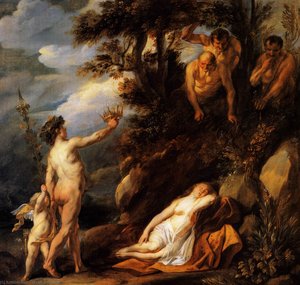
Über den Künstler
Ein Pionier der Romantik: Eugène Delacroix
Eugène Delacroix gilt als eine der prägendsten Figuren der französischen Romantik und wurde von Anfang an für seine Führungsrolle innerhalb dieser künstlerischen Bewegung gefeiert. Geboren 1798 in Chantonnay, Frankreich, fand er seinen künstlerischen Weg durch die Beschäftigung mit den Werken großer Meister wie Rubens und den Malern der venezianischen Renaissance – wobei Farbe und Bewegung eine zentrale Rolle spielten und Klarheit von Konturen sowie sorgfältige Modellierung zugunsten eines dynamischen Ausdrucks vernachlässigt wurden. Diese Philosophie prägte sein gesamtes künstlerisches Leben und beeinflusste nachfolgende Generationen von Künstlern nachhaltig.- Frühe Jahre und Ausbildung: Delacroix erhielt eine umfassende künstlerische Ausbildung am École Royale Supérieure des Beaux-Arts in Paris, wo er sich intensiv mit klassischen Formen beschäftigte und dennoch einen eigenen Stil entwickelte, der sich durch eine besondere Sensibilität für Farbe und Bewegung auszeichnete.
- Die ersten Erfolge: Bereits früh beeindruckte Delacroix sein Publikum mit seinen Gemälden und erhielt zahlreiche Aufträge von wohlhabenden Mäzenen und Mitgliedern des französischen Königshauses. Besonders bekannt wurde sein Werk „Die Barque von Dante“, das eine außergewöhnliche technische Virtuosität und eine tiefgründige künstlerische Vision demonstriert.
Der Einfluss der Romantik und die Suche nach neuen Ausdrucksformen
Delacroix war tief beeindruckt von den Ideen der französischen Romantik, insbesondere von deren Betonung von Gefühl und Leidenschaft sowie ihrer Ablehnung der klassischen Regeln und Konventionen. Er sah sich als Aufgabe, neue Wege zu beschreiten und eine künstlerische Sprache zu entwickeln, die die komplexen Emotionen und Erfahrungen des menschlichen Lebens einfangen konnte. Diese Suche nach neuen Ausdrucksformen fand ihren Ausgang in einer umfassenden Beschäftigung mit historischen Ereignissen und literarischen Werken sowie in einer ersten Reise nach Nordafrika.Nordafrika und die Geburt eines einzigartigen Stil
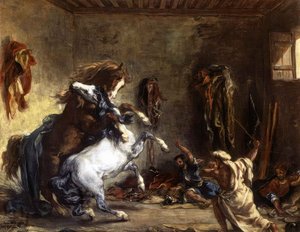
Die Reise nach Nordafrika im Jahr 1830 markierte einen entscheidenden Wendepunkt für Delacroixs künstlerische Entwicklung. Er ließ sich von der exotischen Landschaft und Kultur dieser Region inspirieren und schuf beeindruckende Gemälde wie „Arabische Pferde im Kampf“ und „Der Tod des Sardanapalus“, die durch ihre lebendige Farbgebung, dynamische Komposition und dramatische Darstellung außergewöhnlich sind. Diese Werke gelten als Schlüssel zum Verständnis seines unverwechselbaren künstlerischen Stils und verkörpern die Essenz der romantischen Kunst.Die Meisterwerke und ihr Vermächtnis
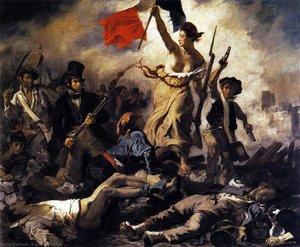
Delacroix hinterließ ein beeindruckendes Oeuvre, das bis heute weltweit Anerkennung findet. Zu seinen berühmtesten Gemälden zählen „Freiheit führt das Volk an“, eine monumentale Darstellung der Julirevolution von 1830, und „Die Schlacht von Zaragoza“, die eine außergewöhnliche historische Dokumentation darstellt. Seine Werke haben einen tiefgreifenden Einfluss auf die Entwicklung der französischen Kunst des 19. Jahrhunderts ausgeübt und inspirierten zahlreiche Künstler nachfolgender Generationen.Ein Erbe für die Zukunft
Eugène Delacroix gilt als einer der bedeutendsten Künstler seiner Zeit und sein Werk wird bis heute intensiv studiert und gefeiert. Seine künstlerische Vision und sein außergewöhnlicher Stil haben einen nachhaltigen Eindruck auf die Kunstgeschichte hinterlassen und werden weiterhin von Künstlern weltweit bewundert und nachgeahmt.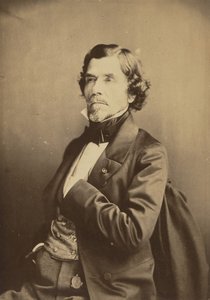
Eugène Delacroix
1798 - 1863 , Frankreich
Kurzinfos
- Artistic Movement Or Style: Romantik
- Artists Or Movements Influenced By This Artist:
- Impressionismus
- Postimpressionismus
- Artists Who Influenced This Artist:
- Rubens
- Venezianische Renaissance
- Date Of Birth: 26. April 1798
- Date Of Death: 13. August 1863
- Full Name: Eugène Delacroix
- Nationality: Französisch
- Notable Artworks:
- Liberty Leading the People
- Der Tod des Sardanapales
- Arabische Pferde im Kampf
- Place Of Birth: Chantonnay, Frankreich
Ähnliche Artikel

The Enduring Power of Painting: A Historical & Contemporary Exploration of Form and Emotion
Explore the rich history & enduring techniques of oil painting with ArtsDot. Discover masterpieces, learn about art collecting, and find authentic handmade reproductions crafted by skilled artists.
The Allure of Azure: Exploring the Symbolic & Aesthetic Depths of Blue in Art History
Explore the rich history of blue in art! Discover its symbolism, from ancient pigments to modern masterpieces by Kandinsky & Seurat. Uncover the psychological impact and cultural meanings behind this captivating hue.
Die Top 10 Gemälde in Schattierungen von 'Slate Blue': Kunst für Ihr Zuhause
Entdecken Sie die Top 10 Gemälde in faszinierenden 'Slate Blue' Tönen! Von Monet bis Manet – erleben Sie Kunstgeschichte und lassen Sie sich von Meisterwerken inspirieren. Hochwertige Kunstdrucke auf

Öl auf Leinwand: Eine historische und technische Erkundung eines zeitlosen künstlerischen Mediums
Entdecken Sie die faszinierende Welt der Ölmalerei! Von historischen Techniken bis zur modernen Anwendung – wir bieten Expertenwissen, Restaurierungstipps und hochwertige Reproduktionen. Jetzt informieren!

The Enduring Legacy of Oil on Canvas: Technique, History & Aesthetic Impact
Explore the rich history & techniques of oil painting – from Renaissance masters to Impressionism. Discover pigments, layering methods, and why this timeless medium endures. Expert insights for artists & art enthusiasts.