 Vorschau anzeigen
 Versenden
 Teilen
 Details anzeigen

 Herunterladen
 Ähnliche Objekte
 Röntgenaufnahme
 Diashow
 Statistiken
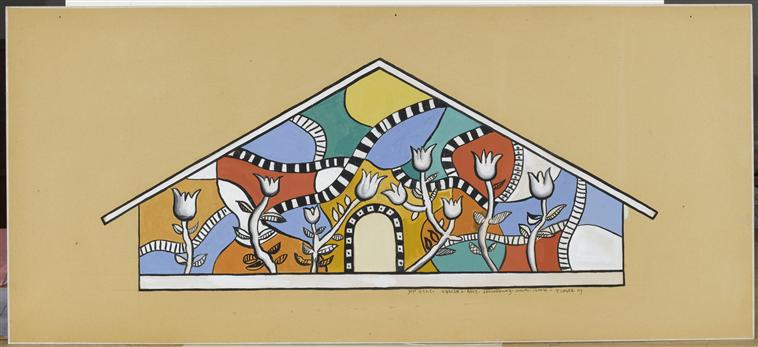
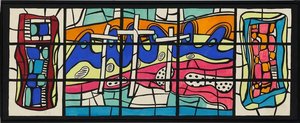
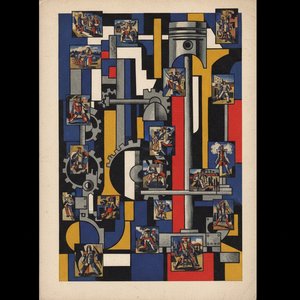
Church Sancellemoz Assy
 Acrylic On Canvas
- WallArt
- Naive Art / Primitivism
 1947
1947- Modern
 45.0 x 122.0 cm
 Weiterlesen
Handgefertigte Ölreproduktion
Handgemaltes Ölgemälde auf Leinwand in Ihrer Wunschgröße und mit Rahmen, auf Bestellung von unseren Künstlern angefertigt. ( Zu Druck wechseln Zum digitalen Bild wechseln)




P118B $10

P118H $10

P118W $10

P438Z $10

P508JH $12

P508YH $12

P805H $10

P805Z $10

P919BZ $10

P919G $10

P919XJ $10

P959ZH $10

P968JZ $12

W106C $8

W218G $10

W218JH $8

W218Y $10

W307PJ $10

W316G $10

W316PJ $8

W316Y $10

W398PJ $8

W4111J $10

W500HY $15

W500JH $15

W692G $12

W849H $8

W940BG $15

W953PJ $8




Wählen Sie aus unseren vordefinierten Formaten, die den ursprünglichen Proportionen des Kunstwerks entsprechen.

Sie können Ihre eigenen Maße eingeben, um einen bestimmten Rahmen oder Platz auszufüllen. Wenn die gewählte Größe nicht den Proportionen des Originalbildes entspricht, werden wir das Kunstwerk entweder beschneiden oder das Gemälde durch zusätzliche, handgemalte Elemente erweitern. Ein digitales Mockup wird Ihnen zur Genehmigung zugesandt, bevor die Produktion beginnt.
Bitte beachten Sie, dass die Bildschirmvorschau nicht die tatsächliche Beschneidung oder Erweiterung widerspiegelt. Nur das Mockup zeigt die endgültige Komposition exakt an.
Obwohl Sondermaße verfügbar sind, empfehlen wir, eine Größe aus der vordefinierten Liste zu wählen, um die ursprünglichen Proportionen beizubehalten.
Nach der Bestellung wird das ArtsDot.com-Team dem Kunden Anweisungen per E-Mail zusenden und eine Mockup-Vorschau bereitstellen.
Weltweiter Versand () in nur 3 bis 4 Wochen statt der üblichen 5 Wochen. (10 September). Keine Kompromisse bei der Qualität.

Kostenloser weltweiter Expressversand

Hochwertige Leinenleinwand

Umfassender Versicherungsschutz beim Versand

Zollgebühren-Rückerstattungsgarantie

Garantie für exakte Farbtreue

100-Tage-Rückgaberecht (nur bei Mängeln)

100% Geld-zurück-Garantie

Mengenrabatt verfügbar
 Die Glasoption ist nur für Größen unter 110 cm verfügbar.

Church Sancellemoz Assy
Art der Reproduktion
Format der Reproduktion
-


Gesamtpreis
$ 263
Fernand Léger’s Vision of Faith and Modernity: Church Sancellemoz Assy
Fernand Léger's "Church Sancellemoz Assy," completed in 1947, stands as a remarkable testament to the artist’s singular approach to sacred art—a fusion of Cubist fragmentation and Naïve Art’s expressive simplicity that defies easy categorization. More than just a depiction of a church interior, it embodies Léger's profound engagement with the burgeoning industrial landscape of post-war France and his unwavering belief in capturing the essence of human experience through geometric forms and bold color palettes. This artwork isn’t merely aesthetically pleasing; it’s a deliberate provocation, urging viewers to reconsider traditional representations of religious spaces and embracing a new visual vocabulary rooted in observation and abstraction.A Synthesis of Influences: Cubism Meets Naïve Art
Léger's artistic journey began amidst the formative years of early 20th-century Paris, where he absorbed the revolutionary ideas circulating within the Cubist movement spearheaded by Picasso and Braque. However, Léger rejected the purely intellectual pursuit of abstraction championed by his peers, opting instead for a stylistic blend that prioritized direct perception and emotional resonance. This decision resulted in “Church Sancellemoz Assy,” which retains the fractured planes characteristic of Cubism—evident in the stylized depiction of architectural elements—yet simultaneously imbues it with the vibrant spontaneity and tactile quality associated with Naïve Art. The artist deliberately eschewed meticulous realism, favoring simplified shapes and bold hues to convey a sense of immediacy and spiritual fervor.The Church Interior: A Geometric Landscape
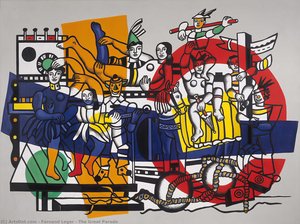
The painting’s composition is dominated by geometric forms—rectangles, squares, and circles—that create an illusionistic landscape within the confines of the church walls. These shapes aren't merely decorative; they represent Léger’s attempt to distill the complexities of human experience into fundamental visual elements. The central figures are rendered in a stylized manner, their bodies simplified into geometric volumes that echo the architectural structure itself. This technique underscores Léger’s conviction that abstraction could serve as a conduit for conveying spiritual truths—a belief deeply influenced by his fascination with machines and industrial processes. Notice how the clock on the wall is represented as a series of intersecting planes, mirroring the rhythmic patterns found in urban environments.Color and Symbolism: Bold Expressions of Faith
The color scheme employed in “Church Sancellemoz Assy” is deliberately vibrant—primarily yellows, reds, and blues—creating an atmosphere of warmth and luminosity that contrasts sharply with the muted tones often associated with religious iconography. Léger’s use of color isn't arbitrary; it reflects his desire to express emotion directly, bypassing intellectual contemplation. The placement of vases near the center symbolizes abundance and fertility, mirroring biblical themes of creation and renewal. Furthermore, the depiction of animals—likely stylized representations of saints—adds a layer of symbolic richness, hinting at the artist’s engagement with Christian iconography while simultaneously rejecting conventional artistic conventions.Legacy and Influence: A Pioneer of Modern Sacred Art
“Church Sancellemoz Assy” solidified Léger's position as one of the foremost innovators in modern sacred art—a genre that had largely retreated into stylistic conservatism following centuries of tradition. By embracing abstraction alongside Naïve Art’s expressive qualities, Léger challenged established artistic norms and paved the way for subsequent generations of artists to explore new avenues of visual communication. Its enduring appeal lies not only in its striking aesthetic beauty but also in its profound intellectual engagement with questions of faith, modernity, and human perception—a legacy that continues to inspire collectors and interior designers alike.Ähnliche Kunstwerke
Über den Künstler
frühes Leben und Ausbildung
Fernand Légér, ein französischer Maler, Bildhauer und Filmemacher, wurde am 4. Februar 1881 in Argentan, Orne, Niedergermanien geboren. Sein Vater züchtete Rinder, und Légér erhielt zunächst eine Ausbildung als Architekt von 1897 bis 1899. Er zog dann im Jahr 1900 nach Paris und unterstützte sich dort als Architektenzeichner.Künstlerische Entwicklung
Légers frühe Werke wurden vom Impressionismus beeinflusst, wie in Le Jardin de ma Mère (Mein Muttergarten) (1905) zu sehen ist. Nach dem Besuch der Schule für dekorative Künste und der Académie Julian begann er ab seinem 25. Lebensjahr ernsthaft als Maler zu arbeiten. Sein Stil entwickelte sich zu einer persönlichen Form des Kubismus, der von Kritikern als "Tubism" bezeichnet wurde, da er sich auf zylindrische Formen konzentrierte.Kubismus und die Puteaux-Gruppe
Im Jahr 1910 stellte Légér im Salon d’Automne zusammen mit Jean Metzinger und Henri Le Fauconnier aus. Er schloss sich der Puteaux-Gruppe an, auch bekannt als die Section d’Or (die Goldene Proportion), zusammen mit anderen Künstlern wie Francis Picabia und Marcel Duchamp.Krieg und seine Auswirkungen auf Légers Werk
Légers Erfahrungen im Ersten Weltkrieg hatten einen erheblichen Einfluss auf sein Werk. Während seiner Zeit an der Front produzierte er Skizzen von Artilleriegeschützen, Flugzeugen und Soldaten. Sein Gemälde Soldat mit Pfeife (1916) spiegelt diese Zeit wider.Spätere Werke und Vermächtnis
Légers Nachkriegszeitliche Arbeiten, die von glatten, maschinellen Formen geprägt waren, verknüpften ihn mit der Tradition der französischen figurativen Malerei. Seine "animierten Landschaften" von 1921 zeigten Figuren und Tiere in harmonischen, stromlinienförmigen Formen.- Fernand Légers Werke auf ArtsDot
- Mehr über Fernand Légér auf Wikipedia
- Entdecken Sie das Musée National Fernand Légér (Frankreich) mit ArtsDot
- Die Sitzende Frau (100 x 81 cm, Tubism)
- Maschinenelement (Kubismus)
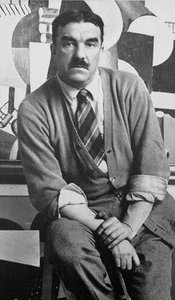
Fernand Léger
1881 - 1955 , Frankreich
Kurzinfos
- Beeinflusste Kunstrichtungen: ['Pop Art']
- Beeinflusste Künstler: ['Paul Cézanne']
- Bemerkenswerte Werke:
- Die Sitzende Frau
- Maschinenelement
- Der Große Umzug
- Die Stadt
- Geburtsdatum: 04. Februar 1881
- Geburtsort: Argentan, Frankreich
- Künstlerische Richtung: Kubismus, Tubismus
- Nationalität: Französisch
- Sterbedatum: 1955
- Vollständiger Name: Fernand Léger
- Von Kunstbewegungen Beeinflusst: ['Cézannismus']
- Von Künstlern Beeinflusst: ['Impressionismus']
Ähnliche Artikel
Kubistischer Expressionismus: Die 10 Meisterwerke, die eine Kunstrevolution prägten | ArtsDot
Entdecken Sie die 10 prägendsten Meisterwerke des Kubismus & Expressionismus! Erfahren Sie die Geschichten von Picasso, Braque und mehr. Kunstdrucke in Museumsqualiät für Ihr Zuhause – jetzt auf ArtsDot.com!
Redefining Nature: A Collector's Guide to the Geometric Beauty of Cubist Landscapes
Explore the revolutionary world of Cubist landscapes. Discover how masters like Picasso and Braque redefined nature through geometric beauty, and learn expert tips for curating these transformative masterpieces in your modern home collection.

Geometrische Abstraktion: Die 10 Meisterwerke, die Kunstgeschichte prägten | ArtsDot.com
Entdecken Sie die 10 Meisterwerke der geometrischen Abstraktion! Von Kandinsky bis Mondrian – erleben Sie die Geschichte, Farben & Formen dieser revolutionären Kunstrichtung. Hochwertige Kunstreproduktionen auf ArtsDot.com

Industrielle Ästhetik: 10 Meisterwerke für Ihr Zuhause | ArtsDot
Entdecken Sie 10 Meisterwerke der Industriekunst! Von Expressionismus bis Kubismus – erleben Sie die Ästhetik von Fabriken, Arbeitern & urbanen Landschaften. Hochwertige Reproduktionen auf ArtsDot.com.
Fernand Léger: Die 25 Meisterwerke des Kubismus für Ihr Zuhause | ArtsDot
Entdecken Sie die 25 Meisterwerke von Fernand Léger! Tauchen Sie ein in die Welt des Kubismus, Tubismus & der Avantgarde. Hochwertige Kunstreproduktionen für Ihr Zuhause – jetzt auf ArtsDot.com!