 Vorschau anzeigen
 Versenden
 Teilen
 Details anzeigen

 Herunterladen
 Ähnliche Objekte
 Röntgenaufnahme
 Diashow
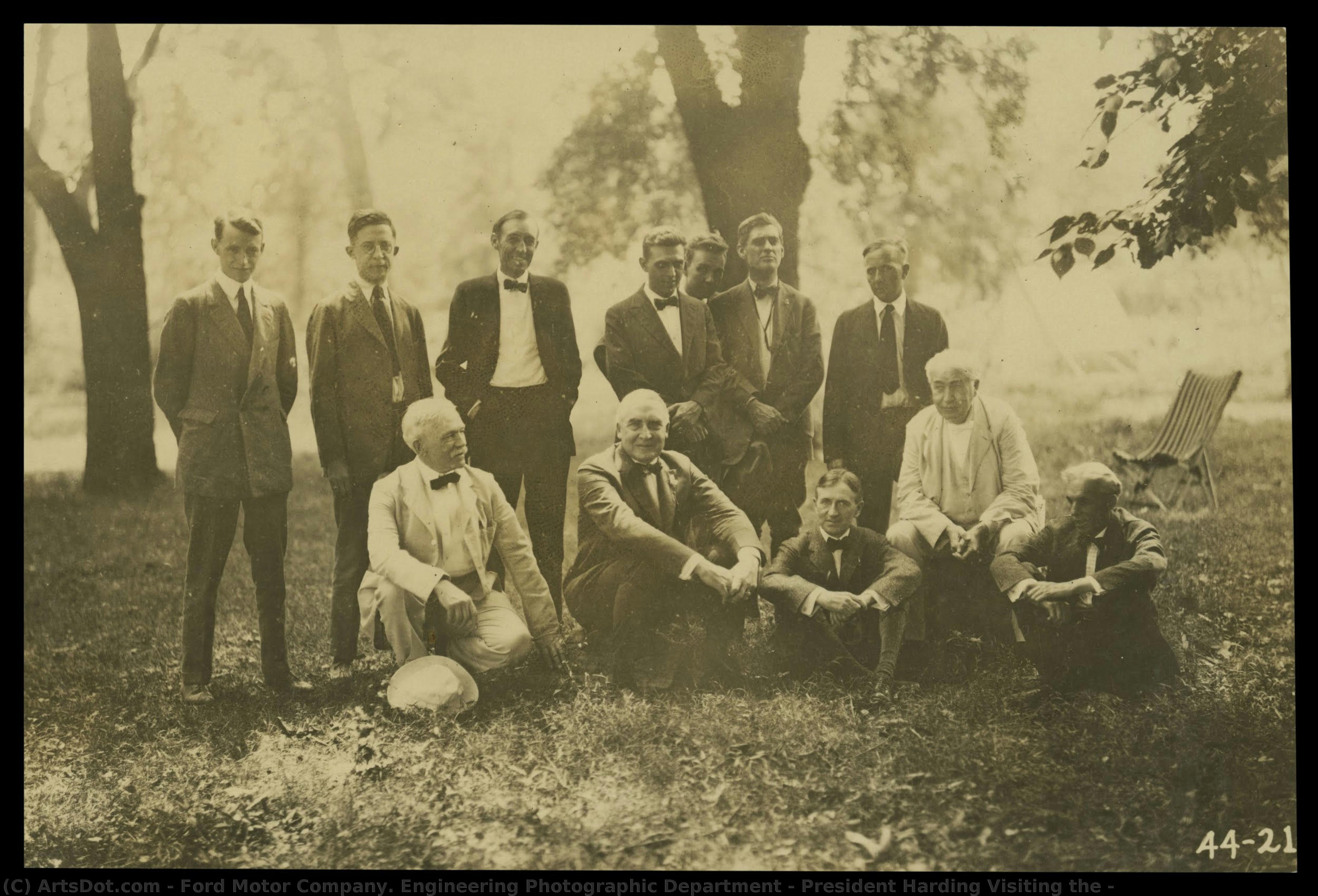
President Harding Visiting the

 Weiterlesen
Erwerben Sie ein hochauflösendes, optimiertes digitales Bild, das der Online-Vorschau weit überlegen ist.
Jede Datei wird von unseren hauseigenen Spezialisten mit modernsten Werkzeugen und fachmännischer manueller Retusche sorgfältig vorbereitet. Wir stellen sicher, dass jedes Bild eine außergewöhnliche Klarheit, präzise Farbgenauigkeit und feinste Details aufweist.
Die endgültige Datei wird innerhalb von 72 Stunden per E-Mail zugestellt und ist für den sofortigen Einsatz in professionellen, redaktionellen und Druckumgebungen optimiert. Es handelt sich um dieselbe Qualität, der führende Designstudios, Verlage und Galerien vertrauen.
Digitales Bild
Laden Sie eine hochauflösende Datei für die persönliche Präsentation, den Druck und kreative Projekte herunter. ( Druck bestellen Handgemalte Reproduktion bestellen)
In jeder Bestellung digitaler Bilder enthalten
Professionelle digitale Bereitstellung, garantiert
Wenn Sie sich für ArtsDot.com entscheiden, erhalten Sie nicht nur ein Bild – Sie erhalten ein professionell aufbereitetes digitales Kunstwerk, das mit höchster Präzision erstellt und durch eine Zufriedenheitsgarantie abgesichert wird. Hier ist alles, was automatisch mit Ihrer Bestellung geliefert wird:

Schnelle E-Mail-Zustellung
Ihre hochauflösende digitale Bilddatei wird Ihnen innerhalb von 72 Stunden nach der Bestellung per E-Mail zugestellt – bereit zur sofortigen Verwendung.

KI-optimierte digitale Datei
Ihre Kunstwerke werden professionell mithilfe fortschrittlicher KI-Tools und manueller Bearbeitung optimiert, um maximale Detailtreue, Klarheit und Farbgenauigkeit zu gewährleisten.

Lebenslanger kostenloser Neudruckservice
Datei versehentlich gelöscht oder verloren? Keine Sorge – wir senden sie Ihnen jederzeit kostenlos erneut zu.

Keine Einfuhrgebühren – jemals
Genießen Sie Ihr Kunstwerk sofort ohne Zollgebühren, Einfuhrabgaben oder Versandkosten – digitale Downloads sind immer steuerfrei.

Garantierte Farbtreue
Wir garantieren, dass Ihr digitales Bild mithilfe professioneller Werkzeuge und Farbmanagement die Originalfarben so präzise wie möglich wiedergibt.

60-Tage-Zufriedenheitsgarantie
Sollten Sie mit Ihrem digitalen Bild nicht zufrieden sein, werden wir es überarbeiten oder Ihnen innerhalb von 60 Tagen 100% erstatten – ohne Wenn und Aber.

100% Geld-zurück-Garantie
Nicht zufrieden? Erhalten Sie innerhalb von 60 Tagen nach Erhalt Ihrer digitalen Datei eine vollständige Rückerstattung – ohne Angabe von Gründen.

Rabatte bei Großbestellungen
3 Bilder kaufen, 10% sparen – 5 Bilder kaufen, 15% sparen – Ab 10 Bildern 20% sparen. Ideal für kreative Projekte, Galerien und Agenturen.
Details zum Sammlerstück
Ähnliche Kunstwerke










Biografie des Künstlers
The Ford Motor Company: Documenting the Rise of a Mechanical Age
The Ford Motor Company, and specifically its Engineering Photographic Department, occupies a unique position in the history of visual culture. It isn’t an artist in the traditional sense – no single visionary wielding brush or chisel – but rather a collective entity that produced a vast archive of images fundamentally shaping how we perceive technology, labor, and progress in the 20th century. Founded by Henry Ford in 1903, the company quickly moved beyond simply manufacturing automobiles; it embarked on an ambitious project to document its own innovations, processes, and impact on American life. This documentation wasn’t merely for internal record-keeping but was strategically disseminated through publications, advertising, and public relations, creating a powerful visual narrative of modernity. The Engineering Photographic Department became the crucial instrument in this endeavor, staffed by skilled photographers who captured not just the finished product – the Model T and its successors – but also the intricate ballet of assembly lines, the raw power of machinery, and the faces of the workers who brought it all to life.From Assembly Line to Iconography: The Evolution of a Visual Language
Initially, photographs served a practical purpose: illustrating technical manuals, showcasing design improvements, and providing evidence of quality control. However, as Fordism revolutionized production methods, the photographic style evolved alongside it. Early images often resembled industrial documentation – precise, detailed, and focused on functionality. But soon, a more dynamic aesthetic emerged, influenced by emerging trends in commercial photography and cinematography. Photographers began to emphasize speed, motion, and scale, capturing the rhythmic precision of the assembly line as a symbol of efficiency and progress. The Model T itself became an increasingly prominent subject, not just as a vehicle but as an emblem of American ingenuity and accessibility. Images depicted families embarking on adventures in their Fords, farmers utilizing them for work, and even the car integrated into scenes of leisure and social life. This deliberate framing transformed the automobile from a mere product into a cultural icon, deeply interwoven with the aspirations and identity of a burgeoning middle class. The department’s work wasn't about artistic expression but about constructing a specific image of Ford – an image that resonated powerfully with the American public.Influences and Technical Innovations
While not directly influenced by established art movements, the Engineering Photographic Department absorbed techniques from various sources. The rise of Pictorialism in photography, emphasizing artistic composition and tonal qualities, likely informed a shift towards more visually appealing imagery. Furthermore, the burgeoning field of motion study, pioneered by Frank and Lillian Gilbreth, undoubtedly impacted how Ford photographers captured the dynamics of labor. Their photographs often sought to break down complex processes into sequential frames, highlighting efficiency and standardization. Technically, the department embraced advancements in photographic technology – large-format cameras for detailed documentation, fast lenses for capturing movement, and sophisticated printing techniques for mass reproduction. The use of standardized lighting and composition further contributed to a consistent visual style that reinforced Ford’s brand identity. The very act of documenting these processes with such precision became a form of aesthetic control.Major Achievements and Lasting Legacy
The most significant achievement of the Engineering Photographic Department lies in its creation of a comprehensive visual archive that documented the rise of Fordism and its profound impact on American society. These photographs weren’t simply records; they were carefully crafted narratives designed to shape public perception. The images played a crucial role in establishing Ford as a leader in innovation, affordability, and social progress. Beyond their immediate promotional value, these photographs have become invaluable historical documents, offering insights into the working conditions of early 20th-century factories, the evolution of automotive design, and the changing landscape of American life. The department’s work continues to be studied by historians, sociologists, and visual culture scholars. The aesthetic influence can also be seen in subsequent industrial photography and advertising campaigns, demonstrating a lasting impact on how technology is visually represented.Historical Significance: Beyond the Automobile
The Ford Motor Company’s Engineering Photographic Department represents more than just a corporate archive; it embodies a pivotal moment in the history of visual communication. It exemplifies the power of photography to construct narratives, shape public opinion, and solidify brand identity. The images produced by this department weren't simply about selling cars – they were about selling a vision of modernity, progress, and the American dream.- The photographs documented the transformation of labor practices.
- They showcased the impact of mass production on consumer culture.
- They contributed to the creation of a powerful national mythology surrounding the automobile.