

 Vorschau anzeigen
 Versenden
 Teilen
 Details anzeigen

 Herunterladen
 Ähnliche Objekte
 Röntgenaufnahme
 Diashow
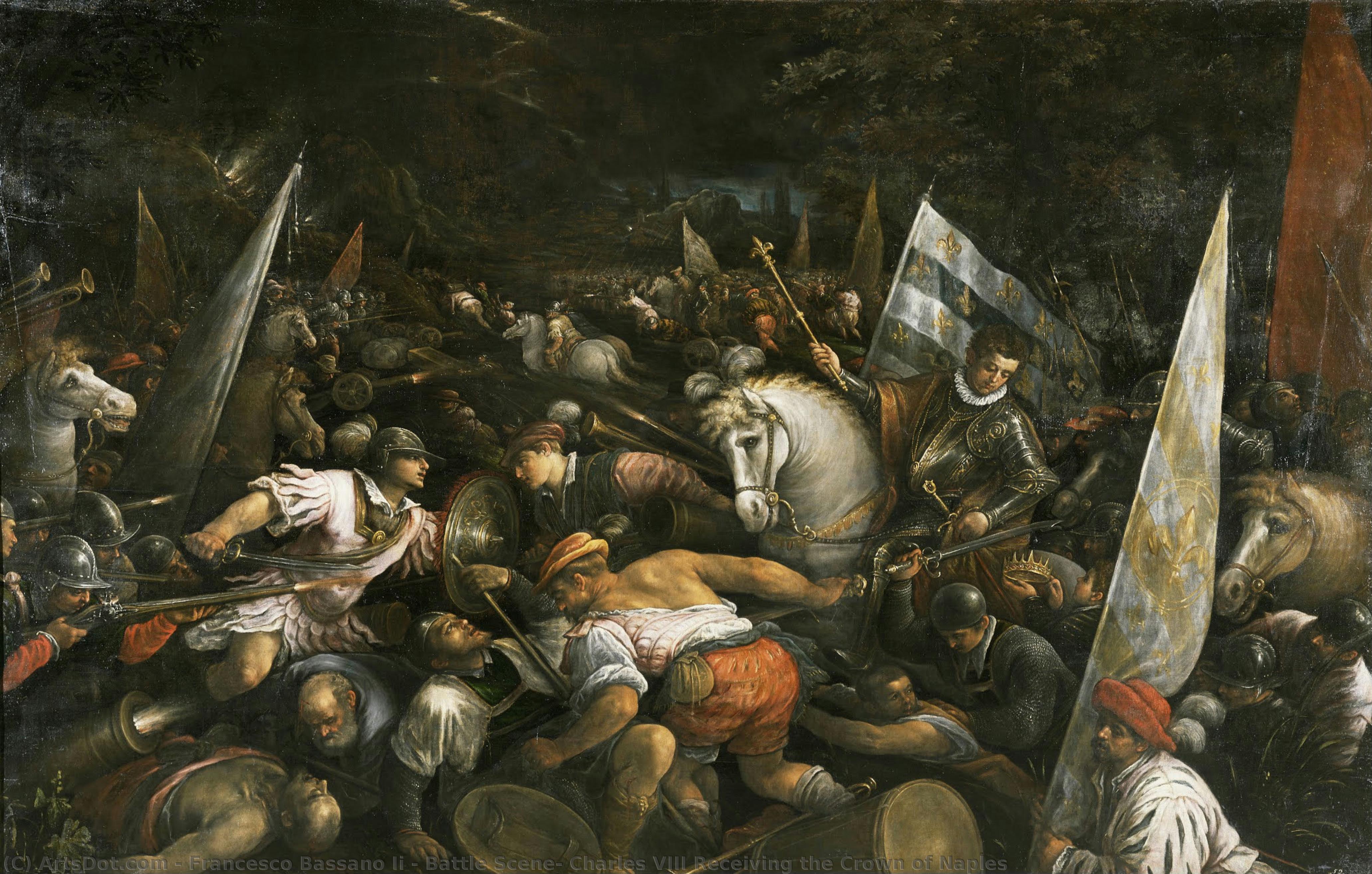
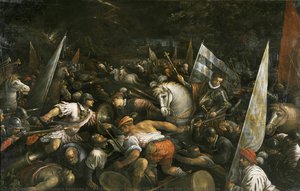
Battle Scene: Charles VIII Receiving the Crown of Naples


 Weiterlesen
Handgefertigte Ölreproduktion
Handgemaltes Ölgemälde auf Leinwand in Ihrer Wunschgröße und mit Rahmen, auf Bestellung von unseren Künstlern angefertigt. ( Druck bestellen Bild kaufen)




P118B $10

P118H $10

P118W $10

P438Z $10

P508JH $12

P508YH $12

P805H $10

P805Z $10

P919BZ $10

P919G $10

P919XJ $10

P959ZH $10

P968JZ $12

W106C $8

W218G $10

W218JH $8

W218Y $10

W307PJ $10

W316G $10

W316PJ $8

W316Y $10

W398PJ $8

W4111J $10

W500HY $15

W500JH $15

W692G $12

W849H $8

W940BG $15

W953PJ $8




Wählen Sie aus unseren vordefinierten Formaten, die den ursprünglichen Proportionen des Kunstwerks entsprechen.

Sie können Ihre eigenen Maße eingeben, um einen bestimmten Rahmen oder Platz auszufüllen. Wenn die gewählte Größe nicht den Proportionen des Originalbildes entspricht, werden wir das Kunstwerk entweder beschneiden oder das Gemälde durch zusätzliche, handgemalte Elemente erweitern. Ein digitales Mockup wird Ihnen zur Genehmigung zugesandt, bevor die Produktion beginnt.
Bitte beachten Sie, dass die Bildschirmvorschau nicht die tatsächliche Beschneidung oder Erweiterung widerspiegelt. Nur das Mockup zeigt die endgültige Komposition exakt an.
Obwohl Sondermaße verfügbar sind, empfehlen wir, eine Größe aus der vordefinierten Liste zu wählen, um die ursprünglichen Proportionen beizubehalten.
Nach der Bestellung wird das ArtsDot.com-Team dem Kunden Anweisungen per E-Mail zusenden und eine Mockup-Vorschau bereitstellen.
Weltweiter Versand () in nur 3 bis 4 Wochen statt der üblichen 5 Wochen. (3 September). Keine Kompromisse bei der Qualität.

Kostenloser weltweiter Expressversand

Hochwertige Leinenleinwand

Umfassender Versicherungsschutz beim Versand

Zollgebühren-Rückerstattungsgarantie

Garantie für exakte Farbtreue

60 Tage Rückgaberecht (nur bei Mängeln)

100% Geld-zurück-Garantie

Mengenrabatt verfügbar
 Die Glasoption ist nur für Größen unter 110 cm verfügbar.

Battle Scene: Charles VIII Receiving the Crown of Naples
Art der Reproduktion
Format der Reproduktion
-


Gesamtpreis
$ 263
Ähnliche Kunstwerke
Über den Künstler
The Venetian Visionary: The Life and Legacy of Francesco Bassano II
In the golden age of the Venetian Renaissance, few names carried the weight of artistic prestige quite like the Bassano lineage. At the heart of this illustrious family stood Francesco Bassano II, a painter whose brief but brilliant career served as a vital bridge between the rustic charm of his father’s workshop and the sophisticated elegance of the Venetian school. Born around 1549 in the picturesque town of Bassano del Grappa, Francesco was immersed from birth in an environment where art was not merely a profession, but a family legacy. As the eldest son of the renowned Jacopo Bassano, his early years were defined by the scent of oil paints and the rhythmic brushstrokes of a master, fostering a talent that would eventually allow him to command his own branch of the family business in the bustling heart of Venice.
The training Francesco received was both rigorous and deeply personal. Within the walls of his father’s workshop, he worked alongside his brothers—Giambattista, Girolamo, and Leandro—creating a dynamic creative ecosystem that blended familial intimacy with professional excellence. This collaborative upbringing instilled in him a profound understanding of the Bassano style: a unique synthesis of pastoral tranquility and dramatic religious narrative. While his father had mastered the art of depicting the humble lives of shepherds and animals, Francesco infused these themes with a refined atmospheric perspective and a luminous color palette that spoke to the evolving tastes of the late Renaissance.
A Mastery of Light, Landscape, and Devotion
Francesco’s oeuvre is characterized by an extraordinary ability to capture the ephemeral qualities of nature. He possessed a singular gift for rendering landscape serenity, where rolling hills and expansive skies are not merely backdrops but living participants in the drama of the canvas. His landscapes often feature the quiet dignity of pastoral life—shepherds tending flocks under a soft, Venetian light—yet they are frequently interrupted by moments of profound spiritual weight. In works such as Abraham Leaves Haran, one can witness his meticulous attention to detail, from the subtle textures of livestock to the divine presence peering down from the heavens, blending the mundane with the miraculous.
Beyond the pastoral, Francesco’s technical prowess extended into more complex historical and religious compositions. He demonstrated a remarkable capacity for psychological depth, imbuing his figures with a sense of solemnity and grace that transcended simple illustration. Whether depicting the chaotic energy of a battle scene or the quiet intimacy of a candlelit interior, his brushwork remained sensitive to the interplay of shadow and light. This mastery of chiaroscuro allowed him to create depth and movement, guiding the viewer's eye through intricate narratives that felt both grounded in reality and elevated by divine inspiration.
A Tragic End and an Enduring Impression
The trajectory of Francesco’s life was marked by a profound tragedy common to many great artists of his era: a life cut short. Dying at the young age of approximately thirty-two, he left behind a body of work that serves as a poignant testament to what might have been had his years been more numerous. Despite this premature departure, his historical significance remains undiminished. He was instrumental in expanding the family’s influence from the provincial charm of Bassano del Grappa to the international stage of Venice, ensuring that the Bassano tradition would resonate throughout Europe.
Today, the legacy of Francesco Bassano II lives on through the masterpieces preserved in prestigious institutions like the Fitzwilliam Museum and the Museo di Bassano. His contributions are remembered not just for their technical brilliance, but for their emotional resonance—a rare ability to capture the quiet beauty of the earth and the soaring majesty of the spirit within a single frame. He remains a pivotal figure whose work continues to enchant, reminding us of a time when the boundaries between the natural world and the divine were as thin as a layer of translucent glaze.
Kurzinfos
- Artistic Movement Or Style: Renaissance Art
- Artists Or Movements Influenced By This Artist: ['Baroque Art Italy']
- Artists Who Influenced This Artist: ['Jacopo Bassano']
- Date Of Birth: Living
- Full Name: Francesco Bassano II
- Nationality: Italian
- Notable Artworks:
- Abraham Leaves Haran
- Landscape with Shepherds
- Battle Scene: Charles VIII Receiving the Crown of Naples
- Place Of Birth: Bassano del Grappa, Veneto
Ähnliche Artikel

Jacopo Tintoretto: Die 25 Meisterwerke des venezianischen Dramatikers | ArtsDot
Entdecken Sie die 25 Meisterwerke von Jacopo Tintoretto! Tauchen Sie ein in die dramatische Welt der venezianischen Renaissance. Hochwertige Kunst-Reproduktionen & Inspiration für Ihr Zuhause – jetzt auf ArtsDot.com.
The Golden Light of Innovation: Exploring the Venetian Renaissance Art Movement (1430–1580)
Explore the Golden Age of Venetian art (1430–1580). Discover Giorgione, Titian & Tintoretto's techniques, the 'colorito' revolution, and lasting influence. Expert insights for collectors & enthusiasts.
Pietro Longhi's Venetian Scenes: A Study of Rococo Society & Domestic Life
Explore the captivating world of Pietro Longhi's Venetian scenes! Discover insightful analysis of his Rococo masterpieces & social commentary on 18th-century life. Learn about this 'Venetian Hogarth' and his lasting artistic legacy.
Daniel Ridgway Knight: A Study in Victorian Genre Painting & Rural Idealism
Explore the captivating world of Daniel Ridgway Knight, a master of Victorian genre painting. Discover his serene rural scenes, realistic technique & lasting influence on American Impressionism. Learn about his life, art, and collectibility.
Jacopo Palma il Giovane: A Venetian Master's Poetic Evolution
Explore the captivating world of Jacopo Palma il Giovane, a pivotal Venetian Renaissance master. Discover his unique style, influenced by Titian & Tintoretto, and learn about key works perfect for discerning collectors.

