 Vorschau anzeigen
 Versenden
 Teilen
 Details anzeigen

 Herunterladen
 Ähnliche Objekte
 Röntgenaufnahme
 Diashow
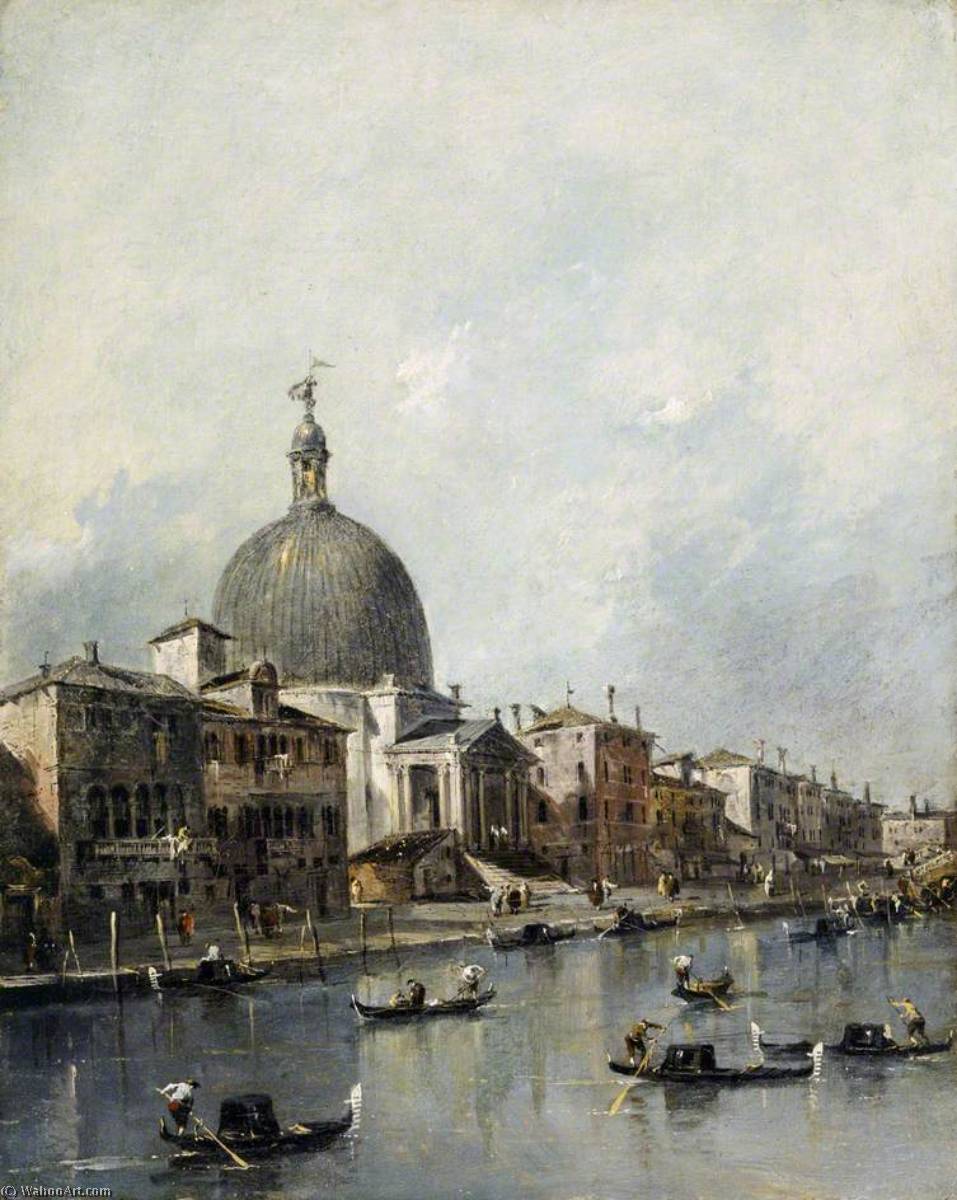
Venice, the Church of San Simeone Piccolo on the Grand Canal
 Acrylic On Canvas
- WallArt
- Venetian Twilight
 1755
1755 43.0 x 36.0 cm
 English Heritage
 Weiterlesen
Giclée / Kunstdruck
Giclée- oder Leinwanddruck in Museumsqualität mit schneller Produktion und flexiblen Veredelungsoptionen. ( Handgemalte Reproduktion bestellen Bild kaufen)




P118B $10

P118H $10

P118W $10

P438Z $10

P508JH $12

P508YH $12

P805H $10

P805Z $10

P919BZ $10

P919G $10

P919XJ $10

P959ZH $10

P968JZ $12

W106C $8

W218G $10

W218JH $8

W218Y $10

W307PJ $10

W316G $10

W316PJ $8

W316Y $10

W398PJ $8

W4111J $10

W500HY $15

W500JH $15

W692G $12

W849H $8

W940BG $15

W953PJ $8




Wählen Sie aus unseren vordefinierten Formaten, die den ursprünglichen Proportionen des Kunstwerks entsprechen.

Sie können Ihre eigenen Maße eingeben, um ein bestimmtes Format oder einen speziellen Platz einzupassen. Wenn das von Ihnen gewählte Format nicht den Proportionen des Originalbildes entspricht, werden wir das Kunstwerk entweder beschneiden oder das Bild mit einem gespiegelten oder einfarbigen Rand erweitern. Ein digitaler Entwurf wird Ihnen zur Genehmigung zugesandt, bevor die Produktion beginnt.
Bitte beachten Sie, dass die Vorschau auf dem Bildschirm nicht den tatsächlichen Zuschnitt oder die Erweiterung widerspiegelt. Nur der Entwurf zeigt die endgültige Komposition präzise an.
Obwohl Sondermaße verfügbar sind, empfehlen wir die Auswahl eines Maßes aus der vordefinierten Liste, um die ursprünglichen Proportionen zu bewahren.
Weltweiter Versand () innerhalb von 2 Wochen statt der üblichen 4/5 Wochen. (5 September)

Kostenloser weltweiter Expressversand

Hochwertige Leinenleinwand

Umfassender Versicherungsschutz beim Versand

Zollgebühren-Rückerstattungsgarantie

Garantie für exakte Farbtreue

60 Tage Rückgaberecht (nur bei Mängeln)

100% Geld-zurück-Garantie

Mengenrabatt verfügbar
 Die Glasoption ist nur für Größen unter 110 cm verfügbar.

Venice, the Church of San Simeone Piccolo on the Grand Canal
Giclée / Kunstdruck
Format der Reproduktion
-


Gesamtpreis
$ 62
A Venetian Twilight: Francesco Guardi’s “Venice, the Church of San Simeone Piccolo on the Grand Canal”
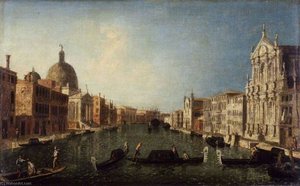
Francesco Lazzaro Guardi's "Venice, the Church of San Simeone Piccolo on the Grand Canal," painted in 1755, isn’t merely a depiction of a Venetian scene; it’s a poignant distillation of a city at a turning point. Born into a family steeped in the artistic traditions of Venice, Guardi inherited a legacy he ultimately transformed, forging a unique style that captured the melancholic beauty and fading grandeur of his beloved hometown. This work, housed within the collection of ArtsDot.com, offers a glimpse into a twilight era – a Venice poised between its illustrious past and an uncertain future, reflected in the muted tones and atmospheric perspective that define Guardi’s signature.
The painting immediately draws the eye with its masterful use of light and shadow. The scene unfolds along the Grand Canal, dominated by the imposing silhouette of San Simeone Piccolo church, a structure that anchors the composition while simultaneously contributing to the overall sense of quiet contemplation. Guardi’s technique is deliberately loose, eschewing the sharp detail favored by earlier Venetian masters like Canaletto in favor of a more expressive, almost impressionistic approach. Notice how he employs *sfumato*, a subtle blurring of edges and contours, creating an ethereal quality that softens the forms and imbues the scene with a dreamlike atmosphere. The reflections shimmering on the water’s surface are not rendered with precise accuracy but rather as hazy suggestions of light and color, further enhancing the painting's atmospheric depth.
The Painterly Hand: Technique and Style
Guardi’s style is often described as “pittura di tocco,” a technique characterized by small, delicate brushstrokes that build up layers of color. This method, reminiscent of the work of Sebastiano Ricci and Giovanni Piazzetta, results in a textured surface where individual marks are visible yet coalesce into harmonious whole. Unlike Canaletto’s meticulously rendered cityscapes, Guardi prioritizes mood and atmosphere over photographic realism. He captures not just what he *sees*, but how he *feels* about the scene – a sense of wistful nostalgia for a Venice slowly losing its former glory.
The color palette is deliberately restrained, dominated by muted blues, grays, and ochres. These earthy tones evoke the dampness and coolness of the Venetian climate, while also contributing to the painting’s overall feeling of melancholy. The subtle shifts in hue create a sense of depth and movement, drawing the viewer into the heart of the scene. The figures present – two individuals standing near the canal's edge – are rendered with minimal detail, serving primarily as anchors for the composition rather than as subjects of intense scrutiny.
A City in Transition: Historical Context
To fully appreciate “Venice, the Church of San Simeone Piccolo,” it’s crucial to understand the historical context in which Guardi was working. The 18th century marked a period of decline for Venice – a once-dominant maritime republic grappling with economic hardship and political instability. The city's wealth had waned, its power diminished, and its population steadily declining. Guardi’s paintings reflect this sense of loss and impermanence, capturing the beauty of a fading world.
The church itself, San Simeone Piccolo, is a significant element within this narrative. Built in the 18th century, it stands as a testament to Venice's enduring architectural heritage while simultaneously embodying the city’s vulnerability to time and change. The painting subtly suggests that even grand structures are subject to decay and eventual disappearance – a poignant reflection of Venice’s broader predicament.
Symbolism and Emotional Resonance
Beyond its technical merits, “Venice, the Church of San Simeone Piccolo” is rich in symbolism. The canal itself represents the flow of time, carrying the city inexorably towards an uncertain future. The muted colors evoke a sense of sadness and resignation, while the figures standing on the bank suggest a quiet contemplation of Venice’s fate. The church, with its imposing presence, serves as a reminder of the city's enduring spirit – a beacon of faith amidst the encroaching darkness.
Ultimately, Guardi’s masterpiece is not simply a landscape painting; it’s a meditation on beauty, loss, and the passage of time. It invites us to pause and reflect on the ephemeral nature of existence, capturing the essence of Venice at a pivotal moment in its history. Reproductions of this evocative work offer a tangible connection to this poignant vision of a city in twilight, allowing viewers to experience the atmospheric depth and emotional resonance of Guardi’s genius.
Ähnliche Kunstwerke
Über den Künstler
Ein Leben der Kunst und des Niedergangs in Venedig
Francesco Lazzaro Guardi, ein italienischer Maler von Veduten, Adliger und Mitglied der venezianischen Schule, lebte vom 5. Oktober 1712 bis zum 1. Januar 1793. Sein Leben markierte das Ende einer Ära in der venezianischen Kunst, die durch ihre einzigartige Mischung aus Realismus und Vorstellungskraft gekennzeichnet war.Frühes Leben und Zusammenarbeit
In seiner frühen Karriere arbeitete Guardi mit seinem älteren Bruder Gian Antonio an der Herstellung religiöser Gemälde zusammen. Diese Partnerschaft dauerte bis zum Tod von Gian Antonio im Jahr 1760, woraufhin Francesco sich auf Veduten konzentrierte, einen Malstil, der die Stadtansicht betont.- Francesco Guardis frühe Werke zeigen den Einfluss von Canaletto, aber er entwickelte allmählich einen lockeren Stil, der durch energische Pinselstriche und frei erdachte Architektur gekennzeichnet ist.
- Seine Familie, darunter sein Vater Domenico (geboren 1678) und seine Brüder Niccolò und Gian Antonio, waren ebenfalls Maler und trugen nach dem Tod ihres Vaters im Jahr 1716 zur Familienwerkstatt bei.
- Maria Cecilia, Guardis Schwester, heiratete Giovanni Battista Tiepolo, einen bedeutenden veneto-europäischen Maler seiner Epoche.
Wichtige Werke und Stil
Guardis wichtigste spätere Werke umfassen die Dogenzeremonien, eine Reihe von zwölf Leinwänden, die die im Jahr 1763 für die Wahl des Dogen Alvise IV Mocenigo abgehaltenen Zeremonien feiern. Sein Stil, bekannt als Pittura di tocco (von der Berührung), ist durch kleine Punktierungen und energische Pinselstriche gekennzeichnet.- Francesco Guardis Gemälde erwecken den Beginn des Niedergangs Venedigs hervor und konzentrieren sich auf bewölkte Himmel über einer Stadt im Zwielicht.
- Seine Arbeit unterscheidet sich vom linearen und architektonisch genaueren Stil von Canalettos Malerei und zeigt oft Venedig bei sonnigem Tageslicht.
- Guardis Stil beeinflusste später die französischen Impressionisten, die seine Werke für ihre einzigartige Mischung aus Realismus und Vorstellungskraft schätzten.
Entwicklung und Vermächtnis
Francesco Lazzaro Guardi starb am 1. Januar 1793 in Campiello de la Madona in Cannaregio (Venedig). Sein Erbe als einer der letzten Vertreter der klassischen venezianischen Kunstschule lebt fort, wobei seine Werke ein Zeugnis für die einzigartige Mischung aus Realismus und Vorstellungskraft sind, die diese Ära der Kunst definierte.- Weitere Werke von Francesco Lazzaro Guardi finden Sie unter https://ArtsDot.com/@/francesco-lazzaro-guardi
- Erkunden Sie die venezianische Schule und ihren Einfluss auf die Kunst unter /de/art/list/
- Entdecken Sie mehr über das Leben und Werk von Francesco Lazzaro Guardi unter https://de.wikipedia.org/wiki/Francesco_Guard

Francesco Lazzaro Guardi
1712 - 1793 , Italien
Kurzinfos
- Bemerkenswerte Werke:
- Dogenfeste
- Ansichten von Venedig
- Geburtsdatum: 05. Oktober 1712
- Geburtsort (Stadt, Land): Venedig, Italien
- Künstler Oder Bewegungen, Die Von Diesem Künstler Beeinflusst Wurden: ['Französische Impressionisten']
- Künstler, Die Diesen Künstler Beeinflussten: ['Canaletto']
- Künstlerische Bewegung/Stil: Veduta, Venezianische Schule
- Nationalität: Italienisch
- Sterbedatum: 01. Januar 1793
- Vollständiger Name: Francesco Lazzaro Guardi
Ähnliche Artikel

John Constable: Die 25 Meisterwerke des englischen Landschaftsgenies – ArtsDot
Entdecken Sie die 25 Meisterwerke von John Constable! Erleben Sie englische Landschaftsmalerei vom Hay Wain bis zur Stour Valley. Hochwertige Reproduktionen & Kunst für Ihr Zuhause auf ArtsDot.com.

Romantische Landschaften: Die 10 Meisterwerke, die eine Epoche prägten | ArtsDot
Entdecken Sie die 10 Meisterwerke der Romantischen Landschaftsmalerei! Von Caspar David Friedrich bis Turner – erleben Sie die Kunst, Emotion & Natur. Hochwertige Reproduktionen auf ArtsDot.com

Evocations of Place: A Historical Journey Through Landscape Art
Explore the rich history of landscape art with ArtsDot. Discover renowned artists, movements like Impressionism & Romanticism, and expert guidance for collecting timeless pieces. Find your perfect serene escape today!

Evocations of Place: A Historical Journey Through Landscape Art
Explore the rich history of landscape art with ArtsDot. Discover renowned artists, movements like Impressionism & tonalism, and expert guidance for collecting timeless pieces. Find your perfect serene escape today!
Evoking Nature's Sublime: A Comprehensive Exploration of 19th-Century Landscape Painting
Explore the captivating world of 19th-century landscape painting! Discover renowned artists like Friedrich & Monet, key movements, and find the perfect artwork to bring nature's serenity into your home. Expert insights at ArtsDot.