

 Vorschau anzeigen
 Versenden
 Teilen
 Details anzeigen

 Herunterladen
 Ähnliche Objekte
 Röntgenaufnahme
 Diashow
 Statistiken
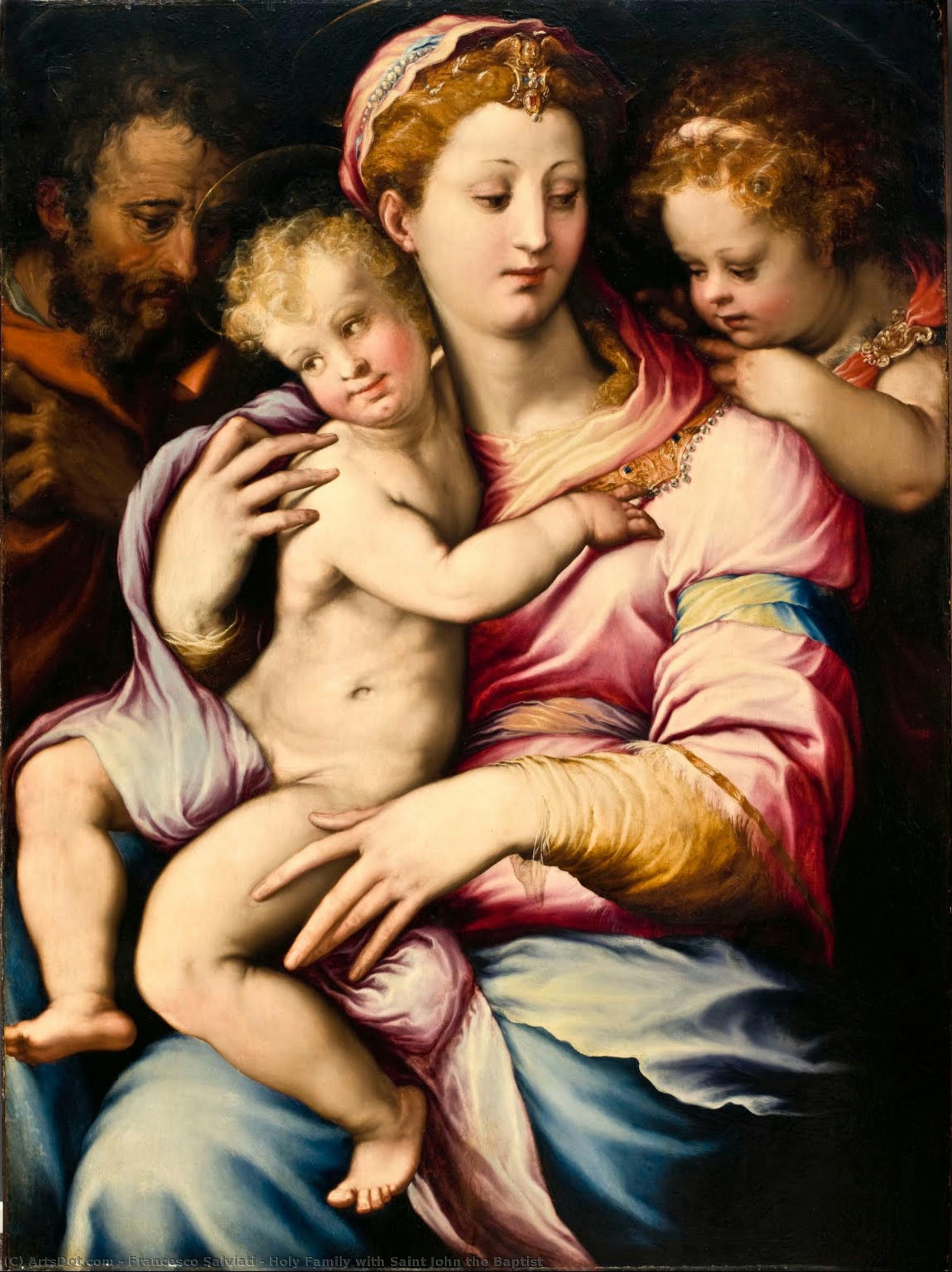
Holy Family with Saint John the Baptist
 1540
1540 980.0 x 1300.0 cm
 Toledoer Kunstmuseum
 Weiterlesen
Erwerben Sie ein hochauflösendes, optimiertes digitales Bild, das der Online-Vorschau weit überlegen ist.
Jede Datei wird von unseren hauseigenen Spezialisten mit modernsten Werkzeugen und fachmännischer manueller Retusche sorgfältig vorbereitet. Wir stellen sicher, dass jedes Bild eine außergewöhnliche Klarheit, präzise Farbgenauigkeit und feinste Details aufweist.
Die endgültige Datei wird innerhalb von 72 Stunden per E-Mail zugestellt und ist für den sofortigen Einsatz in professionellen, redaktionellen und Druckumgebungen optimiert. Es handelt sich um dieselbe Qualität, der führende Designstudios, Verlage und Galerien vertrauen.
Digitales Bild
Laden Sie eine hochauflösende Datei für die persönliche Präsentation, den Druck und kreative Projekte herunter. ( Zu Druck wechseln Handgemalte Reproduktion bestellen)
In jeder Bestellung digitaler Bilder enthalten
Professionelle digitale Bereitstellung, garantiert
Wenn Sie sich für ArtsDot.com entscheiden, erhalten Sie nicht nur ein Bild – Sie erhalten ein professionell aufbereitetes digitales Kunstwerk, das mit höchster Präzision erstellt und durch eine Zufriedenheitsgarantie abgesichert wird. Hier ist alles, was automatisch mit Ihrer Bestellung geliefert wird:

Schnelle E-Mail-Zustellung
Ihre hochauflösende digitale Bilddatei wird Ihnen innerhalb von 72 Stunden nach der Bestellung per E-Mail zugestellt – bereit zur sofortigen Verwendung.

KI-optimierte digitale Datei
Ihre Kunstwerke werden professionell mithilfe fortschrittlicher KI-Tools und manueller Bearbeitung optimiert, um maximale Detailtreue, Klarheit und Farbgenauigkeit zu gewährleisten.

Lebenslanger kostenloser Neudruckservice
Datei versehentlich gelöscht oder verloren? Keine Sorge – wir senden sie Ihnen jederzeit kostenlos erneut zu.

Keine Einfuhrgebühren – jemals
Genießen Sie Ihr Kunstwerk sofort ohne Zollgebühren, Einfuhrabgaben oder Versandkosten – digitale Downloads sind immer steuerfrei.

Garantierte Farbtreue
Wir garantieren, dass Ihr digitales Bild mithilfe professioneller Werkzeuge und Farbmanagement die Originalfarben so präzise wie möglich wiedergibt.

100-Tage-Zufriedenheitsgarantie
Wenn Sie mit Ihrem digitalen Bild nicht zufrieden sind, werden wir es überarbeiten oder 100% innerhalb von 100 Tagen erstatten – ohne Wenn und Aber.

100% Geld-zurück-Garantie
Nicht zufrieden? Erhalten Sie innerhalb von 100 Tagen nach Erhalt Ihrer digitalen Datei eine vollständige Rückerstattung – ohne Wenn und Aber.

Rabatte bei Großbestellungen
3 Bilder kaufen, 10% sparen – 5 Bilder kaufen, 15% sparen – Ab 10 Bildern 20% sparen. Ideal für kreative Projekte, Galerien und Agenturen.
Ähnliche Kunstwerke








Biografie des Künstlers
Francesco Salviati: Weaver of Dreams and Shadows in Renaissance Florence
Born in the heart of Florence around 1510, Francesco de’ Rossi – later known as Francesco Salviati or, more simply, Il Salviati – emerged from a milieu steeped in artistic tradition. His early apprenticeship under masters like Giuliano Bugiardini, Baccio Bandinelli, and crucially, Andrea del Sarto, laid the foundation for a career that would ultimately define him as one of the most significant Mannerist painters of his era. Salviati’s life wasn't marked by grand courtly patronage initially; instead, he honed his skills in the bustling workshops of Florence, absorbing the techniques and stylistic nuances of the time before venturing into the wider artistic landscape.
His journey truly began with a move to Rome in 1531. This relocation proved pivotal, placing him within the orbit of Cardinal Giovanni Salviati, whose family palazzo became his primary commission. It was here that he adopted the surname “Salviati,” forever linking his artistic identity to this influential household. This early association with the Salviati family shaped much of his subsequent work – a blend of intricate detail, dramatic composition, and an almost theatrical quality—a hallmark of his distinctive style. The frescoes he created for the Palazzo Salviati, particularly the celebrated Visitation scene in the Oratory of San Giovanni Decollato, established him as a rising star within the Roman art world.
The Flourishing of Mannerism
Salviati’s artistic development is inextricably linked to the rise and spread of Mannerism. Rejecting the idealized forms and balanced compositions of the High Renaissance, Mannerist painters embraced distortion, exaggeration, and a heightened sense of drama. Salviati perfectly embodies these characteristics. His figures are often elongated, contorted into dynamic poses, and rendered with an almost unsettling intensity. He wasn’t simply depicting reality; he was exploring psychological states, emotions, and the very boundaries of perception.
His style evolved over time, influenced by a diverse range of artists. The early influence of Andrea del Sarto is evident in his meticulous attention to detail and mastery of oil painting techniques. However, as he matured, Salviati absorbed elements from other Mannerist masters like Giulio Romano – particularly the crowded scenes and theatrical lighting—and Parmigianino, incorporating a sense of elegance and refinement into his compositions. This synthesis created a uniquely personal style that combined technical skill with expressive power.
Major Works and Commissions
Salviati’s career was punctuated by a series of significant commissions that showcased his versatility and artistic ambition. The frescoes in the Palazzo Salviati, as mentioned earlier, remain among his most celebrated achievements. He also contributed to the decoration of San Francesco a Ripa with an Annunciation, demonstrating his ability to execute complex narratives within a limited space. His work for the Oratory of San Giovanni Decollato – particularly the Visitation—is a testament to his mastery of color and composition.
Perhaps his most ambitious undertaking was the grand fresco cycle in the Sala dell’Udienza (Audience Hall) of the Palazzo Vecchio in Florence, commissioned by Cosimo I de' Medici. This monumental work, depicting the Triumph of Camillus, is a dazzling display of Mannerist exuberance and a powerful statement of Medici power and prestige. Furthermore, he designed elaborate tapestry cartoons for the Medici’s Arazzeria, including iconic images like “Ecce Homo” (Behold! Man!) and “The Resurrection,” showcasing his skill in both painting and design.
A Venetian Interlude and a Return to Rome
Salviati's artistic journey wasn't confined solely to Florence and Rome. In 1540, he traveled to Bologna, where he collaborated with Giorgio Vasari on frescoes for the Palazzo Bonvicini. He also spent a brief period in Venice, contributing to the opulent decorations of the Palazzo Grimani di Santa Maria Formosa, adopting an antique style that reflected Venetian artistic sensibilities. This experience broadened his stylistic horizons and exposed him to new influences.
Returning to Florence in 1543, Salviati continued to work for the Medici court, culminating in the monumental Triumph of Camillus fresco. He spent his final years in Rome, where he died in 1563. His legacy is one of innovation, technical brilliance, and a profound understanding of the human condition—a testament to the enduring power of Mannerist art.
Salviati’s Enduring Significance
Francesco Salviati's influence on subsequent generations of Italian painters cannot be overstated. He served as a crucial link between the High Renaissance and the Baroque, bridging the gap between idealized beauty and expressive drama. His dynamic compositions, intricate details, and psychological depth continue to captivate viewers today. His work stands as a powerful reminder of Florence’s role as a center of artistic innovation during the 16th century—a period when artists dared to challenge conventions and explore new possibilities in the realm of visual representation.
francesco salviati
1510 - 1563
Kurzinfos
- Artistic Movement Or Style: Mannerism
- Artists Or Movements Influenced By This Artist:
- Vasari
- Bronzino
- Artists Who Influenced This Artist:
- Andrea del Sarto
- Giulio Romano
- Date Of Birth: 1510
- Date Of Death: 1563
- Full Name: Francesco de' Rossi / Salviati
- Nationality: Italian
- Notable Artworks:
- Visitation (San Giovanni Decollato)
- Triumph of Camillus
- Deposition Altarpiece
- Place Of Birth: Florence, Italy