

 Vorschau anzeigen
 Versenden
 Teilen
 Details anzeigen

 Herunterladen
 Ähnliche Objekte
 Röntgenaufnahme
 Diashow
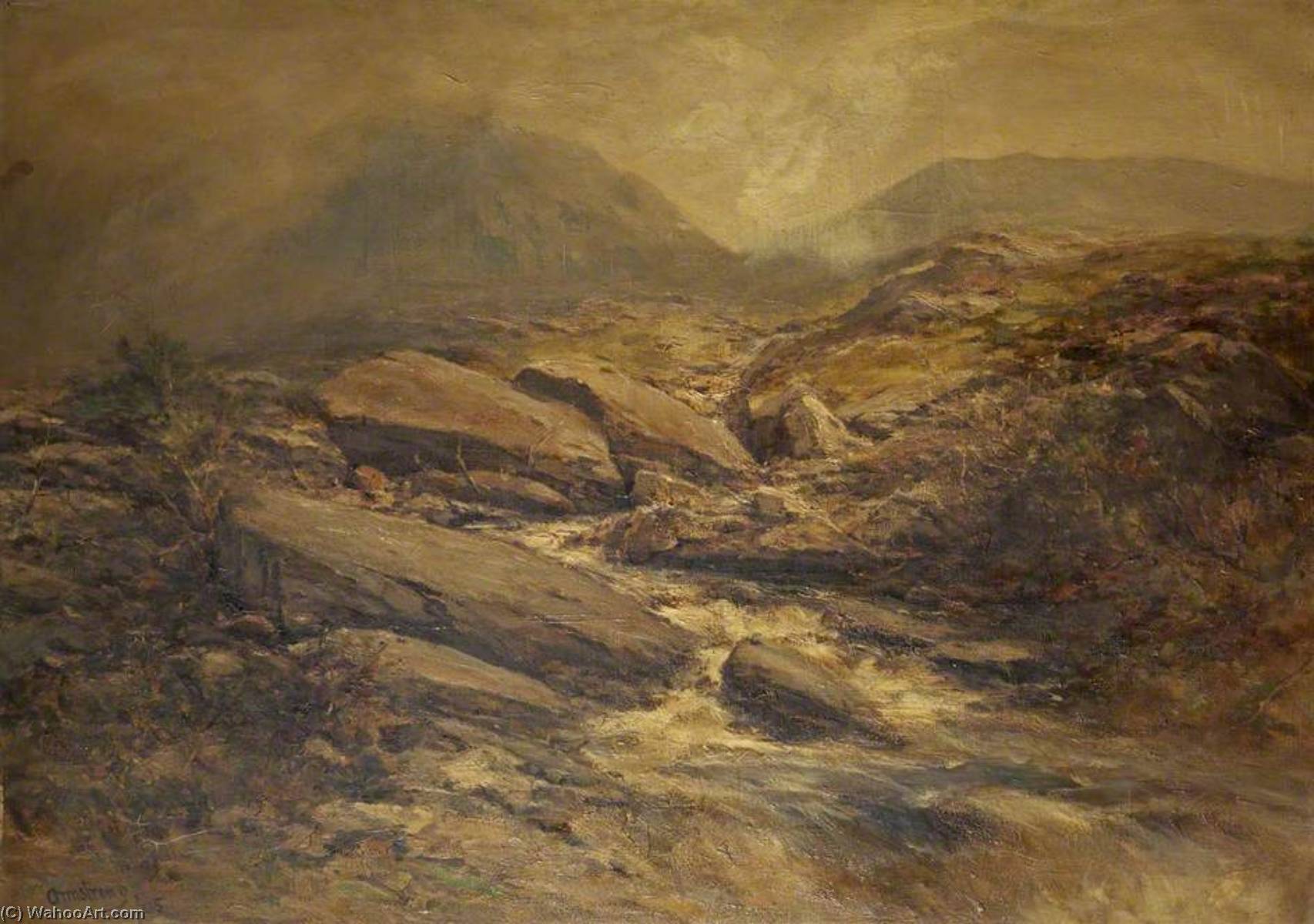
A River Scene with Rocks in the Foreground and Hills Beyond
 86.0 x 121.0 cm
 Royal West of England Academy
 Weiterlesen
Erwerben Sie ein hochauflösendes, optimiertes digitales Bild, das der Online-Vorschau weit überlegen ist.
Jede Datei wird von unseren hauseigenen Spezialisten mit modernsten Werkzeugen und fachmännischer manueller Retusche sorgfältig vorbereitet. Wir stellen sicher, dass jedes Bild eine außergewöhnliche Klarheit, präzise Farbgenauigkeit und feinste Details aufweist.
Die endgültige Datei wird innerhalb von 72 Stunden per E-Mail zugestellt und ist für den sofortigen Einsatz in professionellen, redaktionellen und Druckumgebungen optimiert. Es handelt sich um dieselbe Qualität, der führende Designstudios, Verlage und Galerien vertrauen.
Digitales Bild
Laden Sie eine hochauflösende Datei für die persönliche Präsentation, den Druck und kreative Projekte herunter. ( Druck bestellen Handgemalte Reproduktion bestellen)
In jeder Bestellung digitaler Bilder enthalten
Professionelle digitale Bereitstellung, garantiert
Wenn Sie sich für ArtsDot.com entscheiden, erhalten Sie nicht nur ein Bild – Sie erhalten ein professionell aufbereitetes digitales Kunstwerk, das mit höchster Präzision erstellt und durch eine Zufriedenheitsgarantie abgesichert wird. Hier ist alles, was automatisch mit Ihrer Bestellung geliefert wird:

Schnelle E-Mail-Zustellung
Ihre hochauflösende digitale Bilddatei wird Ihnen innerhalb von 72 Stunden nach der Bestellung per E-Mail zugestellt – bereit zur sofortigen Verwendung.

KI-optimierte digitale Datei
Ihre Kunstwerke werden professionell mithilfe fortschrittlicher KI-Tools und manueller Bearbeitung optimiert, um maximale Detailtreue, Klarheit und Farbgenauigkeit zu gewährleisten.

Lebenslanger kostenloser Neudruckservice
Datei versehentlich gelöscht oder verloren? Keine Sorge – wir senden sie Ihnen jederzeit kostenlos erneut zu.

Keine Einfuhrgebühren – jemals
Genießen Sie Ihr Kunstwerk sofort ohne Zollgebühren, Einfuhrabgaben oder Versandkosten – digitale Downloads sind immer steuerfrei.

Garantierte Farbtreue
Wir garantieren, dass Ihr digitales Bild mithilfe professioneller Werkzeuge und Farbmanagement die Originalfarben so präzise wie möglich wiedergibt.

60-Tage-Zufriedenheitsgarantie
Sollten Sie mit Ihrem digitalen Bild nicht zufrieden sein, werden wir es überarbeiten oder Ihnen innerhalb von 60 Tagen 100% erstatten – ohne Wenn und Aber.

100% Geld-zurück-Garantie
Nicht zufrieden? Erhalten Sie innerhalb von 60 Tagen nach Erhalt Ihrer digitalen Datei eine vollständige Rückerstattung – ohne Angabe von Gründen.

Rabatte bei Großbestellungen
3 Bilder kaufen, 10% sparen – 5 Bilder kaufen, 15% sparen – Ab 10 Bildern 20% sparen. Ideal für kreative Projekte, Galerien und Agenturen.
Ähnliche Kunstwerke










Biografie des Künstlers
The Visionary Landscapes of Francis Abel William Taylor Armstrong
Francis Abel William Taylor Armstrong (1849 – 1920) emerged as a prominent figure in British landscape painting during the Victorian era, leaving behind a legacy of evocative depictions that continue to resonate with collectors and art historians alike. Born in Bristol, England, Armstrong’s artistic journey was shaped by both familial connections to the arts and a burgeoning fascination with capturing the beauty of the natural world. His father, William Taylor Armstrong Sr., a solicitor, instilled in his son a love for meticulous observation and intellectual curiosity. While his formal training may have begun through self-study and experimentation, his innate talent allowed him to navigate the complex artistic landscape of 19th-century Britain with remarkable grace.
By the late 1870s, Armstrong relocated to London, immersing himself in the vibrant artistic milieu of the city. This period marked a significant turning point in his development as he began exhibiting his work regularly at prestigious institutions such as the Royal Academy and the Slade School of Fine Art. It was during these years that his mastery of light and color truly began to flourish. His style became firmly established through a sophisticated use of atmospheric perspective and a profound sensitivity to tonal variations. Favoring oil paints on canvas, Armstrong employed intricate layering techniques to achieve a sense of remarkable realism, all while maintaining the ability to convey the deep mood and character of his subjects.
A Mastery of Light and Atmosphere
The essence of Armstrong’s work lies in its ability to transport the viewer into the heart of the English countryside. His canvases often reflect the profound influence of Romanticism, drawing inspiration from the legendary techniques of masters like Turner and Constable. He possessed a unique gift for capturing the fleeting qualities of nature—the way golden sunlight bathes a valley or how mist clings to a rugged moorland. This technical prowess is perhaps most evident in his celebrated works:
- The River Avon at Bradford Abbas (1883): A stunning portrayal of Dorset’s Avon Valley, where the artist uses light to create a sense of warmth and tranquility.
- Cornfield Near Stoke Newington (1886): A piece that captures the quiet grandeur and peacefulness of rural England.
- Dartmoor Moorland (1902): A demonstration of his ability to convey the raw, rugged beauty of the wild landscape.
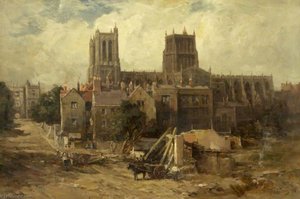
Beyond the pastoral, Armstrong also displayed a keen interest in urban and architectural subjects, blending the majesty of historical structures with the vitality of daily life. His paintings of Bristol, such as The Church of St Mary Redcliffe (1899) and Bristol Cathedral (1904), showcase his skill in capturing the essence of urban landscapes. In these works, he utilizes bold brushstrokes and vivid colors to highlight intricate architectural details, often juxtaposing the permanence of stone towers with the transient movement of horse-drawn carriages and bustling city life.
Legacy and Historical Significance
The historical significance of Francis Abel William Taylor Armstrong lies in his role as a chronicler of a changing Britain. Through his eyes, we witness the serene beauty of the pre-industrial countryside and the dignified evolution of English cities. His work serves as a bridge between the classical landscape traditions of the past and the more emotive, atmospheric approaches of the late Victorian period. By focusing on the interplay of light, texture, and atmosphere, Armstrong created a body of work that transcends mere documentation, offering instead a poetic meditation on the natural and built environments.
Today, his paintings remain cherished for their ability to evoke nostalgia and wonder. Whether depicting a tranquil river scene or a majestic cathedral, Armstrong’s dedication to capturing the soul of his subjects ensures his enduring place in the annals of British art history. His legacy continues to inspire those who find beauty in the subtle shifts of light and the timeless landscapes of the English realm.
francis abel william taylor armstrong
1849 - 1920
Kurzinfos
- Artistic Movement Or Style: Romanticism
- Artists Or Movements Influenced By This Artist: ['Hudson Lowe']
- Artists Who Influenced This Artist:
- John Constable
- George Frederic Handel
- Date Of Birth: 1849
- Date Of Death: 1920
- Full Name: Francis Abel William Taylor Armstrong
- Nationality: British
- Notable Artworks:
- The Old Mill
- Redcliffe Gorge
- Place Of Birth: Bristol, England

